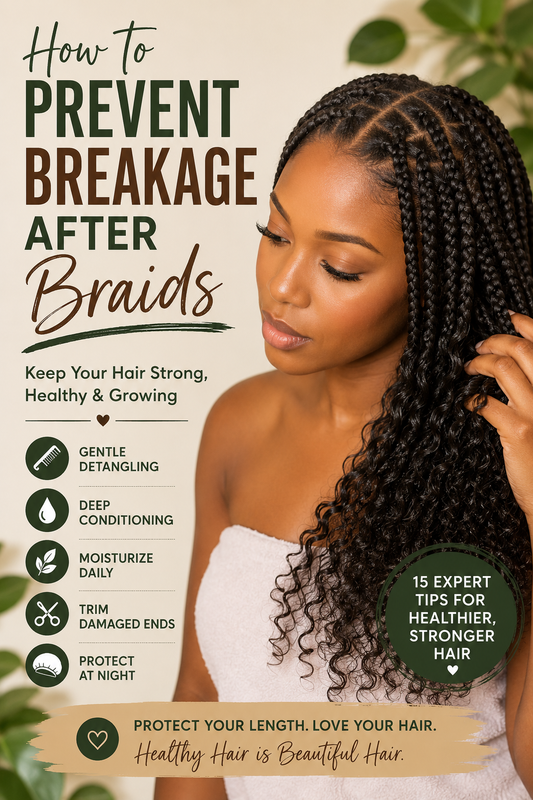
Braids are one of the best protective hairstyles for promoting length retention, reducing daily manipulation, and giving your hair a well-deserved break. Whether you wear box braids, knotless braids, cornrows, twists, or feed-in braids, protective styles can help preserve healthy hair when installed and maintained correctly.
However, many people experience excessive shedding, dryness, tangles, and even severe breakage after taking their braids down. This often leads people to believe that braids damaged their hair when, in reality, the damage usually happens during braid removal and the days immediately afterward.
The good news is that post-braid breakage is largely preventable.
In this guide, you'll learn exactly why hair breaks after braids and the best ways to restore moisture, strengthen your strands, and protect every inch of growth you've worked so hard to achieve.
Why Hair Breaks After Braids
Understanding the causes makes prevention much easier.
Hair usually breaks after braids because of a combination of:
- Dryness
- Product buildup
- Tangles
- Weak ends
- Rough detangling
- Lack of moisture
- Tight installation
- Skipping deep conditioning
Once braids are removed, your hair is often at its most vulnerable.
Normal Shedding vs. Breakage
Many people panic after seeing hair come out during braid removal.
The truth is that shedding is completely normal.
Normal Hair Shedding
Most people naturally lose:
- 50–100 hairs every day
If you've worn braids for six weeks, that's several hundred hairs that couldn't fall out naturally because they were trapped inside the braid.
When you remove the style, they all come out at once.
That's normal.
Signs of Breakage
Breakage is different.
Broken hairs are:
- Short
- Uneven
- Have no white bulb on the end
- Leave hair looking thinner
- Cause frizz
- Reduce length retention
Understanding this difference can save unnecessary stress.
1. Never Rip Through Your Hair
The biggest mistake people make is trying to detangle dry hair immediately after removing braids.
Instead:
- Remove one braid at a time
- Finger separate the section
- Remove loose shed hairs gently
- Keep hair stretched
- Avoid pulling
Patience prevents breakage.
2. Saturate Hair Before Detangling
Dry hair snaps easily.
Before touching a comb, saturate your hair with:
- Warm water
- Leave-in conditioner
- Moisturizing conditioner
- Hair oil on tangled areas
Moisturized strands slide apart much more easily.
3. Finger Detangle First
Your fingers are your best detangling tool.
Benefits include:
- Feeling knots
- Separating shed hairs
- Preventing unnecessary pulling
- Preserving curl patterns
- Reducing split ends
Always finger detangle before using a comb.
4. Use a Wide-Tooth Comb
Never begin with a fine-tooth comb.
Instead use:
- Wide-tooth comb
- Flexible detangling brush
- Fingers
Start at the ends.
Slowly work upward.
5. Work in Small Sections
Trying to detangle your entire head at once causes unnecessary stress.
Instead divide hair into:
- 4 sections
- 6 sections
- 8 sections
- More if your hair is thick
Clip each section separately.
6. Remove Product Buildup Gently
Braids often collect:
- Edge control
- Gel
- Sweat
- Oils
- Dust
- Dry shampoo
Don't scratch buildup aggressively.
Instead:
Massage conditioner into the buildup before shampooing.
This softens residue and reduces tangles.
7. Wash Hair Carefully
Use lukewarm water.
Avoid bunching hair together.
Instead:
- Let water run downward
- Massage scalp gently
- Clean sections individually
- Avoid rough circular scrubbing
Gentle washing protects weakened strands.
8. Deep Condition Immediately
After weeks inside braids, hair needs moisture.
Deep conditioning helps:
- Restore elasticity
- Reduce snapping
- Improve softness
- Increase flexibility
- Prevent future breakage
Leave your treatment on for 20–30 minutes.
9. Strengthen Weak Hair
If your hair feels stretchy or mushy, it may benefit from strengthening ingredients.
These help reinforce fragile strands.
Avoid overusing strengthening treatments, as too much can make hair stiff.
Balance strengthening with regular moisturizing treatments.
10. Moisturize Right Away
Freshly washed hair loses moisture quickly.
Seal hydration in immediately.
A simple routine includes:
- Water-based leave-in conditioner
- Moisturizing cream
- Lightweight oil to help reduce moisture loss
Consistent moisture keeps hair flexible instead of brittle.
11. Trim Damaged Ends
Braids don't cause split ends.
They simply hide them.
After removing braids:
Inspect your ends.
Trim if you notice:
- Splits
- White dots
- Frayed strands
- Single-strand knots
- Thin ends
Healthy ends reduce future breakage.
12. Avoid Heat for a Few Days
Your hair has already experienced stress.
Avoid immediately using:
- Flat irons
- Curling irons
- High-heat blow dryers
Allow hair to recover naturally.
13. Sleep With Hair Protected
Cotton pillowcases absorb moisture.
Instead use:
- Satin bonnet
- Silk scarf
- Satin pillowcase
Night protection reduces friction that leads to breakage.
14. Stay Hydrated
Healthy hair begins inside your body.
Drink enough water daily.
A balanced diet that includes protein, healthy fats, vitamins, and minerals also supports stronger hair over time.
15. Don't Reinstall Braids Immediately
One of the biggest mistakes is reinstalling braids the same day they're removed.
Give your hair time to recover.
Wear your natural hair for at least one to two weeks while focusing on:
- Moisture
- Gentle cleansing
- Deep conditioning
- Low manipulation
Your scalp and strands will thank you.
Ingredients That Support Healthy Hair
Look for products that contain ingredients known for helping maintain moisture and supporting healthier-looking hair, such as:
- Jamaican Black Castor Oil
- Rosemary Oil
- Peppermint Oil
- Aloe Vera
- Coconut Oil
- Avocado Oil
- Olive Oil
- Vitamin E
- Argan Oil
These ingredients can complement a consistent healthy hair routine.
Mistakes That Cause Breakage After Braids
Avoid these common habits:
- Removing braids too quickly
- Detangling dry hair
- Skipping conditioner
- Using small combs first
- Pulling through knots
- Reinstalling braids immediately
- Ignoring split ends
- Overusing heat
- Forgetting nighttime protection
- Neglecting scalp care
A Healthy Post-Braid Routine
Day 1
- Remove braids carefully
- Finger detangle
- Apply conditioner
- Section hair
Day 2
- Shampoo gently
- Deep condition
- Moisturize thoroughly
Day 3–7
- Wear a loose protective style
- Moisturize as needed
- Protect hair while sleeping
Week 2
Continue moisturizing and strengthening your hair before considering another braided style.
Frequently Asked Questions
Is it normal to lose a lot of hair after braids?
Yes. Hair that naturally sheds every day remains trapped inside braids and often comes out all at once when the style is removed.
How long should I wait before getting braids again?
Waiting at least one to two weeks gives your scalp and strands time to recover and allows you to restore moisture before another protective style.
Should I wash my hair immediately after removing braids?
Yes. Gently detangle first, then cleanse your scalp and hair to remove buildup before following with a deep conditioner.
Why does my hair feel dry after braids?
Protective styles can limit access to moisture. Product buildup, environmental exposure, and infrequent conditioning may also leave hair feeling dry.
Can moisturizing really reduce breakage?
Yes. Well-moisturized hair is generally more flexible and less likely to snap than dry, brittle hair.
Final Thoughts
Braids are an excellent protective style, but your post-braid routine determines whether you retain your hard-earned length or experience unnecessary breakage. Taking your time during removal, detangling gently, restoring moisture with deep conditioning, and protecting your hair while it recovers can make a dramatic difference.
Consistency is the secret to stronger, healthier hair. Every careful step—from finger detangling to regular moisturizing and nighttime protection—helps preserve your strands and supports long-term length retention. With the right routine, you can enjoy the benefits of protective styles while keeping your natural hair healthy, resilient, and ready for your next hairstyle.