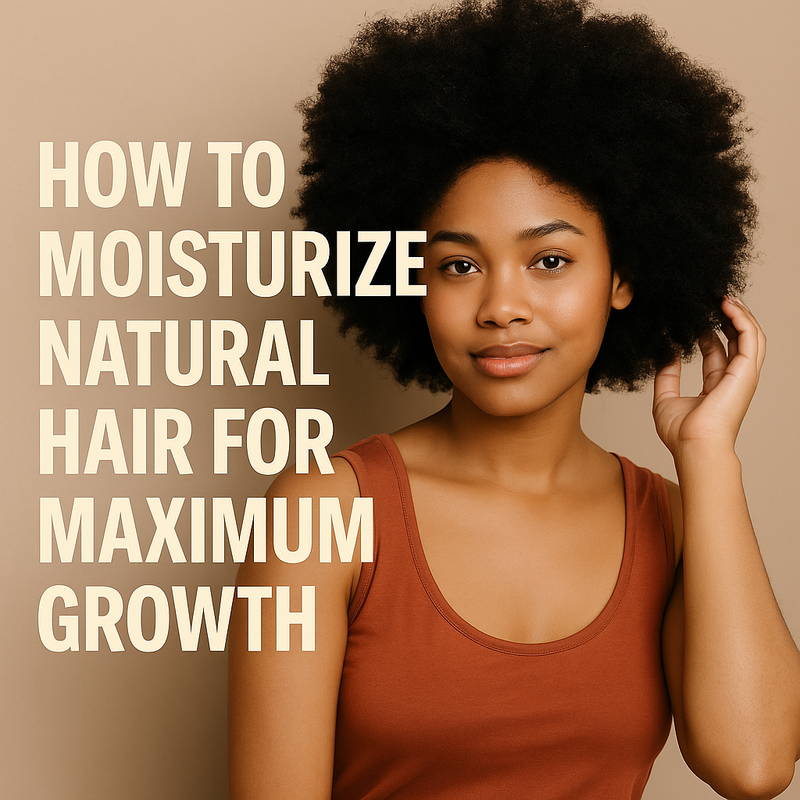
If you want longer, thicker, healthier natural hair, hydration must be your top priority. Natural hair — especially type 3 and type 4 textures — thrives on moisture. Without it, curls break, coils snap, ends dry out, and length retention becomes almost impossible.
Many people think their hair “won’t grow,” when in reality, the hair is growing — it's just breaking faster than it can retain length. Moisture is the key to stopping that cycle.
In this ultimate guide, you’ll learn the science of moisturizing natural hair, the best techniques, the right products, and the daily/weekly routines that produce maximum growth.
Why Moisture Is the Secret to Natural Hair Growth
Moisture isn’t just about softness — it’s what keeps strands flexible, strong, and resistant to breakage. Natural hair grows, on average, ½ inch per month, but dryness prevents you from seeing that growth.
When natural hair lacks moisture, it becomes:
-
brittle
-
hard
-
dull
-
tangled
-
prone to split ends
-
more likely to snap during detangling
-
unable to retain length
To grow long natural hair, you must keep it hydrated from the inside (nutrition + water intake) and the outside (products + technique).
The Science of Moisture in Natural Hair
Natural hair has a unique spiral shape, and those curves make it harder for natural oils to travel from the scalp down the length of the strand. That’s why curls and coils get dry faster than straight hair.
Natural hair needs three things:
-
Water – actual moisture
-
Humectants – ingredients that attract water
-
Oils & emollients – to seal and soften
-
Conditioners – to restore elasticity
When these elements work together, hair stays moisturized longer and breaks significantly less — allowing growth to show.
How to Moisturize Natural Hair for Maximum Growth
Now let’s get into the exact steps to keep natural hair hydrated consistently.
1. Start With a Hydrating Shampoo
Many shampoos strip natural oils, leaving the hair rough and dry. Use a sulfate-free, moisture-rich shampoo that cleanses without over-drying.
Look for shampoos containing:
-
aloe vera
-
shea butter
-
argan oil
-
plant extracts
-
coconut-derived cleansers
Cleansing is essential because buildup blocks moisture, preventing products from penetrating.
Tip:
If you use oils, gels, edge control, or heavy butters, clarify once a month.
2. Follow Every Wash With a Deep Conditioner
Deep conditioning is one of the most important steps for moisturizing natural hair. It replenishes nutrients, restores hydration, and improves elasticity.
Choose a deep conditioner with:
-
aloe vera
-
honey
-
hydrolyzed proteins (occasionally)
-
shea or mango butter
-
natural oils
How to deep condition effectively:
-
Apply to clean, wet hair.
-
Use a heat cap or sit under a steamer.
-
Leave on for 20–30 minutes.
-
Rinse with cool water to seal the cuticle.
Deep conditioning once a week is ideal for maximizing moisture retention.
3. Use the LOC or LCO Method for Long-Lasting Moisture
The LOC/LCO method is the holy grail of moisturizing natural hair.
L = Liquid (water or leave-in)
O = Oil (sealant)
C = Cream (moisturizer)
For low porosity hair:
→ LCO works better (liquid → cream → oil).
For high porosity hair:
→ LOC works better (liquid → oil → cream).
Using these methods ensures moisture enters the strand and stays locked inside.
Try Hairobics Raaw Roots Moisturizing Spray as your “L” step to keep hair soft and hydrated.
4. Moisturize Your Hair in Sections
Don’t apply products randomly. Natural hair absorbs moisture better when applied in small sections.
Benefits:
-
Even coverage
-
Less tangling
-
Greater moisture penetration
-
Better curl definition
For thick or coily hair, work in 4–8 sections.
5. Seal in Moisture With the Right Oils
Oils don’t moisturize — they seal moisture. After applying water or leave-in conditioner, sealing helps trap hydration inside the hair shaft.
Best oils for sealing moisture:
-
avocado oil
-
olive oil
-
jojoba oil
-
grapeseed oil
-
sweet almond oil
These lightweight oils prevent dryness without creating heavy buildup.
Avoid:
-
petroleum
-
mineral oil
-
heavy greases
They sit on top of the hair, suffocating strands and blocking moisture.
6. Use Water-Based Moisturizers Daily or Every Other Day
Natural hair needs regular hydration. Choose a moisturizer where water is the first ingredient.
Signs your hair needs moisture:
-
rough ends
-
tangles
-
lack of shine
-
brittle strands
-
hair feels “crunchy”
-
breakage during styling
A good moisturizing spray like Hairobics Raaw Roots Moisturizer revives dry hair instantly.
7. Protect Moisturized Hair With Satin or Silk
Cotton absorbs moisture, leaving your strands dry.
Use satin/silk for:
-
pillowcases
-
scarves
-
bonnets
-
scrunchies
This prevents friction, dryness, and overnight breakage.
8. Keep Ends Moisturized — They Are the Oldest and Most Fragile
Your ends determine how long your hair gets. Dry, weak ends break easily, making it look like your hair isn’t growing.
To maintain your ends:
-
moisturize them daily
-
seal them with oil
-
fluff them gently, don’t tug
-
trim every 10–12 weeks
Healthy ends = maximum length retention.
9. Avoid Heat or Use It Sparingly
Heat temporarily dries out the hair, and too much leads to:
-
split ends
-
breakage
-
weakened curls
-
moisture loss
If you must use heat:
-
deep condition first
-
use a high-quality heat protectant
-
keep temperature below 375°F
-
avoid multiple passes
10. Keep Your Scalp Healthy and Hydrated
Hair grows from the scalp — so if the scalp is dry, tight, or inflamed, growth slows significantly.
For a healthy scalp:
-
cleanse regularly
-
use lightweight oils or scalp serums
-
massage for 5 minutes daily
-
avoid blocking pores with greasy products
-
remove buildup
Hairobics Hair & Scalp Booster is excellent for improving scalp circulation and feeding follicles.
11. Drink Enough Water
Dehydration dries out your body — including your hair.
The average adult should aim for 8–10 cups of water per day.
Hydrated follicles produce hydrated hair.
12. Eat Foods That Help Hair Retain Moisture
Nutrition plays a huge role in how moisturized your hair stays.
Top moisture-supporting foods:
-
avocados
-
salmon
-
berries
-
leafy greens
-
nuts and seeds
-
eggs
-
Greek yogurt
-
sea moss
The healthier your body, the better your hair holds moisture.
13. Avoid Over-Manipulation
Constant touching, styling, twisting, or combing destroys moisture and causes breakage.
Low-manipulation tips:
-
choose soft protective styles
-
minimize brushing
-
finger detangle when possible
-
moisturize before styling
-
leave hair alone once moisturized
Less manipulation = better growth retention.
14. Use Steam to Deepen Hydration
Steamers and warm mist open the hair cuticle, allowing moisture to penetrate deeply.
Benefits:
-
softer hair
-
less breakage
-
better hydration
-
improved elasticity
-
longer-lasting moisture
Steam is especially helpful for low-porosity natural hair.
15. Protect Hair When Wearing Braids or Locs
Braids and locs help retain moisture if you hydrate the scalp and length consistently.
Keep protective styles moisturized by:
-
using a water-based spray 3–4× per week
-
massaging lightweight oils into the scalp
-
cleansing the scalp biweekly
-
avoiding heavy gels or waxes
Hairobics Raaw Roots Spray is ideal for braids, twists, and locs because it hydrates without buildup.
16. Know Your Porosity Level
Porosity determines how easily your hair absorbs and retains moisture.
Low porosity:
-
cuticle tightly closed
-
moisture sits on top
-
needs heat to absorb hydration
High porosity:
-
cuticle is open and damaged
-
moisture escapes quickly
-
needs thicker creams and regular sealing
Medium porosity:
-
absorbs and retains moisture well
Using the wrong products for your porosity reduces moisture retention dramatically.
17. Use Lightweight Leave-In Conditioners Daily
Daily moisture doesn’t mean heavy creams. A lightweight leave-in keeps hair soft between wash days without causing buildup.
Look for leave-ins containing:
-
aloe
-
glycerin
-
coconut milk
-
plant extracts
-
panthenol (B5)
18. Don’t Skip Protein Completely
Protein and moisture must stay balanced.
Too much protein = dry, brittle hair
Too little protein = mushy, weak hair
Use a light protein treatment every 4–6 weeks to maintain strength.
19. Co-Wash Occasionally (But Don’t Replace Shampoo)
Co-washing is great for midweek moisture boosts, but it shouldn’t replace regular cleansing.
Use co-wash on days when hair feels dry but not dirty.
20. Build a Consistent Moisture Routine
You can’t moisturize once and expect results. Consistency is the key to long-term growth.
Simple Moisture Routine:
Daily
-
spray with water or lightweight mist
-
seal ends with oil
-
cover with satin at night
Weekly
-
wash with sulfate-free shampoo
-
deep condition
-
moisturize using LOC/LCO
Monthly
-
clarify
-
trim if needed
-
protein treatment
Final Thoughts: Moisture = Length Retention = Growth
Moisture is the foundation of long, healthy natural hair.
When your strands stay hydrated:
-
breakage slows down
-
curls stay defined
-
ends stop snapping
-
hair becomes stronger
-
growth becomes visible
Pair a strong moisture routine with:
-
scalp massages
-
low manipulation
-
proper nutrition
-
protective styling done right
…and your hair WILL grow longer.