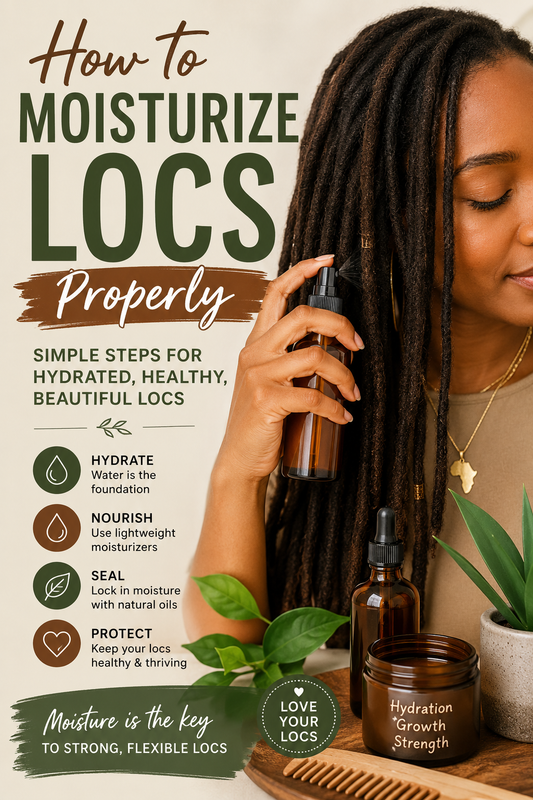
Locs are one of the most beautiful and versatile hairstyles, but they require proper moisture to stay healthy, strong, and vibrant. One of the biggest mistakes people make with locs is assuming they don't need regular moisturizing. In reality, dry locs can become brittle, weak, dull, and prone to breakage.
Whether you're new to your loc journey or have had mature locs for years, understanding how to moisturize locs properly can make a huge difference in their health, appearance, and growth.
In this complete guide, you'll learn:
- Why locs become dry
- How often to moisturize locs
- The best ingredients for loc hydration
- Daily, weekly, and monthly moisture routines
- Common moisturizing mistakes
- How to keep locs hydrated year-round
- Tips for maximum length retention
Why Moisture Matters for Locs
Many people focus on hair growth but overlook moisture. The truth is that healthy hair growth and moisture go hand in hand.
When locs are properly moisturized, they:
- Remain flexible
- Resist breakage
- Feel softer
- Retain length better
- Look shinier
- Experience less shedding
- Have healthier scalp conditions
Dry locs, on the other hand, become:
- Brittle
- Rough
- Frizzy
- Dull
- Weak
- More susceptible to breakage
No matter your hair type, moisture is essential for maintaining healthy locs.
Why Locs Get Dry
Before learning how to moisturize locs, it helps to understand why they become dry in the first place.
Lack of Water
Many people confuse oils with moisture.
Water is moisture.
Oil helps seal moisture in but does not actually hydrate hair.
If you're only applying oils and not using water-based products, your locs may remain dry.
Weather Conditions
Environmental factors can strip moisture from locs.
Dry Winter Air
Cold temperatures and indoor heating remove moisture from the hair.
Summer Sun Exposure
UV rays can dry locs and damage the hair cuticle.
Wind
Constant wind exposure increases moisture loss.
Product Buildup
Heavy products can coat locs and prevent moisture from penetrating the hair shaft.
Common buildup causes include:
- Heavy waxes
- Thick creams
- Petroleum products
- Excessive oils
Overwashing
While scalp hygiene is important, washing too frequently can remove natural oils.
This can leave locs feeling dry and brittle.
Hard Water
Mineral deposits from hard water can create buildup and make moisture absorption difficult.
Understanding Moisture vs Oil
One of the most important concepts in loc care is understanding the difference between moisture and oil.
Moisture
Moisture comes from:
- Water
- Aloe vera juice
- Water-based sprays
- Hydrating leave-in treatments
These ingredients hydrate the hair shaft.
Oils
Oils include:
- Jojoba oil
- Jamaican black castor oil
- Coconut oil
- Grapeseed oil
Oils help lock moisture inside the hair.
Think of it this way:
Water hydrates. Oil seals.
You need both.
How Often Should You Moisturize Locs?
The ideal schedule depends on your hair type, climate, and lifestyle.
Starter Locs
Moisturize every 2-3 days.
Mature Locs
Moisturize 3-4 times per week.
Dry Climates
You may need daily moisture.
Active Lifestyles
Sweating can dry hair out, requiring more frequent hydration.
A good rule:
If your locs feel rough, stiff, or crunchy, they likely need moisture.
Signs Your Locs Need Moisture
Watch for these warning signs:
- Excessive frizz
- Dull appearance
- Rough texture
- Increased breakage
- Itchy scalp
- Flaking
- Stiff locs
- Excessive shedding
Healthy locs should feel flexible and resilient.
Best Ingredients for Moisturizing Locs
Water
The foundation of all moisturizing routines.
Water helps:
- Hydrate strands
- Improve elasticity
- Prevent brittleness
A simple water mist can dramatically improve loc hydration.
Aloe Vera
Aloe vera is one of the best natural moisturizers available.
Benefits include:
- Hydrates hair
- Soothes scalp irritation
- Reduces itching
- Improves softness
Glycerin
Glycerin is a humectant.
It draws moisture from the environment into the hair.
This helps locs stay hydrated longer.
Rose Water
Rose water offers:
- Lightweight hydration
- Scalp soothing properties
- Refreshing scent
It works especially well in daily moisture sprays.
Jojoba Oil
Jojoba oil closely resembles the scalp's natural sebum.
Benefits:
- Lightweight
- Non-greasy
- Excellent moisture sealant
Jamaican Black Castor Oil
A favorite in the natural hair community.
Benefits:
- Helps seal moisture
- Supports healthy scalp conditions
- Adds shine
- Reduces breakage
The Proper Way to Moisturize Locs
Follow this simple process.
Step 1: Apply Water-Based Moisture
Use:
- Water
- Aloe vera spray
- Leave-in treatment
- Moisturizing loc spray
Lightly mist the entire head.
Do not saturate excessively.
Step 2: Focus on Dry Areas
Pay extra attention to:
- Ends
- Hairline
- Crown
- Nape
These areas often dry out fastest.
Step 3: Seal With Oil
Apply a small amount of oil.
Focus on:
- Loc length
- Ends
- Scalp if needed
Avoid excessive oil application.
Step 4: Allow Hair to Dry
Never leave locs soaking wet for extended periods.
Excess moisture can contribute to odor and mildew.
Daily Moisture Routine for Locs
A simple daily routine can make a huge difference.
Morning
- Light water mist
- Apply moisturizing spray
- Seal with a few drops of oil
Evening
- Light scalp massage
- Cover with satin bonnet or scarf
Total time: 3-5 minutes.
Weekly Moisture Routine
Day 1
Deep moisturizing session.
- Water-based moisturizer
- Leave-in treatment
- Seal with oil
Midweek
Refresh with moisture spray.
End of Week
Evaluate dryness levels and adjust.
Monthly Deep Hydration Routine
Once per month:
Clarify the Scalp
Remove buildup using a gentle shampoo.
Deep Moisturize
Apply a hydrating leave-in treatment.
Steam Treatment
Steam helps:
- Open cuticles
- Improve moisture absorption
- Increase softness
Many people notice immediate improvement after steaming.
Best Moisturizing Routine for Starter Locs
Starter locs require special care.
Avoid:
- Heavy oils
- Thick creams
- Excessive manipulation
Instead:
- Use light water-based sprays
- Moisturize every few days
- Allow locs to mature naturally
Heavy products can slow the locking process.
Best Moisturizing Routine for Mature Locs
Mature locs can handle slightly richer products.
A good routine includes:
- Water-based hydration
- Weekly deep moisture
- Monthly clarification
- Regular scalp care
Consistency matters more than product quantity.
How to Moisturize Locs Without Causing Buildup
Buildup is one of the biggest concerns for loc wearers.
Avoid:
- Petroleum
- Heavy waxes
- Thick gels
- Excessive butter
Use lightweight products instead.
Signs of buildup include:
- White residue
- Dull appearance
- Sticky texture
- Increased lint attraction
The Role of Scalp Health
Healthy locs begin with a healthy scalp.
Focus on:
- Cleanliness
- Moisture balance
- Proper blood circulation
A healthy scalp creates an ideal environment for hair growth.
Scalp Massage Benefits
Scalp massage may help:
- Improve circulation
- Reduce tension
- Support healthy follicles
- Distribute natural oils
Try massaging for 3-5 minutes several times per week.
How Sleep Affects Loc Moisture
Cotton pillowcases absorb moisture.
Switch to:
- Satin pillowcases
- Silk pillowcases
- Satin bonnets
- Satin scarves
This simple change can significantly reduce dryness.
How Diet Affects Loc Moisture
Hydration starts internally.
Drink plenty of water daily.
Focus on foods rich in:
- Healthy fats
- Vitamins
- Minerals
- Protein
Examples:
- Avocados
- Salmon
- Nuts
- Seeds
- Leafy greens
Healthy hair reflects healthy habits.
Seasonal Moisturizing Tips
Summer
Increase moisture frequency.
Protect from:
- Sun exposure
- Chlorine
- Saltwater
Wear hats when necessary.
Winter
Use richer moisture routines.
Consider:
- Humidifiers
- More frequent hydration
- Protective coverings
Winter dryness is a common challenge.
Common Loc Moisturizing Mistakes
Using Oil Without Water
Oil alone is not moisture.
Always hydrate first.
Overusing Products
Too many products create buildup.
Simple routines often work best.
Ignoring the Scalp
A dry scalp often leads to dry locs.
Scalp care matters.
Not Protecting Hair at Night
Nighttime friction causes moisture loss.
Use satin protection consistently.
Skipping Clarification
Buildup blocks moisture penetration.
Regular cleansing helps maintain hydration.
Moisture Retention vs Hair Growth
Many people ask:
"Will moisturizing my locs make them grow faster?"
Moisture doesn't directly increase growth speed.
However, it helps:
- Reduce breakage
- Improve length retention
- Maintain stronger strands
The result is longer, healthier-looking locs over time.
Loc Moisturizing Routine for Maximum Length Retention
If your goal is longer locs:
Daily
- Moisture spray
- Light oil seal
Weekly
- Thorough hydration session
Monthly
- Clarifying wash
- Deep moisture treatment
Consistently
- Protect hair while sleeping
- Avoid excessive manipulation
- Maintain scalp health
Ingredients to Avoid
Some ingredients may contribute to buildup.
Use caution with:
- Petroleum jelly
- Mineral oil
- Heavy waxes
- Thick grease products
These can make moisture penetration difficult.
Creating a Simple Loc Moisture Spray
You can create a lightweight moisture spray using:
- Distilled water
- Aloe vera juice
- A few drops of jojoba oil
Shake before each use.
Apply lightly throughout the week.
How Hairobics Can Support Healthy Loc Moisture
A consistent moisturizing routine works best when paired with products designed to hydrate and nourish the scalp and hair.
The Hairobics All Natural product line is formulated with natural ingredients that help support:
- Healthy scalp conditions
- Improved moisture retention
- Reduced dryness
- Stronger-looking locs
- Healthier hair growth journeys
Products such as the Hairobics Leave-In Treatment and Hairobics Raaw Roots Moisturizing Spray can be incorporated into a regular loc care routine to help keep locs feeling soft, refreshed, and hydrated.
Final Thoughts
Learning how to moisturize locs properly is one of the most important steps in maintaining healthy, thriving hair. Moisture is the foundation of strong locs, and without it, even the best hair care routine can fall short.
Remember these key principles:
- Water is moisture.
- Oil seals moisture.
- Consistency beats perfection.
- Avoid heavy buildup.
- Protect locs while sleeping.
- Keep the scalp healthy.
- Clarify regularly.
When you make moisture a priority, your locs are more likely to remain soft, resilient, healthy, and capable of retaining length for years to come.
By following the strategies outlined in this guide, you'll be well on your way to maintaining hydrated, beautiful locs that look and feel their absolute best.