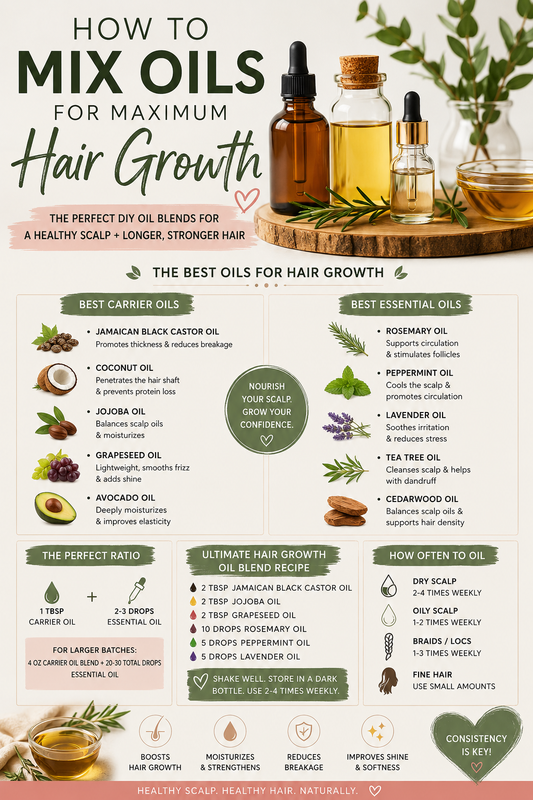
If you’ve been trying to grow longer, thicker, healthier hair naturally, learning how to mix oils correctly can completely change your results. The right oil blend can help moisturize the scalp, strengthen weak strands, reduce breakage, improve scalp circulation, calm inflammation, and support healthier hair growth over time.
But many people make one major mistake: they randomly mix oils together without understanding which oils work best for their hair type, scalp condition, or hair goals.
In this complete guide, you’ll learn:
- The best oils for hair growth
- How to combine carrier oils and essential oils correctly
- The perfect oil ratios
- The best oil mixes for natural hair, braids, locs, edges, and thinning hair
- Oils to avoid mixing together
- How often to oil your scalp
- DIY recipes for faster, thicker hair growth
Whether you have curly hair, natural hair, relaxed hair, braids, locs, or thinning edges, this guide will help you create the perfect hair growth oil blend.
Why Oil Blending Works for Hair Growth
Hair oils work because they help support the scalp environment where hair grows. Healthy hair growth starts at the scalp.
Certain oils can help:
- Reduce scalp dryness
- Minimize inflammation
- Improve moisture retention
- Strengthen weak hair strands
- Reduce breakage
- Protect the scalp barrier
- Improve elasticity
- Support blood circulation
Some oils also contain nutrients like:
- Vitamin E
- Fatty acids
- Antioxidants
- Omega oils
- Antimicrobial compounds
When oils are blended correctly, they work together to create a stronger hair growth formula than using a single oil alone.
Understanding the Two Types of Hair Oils
Before mixing oils, you need to understand the difference between carrier oils and essential oils.
Carrier Oils
Carrier oils are the base oils used in your mixture. These oils can safely cover the scalp and hair directly.
Examples include:
- Jamaican black castor oil
- Coconut oil
- Olive oil
- Avocado oil
- Grapeseed oil
- Jojoba oil
- Sweet almond oil
Carrier oils provide:
- Moisture
- Fatty acids
- Scalp nourishment
- Hair protection
Essential Oils
Essential oils are highly concentrated plant extracts. These oils should almost always be diluted before touching the scalp.
Examples include:
- Rosemary oil
- Peppermint oil
- Tea tree oil
- Lavender oil
- Cedarwood oil
- Clary sage oil
Essential oils help support:
- Scalp stimulation
- Circulation
- Scalp balance
- Reduced irritation
- Hair density support
Never apply large amounts of essential oils directly to the scalp.
The Best Carrier Oils for Hair Growth
Jamaican Black Castor Oil
Jamaican Black Castor Oil is one of the most popular oils for thicker-looking hair and scalp nourishment.
Benefits:
- Thick consistency seals moisture
- Helps reduce dryness
- Great for edges and thinning areas
- Supports protective styles
Best for:
- Natural hair
- Thick curly hair
- Braids
- Locs
- Dry scalp
Coconut Oil
Coconut Oil penetrates the hair shaft better than many oils.
Benefits:
- Helps reduce protein loss
- Softens hair
- Adds shine
- Helps reduce breakage
Best for:
- Dry damaged hair
- Heat-damaged hair
- Curly hair
Avoid using too much if your hair gets stiff easily.
Jojoba Oil
Jojoba Oil closely resembles natural scalp oils.
Benefits:
- Lightweight
- Great for oily scalps
- Helps balance scalp moisture
- Won’t clog pores easily
Best for:
- Fine hair
- Oily scalp
- Low-porosity hair
Grapeseed Oil
Grapeseed Oil is extremely lightweight.
Benefits:
- Non-greasy
- Helps smooth frizz
- Adds softness
- Lightweight scalp moisture
Best for:
- Fine hair
- Thin hair
- Low-density hair
Avocado Oil
Avocado Oil contains fatty acids and vitamins that help soften dry hair.
Benefits:
- Rich moisture
- Helps improve elasticity
- Good for brittle hair
Best for:
- High-porosity hair
- Dry hair
- Color-treated hair
The Best Essential Oils for Hair Growth
Rosemary Oil
Rosemary Essential Oil is one of the most talked-about oils for hair growth support.
Benefits:
- Supports scalp circulation
- Helps maintain healthier follicles
- Popular for thinning hair routines
Best mixed with:
- Castor oil
- Jojoba oil
- Grapeseed oil
Peppermint Oil
Peppermint Essential Oil creates a cooling sensation that many people associate with scalp stimulation.
Benefits:
- Cooling scalp feel
- Refreshes itchy scalp
- Supports circulation
Use carefully because too much can irritate sensitive scalps.
Lavender Oil
Lavender Essential Oil is known for calming and soothing properties.
Benefits:
- Helps soothe scalp irritation
- Relaxing scent
- Great for dry scalp blends
Tea Tree Oil
Tea Tree Oil is commonly used for scalp buildup and dandruff support.
Benefits:
- Helps refresh scalp
- Supports scalp cleanliness
- Good for flaky scalp routines
Never overuse tea tree oil.
Cedarwood Oil
Cedarwood Essential Oil is often used in scalp-support blends.
Benefits:
- Helps balance scalp oils
- Pairs well with rosemary
The Perfect Oil Mixing Ratio
One of the biggest mistakes people make is adding too much essential oil.
A safe beginner ratio is:
- 1 tablespoon carrier oil
- 2–3 drops essential oil
For larger batches:
- 4 ounces carrier oil blend
- 20–30 total drops essential oil
Essential oils are powerful. More is not better.
The Best Oil Blend for Maximum Hair Growth
Here’s one of the best all-around DIY hair growth oil blends.
Ultimate Hair Growth Oil Recipe
Ingredients
- 2 tablespoons Jamaican black castor oil
- 2 tablespoons jojoba oil
- 2 tablespoons grapeseed oil
- 10 drops rosemary oil
- 5 drops peppermint oil
- 5 drops lavender oil
Directions
- Add all oils into a dark glass bottle.
- Shake thoroughly.
- Store in a cool area away from sunlight.
- Apply 2–4 times weekly.
Why This Blend Works
- Castor oil seals moisture
- Jojoba balances scalp oils
- Grapeseed keeps the blend lightweight
- Rosemary supports scalp circulation
- Peppermint refreshes the scalp
- Lavender calms irritation
Best Oil Mix for Natural Hair
Natural hair often needs moisture plus scalp support.
Recipe
- Jamaican black castor oil
- Avocado oil
- Rosemary oil
- Lavender oil
This combination helps:
- Reduce dryness
- Improve softness
- Support protective styling
- Minimize breakage
Best Oil Mix for Braids
Braids require lightweight moisture that won’t create buildup.
Recipe
- Jojoba oil
- Grapeseed oil
- Tea tree oil
- Peppermint oil
Benefits:
- Keeps scalp refreshed
- Reduces itching
- Lightweight enough for braid styles
Best Oil Mix for Locs
Locs need moisture without excessive residue.
Recipe
- Grapeseed oil
- Jojoba oil
- Rosemary oil
- Tea tree oil
Avoid heavy greasy blends that may cause buildup.
Best Oil Blend for Edges
Edges are fragile and easily damaged.
Recipe
- Castor oil
- Rosemary oil
- Lavender oil
Massage gently into edges several nights weekly.
Avoid excessive tension from tight hairstyles.
Best Oil Blend for Thinning Hair
If your hair appears thin, focus on scalp health and breakage reduction.
Recipe
- Jojoba oil
- Rosemary oil
- Cedarwood oil
- Peppermint oil
Use consistently for several months.
Hair growth takes time.
Oils You Should Avoid Mixing Incorrectly
Some combinations can become too heavy or irritating.
Too Many Heavy Oils
Avoid mixing:
- Castor oil
- Olive oil
- Coconut oil
- Shea oil
all together in large amounts.
This may:
- Weigh hair down
- Cause buildup
- Clog follicles
- Make hair greasy
Too Many Essential Oils
Avoid adding:
- Rosemary
- Peppermint
- Tea tree
- Cinnamon
- Clove
all heavily into one blend.
This may irritate the scalp.
How Often Should You Oil Your Scalp?
It depends on your scalp type.
Dry Scalp
2–4 times weekly
Oily Scalp
1–2 times weekly
Braids or Locs
1–3 times weekly
Fine Hair
Use smaller amounts
Too much oil can create buildup.
Should You Warm Your Oils?
Warm oil treatments can help improve spreadability and softness.
Do not overheat oils.
Simply place the bottle in warm water for a few minutes.
How to Apply Hair Oils Correctly
Step 1: Section Hair
Separate hair into sections for even application.
Step 2: Apply to Scalp
Use fingertips to massage gently.
Do not scratch aggressively.
Step 3: Apply to Ends
Hair ends are the oldest and driest part.
Step 4: Massage for 3–5 Minutes
Scalp massage may help improve circulation.
Overnight Oiling vs Daily Oiling
Overnight Oiling
Good for:
- Extremely dry hair
- Thick hair
- Deep moisture routines
Daily Oiling
Better for:
- Braids
- Locs
- Dry scalp touch-ups
Avoid over-oiling daily.
Signs Your Oil Blend Is Working
Positive signs include:
- Softer hair
- Reduced breakage
- Less scalp dryness
- Healthier-looking edges
- Improved shine
- Better moisture retention
Remember:
Hair growth is gradual.
Signs Your Oil Blend Is NOT Working
Stop or adjust your blend if you notice:
- Excessive itching
- Burning
- Heavy buildup
- Increased flakes
- Hair feeling greasy constantly
How Long Does It Take to See Results?
Most people need:
- 4–8 weeks for moisture improvements
- 2–3 months for visible growth progress
- 6+ months for major retention improvements
Consistency matters more than using huge amounts of oil.
Common Hair Oil Mistakes
Using Too Much Oil
Hair growth does not speed up because you pour more oil on the scalp.
Too much oil may cause buildup.
Not Washing Scalp Enough
Oil needs a clean scalp.
Product buildup can block healthy scalp function.
Using Irritating Essential Oils
Always dilute essential oils properly.
Expecting Overnight Growth
Healthy hair growth takes patience.
The Best Hair Growth Routine Alongside Oils
Oil alone is not enough.
You also need:
- Healthy diet
- Water intake
- Low-stress routines
- Scalp cleanliness
- Protective styling
- Reduced heat damage
- Deep conditioning
Diet Matters for Hair Growth
Hair health is heavily connected to nutrition.
Focus on:
- Protein
- Iron
- Zinc
- Vitamin D
- Omega fatty acids
Foods that support hair health:
- Salmon
- Eggs
- Spinach
- Nuts
- Avocados
- Beans
Protective Styles and Oiling
Protective styles help retain length when done correctly.
Good styles:
- Braids
- Twists
- Wigs
- Locs
Bad habits:
- Tight tension
- Heavy edge pulling
- Leaving styles in too long
Oil your scalp lightly while protective styling.
Does Scalp Massage Help Hair Growth?
Scalp massage may help:
- Relax tension
- Improve circulation
- Improve product distribution
Even 5 minutes daily can help support scalp health.
DIY Hair Growth Oil Spray
If you dislike heavy oils, make a lighter spray.
Ingredients
- Aloe vera juice
- Rose water
- Jojoba oil
- Rosemary oil
Shake before use.
Great for:
- Braids
- Locs
- Refreshing curls
Hair Growth Oil for Low-Porosity Hair
Low-porosity hair dislikes heavy oils.
Best oils:
- Grapeseed oil
- Jojoba oil
- Argan oil
Avoid extremely heavy layering.
Hair Growth Oil for High-Porosity Hair
High-porosity hair loses moisture quickly.
Best oils:
- Castor oil
- Avocado oil
- Olive oil
These help seal moisture better.
Seasonal Hair Oil Adjustments
Winter
Use heavier oils.
Summer
Use lighter oils.
Humidity changes how hair responds to products.
Can Oils Fix Bald Spots?
Oils may help support scalp health, moisture, and breakage reduction, but severe hair loss may require evaluation by a medical professional.
If you experience:
- Sudden shedding
- Painful scalp issues
- Rapid thinning
- Circular bald patches
consult a dermatologist.
Best Essential Oil Combinations
Rosemary + Peppermint
Popular for scalp stimulation.
Lavender + Tea Tree
Great for itchy scalp blends.
Cedarwood + Rosemary
Commonly used for thinning hair routines.
Should You Add Oils to Conditioner?
Yes.
Adding a few drops of oil to deep conditioner can help:
- Improve softness
- Add shine
- Improve slip
Do not add excessive amounts.
How to Store Hair Oil Blends
Store oils:
- Away from direct sunlight
- In dark bottles
- In cool temperatures
Most blends last several months.
Final Thoughts on Mixing Oils for Maximum Hair Growth
Learning how to mix oils properly can help transform your hair care routine. The right blend can support moisture retention, scalp health, strength, softness, and healthier hair growth over time.
The key is balance.
Instead of using random heavy oils together, create blends designed for your hair type, scalp condition, and goals.
For most people, the best hair growth oil blend includes:
- A lightweight carrier oil
- A moisturizing oil
- One or two scalp-supporting essential oils
Consistency is what delivers long-term results.
Healthy hair growth is usually about:
- Retaining length
- Reducing breakage
- Keeping the scalp healthy
- Maintaining moisture balance
Start simple, stay consistent, and adjust your oil blends based on how your hair responds.
With the right routine, patience, and proper oil combinations, healthier, fuller-looking hair is possible naturally.