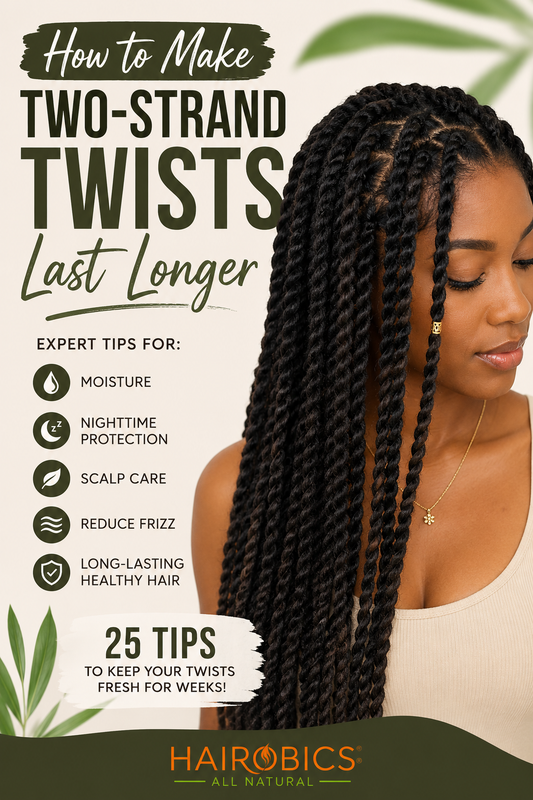
Two-strand twists are one of the most popular protective hairstyles for natural hair because they're versatile, beautiful, and relatively easy to maintain. Whether you're wearing mini twists, chunky twists, shoulder-length twists, or waist-length twists, proper maintenance can help them stay fresh for 4 to 8 weeks while keeping your natural hair healthy underneath.
Unfortunately, many people struggle with:
- Frizzy roots
- Dry twists
- Itchy scalp
- Twists unraveling
- Excessive lint buildup
- Breakage during takedown
- Dull-looking twists
- Hair shrinking excessively
The good news is that making your twists last longer isn't about luck—it's about having the right maintenance routine.
This complete guide explains exactly how to keep your two-strand twists looking salon-fresh while promoting stronger, healthier natural hair.
Why Two-Strand Twists Don't Last
Before learning how to extend the life of your twists, it's important to understand what causes them to age quickly.
The biggest causes include:
- Lack of moisture
- Sleeping without protection
- Touching hair constantly
- Product buildup
- Sweat accumulation
- Dry scalp
- Excessive manipulation
- Skipping scalp care
- Environmental exposure
- Poor installation
Fortunately, every one of these problems has a solution.
Start with Healthy Hair
Long-lasting twists begin before the first section is even twisted.
Preparation matters.
Wash Thoroughly
A clean scalp helps prevent:
- Itching
- Odor
- Product buildup
- Flakes
Always start with freshly cleansed hair.
Deep Condition
Hydrated hair twists better.
Deep conditioning improves:
- Elasticity
- Moisture retention
- Softness
- Strength
Hair that's moisturized from the inside lasts much longer.
Detangle Completely
Knots inside twists create:
- Breakage
- Frizz
- Uneven twists
Take time to detangle every section.
Stretch Your Hair Before Twisting
Slightly stretched hair creates neater twists.
Popular methods include:
- Blow drying on low heat
- Banding
- African threading
- Large braids overnight
Stretched hair helps twists remain smooth longer.
Moisturize Before Twisting
One of the biggest mistakes is twisting dry hair.
Apply moisture before installation.
Focus on:
- Water
- Leave-in conditioner
- Natural oils
- Cream moisturizer
Proper hydration helps twists stay soft for weeks.
Don't Use Too Much Product
Heavy products create buildup.
Too much product leads to:
- Sticky twists
- White residue
- Dirt attraction
- Dull appearance
Use products sparingly.
Less is often more.
Twist Firmly—Not Too Tight
Twists should be secure without causing tension.
Too loose:
- Unravels quickly
Too tight:
- Causes breakage
- Leads to scalp pain
- Can thin edges
Aim for medium tension.
Seal Your Ends
The ends unravel first.
Ways to secure them:
- Finger coils
- Small perm rods
- Twirling the ends
- Slightly curling naturally
Properly sealed ends dramatically increase twist longevity.
Protect Your Hair Every Night
Nighttime care makes the biggest difference.
Never sleep with uncovered twists.
Instead use:
- Satin bonnet
- Satin scarf
- Satin pillowcase
Cotton removes moisture and creates friction.
Pineapple Long Twists
Gather longer twists loosely on top of your head.
Benefits include:
- Less flattening
- Reduced frizz
- Preserved style
- Easier morning routine
Moisturize Weekly
Twists still need hydration.
Use a lightweight moisturizing spray several times each week.
Focus on:
- Mid-lengths
- Ends
- Surface of twists
Avoid soaking them.
Keep Your Scalp Healthy
Healthy hair starts with a healthy scalp.
Dry scalp can cause:
- Flakes
- Itching
- Inflammation
- Scratching
Massage lightweight oil directly onto your scalp.
Don't Scratch
Scratching creates:
- Frizz
- Loose roots
- Scalp irritation
Instead:
Massage gently using fingertips.
Wash Twists Correctly
Yes—you can wash twists.
Use diluted shampoo.
Concentrate on:
- Scalp
- Sweat
- Oil
Avoid excessive rubbing.
Gently squeeze twists clean.
Dry Completely
Never leave twists damp.
Wet twists can develop:
- Odor
- Mildew
- Frizz
Use:
- Microfiber towel
- Cool blow dryer
- Air drying
Ensure twists are completely dry.
Avoid Constant Retwisting
Many people retwist every few days.
That's unnecessary.
Frequent manipulation causes:
- Breakage
- Thin edges
- Frizz
Retwist only when needed.
Protect Twists During Exercise
Sweat shortens the life of twists.
Before workouts:
- Wear sweatband
- Pull twists back
- Cover edges
Afterward:
Allow scalp to dry before removing your head covering.
Reduce Friction
Friction creates fuzzy twists.
Common causes:
- Hoodies
- Scarves
- High collars
- Rough fabrics
Wear smooth materials whenever possible.
Stay Out of Your Hair
Touching twists constantly creates:
- Frizz
- Oil buildup
- Loose roots
Hands transfer dirt and oil.
The less you touch your twists, the longer they stay neat.
Trim Loose Ends Before Twisting
Split ends travel upward.
Fresh trims help twists:
- Stay smoother
- Last longer
- Shed less
Healthy ends equal healthier twists.
Avoid Heavy Oils
Heavy oils attract:
- Dust
- Dirt
- Lint
Instead use lightweight oils sparingly.
Remove Lint Quickly
Dark twists especially collect lint.
Use:
- Tweezers
- Soft toothbrush
- Fingers
Remove lint early before it becomes embedded.
Refresh the Hairline
Usually the front becomes frizzy first.
Instead of redoing every twist:
Only refresh:
- Hairline
- Crown
- Part
This saves time while extending the style.
Keep Edges Moisturized
Edges are delicate.
Protect them by:
- Moisturizing regularly
- Avoiding tight styles
- Limiting brushing
Healthy edges improve the overall appearance of twists.
Eat for Healthy Hair
Beautiful twists begin inside your body.
Prioritize:
Protein
Iron
Vitamin D
Omega-3 fats
Vitamin C
Biotin-rich foods
Hydration
Healthy nutrition supports stronger strands.
Drink Plenty of Water
Hydration affects:
- Elasticity
- Shine
- Moisture retention
Aim for consistent daily water intake.
Know When It's Time to Remove Twists
Keeping twists in too long causes:
- Matting
- Breakage
- Tangles
- Excess shedding
Generally remove twists after:
Mini Twists
6–8 weeks
Medium Twists
4–6 weeks
Large Twists
3–5 weeks
Common Mistakes That Ruin Twists
Avoid these mistakes:
- Sleeping without satin
- Using heavy grease
- Overwashing
- Never moisturizing
- Scratching constantly
- Tight hairstyles
- Leaving twists in too long
- Touching twists all day
- Skipping scalp care
- Ignoring buildup
Weekly Twist Maintenance Schedule
Monday
- Moisturize twists
- Oil scalp lightly
Tuesday
- Leave twists alone
Wednesday
- Refresh edges if necessary
Thursday
- Moisturize lightly
Friday
- Check scalp
- Remove lint
Saturday
- Massage scalp
Sunday
- Wash scalp if needed
- Dry thoroughly
- Cover with satin overnight
Signs Your Twists Are Still Healthy
Healthy twists look:
- Soft
- Defined
- Flexible
- Moisturized
- Neat
Your scalp should feel:
- Comfortable
- Clean
- Free from excessive itching
Signs It's Time to Take Them Down
Remove twists if you notice:
- Severe buildup
- Matting
- Excessive frizz
- Tangling at roots
- Persistent itching
- Bad odor
- Breakage
- Excessive shedding
Waiting too long can damage your natural hair.
Frequently Asked Questions
How long should two-strand twists last?
Most two-strand twists last 4 to 8 weeks, depending on hair texture, twist size, maintenance, and lifestyle.
Can I wash my twists?
Yes. Focus on cleansing your scalp with a diluted shampoo, then dry the twists thoroughly to prevent odor and frizz.
How often should I moisturize twists?
Lightly moisturize your twists 2–3 times per week, or more often if your hair feels dry. Avoid saturating them with product.
Why do my twists unravel so quickly?
Common causes include twisting on very smooth or wet hair, twisting too loosely, failing to seal the ends, or frequent manipulation.
Can I work out with twists?
Absolutely. Protect your twists with a sweatband or scarf during exercise, then allow your scalp to dry afterward before covering your hair again.
Should I oil my scalp every day?
No. Applying a small amount of lightweight oil 1–3 times per week is usually enough. Too much oil can attract dirt and cause buildup.
Final Thoughts
Two-strand twists can be one of the best protective styles for retaining length, reducing daily manipulation, and supporting healthy natural hair—but only if they are cared for properly. A consistent routine that includes cleansing the scalp, moisturizing lightly, protecting your twists at night, minimizing friction, and avoiding excessive manipulation will help your style stay fresh for weeks while keeping your hair strong underneath.
If you're looking to get the most from your twists, remember that healthy hair begins with a healthy scalp. Hydrate regularly, keep buildup under control, and avoid leaving your twists in longer than recommended. By following these simple maintenance habits, you'll enjoy cleaner, softer, and longer-lasting twists while reducing breakage and making your next wash day much easier.