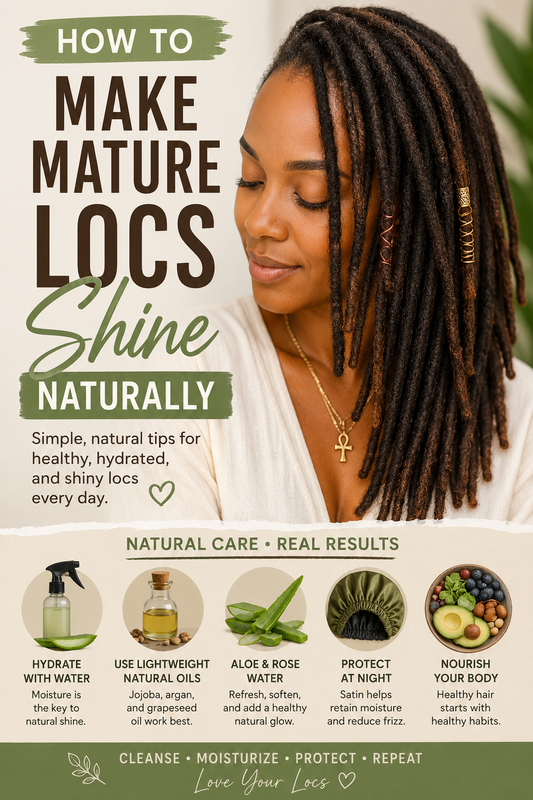
Mature locs are beautiful because they represent patience, consistency, and healthy hair care. After months or years of growth, mature locs become denser, stronger, and more defined. However, many people notice that their locs begin looking dull instead of vibrant.
If your mature locs have lost their shine, don't worry. Dull locs are usually a sign that they need better moisture balance, regular cleansing, and proper maintenance—not heavy grease or excessive oils.
The good news is that you can restore your locs' natural shine without using harsh chemicals or silicone-based products. Healthy, moisturized locs naturally reflect light and appear glossy while remaining lightweight.
In this complete guide, you'll learn:
- Why mature locs become dull
- The difference between shine and oiliness
- The best natural ingredients for shiny locs
- Daily and weekly routines
- Common mistakes that rob locs of shine
- How nutrition affects hair luster
- Long-term maintenance tips
What Makes Mature Locs Lose Their Shine?
Locs naturally become drier as they mature.
Unlike loose hair, natural oils produced by your scalp have difficulty traveling down the length of each loc. Over time this can leave the middle and ends looking dry.
Common causes include:
- Product buildup
- Hard water
- Excessive sun exposure
- Overwashing
- Underwashing
- Dry indoor air
- Lack of hydration
- Heat damage
- Dust accumulation
- Cotton pillowcases
Once buildup coats your locs, light cannot reflect properly, making healthy hair appear dull.
What Healthy Shine Actually Looks Like
Many people mistake greasy locs for healthy locs.
Healthy shine means:
- Smooth appearance
- Soft glow
- Even color
- Lightweight movement
- Moisturized texture
- No sticky residue
Greasy locs usually appear:
- Heavy
- Wet-looking
- Oily
- Sticky
- Dust-attracting
The goal is healthy hydration, not excess oil.
Why Moisture Creates Shine
Moisturized hair has smoother cuticles.
Even though locs are tightly intertwined, the outer layer still reflects light better when hydrated.
Dry locs have:
- Raised cuticles
- Rough texture
- Frizz
- Less flexibility
Hydrated locs become:
- Softer
- Stronger
- More elastic
- Naturally shiny
Start With a Clean Scalp
A dirty scalp can make your locs appear lifeless.
Wash your mature locs every:
- 2–4 weeks for most people
- Weekly if very active
- More often if using heavy products
Use a gentle shampoo that removes dirt without stripping natural moisture.
Signs it's time to wash include:
- Itchy scalp
- Flakes
- Product buildup
- Dull appearance
- Unpleasant odor
Clean locs always shine better than dirty locs.
Clarify Every Few Months
Even natural products eventually leave residue.
Clarify every 6–8 weeks using:
- Clarifying shampoo
- Apple cider vinegar rinse (occasionally)
- Baking soda soaks only if recommended and used sparingly
Clarifying removes invisible buildup that blocks natural shine.
Hydrate With Water First
Water is the best moisturizer for locs.
Instead of applying oil to dry hair:
- Mist with water.
- Allow moisture to absorb.
- Seal lightly if needed.
Hydrated locs naturally become smoother and shinier.
Choose Lightweight Natural Oils
Heavy grease dulls mature locs.
Instead, use lightweight oils such as:
- Jojoba oil
- Grapeseed oil
- Sweet almond oil
- Argan oil
- Sunflower oil
These oils help smooth the outer surface without leaving thick residue.
A little goes a long way.
Use Aloe Vera
Pure aloe vera offers several benefits:
- Hydrates
- Reduces dryness
- Softens locs
- Adds natural shine
- Calms irritated scalp
Light aloe-based sprays are excellent for refreshing mature locs between washes.
Rose Water Refreshes Locs
Rose water is one of the simplest natural moisturizers.
Benefits include:
- Lightweight hydration
- Pleasant scent
- Reduced frizz
- Soft shine
- Daily refresh without buildup
Mist lightly in the morning or before bed.
Protect Your Locs While Sleeping
Cotton pillowcases absorb moisture.
Instead, use:
- Satin bonnet
- Silk scarf
- Satin pillowcase
Benefits include:
- Less dryness
- Reduced lint
- Better moisture retention
- Less frizz
- Shinier locs
Avoid Heavy Butters
While shea butter works well for loose natural hair, it can weigh mature locs down.
Too much butter may:
- Trap lint
- Cause buildup
- Reduce shine
- Make locs feel sticky
Reserve heavier products for specific dry areas if necessary.
Stay Hydrated
Hair health begins inside your body.
Drink enough water throughout the day to support:
- Scalp hydration
- Hair elasticity
- Healthy oil production
Hydrated bodies produce healthier hair over time.
Eat Foods That Support Hair Shine
Nutrition directly affects hair appearance.
Focus on:
Healthy Fats
- Avocados
- Salmon
- Walnuts
- Flaxseed
- Chia seeds
Healthy fats nourish hair follicles.
Protein
Hair is mostly keratin.
Eat:
- Eggs
- Chicken
- Fish
- Beans
- Lentils
- Greek yogurt
Vitamin C
Vitamin C supports collagen production.
Sources include:
- Oranges
- Strawberries
- Bell peppers
- Kiwi
Iron
Low iron may contribute to dull hair.
Choose:
- Spinach
- Lean beef
- Lentils
- Pumpkin seeds
Omega-3 Fatty Acids
Omega-3s help maintain scalp health.
Include:
- Sardines
- Salmon
- Walnuts
- Hemp seeds
Limit Heat Styling
Frequent heat removes moisture.
Avoid excessive:
- Blow drying
- Flat ironing
- Hot combs
When using heat:
- Use low settings
- Limit frequency
- Moisturize afterward
Protect Locs From the Sun
UV exposure dries hair over time.
Protect locs by:
- Wearing hats
- Using scarves
- Staying hydrated
- Moisturizing after outdoor activities
Reduce Friction
Constant rubbing causes dryness.
Watch out for:
- Hoodie fabric
- Wool sweaters
- High collars
- Rough towels
Choose microfiber towels whenever possible.
Trim Loose Ends When Needed
Although locs don't require frequent trimming, removing damaged loose hairs can improve appearance.
Healthy ends reflect light better than frayed ends.
Don't Over-Oil
One of the biggest myths is that more oil equals more shine.
In reality:
Too much oil:
- Collects dust
- Traps lint
- Causes buildup
- Makes washing harder
Instead:
Apply only a few drops when needed.
Massage Your Scalp
Scalp massages improve circulation.
Benefits include:
- Relaxation
- Better scalp health
- Even oil distribution
Massage for 5–10 minutes several times each week.
Avoid Alcohol-Based Products
Products high in drying alcohols remove moisture.
Look for moisturizing ingredients instead.
Moisturize Mature Locs Weekly
Consistency matters more than quantity.
Simple weekly routine:
Monday:
- Light mist
Wednesday:
- Moisture refresh
Friday:
- Scalp massage
Weekend:
- Wash if needed
Keep Your Locs Covered During Cleaning
Household dust settles on hair.
Wear a scarf while:
- Sweeping
- Dusting
- Yard work
- Home renovations
Cleaner locs remain shinier.
Exercise Helps Hair Health
Exercise improves circulation and overall wellness.
Healthy circulation supports:
- Scalp health
- Hair follicles
- Nutrient delivery
Manage Stress
Chronic stress may contribute to:
- Hair shedding
- Dry scalp
- Reduced overall hair quality
Practice:
- Walking
- Meditation
- Prayer
- Deep breathing
- Quality sleep
Common Shine-Stealing Mistakes
Avoid these habits:
- Using heavy grease
- Skipping washes
- Product overload
- Sleeping without protection
- Overusing dry shampoo
- Excessive heat
- Picking at lint
- Not drinking enough water
- Ignoring scalp health
Morning Shine Routine
- Remove satin bonnet.
- Mist locs lightly with water or aloe spray.
- Massage scalp for two minutes.
- Smooth locs gently with hands.
- Add one or two drops of lightweight oil if needed.
Total time:
Less than five minutes.
Evening Shine Routine
- Shake out locs.
- Cover with satin bonnet.
- Sleep on satin pillowcase.
- Keep bedroom humidity comfortable.
This routine helps preserve moisture overnight.
Seasonal Shine Tips
Summer
- Wash more frequently if sweating.
- Protect from UV rays.
- Increase hydration.
Winter
- Moisturize more often.
- Use a humidifier if indoor air is dry.
- Avoid extremely hot showers.
Spring
- Clarify after winter buildup.
- Refresh moisturizing routine.
Fall
- Prepare for colder weather with consistent hydration.
Signs Your Routine Is Working
Healthy mature locs should feel:
- Soft
- Flexible
- Lightweight
- Clean
- Moisturized
They should look:
- Glossy
- Vibrant
- Well-defined
- Smooth
- Healthy
Ingredients That Naturally Improve Shine
Look for products containing:
- Aloe vera
- Jojoba oil
- Grapeseed oil
- Argan oil
- Coconut water
- Rose water
- Vitamin E
- Glycerin (used appropriately in suitable climates)
Avoid excessive amounts of:
- Petroleum
- Mineral oil
- Heavy waxes
- Thick grease
- Silicone buildup
Long-Term Maintenance Checklist
✓ Wash regularly
✓ Clarify every 6–8 weeks
✓ Moisturize with water first
✓ Use lightweight oils sparingly
✓ Protect locs at night
✓ Stay hydrated
✓ Eat nutrient-rich foods
✓ Minimize heat styling
✓ Reduce buildup
✓ Care for your scalp consistently
Frequently Asked Questions
Can mature locs naturally become shiny?
Yes. Healthy, clean, and properly moisturized mature locs naturally develop a soft, healthy sheen without needing heavy oils or greasy products.
How often should I moisturize mature locs?
Most people benefit from lightly moisturizing their locs two to four times per week, depending on climate, activity level, and hair porosity. Avoid saturating them daily if they stay damp for long periods.
Does oil make locs shiny?
Oil can enhance shine when used sparingly, but water-based hydration is the foundation. Applying oil to dry locs may temporarily create gloss without solving underlying dryness.
Why do my locs look dull after washing?
Freshly washed locs can appear dull if they lack moisture or if hard water leaves mineral deposits behind. Follow cleansing with a hydrating mist and consider clarifying periodically if buildup persists.
Can too much product reduce shine?
Yes. Excess oils, waxes, creams, and butters can coat the hair, attract lint, and create buildup that blocks the natural reflection of light, making locs look lifeless.
Final Thoughts
Mature locs don't need heavy grease or expensive treatments to look beautiful. Their healthiest shine comes from a combination of clean hair, balanced moisture, gentle maintenance, and consistent care. By washing regularly, hydrating with water first, using lightweight natural oils sparingly, protecting your locs while you sleep, and supporting hair health from the inside with proper nutrition and hydration, your locs can maintain a vibrant, glossy appearance for years.
Remember that true shine is a reflection of healthy hair—not oily hair. Focus on creating a routine that keeps your locs clean, moisturized, and free of buildup, and you'll enjoy naturally radiant locs that showcase the beauty and maturity of your hair journey.