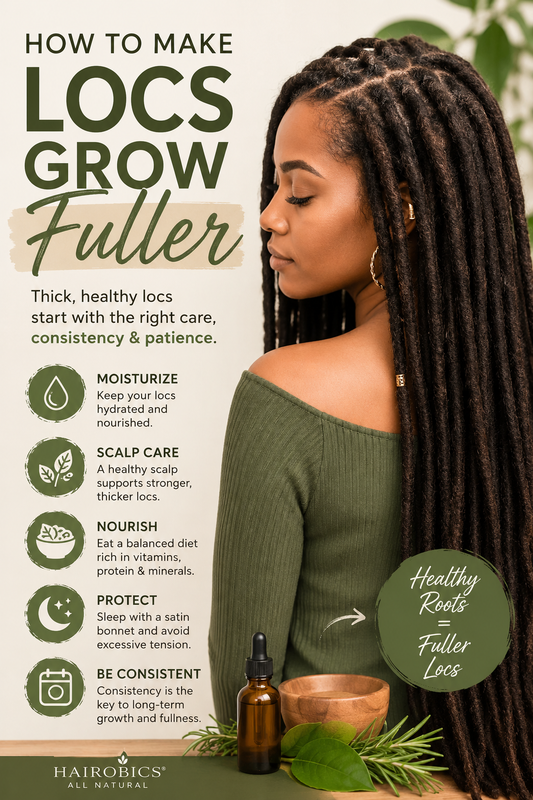
One of the most common concerns among people with locs is not necessarily length—it is fullness. Many people can grow long locs, but achieving thick, healthy, full locs often requires a different approach. If your locs seem thin, flat, weak, or sparse, you may be wondering whether it is possible to make them grow fuller.
The good news is that fuller locs are possible in many cases. While genetics play a role in hair density, there are numerous factors that affect how thick your locs appear and how much hair they retain over time. Proper scalp care, moisture, nutrition, protective habits, and the right products can dramatically improve the overall fullness of your locs.
In this guide, we'll explore everything you need to know about making locs grow fuller, including the causes of thinning locs, the best daily habits for thickness, and proven strategies to maximize hair growth and retention.
What Makes Locs Look Full?
Before discussing solutions, it's important to understand what creates fullness in locs.
Full locs depend on:
- Hair density
- Hair strand thickness
- Healthy follicles
- Moisture retention
- Reduced breakage
- Proper loc maintenance
- Scalp health
Many people focus only on growth, but fullness comes primarily from retaining the hair that grows.
Think of it this way:
If your hair grows half an inch per month but breaks off at the same rate, your locs may never appear fuller.
Hair retention is often more important than hair growth.
Why Are My Locs Thin?
1. Excessive Retwisting
One of the biggest causes of thinning locs is over-retwisting.
Frequent retwisting places stress on the roots and can weaken follicles over time.
Signs include:
- Thin roots
- Visible scalp
- Weak spots
- Locs becoming smaller over time
Most people should retwist every 4 to 8 weeks rather than weekly.
2. Lack of Moisture
Dry locs become brittle and fragile.
When hair lacks moisture:
- Breakage increases
- Locs become rough
- Ends thin out
- Fullness decreases
Moisture is critical for maintaining thickness.
3. Poor Nutrition
Hair is made primarily of protein.
Without adequate nutrients, follicles cannot produce strong hair fibers.
Common nutritional deficiencies linked to thinning hair include:
- Iron
- Zinc
- Vitamin D
- Biotin
- Protein
4. Product Buildup
Heavy buildup can suffocate the scalp and interfere with healthy growth.
Common causes include:
- Heavy waxes
- Thick gels
- Excessive oils
- Infrequent cleansing
5. Stress
Chronic stress can push follicles into a resting phase known as telogen effluvium.
This often causes:
- Increased shedding
- Slower growth
- Reduced density
6. Tight Hairstyles
Styles that place tension on locs can damage follicles.
Examples include:
- Tight ponytails
- Tight barrel twists
- Tight updos
- Heavy extensions
Repeated tension can cause traction alopecia.
Can Thin Locs Become Fuller?
In many cases, yes.
If thinning is caused by:
- Dryness
- Breakage
- Poor scalp health
- Over-manipulation
then fullness can often improve significantly.
However, if follicles have been permanently damaged through years of traction alopecia or scarring, recovery may be more limited.
The earlier you address thinning, the better the outcome.
Start With a Healthy Scalp
Healthy locs begin with a healthy scalp.
Your scalp houses every follicle responsible for producing hair.
Scalp Care Routine
Weekly Cleansing
Wash your locs regularly.
A clean scalp promotes:
- Better circulation
- Reduced inflammation
- Less buildup
- Healthier follicles
Scalp Massage
Massaging the scalp for 5 minutes daily may help improve circulation.
Benefits include:
- Increased blood flow
- Better nutrient delivery
- Relaxation
- Reduced tension
Use Natural Growth Oils
Certain natural oils help nourish the scalp.
Popular options include:
- Jamaican Black Castor Oil
- Rosemary Oil
- Peppermint Oil
- Tea Tree Oil
- Coconut Oil
These oils support scalp health and help reduce dryness.
Moisturize Your Locs Consistently
Dry locs rarely become full locs.
Moisture improves:
- Elasticity
- Strength
- Flexibility
- Retention
The Best Moisture Routine
Step 1: Water
Water is the ultimate moisturizer.
Mist your locs several times per week.
Step 2: Leave-In Moisturizer
Apply a lightweight leave-in product that hydrates without causing buildup.
Step 3: Seal
Use a light oil to lock in moisture.
This helps prevent dryness between wash days.
Eat for Fuller Locs
Healthy hair starts internally.
Protein
Hair is primarily keratin, a protein.
Good sources include:
- Eggs
- Chicken
- Fish
- Beans
- Greek yogurt
Iron
Iron supports oxygen delivery to follicles.
Sources include:
- Spinach
- Lean beef
- Lentils
Healthy Fats
Healthy fats support scalp function.
Sources include:
- Avocados
- Salmon
- Walnuts
- Flaxseed
Hydration
Drink plenty of water daily.
Dehydration often contributes to brittle hair.
Avoid These Habits That Thin Locs
Excessive Retwisting
Give your roots time to recover between maintenance sessions.
Picking at Locs
Constantly pulling apart locs weakens them.
Sleeping Without Protection
Cotton pillowcases absorb moisture and create friction.
Instead use:
- Satin bonnet
- Silk scarf
- Satin pillowcase
Heat Damage
Excessive heat weakens the hair structure.
Limit:
- Blow drying
- Flat ironing
- Direct heat styling
How to Thicken Existing Locs
Combine Smaller Locs
If appropriate, neighboring locs can be combined to create a fuller appearance.
Benefits include:
- Increased thickness
- Greater strength
- Reduced breakage
Repair Weak Areas
Weak spots should be addressed quickly.
A loctician may:
- Reinforce weak areas
- Reattach broken sections
- Combine thin locs
Focus on Root Health
Many people focus only on the length.
The roots determine future thickness.
Healthy roots produce healthier locs.
The Role of Hair Growth Products
Quality hair care products can support:
- Moisture retention
- Scalp health
- Reduced breakage
- Stronger hair
Look for products containing:
- Castor oil
- Aloe vera
- Peppermint
- Rosemary
- Coconut oil
Avoid products loaded with:
- Mineral oil
- Heavy waxes
- Drying alcohols
How Long Does It Take to See Fuller Locs?
Most people notice improvements within:
30 Days
- Improved moisture
- Reduced breakage
- Softer locs
60–90 Days
- Stronger roots
- Better retention
- Healthier scalp
6 Months
- Noticeably fuller appearance
- Reduced thinning
- Greater density
12 Months
- Significant improvement in thickness
- Longer and stronger locs
- Better overall health
Consistency is the key.
Best Nighttime Routine for Fuller Locs
Step 1
Lightly mist locs if needed.
Step 2
Apply a small amount of moisturizer.
Step 3
Massage scalp for 3 to 5 minutes.
Step 4
Cover with a satin bonnet or scarf.
This routine protects moisture while reducing friction.
Signs Your Locs Are Becoming Fuller
Watch for these indicators:
- Less hair shedding
- Stronger roots
- Increased density
- Thicker new growth
- Reduced breakage
- Healthier scalp
These signs often appear before dramatic visual changes.
Common Myths About Fuller Locs
Myth #1: Retwisting More Often Makes Locs Thicker
False.
Excessive retwisting often causes thinning.
Myth #2: Thick Oils Alone Grow Hair
False.
Healthy growth requires:
- Nutrition
- Hydration
- Scalp care
- Consistency
Myth #3: Locs Stop Growing
False.
Hair continues growing beneath locs.
Most issues involve retention, not growth.
Myth #4: Cutting Locs Makes Them Thicker
False.
Cutting does not change follicle activity.
Thickness comes from healthy growth and retention.
A Simple Weekly Routine for Fuller Locs
Monday
Scalp massage and moisturize.
Tuesday
Mist locs with water.
Wednesday
Scalp massage and light oil application.
Thursday
Hydrate locs.
Friday
Scalp massage.
Saturday
Wash and moisturize.
Sunday
Protective styling and recovery.
Consistency produces results.
The Fullness Formula
The formula for fuller locs is simple:
Healthy Scalp + Moisture + Nutrition + Retention + Patience = Fuller Locs
Every action should support one of these five areas.
Avoid shortcuts and focus on long-term hair health.
Conclusion
If you want fuller locs, the answer is not simply finding a miracle product. True fullness comes from maintaining a healthy scalp, keeping your locs moisturized, reducing breakage, eating a nutrient-rich diet, and practicing consistent hair care habits.
Most thinning locs can improve dramatically when the underlying causes are addressed. By focusing on scalp health, moisture retention, gentle maintenance, and healthy lifestyle habits, you can create the ideal environment for thicker, stronger, fuller locs.
Remember that loc growth is a journey. Small daily habits performed consistently over months often produce the most impressive results. Stay patient, stay consistent, and your locs will reward you with the fullness and strength you're looking for.