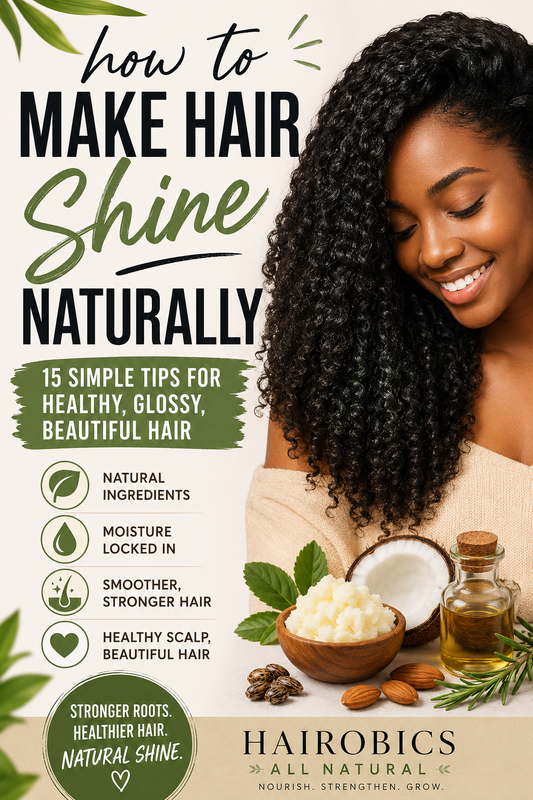
Everyone wants soft, healthy, shiny hair. Whether your hair is curly, coily, straight, wavy, natural, relaxed, braided, or locked, shine is one of the biggest signs of healthy-looking hair. Unfortunately, many people struggle with dull, dry, lifeless strands that refuse to reflect light.
The good news is that you don't need harsh chemicals or expensive salon treatments to achieve beautiful, glossy hair. In most cases, natural shine comes from improving your hair's health from the inside out while protecting the outer layer of each strand.
In this complete guide, you'll learn exactly how to make your hair shine naturally, what causes dull hair, which ingredients actually work, and how to build a routine that keeps your hair looking healthy every day.
Why Does Hair Lose Its Shine?
Hair shines when the cuticle—the outer protective layer of the hair shaft—lies flat and smooth. A smooth surface reflects light evenly, creating a glossy appearance.
When the cuticle becomes rough or damaged, light scatters instead of reflecting, making hair appear:
- Dry
- Frizzy
- Rough
- Brittle
- Dull
- Lifeless
Many daily habits can damage the cuticle without you realizing it.
Common causes include:
- Heat styling
- Overwashing
- Chemical treatments
- Sun exposure
- Hard water
- Product buildup
- Lack of moisture
- Protein imbalance
- Excessive brushing
- Poor nutrition
The healthier your cuticle remains, the shinier your hair naturally becomes.
Can Every Hair Type Be Shiny?
Absolutely.
Many people mistakenly believe that only straight hair can shine.
That's simply not true.
Curly, coily, kinky, and textured hair naturally reflects light differently because the bends and curves scatter light in multiple directions. This means curls may appear less glossy than straight hair—but healthy curls still have beautiful natural shine.
Hair types that can achieve natural shine include:
- Type 1 Straight Hair
- Type 2 Wavy Hair
- Type 3 Curly Hair
- Type 4 Coily Hair
- Locs
- Braids
- Relaxed Hair
- Color-Treated Hair
Healthy hair shines regardless of texture.
1. Moisturize Your Hair Properly
Moisture is the foundation of shiny hair.
Dry strands develop raised cuticles that create a rough surface.
Instead of simply adding more oil, focus on increasing moisture first.
Great moisturizing ingredients include:
- Aloe vera
- Glycerin
- Honey
- Marshmallow root
- Slippery elm
- Coconut water
After moisturizing, seal the moisture inside the hair with a lightweight natural oil.
2. Use Natural Oils
Natural oils help smooth the hair cuticle while locking in moisture.
Some of the best oils include:
Argan Oil
Rich in vitamin E and antioxidants.
Benefits:
- Reduces frizz
- Adds shine
- Softens hair
- Protects against heat
Jojoba Oil
Closely resembles your scalp's natural oils.
Benefits:
- Lightweight
- Non-greasy
- Excellent for scalp health
- Prevents dryness
Jamaican Black Castor Oil
Excellent for thick, textured hair.
Benefits:
- Seals moisture
- Reduces breakage
- Adds healthy sheen
- Supports stronger hair
Coconut Oil
Best used before washing.
Benefits:
- Reduces protein loss
- Improves softness
- Helps smooth cuticles
Olive Oil
A classic natural treatment.
Benefits:
- Deeply conditions
- Softens rough hair
- Increases flexibility
3. Wash Hair Correctly
Many people accidentally strip their hair during wash day.
Tips for healthier washing:
- Use sulfate-free shampoo
- Focus shampoo on the scalp
- Let the suds clean the lengths
- Avoid extremely hot water
- Rinse thoroughly
Hot water opens the cuticle too much.
Finish with cool water to help flatten the cuticle.
4. Deep Condition Weekly
Deep conditioners repair the hair surface while increasing softness.
Look for ingredients like:
- Shea butter
- Avocado oil
- Aloe vera
- Coconut oil
- Honey
- Panthenol
Weekly deep conditioning dramatically improves shine over time.
5. Clarify Monthly
Product buildup blocks shine.
Heavy styling products leave residue that coats hair.
Clarify every 3–4 weeks using:
- Clarifying shampoo
- Apple cider vinegar rinse (diluted)
- Chelating shampoo if you have hard water
Always follow with a moisturizing conditioner.
6. Reduce Heat Styling
Frequent heat damages the cuticle.
High temperatures create tiny cracks in the hair shaft.
Limit:
- Flat irons
- Curling irons
- Blow dryers
If heat is necessary:
- Use a heat protectant
- Stay below 350°F when possible
- Avoid repeated passes
7. Eat for Healthy Hair
Hair health starts inside your body.
Focus on foods rich in:
Protein
- Eggs
- Fish
- Beans
- Greek yogurt
Healthy fats
- Salmon
- Walnuts
- Avocados
- Flaxseed
Vitamin C
- Strawberries
- Oranges
- Kiwi
Iron
- Spinach
- Lean beef
- Lentils
Biotin
- Eggs
- Nuts
- Seeds
Hydration matters too.
Drink plenty of water daily.
8. Protect Hair While Sleeping
Cotton pillowcases absorb moisture.
Instead choose:
- Satin pillowcases
- Silk pillowcases
- Satin bonnets
- Silk scarves
These reduce:
- Friction
- Frizz
- Breakage
- Moisture loss
Hair often looks shinier after making this simple switch.
9. Trim Split Ends
Split ends scatter light.
Even healthy roots can't make damaged ends appear shiny.
Regular trims every 8–12 weeks help:
- Remove damage
- Improve smoothness
- Prevent splits from spreading
10. Massage Your Scalp
Healthy hair begins with a healthy scalp.
Scalp massage may help:
- Increase circulation
- Loosen buildup
- Encourage healthier follicles
- Improve product absorption
Massage for 5 minutes several times each week.
11. Avoid Overwashing
Overwashing strips natural oils.
General guidelines:
Straight Hair:
2–3 times weekly
Curly Hair:
1–2 times weekly
Coily Hair:
Every 7–14 days
Locs:
Every 2–4 weeks depending on lifestyle
Adjust based on your scalp and activity level.
12. Protect Hair From the Sun
UV rays damage hair proteins.
Protect hair by:
- Wearing hats
- Using UV-protective sprays
- Covering hair at the beach
- Rinsing after swimming
13. Reduce Friction
Friction roughens the cuticle.
Avoid:
- Rough towels
- Aggressive brushing
- Tight hairstyles
- Constant touching
Instead use:
- Microfiber towels
- Wide-tooth combs
- Gentle detangling
14. Use Leave-In Conditioner
Leave-in conditioners provide continuous hydration.
Benefits include:
- Less frizz
- Easier detangling
- Softer hair
- Longer-lasting shine
Choose one suitable for your hair type to avoid weighing hair down.
15. Be Consistent
Healthy hair doesn't become shiny overnight.
Natural shine develops after weeks of consistent care.
Stick with:
- Gentle cleansing
- Weekly deep conditioning
- Moisture
- Protective styling
- Healthy eating
The cumulative results are worth it.
Natural DIY Shine Treatments
Honey Hair Mask
Ingredients:
- 2 tablespoons honey
- 2 tablespoons olive oil
Leave on for 20 minutes.
Aloe Vera Mask
Mix:
- Fresh aloe vera gel
- Coconut oil
Excellent for hydration.
Avocado Hair Mask
Blend:
- One ripe avocado
- Olive oil
- Honey
Ideal for dry hair.
Yogurt Hair Mask
Mix:
- Plain yogurt
- Honey
Leaves hair softer and smoother.
Foods That Promote Shinier Hair
Add these regularly:
- Salmon
- Sardines
- Eggs
- Almonds
- Walnuts
- Pumpkin seeds
- Blueberries
- Spinach
- Sweet potatoes
- Bell peppers
- Beans
- Lentils
- Greek yogurt
Nutrition supports healthier hair growth over time.
Common Mistakes That Prevent Shiny Hair
Avoid these habits:
- Washing with very hot water
- Skipping conditioner
- Overusing dry shampoo
- Heavy product buildup
- Heat styling every day
- Brushing wet hair aggressively
- Sleeping without protection
- Ignoring split ends
- Using harsh shampoos
- Not drinking enough water
Correcting these habits often improves shine within a few weeks.
Natural Hair Routine for Maximum Shine
Morning
- Lightly mist hair with water or a hydrating spray.
- Apply a small amount of leave-in conditioner if needed.
- Seal moisture with a few drops of a lightweight natural oil.
- Style gently to minimize friction.
Wash Day
- Cleanse the scalp with a sulfate-free shampoo.
- Apply a moisturizing conditioner.
- Deep condition for 20–30 minutes.
- Rinse with cool water.
- Add a leave-in conditioner and seal with a natural oil.
Night
- Gently detangle if necessary.
- Protect hair with a satin bonnet or silk scarf.
- Sleep on a satin pillowcase for extra protection.
Following this routine consistently helps hair retain moisture, reduce frizz, and develop a healthy natural shine over time.
Frequently Asked Questions
Why is my hair dull even after conditioning?
Hair can still appear dull because of product buildup, hard water minerals, heat damage, or a rough cuticle. Clarifying monthly and maintaining a consistent moisturizing routine often restores shine.
Does cold water make hair shinier?
A cool rinse can help the cuticle lie flatter after conditioning, which may improve light reflection and leave hair looking smoother and shinier.
Can natural oils make hair shiny?
Yes. Oils such as argan, jojoba, olive, and Jamaican black castor oil help smooth the hair's outer layer and reduce moisture loss, giving hair a healthier-looking sheen.
How long does it take to restore natural shine?
If dullness is caused by dryness or buildup, you may notice improvement within a few washes. Hair that has significant heat or chemical damage may require several weeks or months of consistent care.
Is shiny hair always healthy?
Not necessarily. Some silicone-based products create temporary shine without improving hair health. Natural shine that comes from proper moisture, gentle care, and a healthy cuticle tends to last longer.
Final Thoughts
Learning how to make hair shine naturally is less about finding a single miracle product and more about building healthy habits that protect your hair every day. Moisturizing consistently, reducing heat damage, using nourishing natural oils, eating a balanced diet, and protecting your hair while you sleep all work together to improve the condition of the hair cuticle—the key to long-lasting shine.
Whether your hair is natural, relaxed, curly, coily, braided, or in locs, healthy hair can develop a beautiful glow with patience and consistent care. Focus on improving the health of your strands rather than chasing temporary cosmetic fixes, and your hair will reward you with softness, strength, and natural shine that lasts.