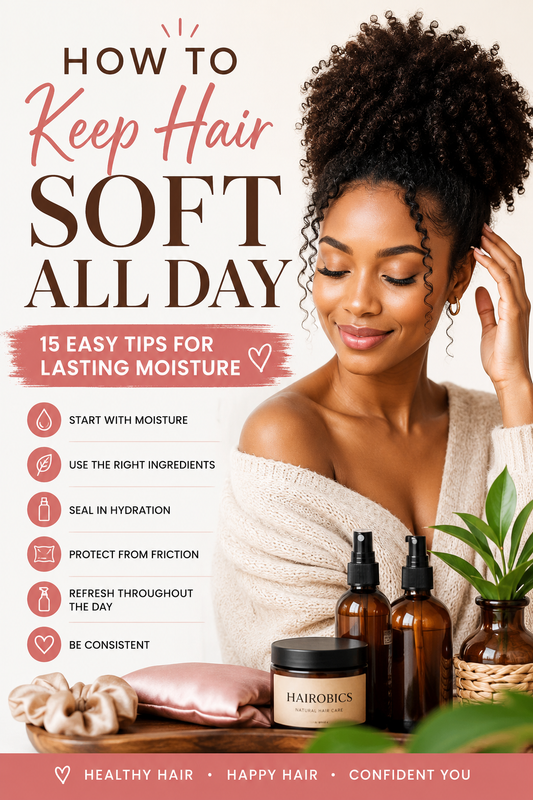
Have you ever started your morning with soft, moisturized hair only to find it feeling dry, rough, or brittle by lunchtime? You're not alone. Whether you have natural hair, curly hair, locs, braids, or chemically treated hair, maintaining softness throughout the day can feel like a constant battle.
Hair loses moisture for many reasons, including dry weather, heat styling, harsh shampoos, friction from clothing, and even the products you use. Fortunately, keeping your hair soft all day isn't about using dozens of products—it's about creating a moisture-retention routine that works with your hair instead of against it.
In this guide, you'll learn exactly why hair dries out during the day, what ingredients actually help lock in moisture, and the best daily habits that leave your hair feeling soft from morning until bedtime.
Table of Contents
- Why Hair Stops Feeling Soft
- What Causes Hair to Dry Out During the Day?
- Signs Your Hair Is Losing Moisture
- The Science Behind Soft Hair
- The Best Daily Hair Care Routine
- Ingredients That Help Hair Stay Soft
- Common Mistakes That Cause Dry Hair
- Hair-Type Specific Tips
- Foods That Support Healthy Hair
- Frequently Asked Questions
- Final Thoughts
Why Hair Stops Feeling Soft
Hair doesn't actually produce moisture.
Your scalp produces natural oils (sebum), but once those oils leave the scalp, they must travel down the hair shaft. Straight hair allows oil to travel easily, while curly and coily hair naturally slows this process.
That's one reason textured hair often becomes dry faster than straight hair.
Throughout the day, your hair is constantly exposed to moisture-robbing conditions like:
- Sun exposure
- Wind
- Air conditioning
- Indoor heating
- Sweat
- Humidity changes
- Cotton clothing
- Hats
- Pillow friction (from the night before)
Each of these gradually removes moisture from your hair.
What Causes Hair to Dry Out During the Day?
1. Low Moisture Levels
Hair that begins the day dry will almost always become drier as the hours pass.
Moisture must be added before it can be sealed in.
2. Damaged Hair Cuticles
Healthy hair has flat cuticles that lock moisture inside.
When the cuticle becomes damaged from heat, coloring, or harsh chemicals, moisture escapes much faster.
Signs include:
- Rough texture
- Dull appearance
- Frizz
- Breakage
- Split ends
3. Washing Too Frequently
Daily shampooing can strip away natural oils.
For many people with textured hair, washing one to two times per week is often enough, depending on lifestyle and scalp needs.
4. Heat Styling
Flat irons, blow dryers, and curling irons remove moisture from inside the hair shaft.
Repeated heat styling leaves hair stiff instead of silky.
5. Hard Water
Minerals from hard water leave buildup on the hair.
This buildup blocks moisture from entering the hair shaft.
Clarifying occasionally can help restore softness.
6. Wrong Hair Products
Some products contain large amounts of drying alcohols or heavy ingredients that leave hair stiff instead of hydrated.
Choosing moisturizing products formulated for your hair type can make a noticeable difference.
Signs Your Hair Is Losing Moisture
Your hair may need additional hydration if you notice:
- Rough texture
- Hair feels crunchy
- Ends feel brittle
- Increased tangles
- Frizz throughout the day
- Lack of shine
- Breakage while combing
- Hair feels lighter but drier
- Difficulty styling
- Hair snaps easily
The sooner these signs are addressed, the easier it is to restore softness.
The Science Behind Soft Hair
Soft hair is the result of three key factors:
Moisture
Water provides flexibility.
Without enough moisture, hair becomes stiff and fragile.
Protein Balance
Hair is primarily made of keratin protein.
Too little protein can weaken strands, while too much protein may make hair feel rigid. A balanced routine that includes both moisture and occasional protein treatments helps maintain softness.
Sealed Cuticles
When the cuticle layer lies flat:
- Light reflects better
- Hair feels smoother
- Moisture stays inside longer
- Hair tangles less
This is why conditioners and leave-in moisturizers are important—they help smooth the cuticle.
The Best Daily Hair Care Routine
Morning
Start by gently fluffing or separating your hair with your fingers instead of pulling through it with a brush.
If your hair feels dry, lightly mist it with water or a moisturizing leave-in spray.
Apply a small amount of moisturizer to the mid-lengths and ends, where dryness is most common.
Seal in that moisture with a lightweight oil or nourishing hair treatment, focusing on the ends.
Avoid applying heavy products directly to the scalp unless your scalp specifically needs hydration.
Midday
If your hair begins to lose softness, resist the urge to add thick creams repeatedly.
Instead:
- Lightly mist the hair.
- Smooth the surface with your hands.
- Add a tiny amount of lightweight oil only if needed.
- Minimize touching your hair throughout the day, as constant manipulation can increase frizz and moisture loss.
Evening
Before bed, detangle gently if necessary.
Protect your hair with a satin or silk bonnet, scarf, or pillowcase to reduce friction and help preserve the moisture you've built up during the day.
The Best Ingredients for Soft Hair
Not every hair product hydrates your hair. Some simply coat the strands, while others actually help attract and retain moisture. Knowing the difference can make a huge impact on how your hair feels throughout the day.
Aloe Vera
Aloe vera is one of the best natural moisturizers for hair. It contains vitamins, minerals, amino acids, and enzymes that help hydrate the hair shaft without leaving it greasy.
Benefits include:
- Lightweight hydration
- Softer curls
- Reduced frizz
- Added shine
- Calmer scalp
Glycerin
Glycerin is a humectant, meaning it attracts moisture from the surrounding air.
It works especially well in moderate humidity, helping hair stay hydrated longer. In extremely dry climates, however, pairing glycerin with a sealing oil or butter is important to prevent moisture loss.
Coconut Oil
Coconut oil penetrates the hair shaft better than many other oils, helping reduce protein loss and improve softness. Because it can feel heavy on fine hair, use it sparingly.
Jojoba Oil
Jojoba oil closely resembles the scalp's natural sebum, making it excellent for softening hair without leaving buildup.
Benefits:
- Lightweight
- Adds shine
- Helps reduce dryness
- Smooths flyaways
Argan Oil
Argan oil is rich in vitamin E and antioxidants. It helps smooth the cuticle, tame frizz, and leave hair feeling silky.
Shea Butter
For thick, coarse, and tightly coiled hair, shea butter creates a protective barrier that slows moisture loss.
A small amount is usually enough to keep hair soft without weighing it down.
15 Proven Tips to Keep Hair Soft All Day
1. Start with Clean Hair
Product buildup prevents moisture from reaching the hair shaft.
Use a clarifying shampoo occasionally to remove residue, then follow with a moisturizing conditioner.
2. Deep Condition Weekly
Deep conditioning replenishes moisture that daily products cannot replace.
Aim for 20–30 minutes with a deep conditioner once a week.
3. Apply Products on Damp Hair
Hair absorbs moisture more effectively when it's slightly damp.
Instead of waiting until your hair is dry, apply leave-in products immediately after washing.
4. Layer Moisture Correctly
A simple layering routine can help lock in hydration:
- Water or leave-in conditioner
- Moisturizer or cream
- Lightweight oil to seal
This method helps keep moisture inside the hair shaft for longer.
5. Avoid Overusing Heat
Frequent blow-drying, flat ironing, or curling can strip moisture from the hair.
If you use heat:
- Apply a heat protectant.
- Use the lowest effective temperature.
- Limit heat styling to special occasions when possible.
6. Trim Split Ends
Split ends make hair feel rough and tangled.
Regular trims every few months help keep the ends smooth and reduce breakage.
7. Drink Plenty of Water
Healthy hair starts from within.
Staying hydrated supports your body's overall health, including your scalp and hair.
8. Protect Hair from the Weather
Wind, direct sunlight, and cold air can dry out your hair.
Protective styles, hats with satin linings, or scarves can help reduce environmental damage.
9. Sleep on Satin or Silk
Cotton pillowcases absorb moisture and create friction.
Switching to satin or silk helps hair retain moisture overnight and reduces tangles.
10. Don't Overload Products
Using too many creams, oils, and gels can create buildup that actually leaves hair feeling stiff.
Sometimes, less is more.
11. Minimize Touching Your Hair
Running your hands through your hair repeatedly can transfer oils, create frizz, and disturb your style.
Try to style it once and leave it alone as much as possible.
12. Choose Protective Hairstyles
Protective styles help reduce daily manipulation and moisture loss.
Examples include:
- Twists
- Loose braids
- Buns
- Flat twists
- Properly maintained locs
Make sure styles aren't too tight, as excessive tension can damage the hairline.
13. Moisturize the Ends
The ends of your hair are the oldest and driest part.
Giving them a little extra attention with leave-in conditioner or oil can help prevent dryness and split ends.
14. Eat a Nutrient-Rich Diet
Foods rich in:
- Protein
- Iron
- Zinc
- Omega-3 fatty acids
- Vitamins A, C, D, and E
support healthy hair growth and stronger strands over time.
15. Stay Consistent
Soft hair isn't achieved with one product—it's the result of a consistent routine.
Daily care, regular conditioning, and gentle handling work together to improve hair texture over time.
Common Mistakes That Make Hair Feel Dry
Even with a good routine, these habits can undo your progress:
- Washing with very hot water
- Skipping conditioner
- Using harsh shampoos too often
- Applying heavy oils to dry hair without adding moisture first
- Sleeping without protecting your hair
- Excessive brushing or combing
- Ignoring product buildup
- Overusing protein treatments
- Wearing tight hairstyles for long periods
- Using heat tools without protection
Correcting just a few of these habits can make a noticeable difference in how soft your hair feels.
Hair Care Isn't One-Size-Fits-All
Different hair types have different moisture needs. Fine hair may do best with lightweight products, while thicker, coily textures often benefit from richer creams and sealing butters. Paying attention to how your hair responds—and adjusting your routine accordingly—is one of the best ways to maintain softness throughout the day.
Natural hair, especially coily and kinky textures, tends to lose moisture more quickly because the scalp's natural oils have a harder time traveling down the twists and bends of each strand. The key is not simply adding more product, but building a routine that helps your hair retain moisture.
A simple routine includes:
- Cleanse with a moisturizing shampoo once every 7–10 days.
- Follow with a rich conditioner, paying extra attention to the ends.
- Apply a leave-in conditioner while your hair is still damp.
- Seal in moisture with a lightweight oil or nourishing butter.
- Sleep with a satin bonnet or on a satin pillowcase.
- Refresh your hair with a light mist of water or a leave-in spray when needed instead of layering on heavy creams throughout the day.
Consistency is what keeps natural hair soft—not constantly changing products.
How to Keep Curly Hair Soft
Curly hair often struggles with dryness because its spiral shape slows the movement of natural scalp oils.
To maintain soft, bouncy curls:
- Use sulfate-free cleansers when appropriate for your hair.
- Deep condition weekly.
- Avoid brushing dry curls.
- Apply styling products while hair is damp.
- Let curls dry naturally or diffuse on low heat.
- Protect your curls overnight with a satin bonnet or pineapple hairstyle.
Keeping curls moisturized helps reduce frizz while improving definition.
How to Keep Locs Soft
Healthy locs should feel flexible rather than hard or brittle.
To keep locs soft:
- Wash your scalp regularly to prevent buildup.
- Moisturize locs with a lightweight water-based spray.
- Seal in moisture with a light oil if needed.
- Avoid heavy waxes that can leave residue.
- Cover your locs with satin or silk at night.
- Separate new growth gently to prevent excessive matting.
Locs thrive on hydration and cleanliness rather than heavy product use.
How to Keep Braids Soft
Braids protect your natural hair, but the hair underneath still needs moisture.
For softer braids:
- Moisturize your scalp several times a week.
- Lightly mist the length of your braids with a hydrating spray.
- Avoid applying thick creams that create buildup.
- Wash your scalp when needed using a diluted shampoo.
- Protect your braids while sleeping.
Well-moisturized braids are more comfortable, less itchy, and help keep your natural hair healthy until it's time to remove the style.
How to Keep Relaxed Hair Soft
Relaxed hair can become dry because the chemical process changes the hair's structure.
To maintain softness:
- Use moisturizing shampoos and conditioners.
- Alternate moisture treatments with occasional protein treatments.
- Limit heat styling.
- Trim damaged ends regularly.
- Apply a lightweight leave-in conditioner after each wash.
Balanced moisture and gentle handling are essential for relaxed hair.
Frequently Asked Questions
Why does my hair get dry only a few hours after styling?
Hair can lose moisture because of dry air, wind, sun exposure, friction from clothing, or products that don't provide lasting hydration. Starting with well-moisturized hair and sealing in that moisture can help.
Should I oil my hair every day?
Not necessarily. Oils help reduce moisture loss, but they don't replace water. Focus on hydrating your hair first, then use a small amount of oil if your hair benefits from it.
Is soft hair healthier?
Softness can be a sign that your hair is well-moisturized and the cuticle is smooth, but healthy hair also depends on strength, elasticity, and gentle care.
Why does my hair feel crunchy?
Crunchiness is often caused by product buildup, drying styling products, excess protein, or lack of moisture. Clarifying occasionally and using moisturizing products can help restore softness.
Does drinking water make hair softer?
Staying hydrated supports overall health, including the scalp, but hair softness also depends on external care such as conditioning, moisturizing, and protecting the hair from damage.
Can humidity make hair dry?
Humidity affects hair differently depending on hair type and the products used. Some people experience frizz as moisture enters the hair, while others may still feel dryness if the cuticle is damaged or products aren't retaining moisture effectively.
Final Thoughts
Keeping your hair soft all day doesn't require an overflowing cabinet of products. It comes down to understanding your hair's moisture needs, using nourishing ingredients, and following a routine consistently.
Start with clean, conditioned hair, apply moisturizing products while your hair is damp, protect it from friction and harsh weather, and avoid habits that strip away hydration. Over time, these simple practices can leave your hair feeling smoother, softer, and easier to manage from morning until night.
Remember that every head of hair is different. Pay attention to how your hair responds to products and routines, and don't be afraid to make small adjustments until you find what works best for you.
Conclusion
Soft hair is healthy-looking hair, and healthy-looking hair starts with daily care. Whether you wear natural curls, coils, locs, braids, or relaxed styles, focusing on moisture retention, gentle handling, and consistent maintenance can dramatically improve the feel and appearance of your hair.
If you're looking to support your moisture routine, consider incorporating nourishing, all-natural hair care products that are formulated to hydrate the hair and scalp without weighing your hair down. Combined with the tips in this guide, a consistent routine can help you enjoy softer, healthier-looking hair every day.