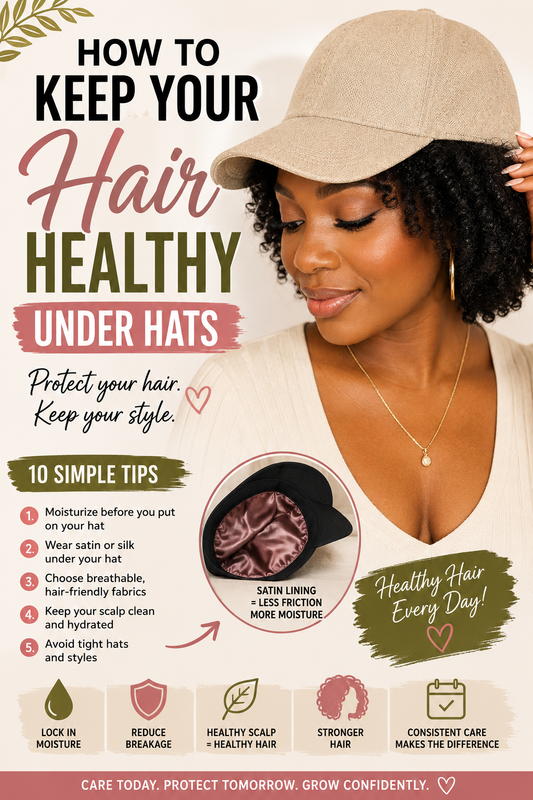
Whether you're wearing a baseball cap, wide-brim hat, beanie, bucket hat, hard hat, or winter cap, hats are a stylish and practical accessory. They protect your face from the sun, keep you warm during cold weather, and complete almost any outfit. However, wearing hats every day can take a toll on your hair if you aren't careful.
Many people notice flattened curls, dry strands, itchy scalps, frizz, tangles, or even breakage after wearing hats for extended periods. While hats themselves don't damage hair, the friction, trapped moisture, lack of airflow, and improper hair care habits associated with hat use can negatively affect your hair's health over time.
The good news is that you don't have to choose between protecting your head and protecting your hair. With the right routine, you can enjoy wearing hats while maintaining healthy, strong, moisturized hair.
In this guide, you'll learn everything you need to know about keeping your hair healthy under hats, whether you have natural hair, curls, locs, braids, relaxed hair, or protective styles.
Table of Contents
- Why Hats Affect Hair
- Can Hats Cause Hair Loss?
- Common Problems Caused by Hats
- How to Prepare Hair Before Wearing a Hat
- The Best Hairstyles to Wear Under Hats
- Choosing the Right Hat Material
- Moisture Tips for Healthy Hair
- Scalp Care While Wearing Hats
- Daily Habits That Prevent Breakage
- Hair Care Tips for Natural Hair, Locs, Braids, and Curly Hair
- Frequently Asked Questions
- Final Thoughts
Why Hats Affect Hair
Your hair naturally moves throughout the day. When you wear a hat, your hair stays compressed against your scalp for hours. Combined with sweat, friction, and heat, this environment can lead to several issues.
Common hat-related hair problems include:
- Dry hair
- Flattened curls
- Frizz
- Broken strands
- Split ends
- Itchy scalp
- Excess oil buildup
- Tangles
- Matting
- Scalp irritation
The amount of damage depends on how long you wear your hat, the material it's made from, and how well you care for your hair before and after wearing it.
Can Wearing Hats Cause Hair Loss?
This is one of the biggest myths in hair care.
The answer is no—wearing a properly fitting hat does not directly cause hair loss.
Hair loss is more commonly caused by:
- Genetics
- Hormonal changes
- Poor nutrition
- Stress
- Medical conditions
- Tight hairstyles
- Excessive chemical processing
However, hats that are extremely tight can contribute to unnecessary tension and friction, which may increase hair breakage around the hairline over time.
The goal is to wear hats that fit comfortably without squeezing your scalp.
Common Hair Problems Caused by Hats
1. Dry Hair
Many hat fabrics absorb moisture from your hair.
Cotton, wool, and rough synthetic materials can pull natural oils away from your strands, leaving them dry and brittle.
Dry hair breaks much easier than moisturized hair.
2. Friction
Every time your hat shifts, your hair rubs against the fabric.
This repeated rubbing weakens the hair cuticle.
Over time, friction may lead to:
- Frizz
- Split ends
- Single-strand knots
- Breakage
- Tangling
3. Sweat Buildup
Warm weather often causes sweating underneath hats.
When sweat mixes with dirt, oil, and styling products, it can clog the scalp and create an unhealthy environment.
Without regular cleansing, buildup can contribute to itching, flakes, and unpleasant odors.
4. Flattened Hairstyles
Curly hair loses volume easily under hats.
Natural curls may become compressed, causing:
- Loss of definition
- Flat roots
- Uneven curl patterns
- Increased frizz after removing the hat
5. Edge Damage
If your hat constantly rubs against your hairline, your delicate edges may become weaker over time.
People who wear helmets or fitted caps daily should pay special attention to protecting this area.
How to Prepare Hair Before Wearing a Hat
Healthy hair starts before the hat goes on.
Moisturize First
Dry hair and hats are a bad combination.
Before putting on your hat, lightly moisturize your hair using:
- Water-based leave-in conditioner
- Hair moisturizer
- Lightweight natural oils
Well-moisturized hair experiences less friction.
Seal in Moisture
After moisturizing, seal hydration into your strands with nourishing oils.
Look for ingredients like:
- Jamaican Black Castor Oil
- Avocado Oil
- Coconut Oil
- Grapeseed Oil
- Argan Oil
These oils help reduce moisture loss throughout the day.
Protect Your Ends
Hair ends are the oldest and weakest part of your hair.
Before wearing hats:
- Twist your ends
- Braid your hair
- Tuck ends inside protective styles
Keeping ends protected reduces breakage significantly.
Wear Satin or Silk Under Your Hat
One of the easiest upgrades you can make is adding a satin barrier.
Instead of allowing rough fabrics to rub against your hair, wear:
- Satin bonnet
- Satin cap
- Silk scarf
- Satin-lined beanie
- Satin-lined baseball cap
Satin dramatically reduces friction while helping your hair retain moisture.
Many people notice healthier hair simply by switching to satin-lined hats.
Choose Hairstyles That Work With Hats
Some hairstyles handle hats much better than others.
Excellent choices include:
Loose Braids
Braids keep hair organized while reducing tangles.
Avoid making them too tight.
Low Puff
A low puff sits comfortably underneath most hats without placing stress on the hairline.
Flat Twists
Flat twists reduce friction while protecting your strands throughout the day.
Loose Bun
A low loose bun minimizes tangling while maintaining moisture.
Avoid high buns that create pressure under hats.
Protective Styles
Styles like:
- Two-strand twists
- Cornrows
- Box braids
- Locs
can all work well with hats when kept moisturized.
Pick the Right Hat Material
Not all hats are equally hair-friendly.
Best Materials
- Satin-lined fabrics
- Silk-lined hats
- Bamboo blends
- Soft fleece with satin lining
Materials That Require Extra Care
- Cotton
- Wool
- Acrylic
- Rough polyester
These fabrics aren't necessarily bad—they simply require extra moisture protection.
Don't Wear Hats on Wet Hair
Putting a hat on soaking wet hair traps moisture against the scalp.
This can lead to:
- Odor
- Increased frizz
- Weakened strands
- Scalp irritation
Whenever possible, allow your hair to dry completely before putting on your hat.
Even air-drying for 20–30 minutes can make a difference.
Give Your Hair Time to Breathe
If possible, remove your hat periodically throughout the day.
Allowing fresh air to circulate helps:
- Reduce sweat buildup
- Refresh curls
- Keep the scalp comfortable
- Prevent excessive flattening
Even five minutes without your hat can help.
Keep Your Scalp Clean
Healthy hair begins with a healthy scalp. When you wear hats regularly, your scalp experiences more heat, less airflow, and increased exposure to sweat and natural oils. Over time, this combination can lead to buildup if you don't maintain a consistent cleansing routine.
Common signs your scalp needs attention include:
- Itching
- Flaking
- Excess oil
- Unpleasant odor
- Tenderness
- Product buildup
Choose a sulfate-free shampoo that cleanses without stripping away your hair's natural moisture. If you wear hats daily because of work, sports, or weather, aim to cleanse your scalp regularly based on your hair type and activity level.
Moisturize Your Scalp
Many people focus only on moisturizing their hair strands, but your scalp needs hydration too.
A dry scalp can cause:
- Flaking
- Tightness
- Irritation
- Increased itching
Apply a lightweight scalp oil a few times each week to help keep your scalp balanced. Massage it gently with your fingertips to encourage circulation and distribute the oil evenly.
A nourishing botanical scalp oil, such as Hairobics Scalp Rejuvenator Oil, can help maintain moisture while supporting an overall healthy scalp care routine.
Protect Your Edges
The hair around your temples and hairline is among the most delicate on your head. Tight-fitting hats, helmets, and beanies can repeatedly rub against this area, increasing the risk of breakage.
To protect your edges:
- Avoid hats that squeeze your head.
- Wear a satin scarf underneath fitted hats.
- Moisturize your hairline regularly.
- Don't pull your hair back too tightly before putting on a hat.
- Give your edges a break from constant tension whenever possible.
Best Hair Care Routine for Natural Hair Under Hats
Natural hair benefits from moisture retention and gentle handling.
A simple daily routine includes:
Morning
- Lightly mist hair with water.
- Apply a leave-in conditioner.
- Seal moisture with a lightweight oil.
- Style hair in a low-manipulation hairstyle.
- Put on a satin-lined hat.
Evening
- Remove the hat.
- Shake out or fluff your hair.
- Massage your scalp for several minutes.
- Cover hair with a satin bonnet before bed.
This routine helps reduce friction while maintaining hydration throughout the day.
Caring for Curly Hair Under Hats
Curly hair often loses definition after wearing hats.
To refresh curls:
- Mist with water.
- Apply a small amount of curl cream or leave-in conditioner.
- Scrunch curls upward.
- Allow hair to air dry.
Avoid brushing dry curls after removing your hat, as this can create frizz and disrupt curl definition.
Caring for Braids Under Hats
Braids are an excellent protective style, but they still need care.
Daily maintenance includes:
- Moisturizing your scalp several times each week.
- Spraying braids with a lightweight moisturizing mist.
- Sleeping with a satin bonnet.
- Avoiding hats that flatten freshly installed braids.
If your braids become damp from sweat, let them dry completely before covering them again.
Caring for Locs Under Hats
Locs generally tolerate hats well, but trapped moisture can become an issue.
Tips for healthy locs:
- Keep your scalp clean.
- Allow locs to dry thoroughly after washing.
- Avoid wearing hats over wet locs.
- Use lightweight oils instead of heavy products that cause buildup.
- Wash hats regularly to prevent transferring dirt and oils back onto your hair.
Caring for Relaxed Hair Under Hats
Relaxed hair is often more prone to dryness because chemical processing can weaken the hair shaft.
Protect relaxed hair by:
- Deep conditioning weekly.
- Using protein treatments as needed.
- Limiting heat styling.
- Applying leave-in conditioner before wearing hats.
- Choosing satin-lined hats whenever possible.
Keeping chemically treated hair moisturized helps minimize breakage.
Stay Hydrated
Healthy hair starts from within.
Drinking enough water supports overall scalp health and helps maintain hair elasticity.
Aim to:
- Drink water consistently throughout the day.
- Eat fruits and vegetables with high water content.
- Reduce excessive sugary beverages when possible.
Hydration works alongside your external hair care routine to keep strands flexible and less prone to breakage.
Eat Hair-Friendly Foods
Your hair depends on nutrients to grow and remain strong.
Include foods rich in:
- Protein
- Iron
- Zinc
- Omega-3 fatty acids
- Biotin
- Vitamins A, C, D, and E
Examples include:
- Eggs
- Salmon
- Spinach
- Sweet potatoes
- Berries
- Nuts
- Seeds
- Beans
- Greek yogurt
A balanced diet supports healthier hair regardless of how often you wear hats.
Wash Your Hats Regularly
Dirty hats collect:
- Sweat
- Oils
- Dust
- Dead skin cells
- Product residue
- Environmental pollutants
Every time you wear an unwashed hat, these substances can transfer back onto your scalp.
Wash hats according to the manufacturer's care instructions. If you wear one daily, clean it regularly to help maintain a healthier environment for your hair.
Avoid Overstyling After Removing Your Hat
Many people immediately grab a brush or comb to fix "hat hair."
Instead:
- Gently fluff roots with your fingers.
- Shake out your curls.
- Use a wide-tooth comb only if necessary.
- Apply a light moisturizing mist if needed.
Less manipulation means less breakage.
Common Mistakes to Avoid
Even a good hair care routine can be undermined by a few habits.
Avoid:
- Wearing extremely tight hats.
- Putting hats on soaking wet hair.
- Ignoring scalp buildup.
- Skipping regular moisturizing.
- Wearing dirty hats repeatedly.
- Overusing heavy oils that attract dirt.
- Leaving hats on all day without breaks.
- Constantly pulling hats on and off roughly.
Small adjustments can significantly improve your hair's long-term health.
Seasonal Tips
Summer
- Choose breathable hats.
- Wash hats more often.
- Cleanse your scalp regularly.
- Stay hydrated.
- Protect hair from UV exposure.
Winter
Cold weather often causes dry hair.
During winter:
- Increase deep conditioning.
- Wear satin-lined beanies.
- Seal moisture with lightweight oils.
- Avoid overheating your hair under thick wool hats.
Your routine should adapt with the seasons to keep your hair healthy year-round.
Frequently Asked Questions
Is it okay to wear a hat every day?
Yes. Wearing a hat every day is generally safe as long as it fits properly and you maintain a healthy hair care routine. The hat itself isn't usually the problem—issues arise from friction, trapped sweat, lack of moisture, or wearing dirty hats. Choosing satin-lined hats and moisturizing your hair regularly can help minimize these concerns.
Do hats stop hair from growing?
No. Hair grows from the follicles beneath your scalp, so wearing a hat does not stop hair growth. However, excessive friction, poor scalp care, and breakage can make it seem like your hair isn't growing because you're losing length faster than you're retaining it.
Can hats make dandruff worse?
They can if sweat, oil, and product buildup are allowed to accumulate. Regular scalp cleansing and washing your hats frequently can help keep dandruff and irritation under control.
Should I wear a bonnet under my hat?
If possible, yes. A satin bonnet, satin scarf, or satin-lined cap creates a protective barrier between your hair and rough fabrics, helping to reduce friction, retain moisture, and minimize breakage.
What hairstyles work best under hats?
Some of the best styles include:
- Low puff
- Flat twists
- Two-strand twists
- Cornrows
- Low bun
- Loose braids
- Well-maintained locs
These styles reduce tangling and distribute pressure more evenly than bulky hairstyles.
How often should I wash my hats?
If you wear the same hat daily, aim to wash it every one to two weeks—or more often if you sweat heavily. Clean hats help reduce the transfer of oils, dirt, and bacteria back onto your scalp.
Healthy Daily Routine for Hat Wearers
If you wear hats every day, consistency is the key to healthy hair.
Morning
- Lightly mist your hair with water.
- Apply a leave-in conditioner.
- Seal in moisture with a lightweight oil.
- Style your hair in a low-manipulation style.
- Put on a satin-lined hat or wear a satin scarf underneath.
Throughout the Day
- Remove your hat briefly when possible to allow airflow.
- Avoid constantly adjusting or rubbing your hat against your hairline.
- Stay hydrated by drinking water throughout the day.
Evening
- Remove your hat.
- Gently fluff or refresh your hairstyle.
- Massage your scalp for 3–5 minutes.
- Cover your hair with a satin bonnet before bed.
Following this routine consistently can help reduce breakage, dryness, and scalp irritation while supporting stronger, healthier hair.
Recommended Hair Care Products
A simple, effective routine doesn't require dozens of products. Focus on high-quality essentials that nourish both your scalp and strands.
A healthy routine may include:
- Sulfate-free shampoo
- Moisturizing conditioner
- Leave-in conditioner
- Lightweight botanical scalp oil
- Deep conditioning treatment
- Satin bonnet or scarf
- Wide-tooth comb
- Microfiber towel
For those looking to support healthier-looking hair and scalp, Hairobics All Natural products can be incorporated into your regular routine to help maintain moisture and reduce dryness.
Internal Linking Suggestions for HairobicsAllNatural.com
To strengthen your site's SEO and improve user engagement, consider linking this article to related content, such as:
- How to Protect Hair from Sun Damage
- How to Increase Hair Elasticity
- How to Keep Hair Healthy After Coloring
- How to Stop Hair From Matting
- How to Prevent Breakage After Braids
- How to Care for Hair After Taking Out Braids
- Why Your Hair Feels Greasy but Dry
- How to Repair Chemical Damage Naturally
- How to Boost Hair Thickness Naturally
- Best Oils for Winter Hair Care
These internal links help readers discover more helpful content while improving your website's topical authority.
Key SEO Keywords
Use these naturally throughout the article and metadata:
Primary Keyword
- How to Keep Hair Healthy Under Hats
Secondary Keywords
- Hair care under hats
- Wearing hats without damaging hair
- Prevent hair breakage from hats
- Natural hair under hats
- Curly hair under hats
- Loc care under hats
- Braids under hats
- Healthy scalp tips
- Satin-lined hats for hair
- Protect hair while wearing hats
Conclusion
Hats are a practical and stylish accessory, but they don't have to come at the expense of healthy hair. With the right habits—keeping your hair moisturized, protecting it from friction, maintaining a clean scalp, and choosing hair-friendly hat materials—you can enjoy the benefits of wearing hats without sacrificing your hair's strength or appearance.
Whether you have natural hair, curls, locs, braids, or relaxed hair, small daily habits make a lasting difference. Consistent care helps reduce breakage, preserve moisture, and support long-term length retention.
If you're looking to elevate your routine, incorporating quality hair care products and protective accessories can make maintaining healthy hair under hats even easier.
Healthy hair isn't about avoiding hats—it's about giving your hair the care it needs before, during, and after you wear them.