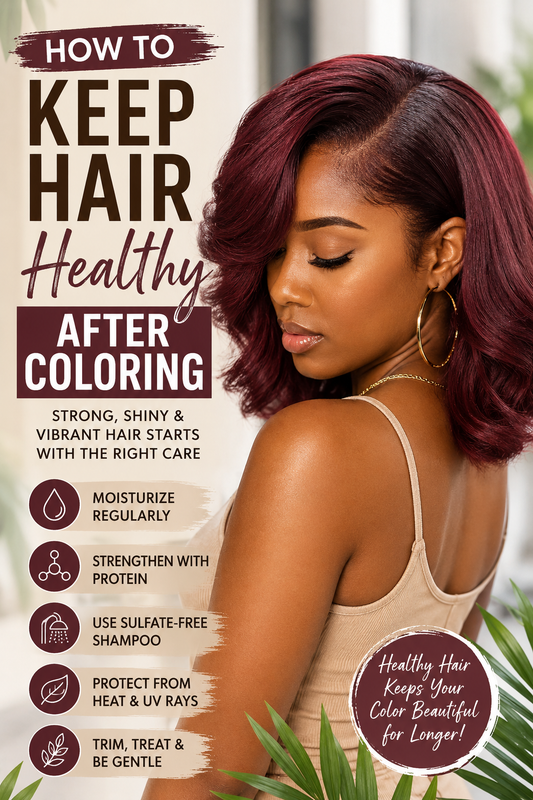
Coloring your hair can completely transform your appearance, boost confidence, and allow you to express your personal style. Whether you're covering grays, adding highlights, trying a bold fashion color, or enhancing your natural shade, healthy hair should always remain the priority.
Unfortunately, hair coloring changes more than just your hair color. Chemical color treatments can weaken the hair shaft, reduce moisture, increase porosity, and make strands more prone to breakage if proper care isn't taken afterward.
The good news is that colored hair can remain soft, shiny, and strong with the right routine.
In this complete guide, you'll learn exactly how to keep hair healthy after coloring, including daily care habits, moisturizing techniques, washing schedules, ingredient recommendations, and common mistakes that can ruin freshly colored hair.
Why Coloring Can Damage Hair
Hair dye works by opening the outer protective layer of your hair called the cuticle. This allows pigment to enter the hair shaft.
During this process:
- Moisture escapes
- Natural oils decrease
- Protein bonds weaken
- Hair becomes more porous
- Cuticles stay lifted longer
The lighter you color your hair—especially when bleaching—the more structural changes occur.
That doesn't mean coloring automatically destroys your hair.
Healthy colored hair depends much more on your aftercare routine than the coloring process itself.
Signs Your Colored Hair Needs More Care
Watch for these warning signs:
- Dry ends
- Rough texture
- Increased tangles
- Loss of shine
- Split ends
- Breakage during combing
- Hair stretching before snapping
- Excessive shedding due to breakage
- Frizz
- Color fading quickly
The earlier you correct these issues, the easier it is to restore your hair.
Wait Before Washing
One of the biggest mistakes people make is shampooing immediately after coloring.
Most color professionals recommend waiting 48–72 hours before your first wash.
Waiting allows:
- Pigment to settle
- Cuticles to close
- Color molecules to stabilize
- Better color longevity
Use Sulfate-Free Shampoo
Harsh shampoos remove natural oils and strip color molecules faster.
Instead, choose gentle sulfate-free cleansers that:
- Clean without drying
- Preserve color
- Reduce fading
- Protect moisture
Gentle cleansing helps your color remain vibrant much longer.
Wash Less Frequently
Frequent washing is one of the fastest ways to fade hair color.
A good schedule includes:
- 1–2 washes weekly for dry hair
- 2–3 washes weekly for oily hair
- Co-washing between washes if needed
Less washing equals healthier hair and longer-lasting color.
Moisture Is Everything
Color-treated hair loses moisture faster than untreated hair.
Hydration should become your biggest priority.
Focus on:
- Water-based leave-in conditioners
- Daily moisturizing sprays
- Lightweight natural oils
- Rich conditioners
- Weekly deep conditioning
Moisturized hair stays flexible instead of brittle.
Deep Condition Weekly
Weekly deep conditioning restores hydration lost during coloring.
A quality deep conditioner helps:
- Improve softness
- Increase elasticity
- Reduce breakage
- Restore shine
- Improve manageability
Leave treatments on for 20–30 minutes for maximum benefits.
Strengthen Hair With Protein
Color treatments can weaken the protein structure inside each strand.
Occasional protein treatments help rebuild damaged areas.
Benefits include:
- Less breakage
- Stronger strands
- Better elasticity
- Improved curl definition
- Reduced split ends
Balance is important.
Too much protein can make hair stiff, while too little leaves hair weak.
Seal Moisture Into Your Hair
Moisture easily escapes from color-treated hair.
After moisturizing, apply a light oil to help seal hydration inside.
Popular sealing oils include:
- Jojoba oil
- Grapeseed oil
- Sweet almond oil
- Avocado oil
A small amount is all you need.
Avoid Heat Styling
Freshly colored hair is already under stress.
Adding daily heat from:
- Flat irons
- Curling irons
- Blow dryers
can cause additional moisture loss.
Whenever possible:
- Air dry
- Use heat protectants
- Keep temperatures below 350°F
- Limit heat styling
Protect Hair While Sleeping
Nighttime friction can damage weakened strands.
Protect your hair with:
- Satin pillowcases
- Silk scarves
- Satin bonnets
- Loose protective hairstyles
Reducing friction preserves moisture and prevents unnecessary breakage.
Don't Skip Leave-In Conditioner
Leave-in conditioners provide all-day moisture.
They also help:
- Reduce tangles
- Improve softness
- Minimize frizz
- Protect color-treated strands
- Increase shine
This simple step makes a noticeable difference.
Trim Split Ends Regularly
Color doesn't cause split ends overnight, but weakened hair develops them faster.
Regular trims every 8–12 weeks prevent splits from traveling upward and causing additional breakage.
Healthy ends make hair appear fuller and longer.
Be Gentle When Detangling
Colored hair is more fragile.
Always:
- Detangle from the ends upward
- Use wide-tooth combs
- Work in sections
- Add conditioner or detangler
- Never yank through knots
Gentle handling prevents unnecessary damage.
Avoid Overlapping Color
Repeatedly coloring already-colored hair causes cumulative damage.
Instead:
- Touch up new growth only
- Refresh faded lengths when necessary
- Avoid unnecessary full-head coloring
This greatly reduces long-term breakage.
Eat for Healthy Hair
Healthy hair starts inside your body.
Focus on foods rich in:
- Protein
- Iron
- Zinc
- Vitamin D
- Vitamin C
- Biotin
- Omega-3 fatty acids
Hair follicles rely on proper nutrition to produce healthy strands.
Stay Hydrated
Water supports scalp health and hair elasticity.
Aim for consistent hydration throughout the day.
Healthy hydration supports:
- Softer hair
- Reduced dryness
- Better scalp health
- Improved elasticity
Protect Hair From the Sun
UV rays can:
- Fade color
- Dry hair
- Increase brittleness
- Damage cuticles
Wear:
- Wide-brim hats
- Scarves
- UV-protective hair products
especially during extended outdoor activities.
Be Careful With Chlorine
Swimming pools expose hair to chlorine, which can:
- Fade color
- Dry strands
- Cause tangles
- Increase breakage
Before swimming:
- Wet hair with clean water
- Apply conditioner
- Wear a swim cap when possible
Rinse immediately afterward.
Don't Ignore Your Scalp
Healthy hair begins with a healthy scalp.
Keep your scalp:
- Clean
- Moisturized
- Balanced
- Free from buildup
Regular scalp massages may also encourage healthy circulation.
Best Daily Routine for Colored Hair
Morning:
- Lightly mist hair
- Apply leave-in conditioner
- Seal with a lightweight oil
- Style gently
Evening:
- Moisturize dry areas
- Protect hair with satin
- Avoid sleeping on cotton pillowcases
Consistency matters more than using dozens of products.
Weekly Routine
Once per week:
- Shampoo gently
- Deep condition
- Detangle
- Moisturize
- Seal
- Style with minimal heat
Monthly Routine
Every month:
- Clarify if needed
- Protein treatment (if hair feels weak)
- Trim damaged ends
- Evaluate moisture balance
Common Mistakes After Coloring Hair
Avoid these common errors:
- Washing too soon
- Washing daily
- Using harsh shampoos
- Excessive heat styling
- Skipping conditioner
- Ignoring split ends
- Coloring too frequently
- Sleeping without protection
- Rough towel drying
- Brushing dry curly hair aggressively
Small habits have a major impact over time.
Tips for Natural Hair After Coloring
Natural hair often needs additional moisture because curls naturally retain less oil.
Focus on:
- Frequent hydration
- Low-manipulation styles
- Deep conditioning
- Gentle detangling
- Protective styling
- Stretching hair without excessive heat
Healthy curls and vibrant color can absolutely coexist.
Tips for Relaxed or Straight Hair
Relaxed hair that's also colored requires extra care because both services alter the hair's structure.
Prioritize:
- Protein-moisture balance
- Minimal heat
- Lightweight oils
- Routine trims
- Gentle brushing
Never perform relaxers and color treatments too close together without professional guidance.
Tips for Braids After Coloring
If installing braids after coloring:
- Moisturize beforehand
- Wait until hair has recovered
- Avoid excessive braid tension
- Keep scalp hydrated
- Moisturize braid lengths regularly
Healthy foundations lead to healthier protective styles.
Tips for Colored Locs
Colored locs require moisture without excessive buildup.
Maintain locs by:
- Using lightweight moisturizers
- Washing gently
- Protecting at night
- Limiting excessive retwisting
- Moisturizing regularly
Healthy locs remain flexible instead of stiff and brittle.
Ingredients That Help Colored Hair
Look for products containing:
- Aloe vera
- Coconut oil
- Jojoba oil
- Argan oil
- Shea butter
- Avocado oil
- Panthenol
- Glycerin
- Rice protein
- Hydrolyzed keratin
These ingredients help maintain softness and strength.
Ingredients to Limit
Some ingredients may dry color-treated hair when overused:
- Harsh sulfates
- Drying alcohols
- Excess salt
- Excessive fragrance
- Strong clarifying agents
Gentle formulas are generally best for long-term color maintenance.
Frequently Asked Questions
Can colored hair still grow long?
Yes. Hair coloring does not stop hair growth. However, damaged hair can break faster than it grows if not properly cared for.
How often should I deep condition colored hair?
Most people benefit from deep conditioning once every week.
Can I oil my hair after coloring?
Yes. Lightweight oils help seal moisture and reduce dryness.
Does coloring cause permanent damage?
Hair coloring permanently changes the treated portion of the hair, but proper care can minimize damage and keep hair looking healthy until new growth replaces it.
Is heat bad for colored hair?
Frequent heat styling can dry out colored hair and accelerate breakage, so use heat sparingly and always apply a heat protectant.
Final Thoughts
Learning how to keep hair healthy after coloring comes down to protecting your hair's moisture, strengthening weakened strands, and treating your hair gently every day. Color-treated hair can remain vibrant, soft, and resilient for months when you follow a consistent routine that includes sulfate-free cleansing, weekly deep conditioning, regular hydration, and minimal heat styling.
Whether you wear your hair natural, relaxed, in braids, or in locs, healthy habits make all the difference. With patience and the right products, you can enjoy beautiful color without sacrificing the strength, shine, or length of your hair.