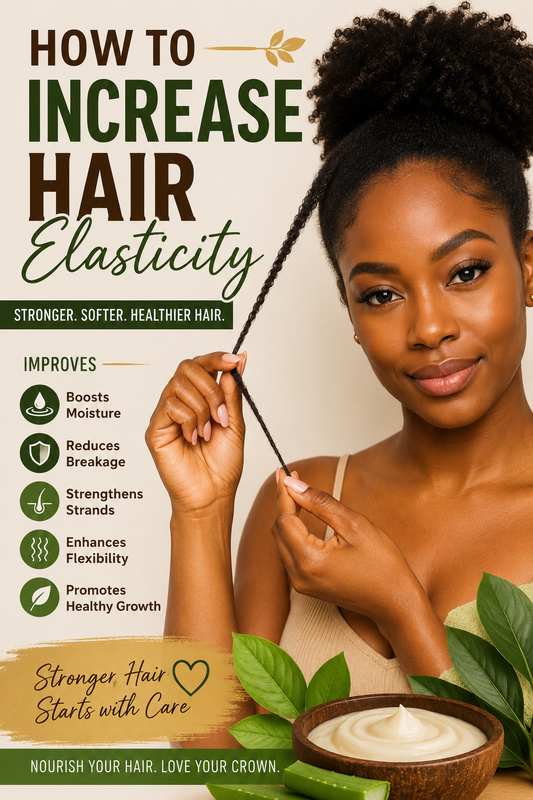
Have you ever stretched a strand of your hair only to watch it snap almost immediately? Healthy hair should have some flexibility before breaking. That flexibility is called hair elasticity, and it's one of the biggest indicators of your hair's overall health.
Whether you have natural hair, curly hair, coily hair, locs, braids, relaxed hair, or color-treated hair, improving hair elasticity can significantly reduce breakage, increase length retention, and make your hair easier to style.
If your hair constantly feels stiff, brittle, dry, or fragile, poor elasticity may be the hidden reason.
In this complete guide, you'll learn:
- What hair elasticity is
- Why elasticity matters
- Common causes of poor elasticity
- How to restore elasticity naturally
- The best ingredients for improving flexibility
- Daily habits that strengthen hair
- Mistakes that destroy elasticity
- A weekly routine for healthier hair
What Is Hair Elasticity?
Hair elasticity is your hair's ability to stretch and return to its normal shape without breaking.
Think of a healthy rubber band.
It stretches.
It bounces back.
It doesn't snap.
Healthy hair behaves similarly.
When elasticity is poor, the hair becomes stiff and brittle. Instead of bending, it breaks.
Hair elasticity depends largely on:
- Moisture
- Protein structure
- Healthy cuticles
- Internal hair strength
Why Hair Elasticity Matters
Good elasticity helps your hair:
- Resist breakage
- Handle styling better
- Retain length
- Stay softer
- Reduce split ends
- Prevent snapping while detangling
- Improve curl definition
- Maintain healthier-looking ends
Hair can grow every month, but if it constantly breaks because elasticity is poor, you'll never notice the growth.
Signs Your Hair Has Poor Elasticity
Your hair may have low elasticity if you notice:
- Hair snaps while combing
- Ends break easily
- Hair feels stiff
- Constant dryness
- Excess shedding from breakage
- Tangles more frequently
- Frizz that won't smooth down
- Dull appearance
- Difficulty styling
Natural hair often shows these signs first because curls require more moisture than straight hair.
The Hair Elasticity Test
One of the easiest ways to test elasticity is using a single strand.
Step 1
Wet one strand of hair.
Step 2
Hold both ends.
Step 3
Stretch gently.
Healthy Hair
- Stretches slightly
- Returns to original length
- Doesn't break
Poor Elasticity
- Breaks immediately
- Feels rough
- Doesn't stretch
Overly Elastic Hair
If the strand stretches excessively without returning, the hair may be over-moisturized and lacking protein.
Balance is the goal.
What Causes Poor Hair Elasticity?
Several factors damage elasticity over time.
1. Lack of Moisture
Dry hair becomes rigid.
Without enough water inside the hair shaft, flexibility disappears.
Moisture is essential for healthy movement.
2. Heat Damage
Frequent use of:
- Flat irons
- Curling irons
- Blow dryers
- Hot combs
can permanently weaken elasticity.
High temperatures damage the protein structure that gives hair strength.
3. Chemical Treatments
Hair color
Bleach
Relaxers
Perms
Chemical straighteners
These services weaken internal bonds and reduce elasticity.
4. Overwashing
Shampooing too often strips away natural oils.
Without those oils, hair loses softness and flexibility.
5. Protein Damage
Hair is primarily made of keratin protein.
Repeated damage weakens these proteins, causing hair to stretch improperly or snap.
6. Environmental Stress
Sun exposure
Wind
Cold weather
Dry indoor heating
Pool chlorine
Salt water
All slowly reduce elasticity.
7. Mechanical Damage
Aggressive brushing
Tight hairstyles
Rough towel drying
Constant friction
These weaken hair fibers daily.
How Moisture Improves Elasticity
Moisture softens the hair shaft.
When hair contains enough water:
- It bends easier
- Detangles faster
- Resists snapping
- Holds styles better
This is why moisturizing routines are essential for healthy hair.
Hydration should always be the foundation before adding oils.
Protein and Elasticity
Protein strengthens damaged areas.
Too little protein causes:
- Mushy hair
- Weak strands
- Overstretching
Too much protein causes:
- Stiffness
- Crunchiness
- Breakage
The healthiest hair has a balance between moisture and protein.
Best Ingredients That Improve Hair Elasticity
Aloe Vera
Helps hydrate hair naturally while soothing the scalp.
Benefits include:
- Moisture
- Softness
- Shine
- Flexibility
Glycerin
Draws moisture into the hair.
Excellent during moderate humidity.
Honey
A natural humectant that attracts water into the hair shaft.
Honey improves softness and elasticity over time.
Coconut Oil
Penetrates the hair shaft and reduces protein loss.
Regular use helps strengthen weak hair.
Jamaican Black Castor Oil
Helps seal moisture while reducing breakage.
Ideal for natural hair and protective styles.
Argan Oil
Rich in Vitamin E and antioxidants.
Helps smooth the cuticle while improving softness.
Avocado Oil
Contains healthy fats that nourish dry hair.
Excellent for restoring flexibility.
Jojoba Oil
Closely resembles the scalp's natural oils.
Helps reduce dryness without feeling heavy.
Deep Conditioning for Better Elasticity
Deep conditioning is one of the fastest ways to improve elasticity.
Benefits include:
- Better hydration
- Softer curls
- Less tangling
- Improved flexibility
- Reduced breakage
Aim for:
- Once weekly for healthy hair
- Twice weekly for very dry hair
Steam Treatments
Warm steam helps lift the cuticle slightly.
This allows conditioners to penetrate deeper.
Steam treatments often improve:
- Moisture retention
- Elasticity
- Curl definition
- Softness
Reduce Heat Styling
Less heat equals healthier elasticity.
Try:
- Air drying
- Flexi rods
- Twist-outs
- Braid-outs
- Roller sets
When heat is necessary:
- Use the lowest effective temperature
- Apply heat protectant
- Limit heat styling sessions
Trim Damaged Ends
Split ends continue traveling upward.
Damaged ends cannot regain elasticity.
Regular trims keep damage from spreading.
Protective Styles Help
Protective styles reduce daily manipulation.
Good options include:
- Twists
- Braids
- Wigs
- Buns
- Cornrows
Remember:
Protective styles only work if your hair remains moisturized underneath.
Sleep Protection
Cotton pillowcases absorb moisture.
Instead choose:
- Satin bonnet
- Silk scarf
- Satin pillowcase
These reduce friction while preserving elasticity overnight.
Nutrition for Hair Elasticity
Healthy hair starts inside the body.
Focus on foods rich in:
Protein
Eggs
Fish
Beans
Greek yogurt
Healthy fats
Avocados
Nuts
Seeds
Leafy greens
Berries
Sweet potatoes
Hydration is equally important.
Drink enough water daily to support healthy hair.
Avoid Over-Manipulation
Constant styling weakens elasticity.
Reduce:
- Daily brushing
- Tight ponytails
- Excessive detangling
- Constant touching
Gentle handling preserves healthy strands.
Detangle Correctly
Always detangle:
- Damp hair
- With conditioner
- Starting from the ends
- Working upward slowly
Wide-tooth combs are often gentler than fine-tooth combs.
Common Mistakes That Reduce Hair Elasticity
Using Too Much Heat
Repeated heat permanently weakens hair.
Skipping Conditioner
Conditioner restores moisture after shampooing.
Never skip it.
Ignoring Protein Needs
Extremely damaged hair often benefits from occasional strengthening treatments.
Tight Hairstyles
Constant tension weakens the hair shaft.
Washing With Harsh Shampoos
Sulfate-heavy shampoos may over-dry certain hair types.
Choose moisturizing cleansers when possible.
Sleeping Without Protection
Nighttime friction causes unnecessary breakage.
Using Dirty Brushes
Clean brushes distribute products better and reduce buildup.
Weekly Hair Elasticity Routine
Wash Day
- Cleanse scalp gently
- Apply moisturizing conditioner
- Deep condition
- Detangle carefully
- Apply leave-in conditioner
- Seal moisture with a lightweight oil
Midweek
Refresh hair with a water-based moisturizing spray.
Apply a small amount of oil to seal hydration if needed.
Night Routine
Wear a satin bonnet or silk scarf.
Avoid sleeping with loose hair rubbing against cotton.
Hair Elasticity for Different Hair Types
Natural Hair
Natural curls naturally lose moisture faster.
Prioritize hydration and gentle styling.
Curly Hair
Use leave-in conditioners regularly.
Avoid brushing dry curls.
Locs
Keep locs moisturized using lightweight water-based sprays.
Cleanse regularly to avoid buildup.
Braids
Moisturize your natural hair and scalp even while wearing protective styles.
Relaxed Hair
Focus on strengthening treatments while minimizing heat and chemical overlap.
Frequently Asked Questions
Can damaged hair regain elasticity?
If damage is mild to moderate, improving moisture, protein balance, and gentle care can help restore elasticity. Severely damaged hair may need to be trimmed as healthy new growth replaces it.
How long does it take?
Many people notice softer, more flexible hair within a few weeks of a consistent routine. Significant improvement often takes several months, depending on the level of damage.
Does oil alone improve elasticity?
Oils help seal in moisture, but they don't replace water. For best results, hydrate the hair first with water or a water-based leave-in, then use oil to help lock in that moisture.
Should I deep condition every week?
Weekly deep conditioning is beneficial for most dry, damaged, or textured hair types. Adjust the frequency based on how your hair responds.
Final Thoughts
Improving hair elasticity is one of the smartest investments you can make in your hair care routine. Flexible, resilient strands are less likely to break, easier to manage, and better able to retain length over time.
The key is consistency. Focus on moisture, maintain a healthy balance of protein, protect your hair from unnecessary heat and friction, and handle it gently throughout the week. Over time, these habits help create stronger, healthier hair that looks and feels its best.
Whether your goal is longer natural hair, healthier curls, stronger locs, or less breakage after protective styles, restoring elasticity lays the foundation for lasting hair health.