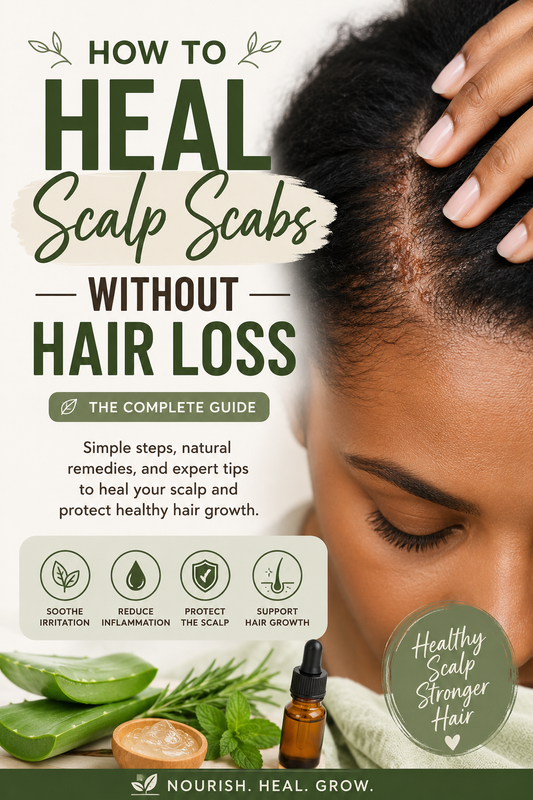
The Complete Guide to Restoring a Healthy Scalp and Protecting Hair Growth
Scalp scabs can be frustrating, painful, itchy, and concerning—especially when you notice hair shedding around the affected area. Many people panic when they see scabs on their scalp because they fear permanent hair loss. The good news is that most scalp scabs can heal successfully without causing lasting damage to your hair follicles when treated properly.
Whether your scalp scabs are caused by excessive scratching, protective styles, product buildup, scalp inflammation, dandruff, psoriasis, eczema, or other underlying conditions, understanding how to heal them correctly is essential for maintaining healthy hair growth.
In this comprehensive guide, we'll explain what causes scalp scabs, why they can lead to hair loss, and the best strategies to heal your scalp safely while preserving your hair.
What Are Scalp Scabs?
A scalp scab is a protective crust that forms when the skin on your scalp becomes damaged or inflamed. Just like a scab forms on your knee after a scrape, scalp scabs develop when the skin experiences injury.
Scabs are actually part of the body's natural healing process.
When the scalp becomes irritated, scratched, inflamed, or infected, your body sends blood platelets and healing factors to the area. As the wound heals, a protective covering forms to shield the damaged skin.
Unfortunately, while scabs are meant to help healing, they can sometimes contribute to temporary hair shedding if not managed properly.
Can Scalp Scabs Cause Hair Loss?
Yes.
Scalp scabs can contribute to hair loss in several ways:
Inflammation
Inflammation surrounding the hair follicle can disrupt the normal growth cycle.
Excessive Scratching
Repeated scratching can weaken follicles and break hairs at the scalp surface.
Infection
Bacterial or fungal infections can damage follicles if left untreated.
Tight Hairstyles
Protective styles that pull on already irritated areas can worsen inflammation and increase hair shedding.
Picking Scabs
Removing scabs prematurely can damage new skin and potentially injure follicles.
The key distinction is that most scalp scab-related hair loss is temporary.
Permanent hair loss typically occurs only when severe inflammation or scarring destroys the follicle.
Common Causes of Scalp Scabs
1. Dandruff
Dandruff often causes intense itching.
Constant scratching can create small wounds that eventually form scabs.
Symptoms include:
- White flakes
- Itching
- Dry scalp
- Mild redness
2. Seborrheic Dermatitis
Seborrheic dermatitis is a more severe form of dandruff.
Signs include:
- Greasy scales
- Yellow flakes
- Red patches
- Itching
- Crusting
3. Scalp Psoriasis
Psoriasis causes thick, scaly patches that can crack and bleed.
People with scalp psoriasis often develop:
- Silver scales
- Thick plaques
- Scabbing
- Temporary hair shedding
4. Eczema
Scalp eczema weakens the skin barrier.
This often leads to:
- Dryness
- Irritation
- Cracking
- Scabbing
5. Tight Protective Styles
Braids, weaves, wigs, and tight ponytails can create tension and irritation.
When the scalp is constantly pulled, inflammation develops.
This may lead to:
- Tenderness
- Bumps
- Scabs
- Hair thinning
6. Product Buildup
Heavy oils, gels, sprays, and styling products can clog follicles and irritate the scalp.
When buildup accumulates:
- Itching increases
- Inflammation develops
- Scabs may form
7. Allergic Reactions
Certain ingredients can trigger scalp irritation.
Common triggers include:
- Fragrances
- Harsh preservatives
- Hair dyes
- Sulfates
8. Folliculitis
Folliculitis occurs when hair follicles become inflamed or infected.
Symptoms include:
- Red bumps
- Pus-filled bumps
- Scabbing
- Tenderness
Signs Your Scalp Scabs Need Immediate Attention
Seek medical evaluation if you experience:
- Severe pain
- Pus drainage
- Large open wounds
- Fever
- Spreading redness
- Rapid hair loss
- Bleeding that doesn't stop
These symptoms may indicate infection.
The Biggest Mistake: Picking Scalp Scabs
Many people automatically pick scalp scabs.
This is one of the worst things you can do.
Picking:
- Reopens wounds
- Delays healing
- Increases infection risk
- Causes additional inflammation
- Raises the chance of hair loss
Allow scabs to detach naturally.
Step 1: Stop Scratching Immediately
The first step toward healing is breaking the scratch cycle.
Scratching:
- Creates new wounds
- Reopens healing skin
- Triggers more inflammation
Instead:
- Massage gently
- Use cooling scalp treatments
- Keep nails short
Step 2: Keep the Scalp Clean
A clean scalp heals faster.
Many people stop washing when they have scabs.
This often makes the situation worse.
Use a gentle shampoo that removes buildup without stripping moisture.
Focus on:
- Removing debris
- Reducing inflammation
- Maintaining scalp balance
Step 3: Moisturize the Scalp
Dry skin cracks more easily.
Hydrated skin heals faster.
Moisturizing helps:
- Reduce itching
- Prevent cracking
- Support skin repair
Look for ingredients such as:
- Aloe vera
- Jojoba oil
- Castor oil
- Coconut oil
- Vitamin E
A lightweight scalp moisturizer like Hairobics Raaw Roots Moisturizer Spray can help soothe dryness while supporting healthy scalp conditions.
Step 4: Reduce Inflammation
Inflammation is often the primary cause of hair shedding around scabs.
Natural anti-inflammatory ingredients include:
- Aloe vera
- Rosemary
- Peppermint
- Tea tree oil
- Chamomile
Reducing inflammation creates a healthier environment for hair growth.
Step 5: Protect the Scalp Barrier
Your scalp barrier acts like a shield.
When damaged, irritation increases.
Protecting the barrier means:
- Avoiding harsh products
- Avoiding excessive heat
- Limiting chemical treatments
- Maintaining moisture
Step 6: Avoid Tight Hairstyles
While healing, avoid:
- Tight braids
- Tight ponytails
- Tight wigs
- Tight weaves
Loose styles reduce tension and allow damaged skin to recover.
Step 7: Address Product Buildup
Excess buildup often contributes to itching and inflammation.
Clarify occasionally to remove:
- Oils
- Butters
- Styling products
- Environmental debris
A cleaner scalp heals more efficiently.
Natural Ingredients That Support Scalp Healing
Aloe Vera
Benefits:
- Hydrates skin
- Reduces inflammation
- Calms irritation
Castor Oil
Benefits:
- Supports moisture retention
- Helps soothe dryness
- Conditions scalp tissue
Tea Tree Oil
Benefits:
- Helps control scalp microbes
- Reduces itching
- Promotes a healthier scalp environment
Rosemary
Benefits:
- Supports circulation
- Helps maintain follicle health
- Reduces inflammation
Peppermint
Benefits:
- Cooling sensation
- Helps calm itching
- Encourages healthy circulation
Foods That Support Scalp Healing
Healing starts from within.
Focus on:
Protein
Hair is primarily made of protein.
Sources include:
- Eggs
- Fish
- Chicken
- Beans
Omega-3 Fatty Acids
Help reduce inflammation.
Sources include:
- Salmon
- Sardines
- Walnuts
- Flaxseeds
Zinc
Supports skin repair.
Sources include:
- Pumpkin seeds
- Beef
- Chickpeas
Vitamin C
Supports collagen production.
Sources include:
- Citrus fruits
- Strawberries
- Bell peppers
How Long Do Scalp Scabs Take to Heal?
Minor scabs often heal within:
7–14 days.
More severe cases may take:
3–8 weeks.
Healing time depends on:
- Cause
- Severity
- Inflammation level
- Overall scalp health
When Hair Will Grow Back
Hair typically regrows once:
- Inflammation decreases
- Skin heals
- Follicles return to normal function
Many people notice regrowth within:
1–3 months.
Full recovery may take:
3–12 months depending on severity.
Best Daily Routine for Healing Scalp Scabs
Morning
- Inspect scalp
- Apply light scalp moisturizer
- Avoid scratching
Midday
- Stay hydrated
- Avoid tight hairstyles
Evening
- Gently massage scalp
- Apply soothing scalp treatment
- Sleep on a satin pillowcase
Prevention Tips
Once healed, prevent future scabs by:
- Keeping the scalp clean
- Moisturizing regularly
- Avoiding harsh chemicals
- Reducing scratching
- Managing dandruff promptly
- Wearing looser protective styles
- Using high-quality scalp products
Why Healthy Scalp Care Is Essential for Hair Growth
Many people focus entirely on hair strands while ignoring scalp health.
Healthy hair begins with a healthy scalp.
When your scalp is:
- Clean
- Moisturized
- Balanced
- Free from inflammation
Your follicles can function at their highest potential.
A consistent scalp care routine combined with nourishing products like Hairobics Hair & Scalp Booster and Hairobics Raaw Roots Moisturizer Spray can help support a healthier scalp environment that encourages stronger, fuller-looking hair.
Final Thoughts
Scalp scabs can be alarming, especially when accompanied by hair shedding. However, most cases can heal successfully without permanent hair loss when treated properly. The keys to recovery include avoiding scratching, keeping the scalp clean, reducing inflammation, maintaining moisture, and protecting the scalp barrier.
Patience is critical. Healing takes time, but with consistent scalp care and the right approach, your scalp can recover and return to a healthier state that supports strong hair growth.
Remember: every strand of healthy hair starts with a healthy scalp.