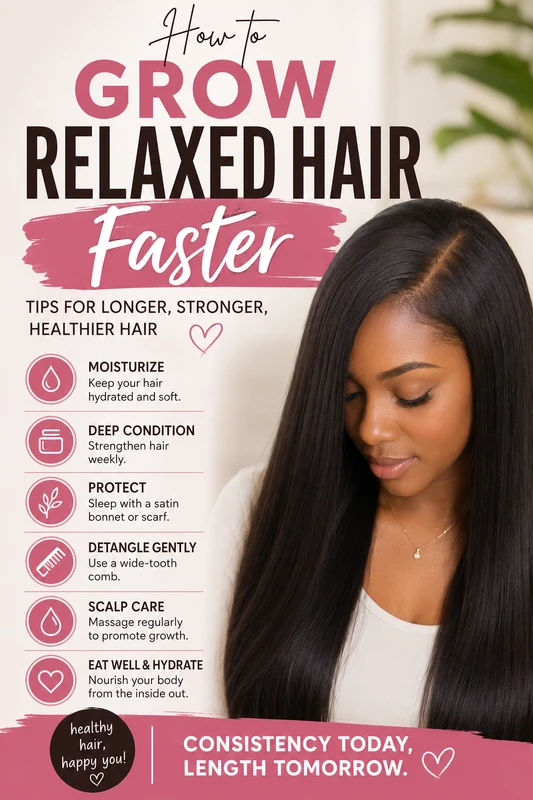
Growing relaxed hair long and healthy is absolutely possible. While many people believe relaxed hair cannot reach great lengths, the truth is that healthy relaxed hair can grow just as well as natural hair when it's cared for properly.
Hair grows from the scalp, but retaining that growth depends on preventing breakage. Relaxed hair is more fragile because chemical relaxers permanently alter the hair's protein structure, making moisture, strength, and gentle handling essential.
If your relaxed hair seems stuck at the same length, chances are your hair is growing—but breakage is preventing you from seeing the progress.
This complete guide explains everything you need to know about growing relaxed hair faster while keeping it healthy, shiny, and strong.
Can Relaxed Hair Really Grow Faster?
The average person's hair grows approximately:
- ½ inch per month
- 6 inches per year
No product can dramatically change your natural growth rate.
However, you can create the ideal environment for healthy growth while preventing breakage, allowing you to retain nearly all of your new growth.
That's the real secret to long relaxed hair.
Why Relaxed Hair Breaks More Easily
Relaxers permanently break down the protein bonds inside the hair shaft.
Although this makes hair straighter and easier to style, it also causes:
- Reduced elasticity
- Less moisture retention
- Increased dryness
- Higher breakage risk
- Split ends
- Weakened cuticles
Because of these changes, relaxed hair requires consistent care.
Focus on Hair Retention Instead of Hair Growth
Many people chase miracle growth products.
The reality is simple.
If your hair grows 6 inches yearly but breaks off 5 inches, you'll only retain one inch.
Instead, if your hair grows 6 inches and only loses one inch to breakage, you'll retain five inches.
Retention equals length.
Moisturize Relaxed Hair Frequently
Moisture is everything.
Dry relaxed hair snaps easily.
Good moisturizers help restore flexibility and reduce breakage.
Focus on ingredients like:
- Aloe vera
- Glycerin
- Coconut oil
- Jojoba oil
- Avocado oil
- Shea butter
- Argan oil
Moisturize your hair 2–4 times weekly depending on how dry your hair becomes.
Seal in Moisture
Moisture evaporates quickly.
Always seal it inside the hair using lightweight natural oils.
Excellent sealing oils include:
- Grapeseed oil
- Sweet almond oil
- Jojoba oil
- Avocado oil
- Castor oil
This simple step dramatically improves moisture retention.
Deep Condition Every Week
Weekly deep conditioning strengthens relaxed hair.
Benefits include:
- Increased elasticity
- Less breakage
- Improved softness
- Better manageability
- More shine
Look for conditioners containing:
- Keratin
- Hydrolyzed proteins
- Ceramides
- Panthenol
- Amino acids
Alternate between moisturizing and protein deep conditioners.
Don't Overlap Relaxers
One of the biggest mistakes is applying relaxer to previously relaxed hair.
Only new growth should be relaxed.
Overlapping causes:
- Severe breakage
- Thin ends
- Split ends
- Hair loss
- Weak strands
Many professionals recommend stretching relaxers every 8–12 weeks instead of relaxing every month.
Avoid Excessive Heat Styling
Heat removes moisture.
Frequent use of:
- Flat irons
- Curling irons
- Blow dryers
can weaken already processed hair.
Whenever possible:
- Air dry
- Roller set
- Wrap hair
- Use heat protectants
Lower temperatures preserve healthy hair.
Trim Damaged Ends
Holding onto damaged ends doesn't increase length.
Split ends continue traveling upward.
Trim only when necessary.
Healthy ends help retain overall length.
Protect Hair While Sleeping
Cotton pillowcases create friction.
Instead use:
- Satin pillowcases
- Silk scarves
- Satin bonnets
Night protection reduces:
- Breakage
- Dryness
- Tangles
- Split ends
Small habits make huge differences.
Massage Your Scalp
Scalp massage improves circulation.
Benefits include:
- Relaxation
- Better product distribution
- Cleaner follicles
- Improved scalp health
Massage your scalp for 5–10 minutes several times weekly using your fingertips.
Keep Your Scalp Healthy
Healthy hair begins with a healthy scalp.
Watch for:
- Excessive flakes
- Product buildup
- Irritation
- Itching
- Redness
Wash regularly to remove buildup.
Clean follicles support healthy hair growth.
Wash Hair Regularly
Many people fear washing relaxed hair too often.
Actually, regular cleansing removes:
- Sweat
- Oils
- Dirt
- Product buildup
Most people benefit from washing every 7–10 days.
Use Sulfate-Free Shampoo
Harsh shampoos can strip moisture.
Gentle sulfate-free cleansers help maintain hydration while still cleaning effectively.
Choose shampoos designed for:
- Dry hair
- Chemically treated hair
- Color-treated hair
Protein Treatments Strengthen Relaxed Hair
Relaxed hair gradually loses protein.
Occasional protein treatments help rebuild strength.
Signs your hair may need protein:
- Mushy texture
- Excessive stretching
- Weakness
- Frequent breakage
Don't overuse protein.
Too much protein can make hair stiff and brittle.
Protective Styling
Protective styles reduce daily manipulation.
Examples include:
- Low buns
- Roller wraps
- Pin curls
- Loose braids
- Flexi rods
- Silk wraps
Avoid styles that pull tightly on the hairline.
Limit Tight Hairstyles
Constant tension causes traction alopecia.
Avoid:
- Tight ponytails
- Tight buns
- Heavy extensions
- Tight braids
Gentle styling protects your edges.
Detangle Carefully
Relaxed hair should always be detangled gently.
Tips:
- Use conditioner first
- Detangle in sections
- Begin at the ends
- Work upward slowly
- Use a wide-tooth comb
Never rush detangling.
Protect Hair During Exercise
Sweat isn't harmful.
Leaving sweat on the scalp for days can create buildup.
After workouts:
- Allow hair to dry
- Cleanse scalp when needed
- Moisturize afterward
Eat Hair-Healthy Foods
Hair needs nutrients.
Focus on foods rich in:
Protein:
- Eggs
- Chicken
- Fish
- Beans
Iron:
- Spinach
- Lentils
- Lean beef
Omega-3s:
- Salmon
- Walnuts
- Flaxseed
Vitamin C:
- Oranges
- Strawberries
- Bell peppers
Biotin:
- Eggs
- Almonds
- Sweet potatoes
Balanced nutrition supports healthy hair production.
Drink Plenty of Water
Hydration supports overall health.
Aim for adequate daily water intake based on your activity level and climate.
Hydrated bodies support healthier hair.
Reduce Stress
High stress may contribute to increased shedding.
Try:
- Walking
- Meditation
- Prayer
- Exercise
- Better sleep
Healthy lifestyles support healthy hair.
Avoid Constant Coloring
Bleach and permanent color place additional stress on relaxed hair.
If coloring:
- Wait between chemical services
- Deep condition regularly
- Moisturize more often
Stretch Your Relaxers
Stretching relaxers allows:
- Less overlap
- Better thickness
- Reduced damage
- Greater length retention
Many experienced relaxed-hair wearers stretch 10–16 weeks depending on manageability.
Clarify Monthly
Product buildup blocks moisture.
Use a clarifying shampoo once monthly to remove residue.
Always follow with a moisturizing deep conditioner.
Wear Low-Manipulation Styles
Simple styles reduce daily breakage.
Examples:
- Wrap styles
- Low ponytails
- Loose buns
- Silk wraps
- Roller sets
Less manipulation means greater retention.
Use Wide-Tooth Combs
Fine-tooth combs increase tension.
Wide-tooth combs glide through relaxed hair with less damage.
Avoid Overwashing
While cleansing is important, washing daily may dry relaxed hair.
Find a schedule that keeps your scalp clean without stripping moisture.
Strengthen Hair With Oils
Natural oils help lubricate strands.
Popular options include:
- Coconut oil
- Olive oil
- Avocado oil
- Castor oil
- Jojoba oil
Oils don't replace moisturizer—but they help lock moisture inside.
Watch for Breakage
Signs include:
- Tiny broken hairs on clothing
- Hair snapping during combing
- Thin ends
- White dots on strands
- Split ends
Address breakage early before it worsens.
Common Mistakes That Prevent Relaxed Hair Growth
Avoid these habits:
- Relaxing too often
- Skipping deep conditioning
- Daily flat ironing
- Sleeping without protection
- Overlapping relaxers
- Tight hairstyles
- Excessive brushing
- Ignoring split ends
- Using harsh shampoos
- Skipping trims when necessary
Weekly Relaxed Hair Growth Routine
Monday
Moisturize and seal.
Tuesday
Protective style.
Wednesday
Scalp massage.
Thursday
Light moisturizer.
Friday
Protective styling.
Saturday
Wash, deep condition, detangle gently.
Sunday
Air dry and moisturize.
Consistency matters more than perfection.
Frequently Asked Questions
How long does relaxed hair take to grow?
Most people grow about half an inch of hair each month. Proper care helps retain more of that growth.
Can relaxed hair become waist length?
Yes. Many people achieve waist-length relaxed hair by minimizing breakage and following a consistent routine.
Should relaxed hair be oiled every day?
Not necessarily. Over-oiling can lead to buildup. Moisturize first, then use a light oil to seal in moisture as needed.
How often should relaxed hair be deep conditioned?
Once a week is ideal for most people. Alternate between moisturizing and protein treatments based on your hair's needs.
Can I wear braids with relaxed hair?
Yes, but choose lightweight, tension-free styles and avoid keeping them in for too long to reduce stress on your strands and edges.
Final Thoughts
Growing relaxed hair faster isn't about finding a miracle product—it's about protecting the hair you already grow. Healthy relaxed hair thrives on moisture, gentle handling, balanced protein, and consistent scalp care. By focusing on retaining length, avoiding unnecessary damage, and following a regular routine, you can enjoy stronger, shinier, and noticeably longer hair over time.
Small daily habits—like moisturizing, sleeping with a satin bonnet, deep conditioning weekly, and avoiding excessive heat—add up to significant results. Stay patient, remain consistent, and celebrate every inch of healthy growth.