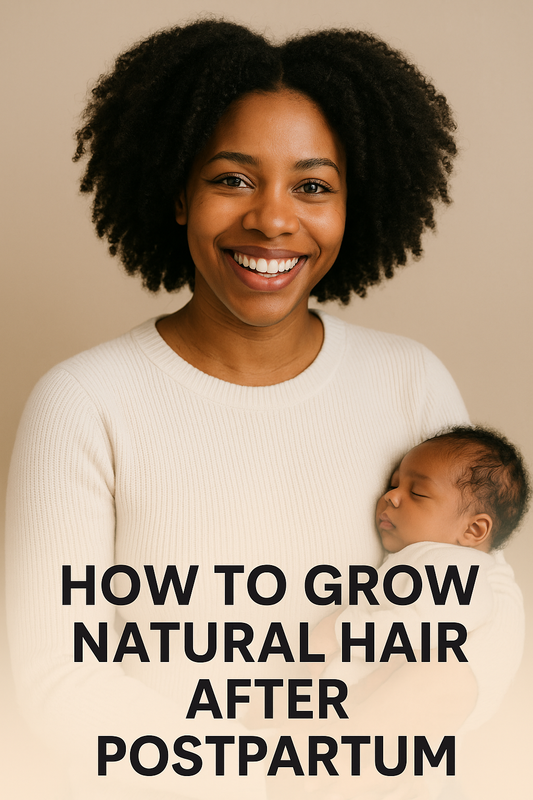
Bringing life into the world is a beautiful experience — but for many new mothers, the months that follow childbirth bring an unexpected challenge: postpartum hair loss. If you’ve noticed your once-thick, shiny natural hair shedding more than usual after pregnancy, you’re not alone. Nearly 50% of women experience hair thinning or shedding postpartum, and for women with natural hair, it can feel especially frustrating.
But here’s the good news — postpartum hair loss is temporary, and with the right care, your hair can bounce back stronger, healthier, and more vibrant than before. In this guide, we’ll cover why postpartum shedding happens, how to care for your natural hair, and how Hairobics Hair Growth products like the Hair & Scalp Booster and Leave-In Treatment can help you restore growth naturally.
Understanding Postpartum Hair Loss
During pregnancy, your body is flooded with hormones — especially estrogen, which helps prolong the growth phase (anagen) of your hair. This means less shedding and often fuller, thicker hair throughout pregnancy.
After childbirth, however, your hormone levels drop dramatically. Estrogen returns to pre-pregnancy levels, and the hair that was “resting” during pregnancy begins to shed all at once — this is called postpartum telogen effluvium.
This shedding usually begins around 3 to 4 months after giving birth and can last anywhere from 6 months to a year, depending on your body, health, and hair care routine.
Signs You’re Experiencing Postpartum Hair Loss
-
More hair in your brush or shower drain than usual
-
Thinning edges (especially around the temples)
-
Reduced hair density — your ponytail feels thinner
-
Dryness or breakage due to hormonal shifts
While it can be alarming, postpartum hair loss is a temporary condition — not permanent hair loss. The key is to nourish your scalp, minimize breakage, and stimulate new growth during this transition.
Step 1: Focus on Scalp Health First
Healthy hair starts with a healthy scalp. After giving birth, your scalp can become dry or inflamed due to stress, hormonal shifts, and nutrient loss. Focusing on scalp care creates the perfect foundation for hair regrowth.
Use a Nourishing Scalp Oil
Incorporate a natural product like Hairobics Hair & Scalp Booster — a blend of essential oils and herbal extracts that deeply nourish the scalp, reduce dandruff, and stimulate dormant follicles.
Massage it gently into your scalp 3–4 times a week to:
-
Increase blood circulation
-
Strengthen roots
-
Reduce dryness and itching
-
Encourage new hair growth
✨ Pro Tip: Massaging your scalp regularly helps oxygen and nutrients reach the hair follicles faster — boosting natural growth.
Step 2: Keep Hair Moisturized and Protected
Postpartum hormones can also affect your hair’s texture and moisture balance, leaving it dry or brittle. Hydration is key to preventing breakage as your new hair grows in.
Add a Leave-In Conditioner to Your Routine
Use the Hairobics Leave-In Treatment after every wash to soften, detangle, and protect your strands from damage. It’s infused with natural oils and plant-based ingredients that keep your hair moisturized without buildup.
How to use it:
-
Apply to damp hair after washing.
-
Distribute evenly from root to tip.
-
Style as desired — twist-outs, braids, or protective styles.
Consistent moisture helps your new growth stay healthy and prevents shedding from turning into breakage.
Step 3: Strengthen From the Inside Out
Hair health isn’t only about what you put on your scalp — it’s also about what you feed your body. After pregnancy, your body is recovering from nutrient depletion. Vitamins and minerals like iron, zinc, vitamin D, and biotin are crucial for hair regrowth.
Eat Hair-Boosting Foods
Include foods rich in:
-
Protein – eggs, fish, beans, lentils
-
Iron – spinach, red meat, or fortified cereals
-
Omega-3 fatty acids – salmon, walnuts, chia seeds
-
Vitamin C – citrus fruits and berries for collagen production
And don’t forget to stay hydrated! Drinking enough water supports your scalp’s natural oil balance.
If you’re breastfeeding, always consult your doctor before taking supplements — but a balanced diet alone can make a huge difference.
Step 4: Avoid Harsh Styling and Chemicals
Your postpartum hair is more fragile than usual. Over-manipulation, heat styling, or chemical treatments can worsen shedding.
Protective Styling Tips
-
Choose low-tension styles like twists, bantu knots, or loose braids.
-
Avoid tight ponytails or weaves that pull on your edges.
-
Limit direct heat (flat irons, blow dryers).
-
Use satin or silk scarves at night to prevent breakage.
The goal is to protect your ends and edges while allowing your scalp to breathe.
Step 5: Create a Gentle Wash Routine
A clean scalp is essential for new growth, but overwashing can strip natural oils and cause more dryness.
How Often to Wash Postpartum Hair
Wash your natural hair every 7–10 days using a sulfate-free shampoo. Follow with a moisturizing conditioner, and then apply your Hairobics Leave-In Treatment.
On wash day:
-
Pre-poo: Apply oil before shampooing to prevent dryness.
-
Cleanse gently: Use fingertips (not nails) to remove buildup.
-
Condition deeply: Let conditioner sit for 10–15 minutes.
-
Seal in moisture: Follow with Hairobics Leave-In Treatment.
-
Finish with oil: Lock in hydration with the Hair & Scalp Booster.
Consistency helps strengthen new growth and reduce shedding over time.
Step 6: Manage Stress and Prioritize Self-Care
The postpartum period can be overwhelming — sleepless nights, hormonal changes, and adjusting to new routines. Chronic stress can increase hair shedding because it raises cortisol levels, disrupting the hair growth cycle.
Stress-Relief Tips for New Moms
-
Try deep breathing or meditation for 10 minutes daily.
-
Go for short walks outside for vitamin D and circulation.
-
Get as much rest as possible (even short naps help!).
-
Ask for help — you don’t have to do it all alone.
Remember, your mental and emotional health directly affect your physical health — including your hair.
Step 7: Be Patient and Consistent
Postpartum hair growth doesn’t happen overnight. It typically takes 6–12 months for shedding to slow and regrowth to become noticeable. The key is consistency with your routine.
Stick to a simple regimen:
-
Scalp massage with Hairobics Hair & Scalp Booster (3–4x per week)
-
Moisturize with Hairobics Leave-In Treatment after wash days
-
Protective styles that reduce manipulation
-
Balanced diet and hydration
Your hair is growing — even if it’s not immediately visible. Consistent care will reveal healthy, stronger curls over time.
Bonus: Natural Ingredients That Support Postpartum Hair Growth
Mother Nature provides powerful ingredients that help restore hair health. Look for these in your products or DIY treatments:
-
Peppermint oil – stimulates scalp circulation
-
Castor oil – thickens hair and seals in moisture
-
Rosemary oil – proven to promote new growth
-
Aloe vera – soothes scalp irritation and adds shine
-
Jojoba oil – balances scalp’s natural oils
The Hairobics Hair & Scalp Booster combines many of these natural botanicals, making it an easy, all-in-one solution for postpartum regrowth.
When to See a Doctor
While postpartum hair loss is usually temporary, you should talk to a healthcare provider if:
-
Shedding lasts longer than a year
-
You notice bald patches
-
Your hairline isn’t recovering
-
You feel fatigued or have other symptoms (possible thyroid imbalance)
Sometimes, hormonal or nutritional imbalances need medical attention — and addressing them early can help speed up your hair recovery.
Conclusion: Your Postpartum Hair Journey is a Process
Regrowing your natural hair after postpartum takes time, but it’s absolutely possible with patience, care, and the right products. Remember, your body just did something miraculous — and now it’s simply finding balance again.
Focus on nourishing your scalp, keeping your hair hydrated, and feeding your body the nutrients it needs. Incorporate Hairobics Hair & Scalp Booster and Leave-In Treatment into your weekly routine to restore moisture, strengthen follicles, and encourage healthy regrowth naturally.
Your postpartum hair journey isn’t about perfection — it’s about healing, self-care, and celebrating your natural beauty at every stage. With consistency and love, your crown will flourish again — thicker, healthier, and full of life.