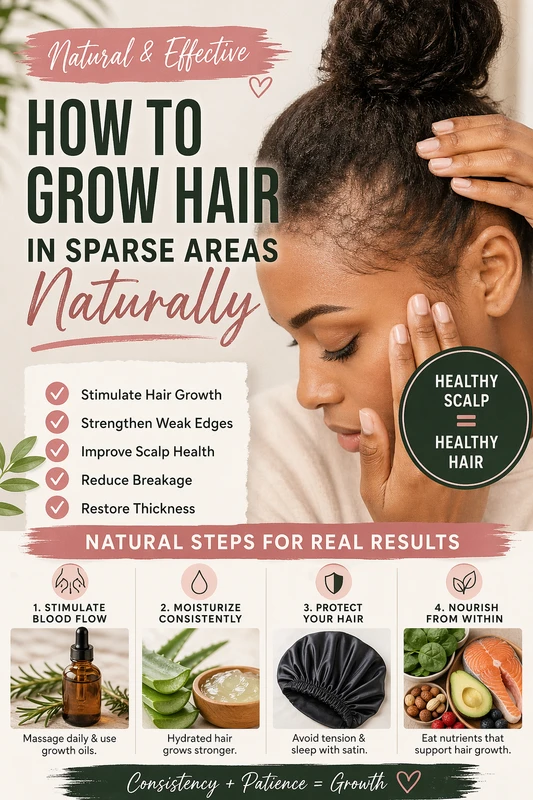
If you’re dealing with thin edges, patchy spots, or sparse areas anywhere on your scalp, you’re not alone—and more importantly, you’re not stuck. Hair loss and thinning in specific areas can feel frustrating, but with the right understanding and consistent natural care routine, you can stimulate regrowth, strengthen follicles, and restore fullness over time.
This guide breaks down why hair becomes sparse, how hair actually grows, and a step-by-step natural system to help you regrow hair in thinning areas—especially for natural, textured, curly, and protective-styled hair.
What Causes Sparse Hair Areas?
Before you can fix sparse hair, you have to understand what caused it. Hair doesn’t just “stop growing”—it’s usually responding to stress, damage, or imbalance.
1. Traction Alopecia (Tight Styles)
This is one of the biggest causes of thinning edges and patches.
Common culprits:
- Tight braids
- Lace fronts glued down frequently
- Tight ponytails or buns
- Heavy extensions
What happens:
Constant pulling weakens follicles → inflammation → hair falls out → regrowth slows or stops.
2. Poor Scalp Health
If your scalp is:
- Dry
- Inflamed
- Clogged with buildup
…it becomes a bad environment for hair growth.
Healthy hair = healthy scalp. Always.
3. Product Buildup
Heavy oils, butters, gels, and edge controls can:
- Block follicles
- Prevent oxygen flow
- Stop nutrients from reaching roots
This suffocates growth over time.
4. Breakage (Not Actual Hair Loss)
Sometimes your hair is growing—but breaking faster than it grows.
This happens when:
- Hair is dry
- Hair lacks protein strength
- Ends are weak or split
5. Stress & Hormonal Imbalance
High stress = elevated cortisol → disrupted hair cycle.
This can push hair into the shedding phase early.
6. Poor Blood Circulation
Hair follicles need:
- Oxygen
- Nutrients
- Blood flow
Without proper circulation, growth slows or stops.
Understanding the Hair Growth Cycle
To regrow hair, you need to work with your natural growth cycle.
The 3 Phases:
1. Anagen (Growth Phase)
- Lasts 2–7 years
- Hair actively grows
2. Catagen (Transition Phase)
- Follicle shrinks
- Growth slows
3. Telogen (Resting Phase)
- Hair sheds
- New hair begins forming
? Sparse areas often happen when too many hairs enter the telogen (shedding) phase prematurely.
Your goal = keep more hair in the growth phase longer.
Can Sparse Hair Grow Back Naturally?
Yes—if the follicle is still alive.
Hair can regrow if:
- The follicle is not permanently damaged
- The scalp environment improves
- Blood flow is restored
Hair may NOT regrow if:
- Scar tissue has formed
- Follicles are permanently destroyed
? The earlier you start, the better your results.
The Natural Hair Regrowth System (Step-by-Step)
This is the exact routine that helps restore growth in sparse areas.
Step 1: Clean, Detox, and Reset Your Scalp
Why This Matters
You can’t grow hair on a clogged scalp.
What to Do
Weekly Clarifying Wash
Use a gentle but effective shampoo to remove:
- Dirt
- Oils
- Product buildup
DIY Detox (Optional)
- Apple cider vinegar rinse (1:3 dilution)
- Apply after shampoo
- Let sit 5 minutes, rinse
Result:
- Unclogged follicles
- Balanced scalp pH
- Better absorption of treatments
Step 2: Stimulate Blood Flow (CRITICAL)
If you skip this step, growth will be slow.
Daily Scalp Massage (5–10 minutes)
Use your fingertips—not nails.
Benefits:
- Increases circulation
- Wakes up dormant follicles
- Speeds up growth
Boost with Natural Oils
Use oils that:
- Stimulate follicles
- Increase blood flow
Best Oils for Sparse Areas:
- Castor oil (thickens + strengthens)
- Rosemary oil (stimulates growth)
- Peppermint oil (increases circulation)
- Tea tree oil (cleans scalp)
How to Use:
- Mix carrier oil + essential oil
- Apply directly to sparse areas
- Massage in daily
Step 3: Moisture = Growth Retention
Dry hair = breakage = thinning appearance.
Your Goal:
Keep hair moisturized consistently.
Use the LOC Method:
- Liquid (water-based leave-in)
- Oil (seal moisture)
- Cream (optional for thickness)
Focus on Sparse Areas:
These areas need extra moisture attention.
Step 4: Strengthen Weak Hair
Thin areas often have fragile strands.
Add Protein Treatments
Do this every 2–4 weeks:
- Strengthens hair shaft
- Reduces breakage
- Helps retain growth
Step 5: Protect the Area
This is where most people fail.
Avoid:
- Tight styles
- Excess tension
- Frequent manipulation
Use Low-Tension Styles:
- Loose braids
- Twists
- Protective styles with no pulling
Sleep Protection:
- Satin bonnet or scarf
- Satin pillowcase
Step 6: Feed Your Hair From Within
Hair growth starts internally.
Key Nutrients:
1. Protein
Hair is made of keratin (protein)
2. Iron
Low iron = hair shedding
3. Biotin
Supports growth strength
4. Vitamin D
Linked to follicle health
5. Omega-3 Fatty Acids
Promotes scalp health
Hydration Matters
Drink enough water daily to keep hair hydrated from within.
Step 7: Consistency Over Time
Hair growth is not instant.
Realistic Timeline:
- 2–4 weeks: Reduced shedding
- 4–8 weeks: Baby hairs appear
- 3 months: Visible improvement
- 6+ months: Noticeable fullness
Targeting Specific Sparse Areas
1. Thin Edges
Causes:
- Tight hairstyles
- Edge control overuse
Fix:
- Stop tension completely
- Apply growth oil daily
- Massage gently
2. Crown Thinning
Causes:
- Dryness
- Breakage
- Poor moisture retention
Fix:
- Deep condition regularly
- Keep crown moisturized daily
3. Patchy Spots
Causes:
- Stress
- Scalp damage
- Traction
Fix:
- Focus oil + massage routine
- Avoid touching area excessively
Natural DIY Growth Treatments
1. Rosemary Growth Oil Blend
- 2 tbsp castor oil
- 1 tbsp jojoba oil
- 5 drops rosemary oil
Apply daily.
2. Aloe Vera Scalp Treatment
- Apply fresh aloe gel to scalp
- Leave 20 minutes
- Rinse
Soothes + promotes growth.
3. Onion Juice (Powerful but optional)
- Apply to scalp
- Leave 10–15 minutes
- Wash out
Boosts circulation and regrowth.
Mistakes That Keep Hair Sparse
Avoid these at all costs:
- Overusing heavy oils
- Skipping scalp cleansing
- Tight protective styles
- Ignoring breakage
- Being inconsistent
- Expecting overnight results
The Truth About “Fast” Hair Growth
Hair grows about:
- 0.5 inches per month
The real goal is:
? Retention, not speed
If your hair stops breaking, it will appear to grow faster.
Building Your Daily & Weekly Routine
Daily:
- Apply growth oil to sparse areas
- Massage scalp (5–10 min)
- Moisturize hair
Weekly:
- Wash scalp
- Deep condition
- Rehydrate hair
Monthly:
- Protein treatment
- Trim ends if needed
How to Stay Consistent
Consistency is what separates:
- People who regrow hair
- From those who stay stuck
Tips:
- Set reminders
- Track progress with photos
- Keep routine simple
Final Thoughts: Your Hair CAN Grow Back
Sparse hair doesn’t mean permanent loss—it’s often a signal.
When you:
- Improve scalp health
- Increase circulation
- Protect your hair
- Stay consistent
? You give your hair the exact environment it needs to grow again.
Quick Recap (Save This)
To grow hair in sparse areas naturally:
- Clean your scalp
- Stimulate blood flow daily
- Use growth oils consistently
- Moisturize your hair
- Strengthen weak strands
- Avoid tension and damage
- Eat for hair health
- Stay consistent for 3–6 months
If you follow this system consistently, you won’t just regrow hair—you’ll grow stronger, thicker, healthier hair than before.