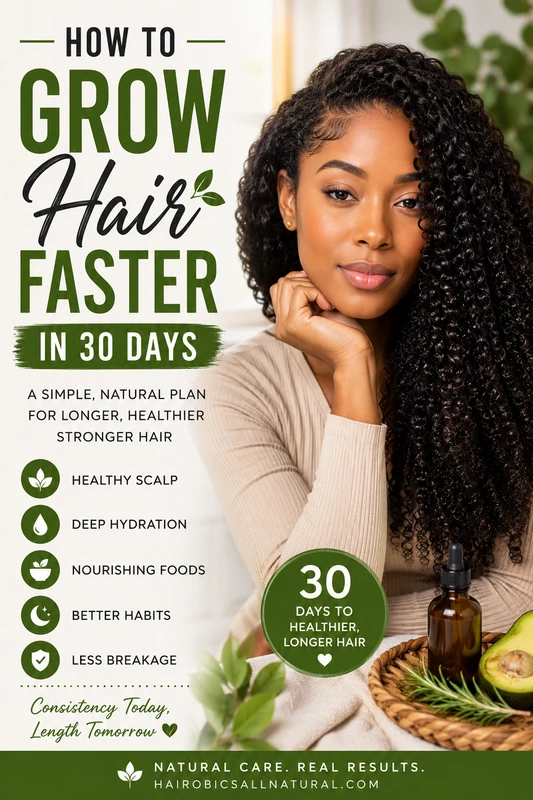
If you've been wondering how to grow hair faster in 30 days, you're not alone. Whether you're recovering from a bad haircut, growing out a protective style, or simply trying to achieve longer, healthier hair, the right routine can help maximize your hair's growth potential.
While no product or routine can magically make hair grow several inches in one month, you can create the perfect environment for faster, healthier growth while reducing breakage. Since the average person's hair grows about half an inch per month, preventing damage is often just as important as encouraging new growth.
In this complete guide, you'll learn exactly what to do over the next 30 days to give your hair the best chance to grow longer, stronger, and healthier.
How Fast Does Hair Grow?
Hair typically grows between 0.5 and 0.75 inches per month, depending on factors such as:
- Genetics
- Age
- Hormones
- Nutrition
- Stress levels
- Overall health
- Hair care habits
Although you can't completely change your genetics, you can remove many of the obstacles that slow healthy hair growth.
What Prevents Hair From Growing?
Many people think their hair has "stopped growing."
In reality, hair is usually growing—but it's breaking off at the same rate.
Common causes include:
- Dry hair
- Split ends
- Heat damage
- Tight hairstyles
- Poor scalp health
- Product buildup
- Nutrient deficiencies
- Excessive chemical processing
- Rough detangling
- Sleeping without protection
Reducing breakage allows you to actually keep the length your hair is producing.
Step 1: Start With a Healthy Scalp
Healthy hair begins with a healthy scalp.
Think of your scalp like fertile soil. Hair follicles thrive when the scalp is:
- Clean
- Moisturized
- Free from heavy buildup
- Well circulated
Weekly Scalp Routine
- Wash regularly
- Massage daily
- Keep follicles clean
- Avoid excessive scratching
- Moisturize when needed
Step 2: Massage Your Scalp Every Day
Scalp massages increase blood flow to hair follicles.
Benefits include:
- Better circulation
- Reduced scalp tension
- Improved nutrient delivery
- Healthier follicles
- More relaxed scalp muscles
How to Massage
Using your fingertips:
- Massage for 5–10 minutes daily
- Use gentle circular motions
- Cover the entire scalp
Consistency matters more than pressure.
Step 3: Keep Hair Moisturized
Dry hair breaks easily.
Moisture helps improve elasticity so strands stretch instead of snapping.
Focus on:
- Water-based moisturizers
- Leave-in conditioners
- Lightweight oils to seal moisture
- Regular hydration
Avoid letting hair remain dry for several days.
Step 4: Wash Your Hair Correctly
A dirty scalp isn't always healthier.
Excess oil and product buildup can clog follicles and create irritation.
Wash often enough to remove:
- Sweat
- Oils
- Dirt
- Styling products
- Environmental pollutants
Choose a gentle shampoo suitable for your hair type.
Step 5: Eat Hair-Friendly Foods
Hair is made primarily of protein.
Without proper nutrition, growth slows.
Excellent foods include:
Protein
- Eggs
- Chicken
- Turkey
- Fish
- Greek yogurt
- Beans
Iron
- Spinach
- Lean beef
- Lentils
Omega-3s
- Salmon
- Walnuts
- Flaxseed
Vitamins
- Sweet potatoes
- Carrots
- Bell peppers
- Citrus fruits
- Berries
A balanced diet supports healthy follicles.
Step 6: Drink More Water
Dehydration affects your skin, scalp, and hair.
Aim to drink water consistently throughout the day.
Proper hydration helps:
- Maintain scalp moisture
- Improve elasticity
- Support healthy cells
- Reduce dryness
Step 7: Protect Your Hair While Sleeping
Nighttime damage adds up.
Cotton pillowcases can create friction.
Instead:
- Sleep on satin
- Use silk pillowcases
- Wear satin bonnets
- Try satin scarves
This simple change can dramatically reduce breakage.
Step 8: Reduce Heat Styling
Frequent heat styling weakens hair over time.
Limit:
- Flat irons
- Curling irons
- Blow dryers on high heat
If using heat:
- Apply a heat protectant
- Use the lowest effective temperature
- Avoid daily styling
Step 9: Trim Split Ends
Split ends continue traveling upward.
Regular trims help:
- Prevent severe splitting
- Improve appearance
- Reduce breakage
Trimming doesn't speed growth directly.
It helps preserve healthy length.
Step 10: Avoid Tight Hairstyles
Styles that constantly pull the hairline can cause unnecessary stress.
Avoid excessive tension from:
- Tight ponytails
- Tight braids
- Tight buns
- Tight extensions
Choose styles that protect without pulling.
Step 11: Detangle Gently
Never rush detangling.
Always:
- Start at the ends
- Work upward
- Use conditioner or detangler
- Separate knots carefully
Gentle detangling prevents unnecessary breakage.
Step 12: Minimize Chemical Damage
Repeated coloring, bleaching, and relaxing can weaken hair.
Space chemical services apart.
Focus on restoring moisture and protein afterward.
Step 13: Reduce Stress
Stress may contribute to increased hair shedding.
Healthy stress-management habits include:
- Walking
- Exercise
- Meditation
- Reading
- Better sleep
- Deep breathing
Healthy bodies often support healthier hair.
Step 14: Sleep 7–9 Hours
Hair repair happens while you sleep.
Consistent sleep supports:
- Hormone balance
- Cell repair
- Tissue regeneration
- Overall wellness
Quality sleep benefits your scalp and hair.
Step 15: Exercise Regularly
Exercise improves circulation throughout the body.
Benefits include:
- Better oxygen delivery
- Improved blood flow
- Reduced stress
- Better overall health
Even 30 minutes daily can make a difference.
Step 16: Avoid Constant Touching
Playing with your hair all day creates friction.
Repeated handling can:
- Cause breakage
- Create frizz
- Transfer oils
- Disturb styles
Leave your hair alone as much as possible.
Step 17: Protect Hair From the Weather
Harsh weather damages hair.
Protect against:
Summer
- UV rays
- Chlorine
- Saltwater
Winter
- Dry air
- Cold winds
- Indoor heating
Wear protective styles or hats when necessary.
Step 18: Keep Your Scalp Balanced
Avoid using excessive heavy products.
Too much buildup can:
- Block follicles
- Cause itching
- Increase flakes
- Make cleansing harder
Use products moderately.
Step 19: Be Consistent
Hair growth rewards consistency.
A great routine followed every day works better than an expensive routine followed once a week.
Stay patient.
Healthy habits compound over time.
Your 30-Day Hair Growth Plan
Week 1
- Cleanse scalp
- Begin daily scalp massages
- Increase water intake
- Eat more protein
- Sleep with satin protection
Week 2
- Moisturize consistently
- Reduce heat
- Exercise regularly
- Wash when needed
Week 3
- Continue healthy eating
- Minimize manipulation
- Protect hair outdoors
- Stay hydrated
Week 4
- Maintain routine
- Trim damaged ends if necessary
- Continue scalp care
- Track progress with photos
Common Hair Growth Mistakes
Avoid these habits:
- Skipping wash days for weeks
- Excessive heat styling
- Tight hairstyles
- Rough towel drying
- Sleeping on cotton
- Picking at your scalp
- Ignoring split ends
- Over-processing hair
- Crash dieting
- Constantly changing products
Frequently Asked Questions
Can hair really grow faster in 30 days?
Hair growth speed is mostly determined by genetics. However, improving scalp health, nutrition, hydration, and reducing breakage can help you retain more length and support your hair's natural growth rate.
Does cutting hair make it grow faster?
No. Trimming removes damaged ends but does not affect the hair follicles where growth occurs.
Should I oil my scalp every day?
Not necessarily. Some people benefit from light scalp oiling, while others may experience buildup. Focus on keeping your scalp clean and balanced rather than applying excessive amounts of oil.
Is protein important for hair growth?
Yes. Hair is primarily made of keratin, a protein. Eating enough protein supports healthy hair structure and growth.
Can stress slow hair growth?
High levels of stress can contribute to increased hair shedding in some individuals. Managing stress supports overall hair health.
Final Thoughts
Growing hair faster in 30 days isn't about finding a miracle solution—it's about creating the ideal conditions for healthy hair to thrive. A clean scalp, balanced nutrition, consistent moisture, gentle handling, and healthy daily habits work together to support stronger strands and reduce breakage.
Remember, the true measure of progress isn't just how much new hair grows, but how much length you keep. By following a consistent routine, you'll not only maximize your hair's natural growth potential over the next 30 days but also build habits that promote healthier, longer hair for months and years to come.
If you're committed to your routine and patient with the process, you'll likely notice healthier-looking hair, improved moisture retention, less breakage, and stronger strands—all of which contribute to achieving your long-term hair growth goals.