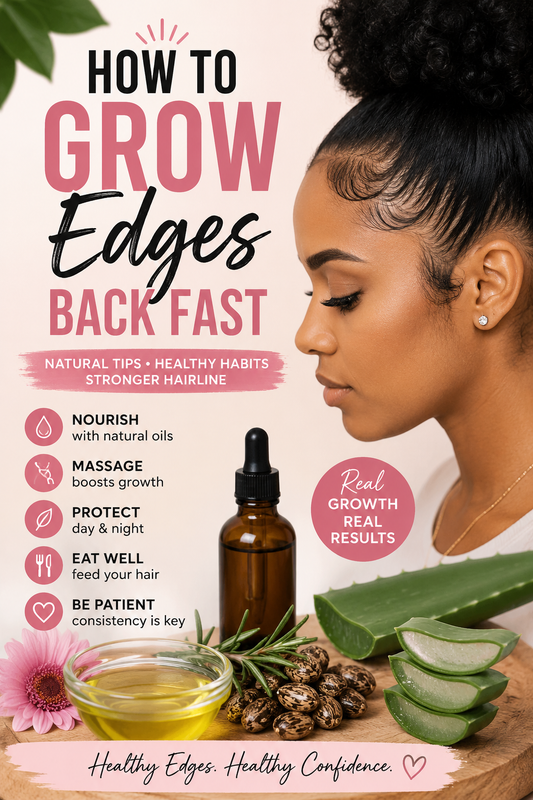
Introduction
Few hair concerns are as frustrating as thinning edges. Whether caused by tight hairstyles, excessive styling, stress, hormonal changes, or improper hair care practices, losing your edges can impact both your appearance and confidence. The good news is that in many cases, edge loss is reversible when you understand the cause and take the right steps to encourage healthy regrowth.
Your edges are among the most delicate hairs on your scalp. Because they are finer and more fragile than the hair on the rest of your head, they require special care and attention. Unfortunately, many popular hairstyles and hair care habits place constant stress on the hairline, making edge thinning one of the most common hair concerns among women with natural hair, braids, locs, and relaxed hair.
If you've been wondering how to grow your edges back fast, this guide covers everything you need to know—from identifying the causes of edge loss to implementing a proven regrowth routine that supports stronger, fuller edges naturally.
What Are Edges?
Edges refer to the fine hairs that grow along your hairline, including:
- Forehead hairline
- Temple areas
- Sideburn region
- Nape of the neck
These hairs are naturally thinner than the rest of your scalp hair, making them especially vulnerable to:
- Breakage
- Tension
- Dryness
- Chemical damage
- Friction
Because edges are so delicate, even minor damage can cause noticeable thinning.
Why Are Your Edges Thinning?
Before you can regrow your edges, it's important to understand what caused the problem in the first place.
1. Tight Hairstyles
One of the leading causes of edge loss is traction alopecia.
This occurs when hair follicles are repeatedly pulled due to:
- Tight braids
- Tight ponytails
- Slicked-back buns
- Tight wigs
- Sew-ins
- Tight loc styles
Over time, constant tension weakens follicles and causes hair to fall out.
Signs of Traction Alopecia
- Tender scalp
- Small bumps around the hairline
- Receding temples
- Broken hairs around edges
- Thinning after protective styles
2. Excessive Edge Control Use
Many edge controls contain:
- Alcohol
- Drying ingredients
- Heavy waxes
Using these products daily can:
- Dry out hair
- Cause buildup
- Increase breakage
The result is thinner, weaker edges.
3. Chemical Damage
Relaxers, dyes, and bleaching treatments can weaken the fragile hairline.
Repeated chemical processing often leads to:
- Breakage
- Dryness
- Follicle stress
Many people notice edge thinning shortly after frequent touch-ups.
4. Stress
Stress can trigger excessive shedding through a condition called telogen effluvium.
Stress-related hair loss may occur after:
- Major illness
- Emotional trauma
- Job stress
- Financial stress
- Sleep deprivation
The hairline is often one of the first places affected.
5. Poor Nutrition
Hair follicles need nutrients to function properly.
Deficiencies in:
- Iron
- Protein
- Zinc
- Vitamin D
- Biotin
can contribute to thinning edges.
6. Hormonal Changes
Hormonal fluctuations may impact hair growth.
Common triggers include:
- Pregnancy
- Postpartum changes
- Menopause
- Thyroid issues
- PCOS
These conditions can cause hairline thinning.
Can Edges Actually Grow Back?
In many cases, yes.
Hair follicles that are still alive can often produce new growth when given the right environment.
The sooner you address edge thinning, the better your chances of recovery.
If traction alopecia has progressed to permanent scarring, regrowth becomes more difficult.
However, most people see noticeable improvement within several months when they consistently follow a healthy edge care routine.
How Long Does It Take to Grow Edges Back?
Hair grows approximately:
1/2 inch per month
Most people begin noticing:
- 4–8 weeks: baby hairs appearing
- 2–3 months: visible thickening
- 4–6 months: stronger edges
- 6–12 months: significant restoration
Consistency is key.
Step 1: Stop Damaging Your Edges
You cannot regrow edges while continuing the habits that caused the problem.
Avoid:
- Tight braids
- Tight wigs
- Tight ponytails
- Tight buns
- Tight loc styles
Your follicles need relief.
Think of this as giving your edges time to heal.
Step 2: Massage Your Hairline Daily
Scalp massage can help improve circulation around hair follicles.
Benefits
- Encourages blood flow
- Delivers nutrients
- Relaxes scalp tension
- Supports healthy growth
How To Do It
Use fingertips and gently massage:
- Temples
- Hairline
- Edges
for 3–5 minutes daily.
Consistency matters more than pressure.
Step 3: Keep Edges Moisturized
Dry hair breaks easily.
Many people focus on moisturizing their hair but forget their edges.
Moisturizing Routine
- Light water mist
- Leave-in conditioner
- Natural oil
- Protective scarf at night
This helps retain softness and elasticity.
Step 4: Use Natural Growth Oils
Certain oils help create a healthier scalp environment.
Popular options include:
Castor Oil
Known for:
- Moisture retention
- Hair strengthening
- Reduced breakage
Rosemary Oil
May support circulation around follicles.
Peppermint Oil
Provides a cooling sensation and supports scalp health.
Jojoba Oil
Lightweight and similar to natural scalp oils.
Coconut Oil
Helps reduce protein loss in hair.
Step 5: Protect Your Edges While Sleeping
Cotton pillowcases create friction.
This friction can contribute to:
- Breakage
- Dryness
- Split ends
Better Options
- Satin bonnet
- Silk bonnet
- Satin pillowcase
- Silk pillowcase
These reduce moisture loss and friction.
Step 6: Eat for Hair Growth
Healthy hair starts internally.
Focus on nutrient-dense foods.
Protein
Hair is made primarily of protein.
Good sources include:
- Chicken
- Fish
- Eggs
- Beans
- Greek yogurt
Iron
Iron supports oxygen delivery to follicles.
Sources include:
- Spinach
- Lentils
- Red meat
- Pumpkin seeds
Vitamin D
Low vitamin D levels are linked to hair loss.
Sources include:
- Sunlight
- Salmon
- Egg yolks
Omega-3 Fatty Acids
Support scalp health.
Sources include:
- Salmon
- Walnuts
- Flaxseed
Step 7: Reduce Stress
Chronic stress can sabotage growth.
Consider:
- Exercise
- Walking
- Meditation
- Prayer
- Journaling
- Better sleep
Reducing stress helps normalize the hair growth cycle.
Best Hairstyles While Growing Edges Back
Loose Twist-Outs
Twist-outs allow hair freedom without tension.
Loose Wash-and-Go Styles
Minimal pulling helps protect the hairline.
Low-Tension Protective Styles
Choose styles that feel comfortable immediately.
If it hurts, it's too tight.
Hairstyles to Avoid
During recovery avoid:
- Tight braids
- Tight loc retwists
- Tight buns
- Tight ponytails
- Tight crochet styles
- Tight sew-ins
Your edges need a break.
The Best Nighttime Routine for Edge Growth
Step 1
Lightly mist hairline.
Step 2
Apply moisturizer.
Step 3
Seal with oil.
Step 4
Massage for 2 minutes.
Step 5
Cover with satin bonnet.
This simple routine can dramatically improve retention.
Common Edge Growth Mistakes
Overusing Oils
More oil does not equal faster growth.
Too much oil can cause buildup.
Applying Products Inconsistently
Growth requires consistency.
Skipping weeks at a time slows progress.
Using Tight Protective Styles
Protective styles should protect—not damage.
Daily Heat Styling
Excessive heat weakens fragile edges.
Ignoring Diet
External products cannot overcome poor nutrition.
Signs Your Edges Are Growing Back
Positive signs include:
- Tiny baby hairs
- Increased density
- Less breakage
- Fuller temples
- Improved hairline shape
These improvements usually occur gradually.
Take photos monthly to track progress.
Weekly Edge Growth Routine
Monday
Moisturize and massage.
Tuesday
Light oil application.
Wednesday
Moisturize and massage.
Thursday
Scalp massage only.
Friday
Moisturize and seal.
Saturday
Deep condition.
Sunday
Protective styling and scalp rest.
Consistency beats intensity.
Natural Remedies That Support Edge Growth
Aloe Vera
Can soothe irritated scalps and improve moisture.
Rosemary
Popular among natural hair enthusiasts.
Castor Oil
Helps reduce breakage and retain moisture.
Fenugreek
Traditionally used for hair strengthening.
Onion Juice
Contains sulfur compounds that may support healthy hair growth.
Always patch test before use.
How to Grow Edges Back After Braids
- Remove braids carefully.
- Deep condition immediately.
- Moisturize daily.
- Avoid re-braiding immediately.
- Focus on scalp massages.
Give your edges at least several weeks of recovery before installing another style.
How to Grow Edges Back After Loc Damage
If tight retwists caused thinning:
- Extend retwist intervals.
- Reduce styling tension.
- Moisturize regularly.
- Massage temples daily.
Many people see improvement once tension is eliminated.
How to Grow Edges Back After Relaxer Damage
Focus on:
- Protein treatments
- Deep conditioning
- Reduced heat
- Gentle styling
Healthy follicles often recover over time.
Frequently Asked Questions
What grows edges back the fastest?
The fastest approach combines:
- Removing tension
- Daily moisturizing
- Scalp massage
- Proper nutrition
- Consistent hair care
Does castor oil regrow edges?
Castor oil may support healthier hair by reducing breakage and improving moisture retention.
Can tight braids permanently damage edges?
Yes. Long-term traction alopecia can become permanent if follicles scar.
Should I use edge control while regrowing edges?
Limit usage and avoid products that cause dryness or buildup.
Can stress cause edge loss?
Absolutely.
Stress-related shedding commonly affects the hairline.
Final Thoughts
Growing your edges back fast requires patience, consistency, and a commitment to healthier hair practices. While there is no overnight solution, many people successfully restore their hairlines by eliminating tension, maintaining moisture, improving nutrition, protecting their hair at night, and supporting overall scalp health.
The most important step is addressing the root cause of the thinning. Once the source of damage is removed, your follicles can focus on producing stronger, healthier hair.
Remember that edge recovery is a journey. Stay consistent with your routine, protect your hairline from unnecessary stress, and focus on long-term scalp health. Over time, those small baby hairs can develop into fuller, thicker edges that enhance the overall appearance and health of your natural hair.