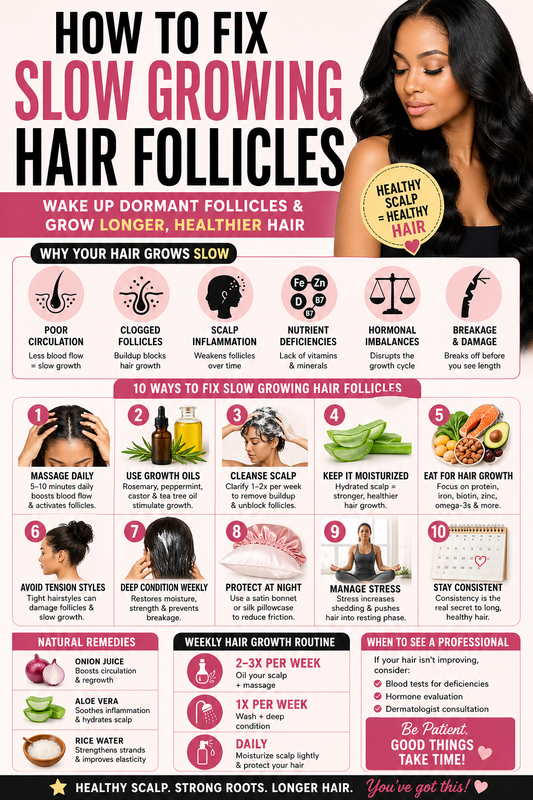
Slow-growing hair isn’t random—and it’s not something you’re stuck with forever. If your hair seems to grow painfully slow, stops at a certain length, or looks thinner over time, the issue usually starts at the follicle level. The good news? Once you understand what’s slowing your follicles down, you can fix it—and start seeing real growth again.
This guide breaks down everything you need to know: the science, the real causes, and a proven step-by-step system to restore faster, healthier hair growth.
What Are Hair Follicles (And Why They Control Growth)
Hair follicles are tiny, tunnel-like structures in your scalp where each strand of hair grows. At the base of each follicle is a bulb connected to blood vessels that supply nutrients, oxygen, and hormones.
If your follicles are:
- Healthy → hair grows faster, thicker, longer
- Weak or clogged → growth slows, shedding increases
Hair growth isn’t just about what you put on your hair—it’s about what’s happening under your scalp.
Understanding the Hair Growth Cycle
Every strand of hair follows a cycle. When this cycle is disrupted, growth slows down.
1. Anagen (Growth Phase)
- Lasts 2–7 years
- Determines your maximum hair length
- Longer phase = longer hair
2. Catagen (Transition Phase)
- Lasts 2–3 weeks
- Hair detaches from blood supply
3. Telogen (Resting Phase)
- Lasts 2–4 months
- Hair sheds and new hair begins forming
? Slow growth usually means your follicles are spending less time in the growth phase and more time resting.
Signs Your Hair Follicles Are Growing Slowly
- Hair barely grows month to month
- Hair stops at shoulder length or shorter
- Edges or crown grow slower than other areas
- Hair looks thinner over time
- Increased shedding
- Breakage before length retention
- Dry, flaky, or itchy scalp
If this sounds familiar, your follicles likely need support—not just your hair strands.
The Real Causes of Slow Hair Growth
Let’s get straight to the root of the issue.
1. Poor Blood Circulation to the Scalp
Your follicles depend on blood flow for nutrients. Without it, growth slows significantly.
Causes include:
- Lack of scalp stimulation
- Stress and tension
- Tight hairstyles
- Sedentary lifestyle
2. Clogged Follicles (Hidden Growth Killer)
Your scalp can become blocked by:
- Product buildup
- Oils and sweat
- Dead skin cells
This creates a barrier that prevents hair from growing properly.
3. Scalp Inflammation
Chronic irritation weakens follicles over time.
Common triggers:
- Dandruff
- Fungal overgrowth
- Harsh chemicals
- Excess scratching
4. Nutrient Deficiencies
Hair is made of protein and requires essential vitamins.
Key deficiencies:
- Iron
- Vitamin D
- Biotin
- Zinc
- Protein
Without these, follicles slow down or shrink.
5. Hormonal Imbalances
Hormones regulate your growth cycle.
Issues include:
- Thyroid problems
- High stress (cortisol)
- Postpartum changes
6. Chronic Dryness
Dry hair leads to breakage—which makes it seem like hair isn’t growing.
7. Breakage Outpacing Growth
Even if your hair is growing, you won’t see it if your ends keep breaking off.
How to Fix Slow Growing Hair Follicles (Step-by-Step)
Now let’s get into what actually works.
1. Stimulate Your Scalp Daily
This is one of the fastest ways to improve follicle activity.
How to do it:
- Use fingertips (not nails)
- Massage for 5–10 minutes daily
- Focus on thinning or slow areas
Why it works:
- Boosts circulation
- Increases nutrient delivery
- Helps activate dormant follicles
2. Use Growth-Stimulating Oils
Certain oils directly support follicle health.
Best options:
- Rosemary oil (shown to improve growth)
- Peppermint oil (increases blood flow)
- Castor oil (supports thickness)
- Tea tree oil (clears scalp buildup)
How to use:
- Dilute essential oils with a carrier oil
- Apply 2–3 times per week
- Massage into scalp
3. Detox Your Scalp Weekly
If your follicles are clogged, growth slows down.
Routine:
- Use a clarifying shampoo every 1–2 weeks
- Wash regularly to remove buildup
Look for ingredients like:
- Tea tree
- Apple cider vinegar
- Charcoal
4. Keep Your Scalp Hydrated
A dry scalp leads to weak growth.
Use:
- Lightweight oils
- Water-based sprays
- Leave-in conditioners
5. Improve Your Diet for Hair Growth
Hair growth starts internally.
Eat more:
- Eggs (biotin + protein)
- Leafy greens (iron)
- Fish (omega-3s)
- Nuts and seeds (zinc)
- Beans (protein)
Drink:
- Plenty of water daily
6. Avoid Tension Styles
Tight styles can damage follicles and slow growth permanently.
Limit:
- Tight braids
- Tight ponytails
- Heavy wigs
7. Deep Condition Weekly
This strengthens hair and reduces breakage.
Benefits:
- Restores moisture
- Improves elasticity
- Prevents snapping
8. Protect Your Hair at Night
Friction slows your progress.
Use:
- Satin bonnet
- Silk pillowcase
9. Manage Stress
Stress pushes follicles into the resting phase.
Do more of:
- Exercise
- Meditation
- Proper sleep
10. Be Consistent
This is where most people fail.
Hair growth takes time—but consistency compounds results.
Natural Remedies That Help Wake Up Follicles
Onion Juice
- Improves circulation
- Supports regrowth
Aloe Vera
- Reduces inflammation
- Soothes scalp
Rice Water
- Strengthens strands
- Improves elasticity
Proven Weekly Growth Routine
2–3 times per week:
- Oil scalp + massage
1 time per week:
- Wash + deep condition
Daily:
- Moisturize scalp lightly
- Protect hair
Mistakes That Keep Hair Growing Slowly
- Skipping scalp care
- Overusing heavy oils
- Not washing buildup away
- Ignoring diet
- Tight hairstyles too often
- Lack of consistency
How Long Until You See Results?
With proper care:
- 2–4 weeks: Healthier scalp
- 4–8 weeks: Reduced shedding
- 8–12 weeks: Noticeable growth
When to Seek Help
If growth doesn’t improve, consider:
- Bloodwork for deficiencies
- Hormone testing
- Dermatologist consultation
The Bottom Line
Slow hair growth isn’t permanent—it’s fixable.
The key is focusing on:
- Scalp health
- Circulation
- Nutrition
- Consistency
When you fix the follicle, you fix the growth.