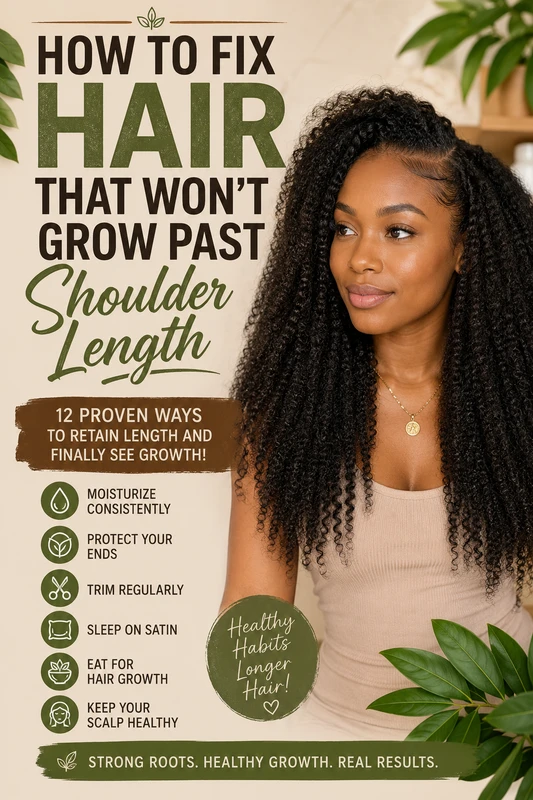
Have you been stuck with shoulder-length hair for months—or even years? If so, you're not alone. One of the most common frustrations among people with natural hair, curly hair, locs, relaxed hair, and protective styles is feeling like their hair simply refuses to grow any longer.
Here's the good news:
Your hair is probably growing.
The real issue is often length retention, not hair growth.
On average, hair grows about ½ inch per month, or roughly 6 inches per year. If your hair isn't getting longer, it usually means you're losing the same amount of hair through breakage, split ends, excessive shedding, or poor hair care habits.
In this guide, you'll learn exactly why hair gets stuck at shoulder length and what you can do to finally achieve longer, healthier hair.
Why Hair Gets Stuck at Shoulder Length
Hair reaches shoulder length at a point where it experiences more friction than ever before.
Shoulder-length hair constantly rubs against:
- Shirts
- Jackets
- Scarves
- Seat belts
- Backpack straps
- Pillowcases
Every day, this friction weakens the ends of your hair.
Eventually:
- Ends split
- Hair snaps
- Breakage increases
- Growth appears to stop
Meanwhile, your scalp continues producing new hair.
Hair Growth vs. Hair Retention
Many people confuse these two concepts.
Hair Growth
Hair follicles produce new strands from the scalp.
Growth depends on:
- Genetics
- Nutrition
- Hormones
- Overall health
- Scalp condition
Hair Retention
Retention refers to keeping the hair you've already grown.
You can grow six inches per year but only retain two inches if breakage removes the rest.
Length retention is the secret to waist-length hair.
1. Trim Damaged Ends
Many people avoid trims because they fear losing progress.
Ironically, damaged ends prevent growth.
Split ends continue traveling upward.
Eventually they cause:
- Knots
- Tangles
- Mid-shaft breakage
- Thinning ends
Small trims every 8–16 weeks can actually help hair grow longer by preventing major breakage.
2. Moisturize Hair Consistently
Dry hair breaks.
Healthy hair bends.
Moisture improves elasticity, reducing snapping during styling and detangling.
Excellent moisturizers contain:
- Aloe vera
- Glycerin
- Panthenol
- Honey
- Marshmallow root
- Slippery elm
After moisturizing, seal hydration with a lightweight natural oil.
3. Stop Overwashing
Frequent shampooing can strip natural oils.
Instead:
- Wash every 7–14 days for most hair types.
- Use sulfate-free cleansers.
- Focus shampoo on the scalp.
- Let the lather clean the hair lengths.
Clean hair grows better because healthy follicles aren't clogged with excess oil and product buildup.
4. Protect Your Ends
The oldest part of your hair deserves the most protection.
Simple protective habits include:
- Loose buns
- Twists
- Braids
- Low manipulation styles
- Silk scrunchies
- Satin bonnets
Keeping ends tucked away dramatically improves length retention.
5. Reduce Heat Damage
Flat irons and curling irons permanently weaken protein bonds.
Repeated heat exposure causes:
- Dryness
- Split ends
- Loss of elasticity
- Breakage
If you use heat:
- Always apply heat protectant.
- Keep temperatures below 375°F.
- Limit heat styling to special occasions.
6. Detangle Gently
Aggressive brushing destroys healthy strands.
Instead:
- Detangle on damp hair.
- Use conditioner with slip.
- Finger-detangle first.
- Work from ends upward.
- Be patient.
Every broken strand is lost length.
7. Improve Scalp Health
Healthy hair starts with a healthy scalp.
Keep your scalp:
- Clean
- Moisturized
- Free from excessive buildup
- Well-circulated
Scalp massages for 5–10 minutes several times a week may help improve blood circulation and create an environment that supports healthy hair growth.
8. Eat for Hair Growth
Hair is made primarily of protein.
Your diet directly affects growth.
Focus on foods rich in:
Protein
- Chicken
- Fish
- Eggs
- Beans
- Greek yogurt
Iron
- Spinach
- Lean beef
- Lentils
Vitamin C
- Citrus fruits
- Bell peppers
- Strawberries
Omega-3 Fatty Acids
- Salmon
- Walnuts
- Flaxseed
Zinc
- Pumpkin seeds
- Chickpeas
- Beef
9. Avoid Tight Hairstyles
Excessive tension damages follicles.
Avoid:
- Extremely tight ponytails
- Tight braids
- Tight loc retwists
- Tight sew-ins
Traction can eventually lead to permanent hair loss.
Protective styles should never hurt.
10. Sleep on Satin
Cotton pillowcases absorb moisture.
They also create friction.
Satin or silk:
- Reduces tangles
- Prevents dryness
- Protects ends
- Helps preserve hairstyles
One small change can make a huge difference over months.
11. Reduce Chemical Damage
Frequent coloring, bleaching, and relaxing weaken hair.
Space chemical treatments appropriately.
Always:
- Deep condition afterward.
- Use protein treatments when needed.
- Moisturize consistently.
Healthy chemically treated hair requires balance.
12. Be Patient
Hair growth takes time.
Typical yearly growth:
- 6 inches average
- Some people slightly more
- Some slightly less
Healthy habits compounded over months produce dramatic results.
Common Mistakes That Prevent Longer Hair
Avoid these common habits:
- Skipping trims
- Using excessive heat
- Detangling dry hair
- Sleeping without protection
- Overprocessing hair
- Ignoring scalp health
- Wearing styles too tightly
- Picking at split ends
- Excessive brushing
- Constantly changing hairstyles
Best Weekly Routine for Length Retention
Wash Day
- Cleanse scalp
- Condition thoroughly
- Detangle gently
- Apply leave-in conditioner
- Seal moisture
- Style with low manipulation
Midweek
- Refresh moisture
- Massage scalp
- Protect ends
Night
- Wear satin bonnet
- Use satin pillowcase
- Pineapple curls if necessary
- Avoid sleeping with loose dry hair
Natural Ingredients That Support Healthy Hair
Many people choose botanical ingredients to help maintain healthier hair. While no ingredient can magically make hair grow overnight, these natural options may help improve moisture, reduce breakage, and support a healthier scalp environment:
- Jamaican Black Castor Oil
- Rosemary
- Peppermint
- Aloe Vera
- Coconut Oil
- Avocado Oil
- Grapeseed Oil
- Tea Tree Oil
- Lavender Oil
- Jojoba Oil
Using these ingredients consistently as part of a healthy hair care routine can contribute to stronger, more resilient hair over time.
When to See a Professional
If your hair suddenly stops growing or you notice excessive shedding, patchy hair loss, scalp pain, or significant thinning, it's a good idea to consult a dermatologist or healthcare provider. Underlying medical conditions, nutritional deficiencies, hormonal changes, or certain medications can affect hair growth and should be properly evaluated.
Frequently Asked Questions
Why won't my hair grow past shoulder length?
In most cases, your hair is growing normally, but breakage prevents you from seeing additional length. Improving moisture, reducing damage, and protecting your ends can help you retain more of your growth.
How long does it take to grow hair past shoulder length?
Hair grows about half an inch per month on average. Depending on your starting point and how well you retain length, it may take several months to over a year to move significantly beyond shoulder length.
Does trimming make hair grow faster?
No. Trimming doesn't increase the speed of hair growth, but it removes damaged ends that can split and break, making it easier to retain length.
Can protective styles help?
Yes. Protective styles can reduce daily manipulation and friction when installed and maintained properly. Avoid styles that are excessively tight or left in too long.
What causes the most breakage?
Common causes include excessive heat styling, dry hair, rough detangling, tight hairstyles, chemical overprocessing, friction from clothing, and sleeping without satin protection.
Final Thoughts
If your hair won't grow past shoulder length, remember that growth is rarely the problem—retaining the hair you already grow is. By focusing on healthy scalp care, consistent moisturizing, gentle handling, protecting your ends, and minimizing breakage, you can steadily keep more of your natural growth over time.
Small improvements practiced week after week often lead to the biggest changes. Stay consistent, be patient, and prioritize healthy hair habits over quick fixes. With the right routine, shoulder-length hair can become mid-back, waist-length, or longer while remaining strong, healthy, and beautiful.