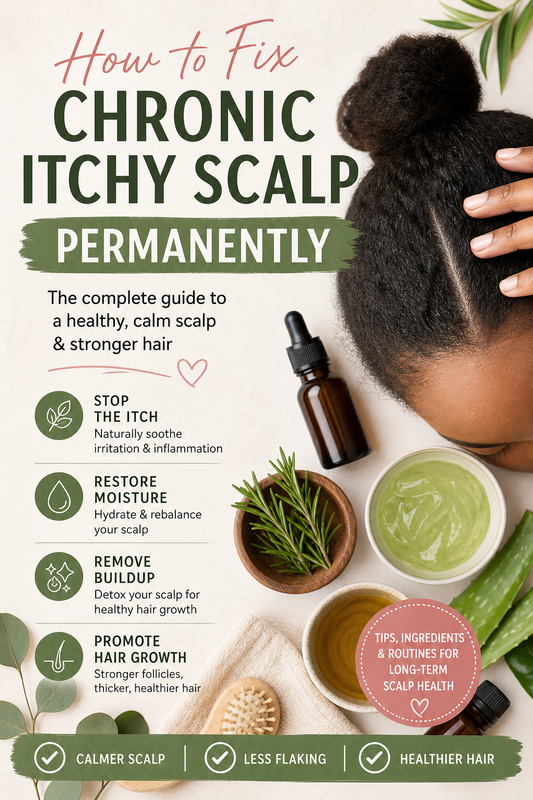
A chronically itchy scalp can feel exhausting, embarrassing, and impossible to escape. For many people, the itching never truly stops. It may calm down for a few days, then suddenly return stronger than before. Constant scratching can lead to irritation, flakes, tenderness, thinning hair, inflammation, and even hair loss over time.
The good news is this: chronic itchy scalp is usually treatable once you understand the real root cause.
Most people only treat the symptoms. They buy random oils, shampoos, scalp sprays, or dandruff products without understanding why their scalp is itching in the first place. Permanent relief comes from identifying the source of the problem and rebuilding a healthy scalp environment.
In this complete guide, you’ll learn:
- The real causes of chronic itchy scalp
- Why some itchy scalp treatments fail
- How inflammation damages hair growth
- The difference between dry scalp and dandruff
- How to stop scalp irritation naturally
- The best ingredients for long-term scalp healing
- Daily routines that permanently reduce itchiness
- The worst habits making your scalp worse
- How to regrow healthier hair after scalp damage
If your scalp constantly burns, flakes, tingles, or itches no matter what you try, this guide will help you finally regain control.
What Causes Chronic Itchy Scalp?
An itchy scalp is not a condition by itself. It’s a symptom.
Your scalp is trying to tell you that something is wrong with its balance, barrier, or microbiome.
The most common causes include:
1. Dry Scalp
Dry scalp happens when the scalp lacks moisture and natural oils.
Symptoms often include:
- Tightness
- Small white flakes
- Itching after washing
- Rough or dull hair
- Seasonal irritation
Dry scalp is extremely common during winter, low humidity weather, excessive shampooing, or dehydration.
2. Dandruff
Dandruff is different from dry scalp.
It’s usually caused by an overgrowth of yeast called Malassezia, which feeds on scalp oils and creates inflammation.
Symptoms include:
- Large flakes
- Oily scalp
- Persistent itching
- Redness
- Greasy buildup
Many people mistake dandruff for dryness and apply heavy oils that actually worsen the problem.
3. Product Buildup
Hair products can accumulate on the scalp over time.
This buildup can trap:
- Sweat
- Dirt
- Dead skin cells
- Bacteria
- Excess oils
Heavy buildup blocks follicles and creates irritation.
Common buildup-causing products include:
- Thick pomades
- Heavy grease
- Silicone-rich products
- Excessive dry shampoo
- Sticky edge controls
4. Scalp Inflammation
Inflammation is one of the biggest hidden causes of chronic itching.
Inflamed scalps often feel:
- Tender
- Hot
- Burning
- Tingly
- Painful when touched
Chronic inflammation can weaken follicles and contribute to thinning hair.
5. Allergic Reactions
Your scalp may react negatively to ingredients in shampoos, dyes, fragrances, or synthetic products.
Common irritants include:
- Sulfates
- Artificial fragrance
- Alcohol-heavy sprays
- Hair dye chemicals
- Preservatives
Even products labeled “natural” can trigger sensitivity in some people.
6. Tight Hairstyles
Protective styles can sometimes create scalp stress.
Styles that commonly trigger itching include:
- Tight braids
- Tight ponytails
- Heavy wigs
- Tight sew-ins
- Tight loc retwists
Constant tension irritates follicles and damages the scalp barrier.
7. Scalp Psoriasis or Eczema
Some chronic scalp conditions require medical treatment.
Symptoms may include:
- Thick scales
- Severe redness
- Cracking
- Bleeding
- Painful patches
If your itching becomes severe or spreads beyond the scalp, consult a dermatologist.
Why Chronic Itchy Scalp Can Cause Hair Loss
Many people don’t realize scalp health directly affects hair growth.
Healthy hair grows from healthy follicles.
When your scalp stays inflamed for months or years, it can:
- Shrink follicles
- Slow growth cycles
- Increase shedding
- Cause breakage
- Weaken roots
Scratching also damages the scalp physically.
Constant scratching can create microtears that worsen irritation and increase inflammation.
If you want thicker hair, healthier locs, stronger edges, or faster growth, scalp healing must come first.
Dry Scalp vs Dandruff: Know the Difference
One of the biggest mistakes people make is treating dandruff like dryness.
Here’s the difference:
| Dry Scalp | Dandruff |
|---|---|
| Small flakes | Large oily flakes |
| Tight feeling | Greasy feeling |
| Caused by lack of moisture | Caused by yeast overgrowth |
| Often seasonal | Often chronic |
| Improves with moisture | May worsen with oils |
Understanding the difference changes everything.
The Best Routine to Fix Chronic Itchy Scalp Permanently
Consistency matters more than random treatments.
Here’s the ideal scalp-healing routine.
Step 1: Detox the Scalp
A clogged scalp cannot heal properly.
Use a gentle clarifying shampoo every 2–4 weeks to remove:
- Product buildup
- Sweat
- Dirt
- Dead skin
- Excess oil
Avoid harsh shampoos that completely strip the scalp.
Look for ingredients like:
- Tea tree oil
- Peppermint
- Apple cider vinegar
- Salicylic acid
- Aloe vera
Step 2: Restore Moisture Balance
Your scalp needs hydration just like your skin.
Focus on lightweight moisture rather than heavy grease.
Excellent moisturizing ingredients include:
- Aloe vera
- Jojoba oil
- Glycerin
- Rose water
- Avocado oil
Lightweight hydration helps calm irritation without clogging follicles.
Step 3: Reduce Inflammation Naturally
Scalp inflammation is a major trigger for chronic itching.
Some of the best anti-inflammatory ingredients include:
Rosemary Oil
Rosemary oil helps stimulate circulation while calming irritation.
Peppermint Oil
Peppermint creates a cooling sensation that temporarily relieves itching.
Tea Tree Oil
Tea tree oil has antifungal and antibacterial properties.
Aloe Vera
Aloe vera helps soothe irritated skin and reduce redness.
Jamaican Black Castor Oil
Jamaican black castor oil can help seal in moisture while supporting scalp nourishment when used moderately.
Step 4: Protect the Scalp Barrier
Your scalp barrier is your scalp’s protective shield.
Damaging it leads to chronic sensitivity.
Avoid:
- Overwashing
- Excessive scratching
- Harsh shampoos
- Tight hairstyles
- Excess heat
A healthy scalp barrier retains moisture and resists irritation better.
Step 5: Improve Scalp Circulation
Poor circulation may contribute to slow healing and sluggish hair growth.
Daily scalp massage can help:
- Increase blood flow
- Relax tension
- Improve product absorption
- Support healthier follicles
Massage gently for 3–5 minutes daily.
The Best Natural Ingredients for Itchy Scalp Relief
Aloe Vera
Aloe vera is one of the best ingredients for itchy scalp relief.
Benefits include:
- Hydration
- Cooling relief
- Reduced inflammation
- Scalp healing support
Peppermint Oil
Peppermint oil provides instant cooling relief for many people.
It may help:
- Reduce itchiness
- Improve circulation
- Refresh the scalp
Always dilute essential oils properly.
Tea Tree Oil
Tea tree oil is extremely effective for dandruff-related itching.
It may help reduce:
- Yeast overgrowth
- Flaking
- Irritation
Rosemary Oil
Rosemary oil is popular for both scalp health and hair growth.
Benefits may include:
- Improved circulation
- Reduced inflammation
- Stronger follicles
Apple Cider Vinegar
Apple cider vinegar helps rebalance scalp pH levels.
It may help reduce:
- Product buildup
- Excess oil
- Flakes
Always dilute before use.
The Worst Habits for Chronic Itchy Scalp
1. Overusing Heavy Grease
Heavy grease suffocates the scalp and traps buildup.
2. Scratching Aggressively
Scratching worsens inflammation and damages follicles.
3. Leaving Sweat on the Scalp
Sweat buildup can irritate sensitive scalps.
Cleanse after heavy sweating when possible.
4. Tight Protective Styles
Styles that pull the scalp create irritation and tension.
5. Overwashing
Too much washing strips natural oils and worsens dryness.
6. Ignoring Ingredients
Some shampoos contain harsh ingredients that trigger scalp sensitivity.
How Diet Affects Scalp Itching
Your scalp health is connected to your internal health.
Poor nutrition may contribute to inflammation.
Focus on foods rich in:
- Omega-3 fatty acids
- Zinc
- Iron
- Vitamin D
- Biotin
- Antioxidants
Hydration also matters.
Dehydration can worsen scalp dryness and irritation.
Can Stress Cause Itchy Scalp?
Yes.
Stress increases inflammation throughout the body.
It can trigger:
- Excess oil production
- Increased sensitivity
- Scalp tension
- Flare-ups of eczema or psoriasis
Stress management helps more than many people realize.
Best Hairstyles for an Itchy Scalp
If your scalp is irritated, choose low-tension styles.
Best options include:
- Loose twists
- Loose braids
- Low-manipulation styles
- Lightweight wigs
- Gentle loc maintenance
Avoid styles that pull your edges or create scalp pain.
How to Sleep Without Irritating Your Scalp
Cotton pillowcases absorb moisture and increase friction.
Use:
- Satin bonnets
- Silk scarves
- Satin pillowcases
These help preserve scalp moisture overnight.
How Often Should You Wash an Itchy Scalp?
It depends on the cause.
General guidelines:
| Scalp Type | Wash Frequency |
|---|---|
| Dry scalp | Every 7–10 days |
| Oily dandruff scalp | Every 4–7 days |
| Heavy buildup | Clarify every 2–4 weeks |
| Active sweating | More frequent cleansing may help |
Overwashing and underwashing can both worsen symptoms.
Signs Your Scalp Is Healing
Healing takes consistency.
Positive signs include:
- Less itching
- Fewer flakes
- Reduced tenderness
- Softer scalp skin
- Improved hair retention
- Less inflammation
Hair growth may also improve once the scalp environment stabilizes.
How Long Does It Take to Fix Chronic Itchy Scalp?
Results vary depending on the cause.
Some people improve within:
- Days
- Weeks
- Months
Long-term scalp damage may require more patience.
Consistency matters more than quick fixes.
A Simple Weekly Scalp Healing Routine
Wash Day
- Gentle cleanse
- Scalp massage
- Lightweight moisturizing treatment
- Apply scalp oil sparingly
Midweek
- Refresh scalp with aloe vera or lightweight spray
- Massage scalp gently
- Avoid heavy buildup
Monthly
- Clarify scalp
- Trim damaged ends if needed
- Evaluate product reactions
Best Ingredients to Avoid if You Have Chronic Itchy Scalp
Some ingredients commonly trigger irritation.
Watch out for:
- Sulfates
- Excess alcohol
- Heavy artificial fragrance
- Mineral oil overload
- Harsh preservatives
Simpler routines often work better for sensitive scalps.
Why Healthy Scalp Care Improves Hair Growth
When the scalp environment improves, follicles function better.
Healthy follicles are more likely to produce:
- Stronger strands
- Better retention
- Reduced shedding
- Faster visible growth
Scalp care and hair growth are deeply connected.
Natural Remedies for Itchy Scalp
Aloe Vera Gel Mask
Apply pure aloe vera gel to the scalp for 15–20 minutes before washing.
Diluted Tea Tree Oil
Add a few drops to shampoo for dandruff-related itching.
Rosemary Oil Massage
Massage diluted rosemary oil into the scalp 2–3 times weekly.
Apple Cider Vinegar Rinse
Use diluted apple cider vinegar after cleansing.
When to See a Dermatologist
Seek medical help if you experience:
- Severe redness
- Bleeding
- Open sores
- Hair falling out in patches
- Painful scalp lesions
- Thick crusting
Some scalp conditions require prescription treatment.
The Truth About Permanent Itchy Scalp Relief
Permanent relief comes from consistency and balance.
Most people bounce between:
- Overdrying the scalp
- Overoiling the scalp
- Ignoring buildup
- Using harsh products
- Switching routines too often
Real scalp healing takes patience.
The goal is not just reducing symptoms temporarily — it’s rebuilding a healthy scalp environment long term.
Final Thoughts
Chronic itchy scalp can feel frustrating, distracting, and emotionally draining. But in most cases, it can improve dramatically once you understand the true cause.
Healthy scalp care is not about using the harshest shampoo or the heaviest oil. It’s about restoring balance.
Focus on:
- Gentle cleansing
- Moisture balance
- Reducing inflammation
- Avoiding buildup
- Supporting scalp circulation
- Using consistent routines
When your scalp becomes healthier, your hair often becomes healthier too.
Calmer scalp.
Stronger follicles.
Better growth.
Less irritation.
More confidence.
That’s the real goal.