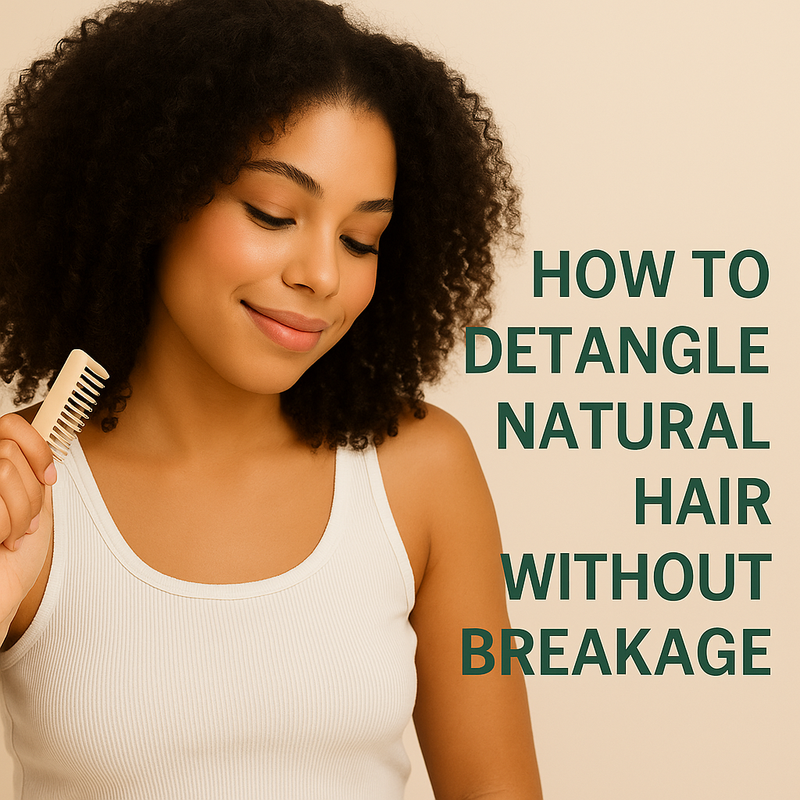
Detangling natural hair can feel like one of the most time-consuming parts of wash day — but it doesn’t have to be. With the right tools, products, technique, and patience, you can detangle curly, coily, and kinky hair without breakage, pain, or frustration.
Whether you have Type 3 curls, Type 4 coils, locs, or thick protective styles, this guide will show you exactly how to detangle natural hair gently and effectively. We'll also highlight how products like Hairobics Leave-In Conditioner, Hair & Scalp Booster, Raaw Roots Moisturizing Spray, and Soft Pomade make the process smoother, faster, and healthier for your hair.
Let’s get into the science, the technique, and the routine that will keep your curls soft, defined, and breakage-free.
1. Why Natural Hair Tangles So Easily
Natural hair is beautiful — and unique. Its coils and curls make it more prone to dryness, tangles, and knots.
Here’s why your hair tangles:
1. Natural Curl Pattern
Curly and coily hair strands wrap around each other, causing single-strand knots and tangles.
2. Dryness
Curly hair produces less sebum (natural oils), which means less lubrication. When hair lacks moisture, it clings, coils, and catches onto itself.
3. Shedding
We lose 50–100 hairs per day. If your hair is in protective styles or not combed often, shed hair gets trapped, creating knots.
4. Product Buildup
Gels, creams, and heavy oils can create sticky, stiff tangles.
5. Friction
Sleeping on cotton pillowcases, rubbing your hair with towels, or wearing hats without satin lining can cause breakage and tangling.
Good news:
You can minimize breakage simply by detangling the right way and using the right moisture-rich products.
2. Signs You’re Detangling Incorrectly
If you notice any of these signs, your detangling routine needs an upgrade:
-
Excessive hair in the comb or shower drain
-
Loud snapping or ripping sounds
-
Hair feels dry or brittle during the process
-
You lose curl definition
-
End pieces look frizzy or thinning
-
You dread wash day
This usually means you’re detangling dry, using the wrong tools, or not prepping the hair properly.
3. The Best Time to Detangle Natural Hair
Always detangle hair when it’s:
-
Damp
-
Coated with slip (conditioner, leave-in, moisturizing spray)
-
Lubricated with oils or water-based products
Detangling dry natural hair is one of the biggest causes of breakage.
You can detangle during:
✔ Pre-pooing
Using oils or conditioners before shampoo.
✔ Deep conditioning
Hair is at its softest with conditioner.
✔ Styling
With leave-in treatments and moisturizers.
For extremely thick or coily hair (Type 4), detangling during deep conditioning works best.
4. Essential Tools for Safe, Breakage-Free Detangling
Using the right tools makes a HUGE difference. The wrong comb or brush can rip out perfectly healthy hair.
Highly Recommended Tools:
-
Wide-tooth comb
-
Detangling brush or Tangle Teezer
-
Fingers (the gentlest tool you have)
-
Spray bottle with water
-
Hair clips for sectioning
-
Satin scrunchies
Products That Add Slip:
Products with slip allow the comb to glide through without friction.
Your best options:
⭐ Hairobics Raaw Roots Moisturizing Spray
Instant hydration and slip for curls.
⭐ Hairobics Leave-In Hair & Scalp Treatment
Adds softness, smoothness, and detangling power.
⭐ Hairobics Soft Pomade
Helps seal moisture and keep strands lubricated during styling.
⭐ Hairobics Hair & Scalp Booster
Keeps roots nourished and reduces dryness that leads to tangling.
5. Step-By-Step: How to Detangle Natural Hair Without Breakage
This is the most important part — a gentle, proven detangling routine.
Step 1: Start With Moisture (Never Dry Hair)
Spritz your hair lightly with water or use Raaw Roots Moisturizing Spray until it’s damp, not soaking wet.
Damp hair:
-
Has more elasticity
-
Is easier to stretch
-
Reduces breakage
-
Allows product to absorb better
Avoid detangling when soaking wet — wet hair is more fragile.
Step 2: Apply Slip Products Generously
Coat each section with a moisturizing, detangling product:
-
Hairobics Leave-In Treatment
-
A slippery conditioner
-
Or natural oils (argan, olive, jojoba)
This step reduces friction and makes detangling a breeze.
You should feel the hair soften immediately.
Step 3: Divide Hair Into Sections
Split hair into 4–8 sections depending on thickness.
Why?
-
Easier control
-
Less tangling
-
More gentle detangling
-
Prevents re-tangling
Secure the sections with clips or satin scrunchies.
Step 4: Use Your Fingers First
Before reaching for combs or brushes, use your fingers to gently pull apart knots.
Finger detangling:
-
Keeps curls intact
-
Reduces shedding
-
Avoids ripping or snapping
Work slowly and feel for knots instead of forcing your fingers through.
Step 5: Start From the Ends, Work Upward
This is the golden rule.
Never start detangling from the roots — it pushes knots downward, making them worse.
Proper order:
-
Ends
-
Midshaft
-
Roots
Think of it like untying a rope:
You start at the bottom.
Use a wide-tooth comb or detangling brush, gently working upward as tangles release.
Step 6: Be Gentle With Single-Strand Knots
Natural hair often forms fairy knots. Don’t yank!
Instead:
-
Add more leave-in
-
Rub the knot gently
-
Detangle slowly
If it won’t budge, cut it with hair shears — not regular scissors.
Step 7: Keep Hair Covered as You Move Along
Once a section is fully detangled:
-
Twist it
-
Braid it
-
Or clip it away
This prevents tangles from returning.
Step 8: Rinse or Style With Moisture Still Locked In
Once all sections are done, you can:
-
Rinse (if you’re mid-wash)
-
Apply styling products
-
Or go straight into braids, twists, or protective styles
To finish:
Seal moisture with:
-
Hairobics Soft Pomade
-
Or Scalp Rejuvenator Oil
This locks in hydration and keeps hair smooth.
6. Detangling by Hair Type
Different curl types benefit from different techniques. Here’s what works best:
Type 3 (Curly Hair)
-
Needs lightweight products
-
Avoid heavy oils
-
Detangles easily with leave-in conditioner
-
Best tools: wide-tooth comb or detangling brush
Type 4A (Loose Coils)
-
Finger detangling works extremely well
-
Needs richer conditioners
-
Oils help soften knots
-
Detangle in small sections
Type 4B/4C (Tight Coils & Zig-Zag Pattern)
-
Most prone to tangles
-
Requires patience and more slip
-
Pre-poo + leave-in + finger detangling is ideal
-
Use tools last, not first
Locs
-
Use moisturizing sprays only
-
Palm roll or gently separate new growth
-
Never comb out mature locs
-
Use Hairobics Hair & Scalp Booster on roots for slip and nourishment
7. The Best Products to Prevent Tangling Long-Term
Moisture is everything.
Here are the best categories of products to keep tangles away:
⭐ Moisturizing Sprays (Daily Use)
Like Raaw Roots Moisturizing Spray.
Keeps hair hydrated and prevents dryness.
⭐ Leave-In Conditioners
Strengthens hair, repairs cuticles, and adds slip.
⭐ Lightweight Oils
Jojoba, argan, and Hairobics Hair & Scalp Booster help lubricate strands.
⭐ Sealants
Hairobics Soft Pomade seals in moisture and prevents friction.
⭐ Deep Conditioners
Use weekly to maintain softness.
8. Mistakes That Cause Breakage When Detangling
Avoid these common mistakes:
❌ Detangling dry hair
❌ Using small-tooth combs
❌ Rushing
❌ Detangling without product
❌ Using cheap brushes
❌ Skipping trims
❌ Sleeping on cotton pillows
❌ Not sectioning the hair
Correcting these mistakes alone can reduce breakage by 70–90%.
9. How Often Should You Detangle Natural Hair?
It depends on your hair type, texture, and routine:
Loose curls: 1–2 times per week
Type 4 coils: Once per week
Protective styles: Every 2–3 days (with moisturizing spray only)
Locs: Never detangle; only separate roots
Over-detangling can cause unnecessary stress on hair fibers.
10. A Complete Detangling Routine Using Hairobics Products
Here’s a full step-by-step routine using Hairobics products:
Before Wash: Pre-Poo
Apply Hairobics Hair & Scalp Booster to dry hair and gently finger detangle.
During Wash
Condition hair and detangle with wide-tooth comb while conditioner is still in.
After Wash
Spray Raaw Roots Moisturizing Spray generously.
Apply Leave-In Hair & Scalp Treatment for extra slip.
Detangle again if needed.
Seal & Style
Use Soft Pomade to seal moisture.
Style in braids, twists, or wash-and-go.
11. Tips to Prevent Tangles Between Wash Days
Here’s how to make your detangling sessions much easier:
-
Sleep with a satin bonnet or scarf
-
Pineapple your curls at night
-
Moisturize daily
-
Avoid friction from hats or rough clothing
-
Stretch your hair with braids or twists
-
Trim split ends regularly
-
Avoid excessive heat
Healthy, moisturized hair tangles far less.
12. Final Thoughts: Detangling Can Be Easy, Pain-Free, and Breakage-Free
Detangling natural hair doesn’t have to be frustrating. With patience, the right tools, and a moisture-first approach, you can glide through tangles without ripping, snapping, or breaking your hair.
Remember the golden rules:
-
Work in sections
-
Use plenty of slip
-
Start from the ends
-
Use your fingers first
-
Never detangle dry hair
Combine these techniques with Hairobics All Natural’s moisturizing and strengthening products, and your hair will be softer, healthier, and easier to manage — every single day.