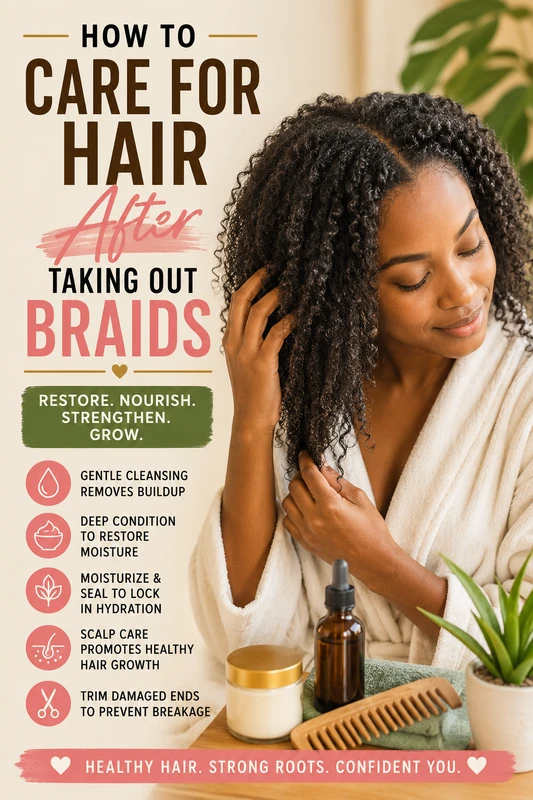
Protective styles like braids are one of the best ways to reduce daily manipulation, retain length, and protect natural hair. Whether you wore box braids, knotless braids, cornrows, twists, or crochet braids, removing them is only the beginning of your next healthy hair journey.
Many people panic after braid removal because they notice loose strands, tangles, dryness, or shedding. Fortunately, most of these changes are completely normal. What matters most is how you treat your hair during the first few days after taking your braids out.
A proper post-braid routine helps prevent unnecessary breakage, restores moisture, strengthens weakened strands, and prepares your hair for your next protective style.
In this complete guide, you'll learn exactly how to care for your hair after taking out braids so your hair stays healthy, thick, and continues growing.
Why Your Hair Looks Different After Removing Braids
Many people think they've suddenly lost a large amount of hair after removing braids.
In reality, you're seeing weeks of naturally shed hair that never had the chance to fall out.
The average person loses:
- 50–100 hairs every day
If your braids stayed in for:
- 6 weeks = over 2,000 shed hairs
- 8 weeks = over 4,000 shed hairs
Instead of falling throughout the day, those hairs remained trapped inside your braids until removal.
This is completely normal.
Step 1: Remove Braids Gently
The removal process is just as important as installing them.
Never rush.
Avoid:
- Pulling
- Ripping
- Cutting too high
- Tugging through tangles
Instead:
- Remove one braid at a time.
- Finger-detangle immediately.
- Separate shed hair from healthy strands.
Patience now prevents massive breakage later.
Step 2: Detangle Before Washing
One of the biggest mistakes people make is jumping straight into the shower.
Water tightens tangles.
Always detangle first.
Use:
- Fingers
- Wide-tooth comb
- Detangling brush only after finger detangling
Work:
- Ends first
- Mid-length
- Roots last
This prevents knots from becoming impossible to remove.
Step 3: Remove All Shed Hair
As you detangle, remove accumulated shed hair.
You'll notice:
- Hair balls
- Loose strands
- Small knots
Do not panic.
These are usually hairs that naturally shed while your braids were installed.
Continue gently removing them section by section.
Step 4: Pre-Poo Before Shampooing
A pre-poo protects your hair from excessive drying.
Good options include:
- Aloe vera
- Conditioner
- Coconut oil
- Olive oil
- Hair butter
Apply generously.
Leave on:
20–30 minutes
Benefits include:
- Softer tangles
- Less breakage
- Easier washing
- Better moisture retention
Step 5: Clean Your Scalp Thoroughly
Your scalp has likely accumulated:
- Sweat
- Oil
- Dust
- Styling products
- Dead skin
Use a gentle sulfate-free shampoo.
Massage:
- Scalp only
Avoid:
- Scrubbing hair lengths aggressively
Allow shampoo to rinse through the hair naturally.
Repeat if necessary.
Step 6: Clarify If Necessary
If your braids stayed in several weeks, product buildup may be heavy.
Use a clarifying shampoo once.
Signs you need clarification:
- Hair feels coated
- Hair won't absorb moisture
- Sticky strands
- Dull appearance
- Heavy scalp buildup
Avoid clarifying every wash because it can become drying.
Step 7: Deep Condition Immediately
Deep conditioning is one of the most important steps after braid removal.
Look for products containing:
- Shea butter
- Aloe vera
- Avocado oil
- Coconut oil
- Honey
- Panthenol
Leave on:
20–40 minutes
Use heat if possible.
Deep conditioning restores:
- Moisture
- Elasticity
- Shine
- Softness
Step 8: Moisturize Correctly
Hair is usually thirsty after weeks inside braids.
Apply moisture in layers.
A simple routine includes:
- Water
- Leave-in conditioner
- Hair oil
- Butter or cream if needed
This helps lock moisture inside each strand.
Step 9: Don't Skip the Scalp
Healthy hair begins with a healthy scalp.
Massage lightweight oils into the scalp 2–3 times weekly.
Benefits include:
- Improved moisture
- Reduced dryness
- Less flaking
- Better scalp comfort
Gentle massage also helps distribute natural oils.
Step 10: Trim Damaged Ends
Braids sometimes hide split ends.
Inspect your ends.
Trim only if necessary.
Removing damaged ends prevents splits from traveling upward.
Healthy ends retain length much better than damaged ones.
Common Problems After Taking Out Braids
Dry Hair
Hair often feels dry because:
- Moisture wasn't added regularly
- Shampoo residue remains
- Weather exposure
- Product buildup
Solution:
- Deep condition
- Moisturize consistently
- Seal with oil
Itchy Scalp
Causes include:
- Product buildup
- Sweat
- Dead skin
- Dry scalp
Wash thoroughly and moisturize afterward.
Hair Feels Weak
Braids reduce manipulation.
When removed, hair may feel fragile.
Strengthening treatments containing protein can help restore resilience.
Hair Looks Shorter
Shrinkage often returns immediately after braid removal.
Natural curls contract once freed.
This is normal and not actual hair loss.
Tangles
Hair may wrap around shed strands.
Finger detangle patiently before using combs.
Never force knots apart.
Should You Use Protein?
It depends.
Signs your hair may benefit include:
- Mushy texture
- Excessive stretching
- Breaking easily
- Weak curls
Avoid overusing protein.
Too much can make hair stiff and brittle.
Balance moisture and protein for the healthiest results.
How Long Should You Wait Before Installing New Braids?
Give your hair time to recover.
Many healthy hair professionals recommend waiting:
1–2 weeks
During this time:
- Wash
- Moisturize
- Deep condition
- Massage scalp
- Strengthen strands
Your next style will last longer because your hair is healthier.
Foods That Support Hair Recovery
Healthy hair starts inside your body.
Focus on foods rich in:
Protein
Examples:
- Eggs
- Fish
- Chicken
- Greek yogurt
Iron
Examples:
- Spinach
- Lentils
- Lean beef
Omega-3 fats
Examples:
- Salmon
- Walnuts
- Chia seeds
Vitamin C
Examples:
- Oranges
- Strawberries
- Bell peppers
Biotin
Examples:
- Eggs
- Almonds
- Sweet potatoes
Hydration is equally important.
Drink enough water daily to support scalp and hair health.
Daily Hair Care Routine After Braids
Morning
- Mist hair lightly with water.
- Apply leave-in conditioner.
- Seal with a lightweight oil.
- Style gently.
Evening
- Moisturize dry areas.
- Massage scalp for 3–5 minutes.
- Cover hair with a satin bonnet or sleep on a satin pillowcase.
Weekly Routine
Week 1
- Wash
- Deep condition
- Moisturize
- Trim if needed
Week 2
- Scalp massage
- Moisture treatment
- Protective styling with loose hairstyles
Week 3
- Continue hydration
- Evaluate scalp health
Mistakes to Avoid
Skipping Detangling
Always detangle before washing.
Using Too Much Heat
Avoid excessive blow drying or flat ironing immediately after braid removal.
Hair is more vulnerable.
Tight Hairstyles
Loose buns and twists are better while hair recovers.
Ignoring Split Ends
Damaged ends continue splitting upward if ignored.
Installing New Braids Immediately
Allow recovery time before another protective style.
Signs Your Hair Is Recovering
You'll notice:
- Increased softness
- Better moisture retention
- Less breakage
- Easier detangling
- Healthy shine
- Flexible strands
- Reduced shedding
- Comfortable scalp
These signs indicate your recovery routine is working.
Long-Term Tips for Healthy Hair Between Braids
Healthy hair is built through consistent care—not just protective styling. Between braid installations, keep your hair moisturized, avoid excessive heat, wear satin or silk at night, trim damaged ends every few months, and maintain a clean scalp. Giving your hair regular breaks from tension allows your follicles and strands to recover, reducing the risk of thinning edges and traction-related damage.
Protective styles should protect your hair, not replace a healthy hair care routine. When you combine nourishing products, gentle handling, balanced nutrition, and patience, your hair has the best chance to thrive year-round.
Frequently Asked Questions
Is it normal to lose a lot of hair after taking out braids?
Yes. Most of what you see is normal daily shedding that remained trapped inside your braids for several weeks. Unless you notice bald patches, severe scalp irritation, or excessive breakage, this amount of shedding is generally expected.
Should I wash my hair immediately after removing braids?
Yes. After gently detangling and removing shed hair, cleanse your scalp with a gentle shampoo to remove buildup, sweat, oils, and debris accumulated while wearing braids.
Can I deep condition the same day?
Absolutely. In fact, deep conditioning immediately after washing is one of the best ways to replenish lost moisture, improve elasticity, and reduce future breakage.
How long should I wait before getting braids again?
Waiting at least one to two weeks gives your scalp and strands time to recover. During this period, focus on moisturizing, deep conditioning, and gentle styling.
Why does my hair feel dry after braid removal?
Hair often loses moisture while in protective styles, especially if it wasn't moisturized regularly. Product buildup can also block hydration. A thorough cleanse followed by deep conditioning and regular moisturizing usually restores softness.
Final Thoughts
Taking out braids doesn't mean your protective styling journey is over—it marks the beginning of your hair's recovery phase. By removing braids carefully, detangling with patience, cleansing away buildup, restoring moisture with deep conditioning, and giving your scalp time to recover before your next style, you can minimize breakage and maximize healthy hair growth.
Consistency is the secret. Every gentle wash, moisturizing session, scalp massage, and healthy habit contributes to stronger, fuller, and more resilient hair over time.
If you're committed to long, healthy natural hair, treat your post-braid routine with the same care you gave your protective style. Your hair will reward you with improved strength, shine, and length retention for your next braid installation and beyond.