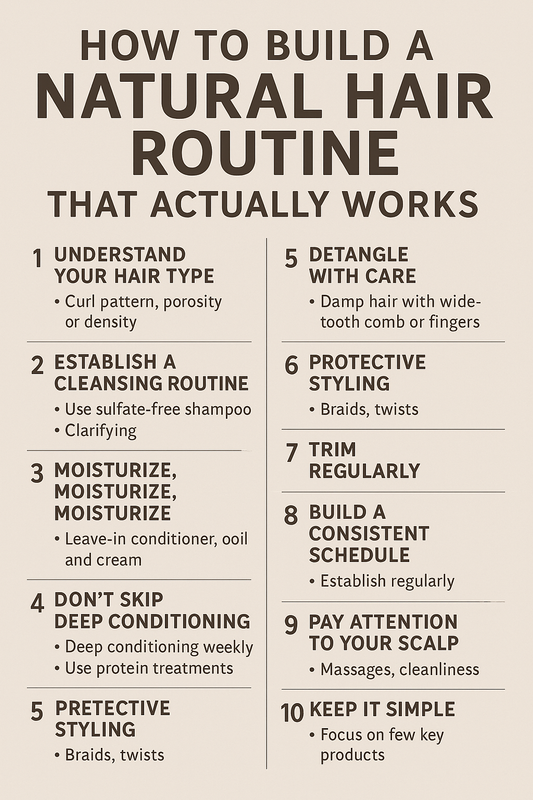
Taking care of natural hair is both a beautiful journey and a learning experience. With so many products, methods, and conflicting advice floating around, it’s easy to feel overwhelmed when trying to build a natural hair routine. The truth is, there’s no one-size-fits-all solution—what works for one person’s curls may not work for another’s. The key is creating a routine that fits your unique hair type, lifestyle, and goals.
In this guide, we’ll break down how to build a natural hair routine that actually works—step by step.
Step 1: Understand Your Hair Type
Before you can create a routine, you need to know what kind of hair you’re working with. Natural hair is incredibly diverse, ranging from loose waves to tight coils. The curl pattern is often categorized using the hair typing system:
-
Type 2 (Wavy): Loose waves, fine to medium strands.
-
Type 3 (Curly): Defined curls, more prone to frizz.
-
Type 4 (Coily/Kinky): Tight coils, often very fragile and prone to dryness.
But curl type isn’t the only factor. Pay attention to:
-
Porosity (how well your hair absorbs and retains moisture).
-
Density (how thick or thin your hair appears).
-
Strand width (fine, medium, or coarse).
Understanding these elements will help you choose the right products and techniques.
Step 2: Establish a Cleansing Routine
Clean, healthy hair starts with your scalp. But natural hair thrives best when you don’t over-wash it.
-
Shampooing: Use a sulfate-free shampoo once a week or every two weeks to cleanse without stripping natural oils. If you have a dry scalp, stretch washes further.
-
Co-washing: Many naturals love using a cleansing conditioner in between shampoos to refresh curls without harsh cleansing.
-
Clarifying: Once a month, use a clarifying shampoo to remove buildup from products, oils, and sweat.
Pro tip: Always massage your scalp with your fingertips (not nails) to boost circulation and encourage growth.
Step 3: Moisturize, Moisturize, Moisturize
Moisture is the foundation of any natural hair routine. Because curly and coily hair textures tend to be drier, hydration should always be a top priority.
Here’s a simple formula:
-
Hydrate with water or a water-based leave-in conditioner.
-
Seal with an oil (like jojoba, olive, or argan oil).
-
Lock it in with a cream or butter (such as shea butter or a curl cream).
This layering technique, often called the LOC method (Liquid, Oil, Cream) or LCO method (Liquid, Cream, Oil), keeps curls soft and defined. Experiment with both to see which works best for your hair.
Step 4: Don’t Skip Deep Conditioning
Deep conditioning is the secret weapon for healthy natural hair. Aim to deep condition at least once a week or every other wash.
-
Moisturizing deep conditioners replenish hydration.
-
Protein treatments strengthen strands and prevent breakage (use once a month or as needed).
Cover your hair with a shower cap and sit under a hooded dryer or use a heat cap for maximum absorption.
Step 5: Detangle with Care
Detangling can make or break your natural hair routine—literally. Rough handling causes unnecessary breakage.
Tips for safe detangling:
-
Always detangle when hair is damp or coated with conditioner.
-
Use a wide-tooth comb, a detangling brush, or your fingers.
-
Work in small sections, starting from the ends and working your way up.
Patience is key here. The gentler you are, the healthier your hair will be.
Step 6: Protective Styling
Protective styles reduce manipulation and help retain length. Braids, twists, bantu knots, wigs, and weaves (done correctly) all protect your hair.
When wearing protective styles:
-
Don’t make them too tight (to avoid tension and breakage).
-
Moisturize your scalp regularly.
-
Keep them in for no longer than 6–8 weeks.
At night, always protect your style with a satin or silk scarf, bonnet, or pillowcase.
Step 7: Trim Regularly
A lot of naturals avoid trimming because they want to keep length, but skipping trims often leads to more breakage in the long run. Regular trims:
-
Get rid of split ends.
-
Keep your curls looking neat and defined.
-
Encourage healthier growth.
Aim for a trim every 8–12 weeks, depending on your hair’s needs.
Step 8: Build a Consistent Schedule
A good natural hair routine isn’t just about products—it’s about consistency. Here’s a sample routine you can try:
-
Weekly: Wash, deep condition, moisturize, style.
-
Daily or every other day: Refresh curls with a spray bottle of water and leave-in conditioner, then seal with oil if needed.
-
Monthly: Clarify scalp and hair, do a protein treatment if necessary, and check if a trim is due.
Your schedule may vary, but what matters most is sticking to it. Over time, you’ll notice your hair becoming healthier, stronger, and more predictable.
Step 9: Pay Attention to Your Scalp
Healthy hair starts with a healthy scalp. A dry, itchy, or flaky scalp can prevent growth and cause discomfort.
Tips for scalp care:
-
Massage with natural oils like peppermint, tea tree, or castor oil.
-
Keep your scalp clean—don’t let product buildup sit for weeks.
-
Avoid scratching, which can cause irritation.
Step 10: Keep It Simple
One of the biggest mistakes naturals make is trying every new product or method they see online. While experimenting can be fun, it often leads to product overload and wasted money.
Instead, stick to a core set of products that your hair loves:
-
A gentle shampoo or co-wash.
-
A moisturizing conditioner.
-
A deep conditioner.
-
A leave-in conditioner.
-
A sealing oil or cream.
Once you’ve mastered your basics, you can slowly add new products if needed.
Step 11: Stay Patient and Listen to Your Hair
Building a natural hair routine is about trial and error. Your hair will let you know what it likes and dislikes—pay attention. If it feels dry, add more moisture. If it feels weak, add protein. If your scalp is itchy, cleanse more often.
Most importantly, be patient. Natural hair growth and progress take time, but with consistency, you’ll see results.
Final Thoughts
Creating a natural hair routine that actually works doesn’t have to be complicated. By understanding your hair type, focusing on moisture, deep conditioning regularly, protecting your strands, and staying consistent, you’ll build a routine that not only works but also helps you fall in love with your hair.
Remember: your journey is unique. Don’t compare your progress to someone else’s. Instead, focus on learning what makes your hair thrive, and celebrate every milestone along the way.
Healthy, beautiful natural hair is possible—you just need the right routine.