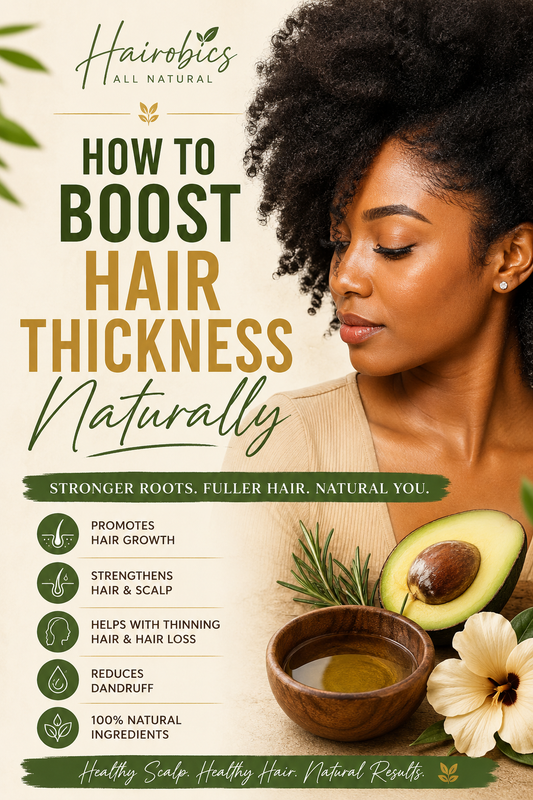
If you've ever looked in the mirror and wished your hair looked thicker, fuller, and healthier, you're not alone. Millions of people struggle with thinning hair, fine strands, and reduced volume. Whether you wear your hair natural, relaxed, braided, curly, or in locs, increasing hair thickness is one of the most common hair goals.
The good news is that thicker hair isn't always about genetics. While your natural hair type plays a role, many lifestyle habits, hair care practices, and scalp conditions can either support or reduce hair thickness over time.
In this guide, you'll learn exactly how to boost hair thickness naturally using science-backed methods and healthy hair practices. We'll also discuss common mistakes that make hair appear thinner and how to create a routine that encourages stronger, fuller hair.
What Determines Hair Thickness?
Hair thickness comes from two important factors:
- The diameter of each individual strand
- The total number of hairs growing from your scalp
Some people naturally have thicker individual strands, while others simply have more hair follicles producing healthy hairs.
Although genetics play a role, environmental factors can dramatically affect how thick your hair appears.
These include:
- Poor nutrition
- Chronic stress
- Product buildup
- Scalp inflammation
- Heat damage
- Tight hairstyles
- Excessive chemical treatments
- Aging
- Lack of moisture
Fortunately, many of these causes are reversible.
Why Hair Starts Looking Thin
Many people assume they're losing hair when it actually appears thinner because the strands have become weaker.
Common causes include:
Breakage
Hair breaking halfway down the strand reduces overall fullness.
Dryness
Dry hair loses elasticity and volume.
Split Ends
Thin ends make the entire hairstyle appear sparse.
Dirty Scalp
Oil, dead skin, and buildup can clog follicles and create an unhealthy scalp environment.
Protein Damage
Too much protein without moisture makes hair brittle.
Heat Styling
Frequent flat ironing weakens the cuticle.
Tight Hairstyles
Constant tension around the hairline contributes to thinning edges.
1. Keep Your Scalp Healthy
Healthy hair begins with a healthy scalp.
Think of your scalp like soil in a garden. Healthy soil grows healthy plants.
A healthy scalp should be:
- Clean
- Moisturized
- Free of excessive flakes
- Free of heavy buildup
- Well circulated
Wash regularly using a gentle shampoo that removes buildup without stripping natural oils.
2. Massage Your Scalp Daily
Scalp massage is one of the easiest natural ways to support thicker-looking hair.
Massage may help:
- Increase blood circulation
- Relax scalp tension
- Encourage healthier follicles
- Improve nutrient delivery
Use your fingertips—not your nails.
Massage for:
- 5–10 minutes
- Once daily
- Gentle circular motions
Consistency matters more than pressure.
3. Moisturize Without Overdoing It
Hair that stays moisturized is less likely to break.
Use lightweight moisture from:
- Water
- Aloe vera
- Leave-in conditioner
- Natural botanical ingredients
Seal moisture with natural oils if your hair needs additional protection.
Avoid constantly layering heavy products.
4. Eat More Protein
Hair consists mostly of keratin, a structural protein.
Without enough dietary protein, your body may prioritize other organs over hair production.
Excellent protein sources include:
- Eggs
- Fish
- Chicken
- Greek yogurt
- Beans
- Lentils
- Nuts
- Seeds
Balanced nutrition supports healthy hair growth.
5. Increase Iron Intake
Iron deficiency is one of the most common nutritional causes of hair thinning.
Foods rich in iron include:
- Spinach
- Lean beef
- Pumpkin seeds
- Lentils
- Chickpeas
Pair iron-rich foods with vitamin C to improve absorption.
6. Get Enough Omega-3 Fatty Acids
Healthy fats nourish both the scalp and hair shaft.
Natural sources include:
- Salmon
- Sardines
- Walnuts
- Flaxseed
- Chia seeds
Healthy fats help reduce dryness while supporting shine and flexibility.
7. Reduce Heat Damage
Frequent heat styling weakens hair.
Instead:
- Air dry whenever possible
- Use heat protectants
- Lower styling temperatures
- Limit flat ironing
Healthy strands naturally appear thicker.
8. Avoid Tight Hairstyles
Constant pulling causes stress on follicles.
Reduce tension from:
- Tight ponytails
- Heavy braids
- Tight buns
- Tight loc styles
Protective styles should never feel painful.
9. Trim Split Ends
Keeping damaged ends allows breakage to travel upward.
Regular trims:
- Improve fullness
- Prevent splitting
- Make hair appear thicker
Most people benefit from trims every few months depending on damage.
10. Stay Hydrated
Water supports every cell in your body—including those responsible for healthy hair production.
Drink enough water daily to support:
- Healthy scalp
- Elastic hair
- Reduced dryness
Hydration works from the inside out.
11. Sleep on Satin or Silk
Cotton pillowcases create friction.
This friction causes:
- Breakage
- Frizz
- Moisture loss
Satin pillowcases and bonnets help preserve hair thickness.
12. Protect Hair While Sleeping
Loose hair rubs against bedding for hours every night.
Instead:
- Pineapple curly hair
- Loosely braid long hair
- Wear a satin bonnet
- Use a satin scarf
Less friction equals less breakage.
13. Clarify Your Hair Monthly
Product buildup weighs hair down.
Clarifying removes:
- Silicone
- Heavy oils
- Hard water minerals
- Styling residue
Fresh hair naturally has more movement and volume.
Don't clarify too often, as excessive cleansing can dry the hair.
14. Reduce Stress
Stress can affect the hair growth cycle.
Daily stress management may include:
- Walking
- Meditation
- Exercise
- Better sleep
- Prayer
- Deep breathing
Healthy bodies often produce healthier hair.
15. Use Natural Oils Wisely
Natural oils do not magically grow hair overnight, but they can help reduce breakage, improve softness, and support a healthy scalp environment.
Popular choices include:
- Coconut oil
- Olive oil
- Avocado oil
- Jojoba oil
- Argan oil
- Castor oil
Use oils sparingly. Too much can cause buildup.
Best Vitamins for Hair Thickness
Healthy hair depends on balanced nutrition.
Important nutrients include:
- Protein
- Biotin
- Zinc
- Vitamin D
- Vitamin E
- Vitamin C
- Iron
- Omega-3 fatty acids
Speak with a healthcare professional before taking supplements, especially if you suspect a deficiency.
Foods That Naturally Support Thicker Hair
Fill your plate with nutrient-rich foods like:
- Eggs
- Berries
- Sweet potatoes
- Leafy greens
- Salmon
- Beans
- Almonds
- Pumpkin seeds
- Citrus fruits
- Greek yogurt
A healthy diet supports hair from the inside out.
Hair Habits That Make Hair Look Thinner
Avoid these common mistakes:
- Excessive bleaching
- Daily heat styling
- Skipping trims
- Sleeping without protection
- Tight hairstyles
- Using harsh shampoos
- Overwashing very dry hair
- Constantly changing products
- Picking at the scalp
- Ignoring scalp buildup
Small changes over time can have a noticeable impact.
A Simple Weekly Hair Thickness Routine
Monday
- Moisturize hair
- Gentle scalp massage
Tuesday
- Protective hairstyle
- Hydrate well
Wednesday
- Light scalp massage
- Avoid unnecessary manipulation
Thursday
- Refresh moisture
Friday
- Wash if needed
- Condition thoroughly
Saturday
- Deep conditioning treatment
- Detangle gently
Sunday
- Protective nighttime style
- Satin bonnet
Consistency is more effective than using many products.
Myths About Hair Thickness
Myth: Cutting Hair Makes It Grow Thicker
Haircuts don't change the number of follicles or strand diameter. Trimming removes damaged ends, making hair appear fuller.
Myth: Oils Instantly Grow Hair
Oils support scalp health and reduce breakage, but they do not instantly increase hair growth.
Myth: Washing Hair Causes Hair Loss
Shedding during washing is usually normal. Washing helps maintain a clean scalp, which supports healthy hair.
Myth: Brushing 100 Times a Day Thickens Hair
Excessive brushing can cause breakage. Gentle detangling is sufficient.
When to Seek Medical Advice
If you notice sudden or significant thinning, bald patches, or excessive shedding that persists for several months, it's a good idea to consult a healthcare professional or dermatologist. They can evaluate possible underlying causes such as nutritional deficiencies, hormonal changes, thyroid conditions, or other medical issues and recommend appropriate treatment.
Frequently Asked Questions
How long does it take to see thicker hair naturally?
Many people notice improvements in hair strength and appearance within a few months of consistent care, while meaningful changes in new growth often take longer because hair grows gradually.
Does drinking more water make hair thicker?
Hydration supports overall hair health and helps prevent dryness, but water alone won't increase the number of hair follicles.
Can natural oils make hair thicker?
Natural oils can reduce breakage, improve shine, and help hair retain moisture, making it appear fuller over time.
Is scalp massage worth doing?
Yes. Regular scalp massage is a simple habit that may support scalp health and improve circulation.
Which hairstyle helps maintain thickness?
Low-tension protective styles that minimize breakage and friction are generally the best choice.
Final Thoughts
Learning how to boost hair thickness naturally is less about finding one miracle product and more about creating healthy, consistent habits. A clean scalp, balanced nutrition, gentle handling, regular moisture, and protection from breakage all work together to support fuller, healthier-looking hair over time.
Patience is essential. Hair grows slowly, and noticeable improvements typically come from months of consistent care rather than quick fixes. Focus on protecting the hair you have while supporting healthy new growth with a routine you can maintain.
Whether your hair is natural, curly, coily, braided, relaxed, or in locs, these practices can help you maximize your hair's natural potential and enjoy stronger, thicker-looking strands for the long term.