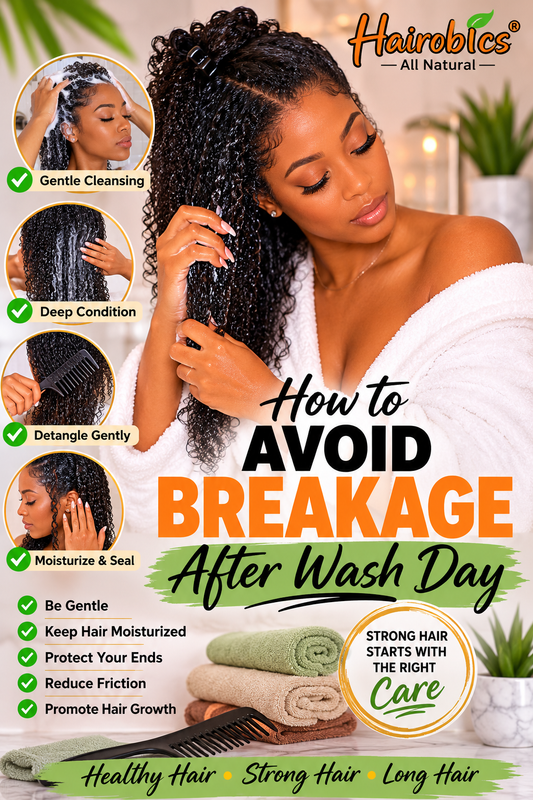
Wash day should leave your hair feeling refreshed, moisturized, and healthier—not weak, tangled, and full of broken strands. Yet for many people, the majority of their hair breakage happens immediately after washing.
Whether you have natural hair, relaxed hair, curls, coils, locs, or protective styles, your hair is at its most vulnerable when it's wet. Without the proper routine, excessive manipulation, rough drying, and lack of moisture can quickly turn a productive wash day into a setback for your hair growth goals.
The good news is that breakage after wash day is largely preventable.
This guide explains exactly why breakage happens after washing and provides a complete routine that helps preserve length, reduce split ends, and keep your hair growing stronger over time.
Why Hair Breaks More After Washing
Water temporarily changes your hair's structure.
When hair absorbs water:
- Hair fibers swell.
- The cuticle lifts.
- Elasticity increases.
- Hair stretches more easily.
- Individual strands become weaker.
While elasticity is beneficial, overstretched hair snaps easily if handled aggressively.
That means even simple actions like:
- Rubbing with a towel
- Rough detangling
- Tight ponytails
- Blow drying incorrectly
- Sleeping on wet hair
can cause significant breakage.
Signs Your Hair Is Breaking After Wash Day
Common warning signs include:
- Hair all over the bathroom floor
- Broken pieces in your comb
- Short strands on your shoulders
- Split ends appearing quickly
- Hair becoming thinner over time
- Ends looking frayed
- Difficulty retaining length
If these symptoms happen after every wash, your routine likely needs improvement.
Mistake #1: Waiting Too Long to Moisturize
Many people wash their hair and then allow it to air dry for hours before applying products.
This allows moisture to escape.
As hair dries:
- Water evaporates.
- The cuticle hardens.
- Hair becomes brittle.
- Friction increases.
Instead, apply moisturizing products while your hair is still damp.
This helps lock hydration inside the hair shaft.
Mistake #2: Using a Regular Bath Towel
Cotton bath towels create tremendous friction.
This friction causes:
- Cuticle damage
- Frizz
- Split ends
- Snagging
- Breakage
Better options include:
- Microfiber towels
- Cotton T-shirts
- Soft bamboo towels
Always blot instead of rubbing.
Mistake #3: Detangling Dry Hair
Hair should never be aggressively detangled while dry.
Instead:
- Saturate hair with conditioner.
- Separate into sections.
- Use fingers first.
- Finish with a wide-tooth comb.
Working from ends toward roots dramatically reduces breakage.
Mistake #4: Skipping Deep Conditioning
Shampoo removes dirt—but it also removes moisture.
Without replacing that moisture:
- Hair becomes stiff.
- Ends become rough.
- Elasticity decreases.
Deep conditioning restores:
- Hydration
- Softness
- Manageability
- Strength
Aim for a deep conditioning treatment every wash day.
Mistake #5: Applying Too Much Heat
Heat immediately after washing can damage weakened strands.
High temperatures:
- Dry the cuticle
- Remove moisture
- Cause split ends
- Increase brittleness
If using heat:
- Apply a heat protectant.
- Use medium temperatures.
- Keep the dryer moving.
- Avoid repeated passes.
Mistake #6: Sleeping on Wet Hair
Wet hair stretches easily.
Tossing throughout the night creates friction.
This often leads to:
- Tangles
- Knots
- Breakage
- Frizz
Always dry your hair before sleeping whenever possible.
Protect your hair with a satin bonnet or satin pillowcase.
Build the Perfect Post-Wash Routine
An effective routine follows a simple sequence:
- Cleanse
- Condition
- Detangle
- Moisturize
- Seal
- Protect
Consistency is more important than complexity.
Step 1: Cleanse Gently
Choose shampoos that clean without stripping.
Avoid excessive washing.
Most hair types benefit from washing every 1–2 weeks, depending on scalp needs, activity level, and product buildup.
Focus shampoo on the scalp rather than scrubbing the hair lengths aggressively.
Step 2: Deep Condition Every Wash Day
A quality deep conditioner:
- Softens hair
- Restores flexibility
- Improves elasticity
- Reduces tangles
- Makes detangling easier
Allow enough time for the conditioner to penetrate before rinsing thoroughly.
Step 3: Detangle in Sections
Large sections create unnecessary pulling.
Instead:
- Divide hair into 4–8 sections.
- Work one section at a time.
- Finger detangle first.
- Remove knots slowly.
- Use clips to keep sections organized.
This minimizes stress on each strand.
Step 4: Moisturize Immediately
Hair loses moisture rapidly after washing.
Apply a leave-in conditioner or moisturizing product while hair remains damp.
Focus especially on:
- Ends
- Crown
- Hairline
These areas typically experience the most breakage.
Step 5: Seal Moisture
Moisture evaporates if not sealed.
After applying a moisturizer:
- Use a lightweight oil or butter to help reduce moisture loss.
- Pay special attention to your ends, which are the oldest and most fragile part of your hair.
Step 6: Choose Low-Manipulation Styles
The less your hair is handled after wash day, the lower the chance of breakage.
Good options include:
- Twists
- Loose braids
- Buns (not overly tight)
- Roller sets
- Braid-outs
- Twist-outs
Avoid tight ponytails immediately after washing.
Protect Your Ends
Hair ends have experienced years of:
- Washing
- Heat
- Sun exposure
- Friction
- Styling
Protect them by:
- Keeping them moisturized
- Trimming when necessary
- Avoiding excessive brushing
- Wearing protective styles
Healthy ends help retain length.
Reduce Friction Everywhere
Friction quietly damages hair every day.
Reduce it by:
- Sleeping on satin pillowcases
- Wearing satin bonnets
- Using silk scrunchies
- Avoiding rough scarves
- Wearing smooth-lined hats
Small changes produce noticeable improvements over time.
Feed Your Hair From Within
Healthy hair starts with a healthy body.
Support stronger strands by consuming foods rich in:
- Protein
- Iron
- Zinc
- Vitamin D
- Omega-3 fatty acids
- Biotin-containing foods
Stay hydrated throughout the day, as overall hydration supports scalp and hair health.
Avoid Product Buildup
Too many products can weigh hair down and attract dirt.
Use products strategically rather than layering multiple heavy formulas.
Occasional clarifying washes may help remove buildup if your hair feels coated or products stop performing well.
Be Gentle With Protective Styles
Braids, twists, wigs, and locs can reduce daily manipulation, but they can also cause breakage if installed or maintained improperly.
Avoid:
- Styles that are too tight
- Excessive tension at the hairline
- Leaving styles in far beyond their recommended wear time
- Skipping scalp cleansing and moisturizing
Protective styles should protect your hair—not damage it.
Create a Weekly Maintenance Routine
Between wash days:
- Moisturize as needed.
- Sleep with satin protection.
- Minimize unnecessary styling.
- Avoid excessive brushing.
- Refresh your scalp if needed.
Consistency between washes is just as important as wash day itself.
Myths About Hair Breakage
Myth: Hair grows slowly because it breaks.
Hair typically grows at a relatively steady rate for most people, but excessive breakage prevents you from seeing length retention.
Myth: More products equal healthier hair.
Too many products can lead to buildup and make hair harder to manage.
Myth: Natural hair always breaks more.
Natural hair is not inherently weaker. Its curls and coils simply require thoughtful handling and moisture management.
Myth: Air drying is always safest.
Air drying can be beneficial, but leaving hair wet for extended periods may increase tangling and stress during manipulation. The best approach depends on your hair type and routine.
Daily Habits That Prevent Breakage
Incorporate these habits into your routine:
- Handle hair gently.
- Detangle patiently.
- Keep hair moisturized.
- Protect your ends.
- Avoid unnecessary heat.
- Sleep with satin protection.
- Wear low-tension styles.
- Trim damaged ends when needed.
- Stay consistent.
Small improvements repeated over time have the greatest impact on length retention.
Frequently Asked Questions
Why does my hair break after every wash?
Hair is more fragile when wet. Rough detangling, towel drying, lack of moisture, excessive heat, or sleeping on wet hair can all contribute to post-wash breakage.
Should I comb my hair when it's wet?
Yes—but only after applying conditioner or a detangling product. Use your fingers first, then a wide-tooth comb, and always work from the ends upward.
How often should I deep condition?
Many people benefit from deep conditioning every wash day, though frequency may vary based on hair type, damage level, and styling habits.
Is air drying better than blow drying?
Both methods can work well when done correctly. If blow drying, use a heat protectant and moderate heat. If air drying, avoid excessive manipulation while hair is wet and don't leave it damp for an extended period if it leads to tangling.
Can protective styles stop breakage?
Protective styles can reduce breakage when they are installed without excessive tension, maintained properly, and removed on time.
Final Thoughts
Healthy hair growth isn't just about what happens before wash day—it's about how you care for your hair afterward. Because wet hair is naturally more delicate, every step you take after cleansing can either protect your strands or contribute to unnecessary breakage.
By moisturizing while your hair is still damp, detangling gently in sections, reducing friction, protecting your ends, minimizing heat, and maintaining a consistent routine, you'll create the ideal environment for stronger, healthier hair and better length retention.
Remember that lasting results come from steady habits rather than quick fixes. Every gentle wash day builds on the last, helping your hair stay resilient, manageable, and ready to reach its full growth potential.