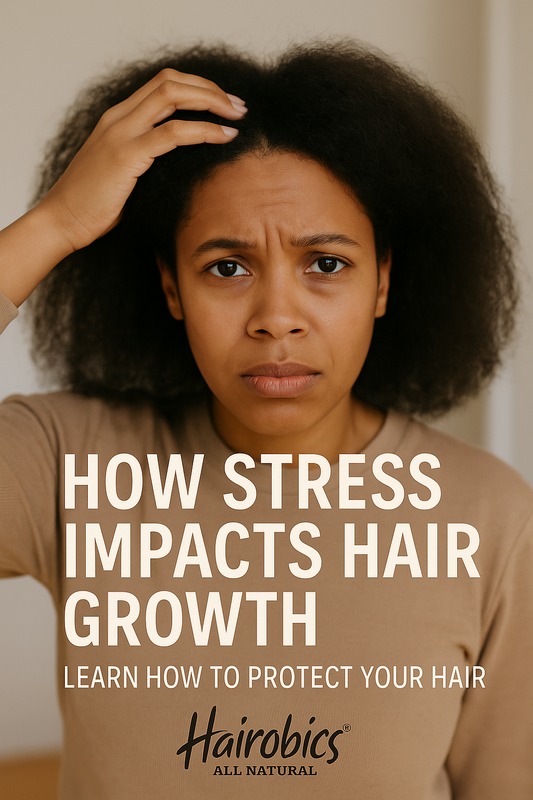
Stress affects more than your mood — it can directly impact your scalp, hair follicles, and overall hair growth cycle. If you’ve noticed sudden shedding, thinning edges, breakage, or slowed growth, stress may be one of the biggest hidden causes. In today’s fast-paced world, physical, emotional, and even environmental stress can disrupt the hair growth process, leading to long-term effects if not addressed.
In this comprehensive guide, you’ll learn how stress harms hair growth, the different types of stress-related hair loss, scientific reasons behind it, and — most importantly — how to restore your hair’s strength, thickness, and growth.
What Happens to Hair When You’re Stressed?
Stress triggers a chain reaction inside your body. When cortisol — your primary stress hormone — rises, it disrupts multiple systems responsible for healthy hair, including:
✔ Blood flow to the scalp
Stress constricts blood vessels, reducing oxygen and nutrient delivery to hair follicles.
✔ The hair growth cycle
Hair prematurely enters the shedding phase instead of staying in the growing phase.
✔ Oil production
The scalp may become dry, itchy, flaky, or overly oily.
✔ Inflammation
Stress increases internal inflammation, which weakens follicles and slows regrowth.
✔ Hormonal balance
Hormonal changes from stress can trigger hair thinning, especially around the edges and hairline.
When these systems are disrupted, hair becomes more fragile, breaks easily, stops growing, or sheds in larger amounts.
The 3 Types of Stress-Related Hair Loss
Not all stress affects hair the same way. Below are the three most common types:
1. Telogen Effluvium (Stress Shedding)
This is the most common type of stress-related hair loss.
What happens:
Stress pushes 30–50% of your hair follicles into the telogen (resting) phase, causing sudden shedding 2–3 months later.
Symptoms include:
-
Hair coming out in clumps
-
Excessive shedding during washing
-
Hair all over pillows, floors, and clothing
-
Thinner ponytail or less density
-
Loss across the entire scalp — not just one spot
Is it reversible?
Yes — once stress levels decrease and follicles re-enter the growth phase, hair gradually returns to normal.
Duration:
3–9 months, depending on severity and how quickly stress is managed.
2. Alopecia Areata (Stress-Triggered Autoimmune Response)
This type of hair loss is less common but more severe.
What happens:
Stress triggers an autoimmune response where the body attacks its own hair follicles.
Symptoms include:
-
Sudden smooth, round bald patches
-
Eyebrow or beard hair loss
-
Rapid thinning
-
Complete hair loss in severe cases
Is it reversible?
Often yes — but it may require medical treatment. Faster intervention increases regrowth success.
3. Trichotillomania (Stress Pulling)
This is a stress-induced compulsive disorder.
What happens:
People pull, twist, or pluck their own hair — often without realizing it.
Symptoms include:
-
Thinning edges or bald spots from pulling
-
Broken hairs of different lengths
-
Feelings of guilt or relief after pulling
Is it reversible?
Yes — but habits must be addressed. Therapy and stress management are extremely helpful.
How Stress Disrupts the Hair Growth Cycle
Your hair goes through four phases:
-
Anagen (growth)
-
Catagen (transition)
-
Telogen (resting)
-
Exogen (shedding)
Stress interferes with these phases by:
1. Shortening the Growth Phase
When stressed, hair spends less time growing and more time resting. This means:
-
Slow length retention
-
Weak, thin, fragile strands
-
Difficulty growing past certain lengths
2. Forcing Hair Into the Shedding Phase Early
In severe stress, large sections of hair jump to the shedding phase. This leads to:
-
Sudden shedding
-
Thinner ponytails
-
Reduced density
-
Increased scalp visibility
3. Weakening the Follicles
Stress increases inflammation throughout the body — including the scalp. Over time, this weakens follicles and makes hair more prone to:
-
Breakage
-
Frizz
-
Roughness
-
Brittleness
-
Thinning edges
Follicles under chronic stress may even shrink, leading to long-term thinning.
Common Signs Your Hair Loss Is Caused by Stress
Many people don’t realize stress is the root cause. Look for these signs:
✔ Hair falling out more than usual
✔ Increased shedding during wash days
✔ Widened middle part
✔ Thinning edges or temples
✔ Dry, irritated, itchy scalp
✔ Stalled hair growth
✔ More breakage than normal
✔ Hair feeling thinner or lighter
✔ Hair collecting on your pillow or shower drain
If multiple signs appear within the same 1–3 month window, stress is likely contributing.
How Stress Affects Hair if You Have Locs, Braids, or Protective Styles
Stress impacts textured hair differently — especially when protective styles are involved.
1. Increased Shedding Under Locs and Braids
Shedding may collect inside braids or locs, making it seem like you’re losing even more hair when you take them down.
2. Dryness and Brittleness
Stress reduces scalp oil production. With protective styles, this can lead to:
-
Dry locs
-
Brittle braids
-
Thinning ends
3. Thinning Edges From Tension + Stress
If your protective style is tight AND you’re stressed, follicle strain increases dramatically.
This can lead to:
-
Tension alopecia
-
Bald patches
-
Edge thinning
-
Hairline recession
4. Slower Loc Maturation
Stress weakens hair strands, causing:
-
Loc slippage
-
Frizz that won’t smooth
-
Difficulty locking
-
Weak spots in locs
The Science Behind Stress and Hair Loss
When your body is stressed, cortisol spikes. Chronic high cortisol levels:
✔ Interrupt the hair growth cycle
✔ Suppress essential hair-building nutrients
✔ Increase scalp inflammation
✔ Reduce collagen and protein synthesis
✔ Slow down natural oil (sebum) production
In other words — your body focuses on survival, not hair growth.
How to Regrow Hair After Stress-Related Hair Loss
The good news? Stress-related hair loss is highly reversible. With consistent care and stress management, hair can return to full thickness.
Below are the most effective strategies.
1. Create a Healthy Hair Routine (Daily & Weekly)
Your goal is to reduce shedding, strengthen follicles, and maintain moisture.
✔ Daily Hydration (Especially for Locs & Braids)
Use a lightweight moisturizing spray to hydrate hair and scalp:
Examples:
-
Hairobics Raaw Roots Moisturizing Spray (excellent for hydration + scalp relief)
-
Aloe/water-based mists
-
Lightweight leave-ins
Daily moisture reduces breakage — a common stress response.
✔ Seal in Moisture With a Light Oil
Choose oils like:
-
Jojoba
-
Grapeseed
-
Olive
-
Argan
These help reduce dryness caused by stress-induced hormonal changes.
✔ Scalp Care
A stimulated scalp regrows hair faster.
Try:
-
Scalp massage 5–10 minutes/day
-
Rosemary and peppermint oil blends
-
Scalp-friendly sprays for soothing and itch control
2. Manage Your Stress Levels
Hair cannot regrow fully until your stress levels decrease.
Best stress-reduction methods:
-
Light exercise
-
Meditation
-
Deep breathing
-
Aromatherapy
-
Journaling
-
Spending time outdoors
-
Adequate sleep
-
Creative hobbies
-
Talking to a therapist
Even 10–15 minutes per day makes a measurable difference.
3. Fix Nutritional Deficiencies
Stress burns through key nutrients that hair needs:
Important vitamins/minerals for regrowth:
-
B-complex vitamins
-
Zinc
-
Vitamin D
-
Iron
-
Omega-3 fatty acids
-
Biotin
-
Protein
A well-balanced diet accelerates recovery.
4. Avoid Tight Hairstyles During Recovery
While protective styles are amazing, avoid:
-
Tight braids
-
Frequent retwists
-
Heavy ponytails
-
Styles pulling on edges
Give follicles time to regain strength.
5. Wash and Condition Regularly
A clean scalp supports faster hair growth.
Tips:
-
Wash every 1–3 weeks depending on your style
-
Use a sulfate-free shampoo
-
Follow with a lightweight conditioner for loose hair
-
For locs: use residue-free formulas
Regular cleansing removes cortisol-driven excess oils or flakes.
6. Use Growth-Stimulating Products
You can add:
-
Scalp oils (rosemary, castor oil, peppermint)
-
Growth sprays
-
Light leave-in conditioners
-
Herbal growth serums
Avoid heavy products with waxes or petroleum.
7. Protect Your Scalp While You Sleep
Use:
-
Satin bonnet
-
Satin pillowcase
-
Silk scarf
Stress can dry out your hair — nighttime protection reduces friction, breakage, and further thinning.
8. Know That Recovery Takes Time
Most stress-related hair loss improves within:
3–6 months with consistent care
9–12 months for full restoration
Be patient — your hair WILL bounce back.
How to Prevent Stress-Related Hair Loss Long-Term
✔ Maintain a consistent hair routine
✔ Protect your edges from tension
✔ Stay hydrated
✔ Keep stress levels low
✔ Eat nutrient-dense foods
✔ Avoid over-manipulation
✔ Use high-quality moisturizing sprays
✔ Monitor shedding during stressful life events
Successful prevention is a combination of health, hair care, and stress management.
Final Thoughts: You Can Reclaim Your Hair Health
Stress may cause shedding, thinning, slowed growth, or dryness — but the damage is NOT permanent. With the right habits, nutrition, scalp care, and a calming routine, your hair can return stronger, thicker, and healthier than before.
Focus on keeping your scalp nourished, your stress levels low, and your moisture levels high — especially if you have locs, braids, or natural hair. Products like hydrating sprays, scalp oils, lightweight conditioners, and satin protection go a long way in restoring balance.
Your hair is resilient — and so are you. With intentional care and stress support, healthy growth is absolutely within reach.