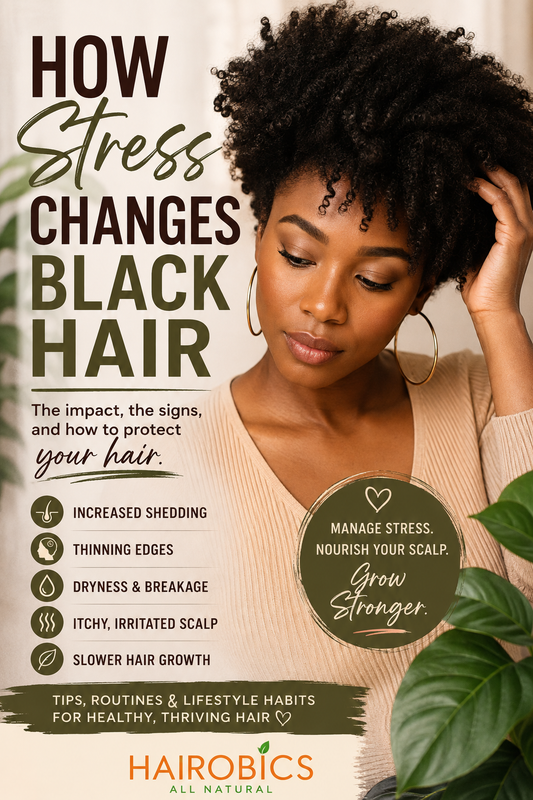
Stress affects far more than your mood—it can also change the health, appearance, and growth of your hair. Many people notice increased shedding, thinning edges, dry curls, or an itchy scalp during stressful periods, yet they don't realize that their emotional and physical stress may be the underlying cause.
For Black women and men, stress can be especially damaging because textured hair is naturally more delicate. Curly, coily, kinky, and loc'd hair has unique characteristics that make it more vulnerable to dryness and breakage. When stress disrupts your body's natural processes, these challenges often become even more noticeable.
The good news is that stress-related hair changes are often reversible. Once stress is managed and your hair receives proper care, healthy growth usually returns.
In this complete guide, you'll learn:
- How stress affects Black hair
- The science behind stress-related hair loss
- Why textured hair reacts differently
- Common warning signs
- Ways to reduce shedding
- The best hair care routine during stressful times
- Lifestyle habits that support healthy growth
Why Black Hair Responds Differently to Stress
Black hair has unique structural characteristics.
Each strand grows in a spiral or elliptical shape rather than a straight cylinder. While this creates beautiful curls and coils, it also means:
- Hair is naturally drier.
- Natural oils travel more slowly.
- Strands are more fragile.
- Moisture escapes faster.
- Breakage occurs more easily.
When stress enters the picture, these natural challenges become amplified.
Instead of simply losing a few hairs, many people notice:
- Excessive shedding
- Dryness
- Dullness
- Tangling
- Split ends
- Edge thinning
- Slow growth
The Science Behind Stress and Hair
When you're stressed, your body releases hormones like:
- Cortisol
- Adrenaline
- Norepinephrine
These hormones help your body survive emergencies.
However, chronic stress keeps these hormones elevated for weeks or months.
High cortisol levels can:
- Shorten the hair growth cycle
- Reduce blood flow to follicles
- Increase inflammation
- Trigger hair shedding
- Slow new growth
- Disrupt scalp health
Your hair follicles actually enter a resting phase sooner than they should.
Weeks later, hair begins falling out.
Understanding the Hair Growth Cycle
Hair grows in four stages.
1. Anagen (Growth Phase)
This phase lasts 2–7 years.
Most healthy hairs remain here.
Longer anagen phases produce longer hair.
2. Catagen
Hair briefly transitions.
Growth slows.
3. Telogen
Hair rests.
Eventually it sheds naturally.
4. Exogen
Old hairs fall out.
New hairs begin growing.
Stress pushes more follicles into the telogen phase too early.
This condition is called telogen effluvium.
What Is Telogen Effluvium?
Telogen effluvium is one of the most common stress-related causes of hair shedding.
Symptoms include:
- Hair everywhere after washing
- More strands on your pillow
- Hair filling your brush
- Overall thinning
- Less volume
Unlike permanent hair loss, follicles usually remain healthy.
Growth often returns once stress improves.
Emotional Stress vs Physical Stress
Both forms affect hair.
Emotional Stress
Examples include:
- Divorce
- Anxiety
- Depression
- Financial worries
- Job pressure
- Grief
- Burnout
Physical Stress
Examples include:
- Surgery
- High fever
- Illness
- Childbirth
- Rapid weight loss
- Major infections
Both trigger similar hormonal responses.
Signs Stress Is Affecting Your Black Hair
Many symptoms appear gradually.
Watch for:
Increased Shedding
Hair falls out during washing.
You notice more strands on clothing.
Thinning Edges
Stress commonly affects hairlines.
Many people mistakenly blame hairstyles alone.
Dry Hair
Stress reduces natural moisture balance.
Hair feels rough.
Brittle Hair
Breakage becomes frequent.
Ends snap easily.
Slow Growth
Hair seems stuck at one length.
Itchy Scalp
Stress increases inflammation.
The scalp becomes irritated.
More Knots
Dry strands tangle faster.
Single-strand knots become common.
Dull Hair
Healthy shine disappears.
Can Stress Cause Bald Spots?
Yes.
Severe stress may trigger:
Alopecia Areata
This autoimmune condition can create smooth bald patches.
Stress isn't always the direct cause, but it may trigger flare-ups.
Stress and Protective Styles
Protective styles help reduce manipulation.
However, stress can still affect follicles underneath.
Even while wearing:
- Braids
- Twists
- Wigs
- Sew-ins
- Crochet styles
- Locs
Hair may continue shedding internally.
Protective styles cannot prevent hormonal hair loss.
Why Stress Causes Dry Hair
Stress changes oil production.
The scalp becomes less balanced.
You may notice:
- Flakes
- Dry curls
- Frizz
- Brittle ends
- Rough texture
Moisture retention decreases dramatically.
How Stress Affects the Scalp
Healthy hair begins with a healthy scalp.
Stress may contribute to:
- Dry scalp
- Excess oil
- Inflammation
- Sensitivity
- Flaking
- Itching
Poor scalp health often slows healthy growth.
The Connection Between Sleep and Hair
Stress often reduces sleep quality.
Poor sleep increases cortisol.
High cortisol affects follicles.
Healthy adults should aim for approximately 7–9 hours of sleep each night to support overall wellness and normal hair growth.
Nutrition During Stress
Many people eat differently under stress.
Common deficiencies include:
- Protein
- Iron
- Vitamin D
- Zinc
- Biotin
- Omega-3 fats
Hair needs nutrients to grow efficiently.
Focus on foods such as:
- Eggs
- Salmon
- Spinach
- Sweet potatoes
- Beans
- Lean meats
- Nuts
- Seeds
- Berries
Can Stress Cause Gray Hair?
Stress alone isn't considered the sole cause of gray hair, but research suggests it may accelerate the loss of pigment in some people by affecting pigment-producing cells within hair follicles.
Genetics remain the biggest factor.
Best Hair Routine During Stress
Step 1: Cleanse Regularly
Wash every 1–2 weeks depending on your hair type and lifestyle.
A clean scalp supports healthy follicles.
Step 2: Deep Condition
Restore moisture.
Use products rich in:
- Shea butter
- Aloe vera
- Coconut oil
- Avocado oil
Step 3: Moisturize
Hydrate hair consistently.
Seal moisture with natural oils or butters if they work well for your hair.
Step 4: Massage Your Scalp
Gentle scalp massages may improve circulation and help distribute natural oils. While relaxing, they should not be viewed as a guaranteed way to increase hair growth.
Step 5: Limit Heat
Stress-weakened hair breaks easier.
Reduce:
- Flat irons
- Blow dryers
- Curling tools
Step 6: Protect Hair at Night
Sleep with:
- Satin bonnet
- Silk scarf
- Satin pillowcase
These reduce friction and moisture loss.
Stress Management Tips That May Support Healthier Hair
Managing stress benefits your overall health and may also support healthier hair over time.
Helpful habits include:
- Walking regularly
- Deep breathing exercises
- Meditation
- Prayer or mindfulness
- Journaling
- Stretching or yoga
- Spending time outdoors
- Talking with trusted friends or family
- Seeking support from a mental health professional when needed
Ingredients That Support Healthy Hair
Many people with textured hair benefit from ingredients that help moisturize the scalp and hair shaft.
Popular choices include:
- Jamaican Black Castor Oil
- Rosemary oil (always dilute before applying)
- Peppermint oil (diluted)
- Aloe vera
- Shea butter
- Coconut oil
- Avocado oil
- Jojoba oil
Patch-test new products first, and remember that oils alone cannot reverse stress-related hair loss.
Daily Habits That Protect Black Hair During Stress
Small habits make a big difference.
Try to:
- Drink enough water.
- Eat balanced meals.
- Avoid excessively tight hairstyles.
- Detangle gently.
- Trim damaged ends as needed.
- Minimize harsh chemicals.
- Protect hair while sleeping.
- Keep the scalp clean.
- Be patient—hair growth takes time.
When to See a Healthcare Professional
While temporary shedding after stress often improves within several months, you should seek medical advice if you notice:
- Sudden large bald patches
- Painful scalp inflammation
- Hair loss lasting longer than about six months
- Rapidly worsening thinning
- Other symptoms such as fatigue, unexplained weight changes, or signs of nutrient deficiencies
A healthcare professional or dermatologist can evaluate whether another condition—such as thyroid disease, iron deficiency, hormonal changes, or an autoimmune disorder—is contributing to your hair loss.
Frequently Asked Questions
Can stress make Black hair stop growing?
Stress usually doesn't stop growth completely, but it can shorten the growth phase and increase shedding, making it seem like hair isn't growing.
How long does stress hair loss last?
Many people notice improvement within 3–6 months after the stressful event has resolved, although recovery varies.
Can stress thin my edges?
Yes. Increased shedding from stress can contribute to thinning around the hairline, especially if combined with tight hairstyles or excessive manipulation.
Does stress affect locs?
Yes. Locs can become drier, and stress-related shedding may reduce fullness over time if the underlying cause isn't addressed.
Can stress cause breakage?
Indirectly, yes. Stress can contribute to dryness and brittleness, making textured hair more likely to break during styling or detangling.
Final Thoughts
Stress affects nearly every system in the body, and your hair is no exception. For Black hair, which naturally requires extra moisture and gentle handling, chronic stress can contribute to increased shedding, dryness, thinning, and slower visible growth.
The encouraging news is that stress-related hair changes are often temporary. By caring for your scalp, maintaining a consistent moisturizing routine, eating a nutrient-rich diet, prioritizing sleep, and finding healthy ways to manage stress, you can create an environment that supports stronger, healthier hair over time.
Patience is key. Healthy hair recovery doesn't happen overnight, but with consistent care and attention to your overall well-being, your curls, coils, braids, twists, or locs can regain their strength and vitality.