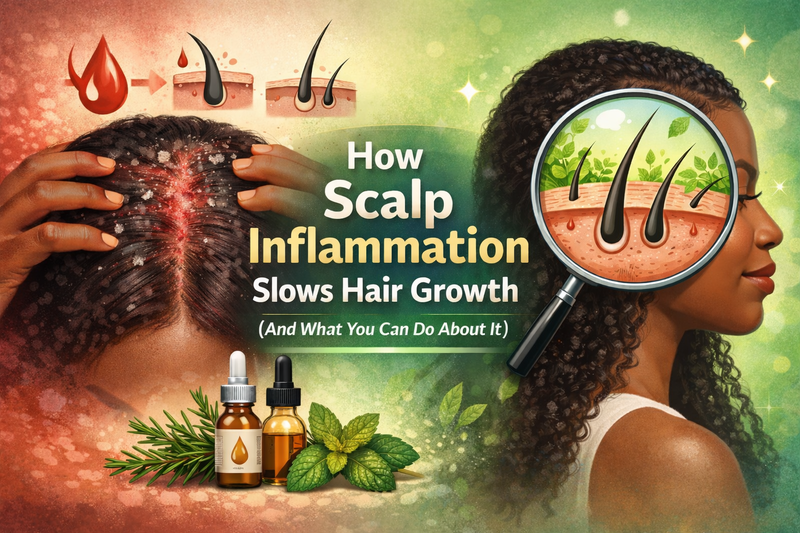
Introduction: When Your Scalp Is the Real Problem
If your hair seems stuck at the same length, breaks easily, or feels thinner than it used to, the issue may not be your strands at all — it could be your scalp.
Scalp inflammation is one of the most overlooked causes of slow hair growth, excessive shedding, and poor length retention. Many people focus on oils, styles, and protective routines while unknowingly ignoring the health of the skin where hair growth begins.
Healthy hair can only grow from a healthy, balanced scalp. When inflammation is present, hair follicles struggle to function properly — slowing growth, weakening strands, and even triggering long-term thinning if left untreated.
In this guide, you’ll learn:
-
What scalp inflammation really is
-
How it interferes with hair growth
-
Common signs you may be dealing with it
-
What causes it (many will surprise you)
-
How to calm inflammation naturally and restore scalp health
Let’s break it down.
What Is Scalp Inflammation?
Scalp inflammation occurs when the skin on your scalp becomes irritated, swollen, sensitive, or inflamed due to internal or external stressors. This inflammation disrupts the scalp’s natural balance, affecting circulation, oil production, and follicle function.
Your scalp is skin — just like your face. When it’s inflamed, it cannot properly support healthy hair growth.
Common inflammatory scalp conditions include:
-
Seborrheic dermatitis
-
Psoriasis
-
Folliculitis
-
Contact dermatitis
-
Chronic dryness or buildup-induced irritation
Even mild inflammation — without a medical diagnosis — can significantly slow hair growth over time.
How Scalp Inflammation Directly Slows Hair Growth
Hair grows from follicles embedded in your scalp. When inflammation is present, it interferes with this process in several critical ways.
1. Reduced Blood Flow to Hair Follicles
Inflammation restricts proper circulation in the scalp. Reduced blood flow means:
-
Less oxygen reaching follicles
-
Fewer nutrients delivered to the hair root
-
Slower cell regeneration
Without adequate blood supply, follicles enter a weakened state and hair growth slows dramatically.
2. Follicle Miniaturization
Chronic inflammation can cause follicles to shrink over time, a process known as follicle miniaturization. When this happens:
-
Hair grows thinner
-
Growth cycles shorten
-
Hair sheds more frequently
Eventually, follicles may stop producing hair altogether.
3. Disrupted Hair Growth Cycle
Healthy hair growth follows a cycle:
-
Anagen (growth phase)
-
Catagen (transition phase)
-
Telogen (resting phase)
Inflammation pushes follicles prematurely into the resting phase, causing:
-
Excessive shedding
-
Difficulty retaining length
-
Hair that never reaches its full potential
4. Increased Breakage at the Root
An inflamed scalp produces weaker, more fragile hair strands from the root. This leads to:
-
Hair snapping close to the scalp
-
The illusion of “slow growth”
-
Difficulty growing past certain lengths
Signs Your Scalp Is Inflamed
Scalp inflammation doesn’t always come with obvious pain. Many people live with it for years without realizing it.
Common symptoms include:
-
Persistent itchiness
-
Burning or tingling sensation
-
Redness or soreness
-
Flaking (dry or oily dandruff)
-
Tenderness when touching the scalp
-
Hair shedding more than usual
-
Slow or stalled hair growth
If you’re experiencing several of these symptoms, inflammation may be blocking your hair growth progress.
What Causes Scalp Inflammation?
Scalp inflammation is rarely caused by one factor alone. It’s usually the result of multiple stressors stacking over time.
1. Product Buildup and Harsh Ingredients
Many hair products contain ingredients that irritate the scalp:
-
Sulfates
-
Alcohols
-
Synthetic fragrances
-
Silicones
-
Petroleum-based oils
These ingredients can clog follicles, disrupt the scalp microbiome, and trigger inflammation — especially when buildup is not removed regularly.
2. Dryness and Lack of Moisture
A dry scalp is an inflamed scalp. When the scalp lacks moisture:
-
The skin barrier weakens
-
Irritation increases
-
Flaking and itchiness develop
Dryness forces the scalp into survival mode instead of growth mode.
3. Tight Hairstyles and Excessive Tension
Styles that pull on the scalp — such as tight braids, ponytails, or locs — can cause:
-
Micro-inflammation
-
Follicle stress
-
Reduced blood flow
Over time, this tension can permanently damage follicles.
4. Poor Diet and Internal Inflammation
Scalp health starts internally. Diets high in:
-
Sugar
-
Processed foods
-
Inflammatory oils
can trigger systemic inflammation, which often shows up first in the scalp and skin.
5. Stress and Hormonal Imbalances
Chronic stress elevates cortisol levels, which:
-
Disrupts scalp oil production
-
Weakens follicles
-
Triggers shedding
Hormonal fluctuations (postpartum, menopause, thyroid issues) can worsen scalp inflammation significantly.
The Link Between Inflammation and Hair Loss
Inflammation doesn’t just slow growth — it can lead to long-term hair loss if untreated.
When follicles remain inflamed:
-
Growth cycles shorten
-
Hair density decreases
-
Scalp conditions worsen
-
Regrowth becomes more difficult
This is why addressing scalp health early is critical for retaining length and density.
How to Reduce Scalp Inflammation Naturally
The good news? Scalp inflammation is often reversible with consistent, gentle care.
1. Cleanse the Scalp Without Stripping It
Use a sulfate-free cleanser that:
-
Removes buildup
-
Balances the scalp
-
Preserves natural oils
Cleansing should leave your scalp refreshed — not tight or itchy.
2. Incorporate Anti-Inflammatory Scalp Oils
Natural oils with anti-inflammatory properties help calm irritation and restore balance.
Look for ingredients like:
-
Jamaican Black Castor Oil
-
Peppermint oil
-
Tea tree oil
-
Rosemary oil
-
Frankincense & myrrh
Scalp oils formulated with these ingredients — like Hairobics All Natural Scalp Rejuvenator Oil — help soothe inflammation while supporting circulation and follicle health.
3. Massage Your Scalp Regularly
Scalp massage:
-
Improves blood flow
-
Reduces tension
-
Encourages nutrient delivery
Even 5 minutes a day can significantly improve follicle function over time.
4. Moisturize the Scalp (Not Just Your Hair)
Many people moisturize their hair but neglect their scalp.
Use lightweight, natural sprays or serums — like Hairobics Raaw Roots Moisturizing Spray — to hydrate the scalp without clogging pores.
5. Avoid Chronic Tension and Overstyling
Protective styles should protect your scalp — not punish it.
-
Loosen styles
-
Avoid constant pulling
-
Give your scalp regular breaks
6. Support Scalp Health From the Inside
Anti-inflammatory foods that support scalp health include:
-
Leafy greens
-
Fatty fish
-
Berries
-
Nuts and seeds
-
Adequate water intake
Reducing internal inflammation often improves scalp conditions dramatically.
How Long Does It Take to Heal an Inflamed Scalp?
Healing timelines vary, but most people notice:
-
Reduced itchiness within 1–2 weeks
-
Less shedding in 4–6 weeks
-
Improved growth and thickness within 2–3 months
Consistency is key. Scalp healing is a process — not a quick fix.
Final Thoughts: Healthy Hair Starts With a Calm Scalp
If your hair growth feels slow, inconsistent, or stalled, don’t just blame genetics or products. Your scalp may be inflamed and struggling to support healthy growth.
By:
-
Removing irritants
-
Nourishing your scalp
-
Reducing inflammation
-
Using natural, scalp-friendly products
you create the ideal environment for stronger, longer, healthier hair.
At Hairobics All Natural, scalp health is the foundation of everything — because when your scalp thrives, your hair follows.