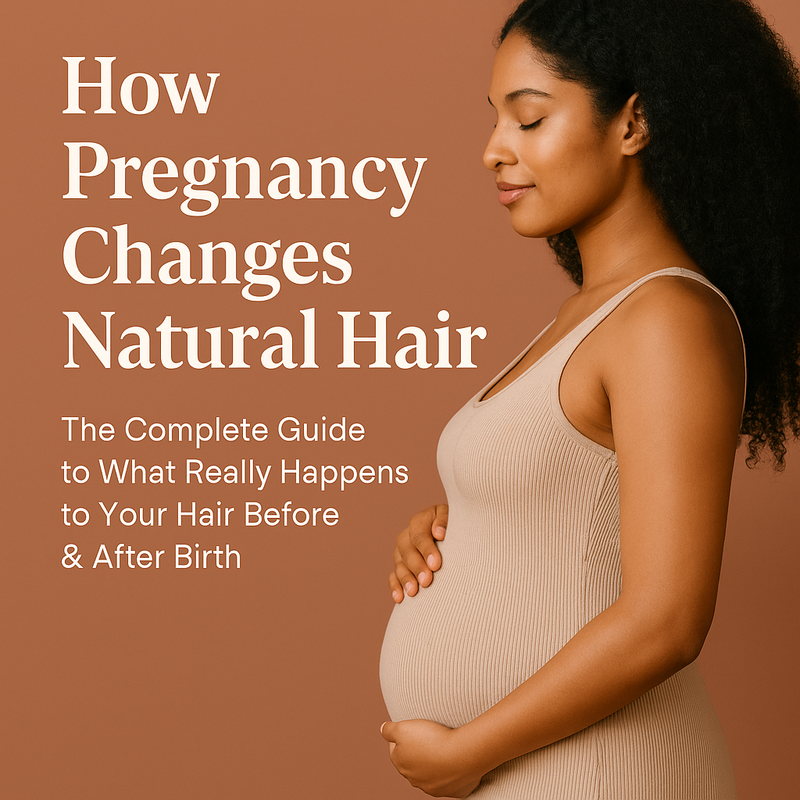
Pregnancy is one of the most transformative experiences in a woman’s life — physically, emotionally, and hormonally. But one change many women don’t expect is how dramatically pregnancy can impact their natural hair. Some women enjoy the thickest, fullest curls they’ve ever had. Others notice dryness, shedding, or unexpected texture changes. And after birth, postpartum shedding can feel overwhelming.
The truth is simple:
Pregnancy changes natural hair in powerful ways — and understanding those changes can help you protect your growth, retain moisture, and maintain healthy curls from trimester to trimester.
In this comprehensive, science-based guide, you’ll learn:
-
Why pregnancy hormones make your hair behave differently
-
Why some women experience extreme growth and others experience dryness
-
How pregnancy affects your scalp health
-
What causes postpartum shedding
-
How to care for natural hair safely during pregnancy
-
The best ingredients and products to support hair strength and moisture
Let’s break down exactly what happens to your natural hair before, during, and after pregnancy — and how to keep it strong through all the changes.
How Pregnancy Hormones Affect Natural Hair
Pregnancy triggers dramatic increases in certain hormones — especially estrogen, progesterone, and hCG (human chorionic gonadotropin). These hormones impact your natural hair in multiple ways.
1. Estrogen Extends the Growth Phase
Your hair normally grows in three phases:
-
Anagen — growth phase
-
Catagen — transition phase
-
Telogen — resting/shedding phase
High estrogen levels cause your hair to stay in the anagen phase longer, which means:
✔ Less shedding
✔ Fuller, thicker hair
✔ Increased shine
✔ More volume at the roots
Many pregnant women describe their natural hair as:
-
“The thickest it’s ever been”
-
“Growing super fast”
-
“So full and healthy”
This is one of the most common and positive pregnancy hair changes.
2. Progesterone Boosts Sebum Production
Progesterone can increase oil production from your scalp, which may make your hair feel:
-
More moisturized
-
Less dry
-
Easier to detangle
-
More defined
However, for some women, this increased sebum production can lead to:
-
Itchy scalp
-
Mild dandruff
-
Scalp buildup
Your specific experience depends on your natural scalp type.
3. Changes in Blood Circulation Increase Hair Growth
Pregnant women produce significantly more blood to support the baby. Increased blood circulation means more nutrients reach your hair follicles, possibly giving you:
-
Faster hair growth
-
Stronger roots
-
Better curl definition
-
Healthier scalp function
Think of your follicles being “supercharged” during pregnancy.
Common Hair Changes Pregnant Women Experience
Every pregnancy is unique, but these are the most common natural hair changes women report.
1. Thicker, Fuller Natural Hair
Because shedding slows down, your hair density increases naturally. Your twist-outs, braid-outs, and wash-and-go styles may look:
-
Bigger
-
Fuller
-
More voluminous
This is one of the most noticeable pregnancy hair effects.
2. Reduced Breakage & Stronger Hair Strands
Higher estrogen levels reduce hair breakage, which means:
✔ Less split ends
✔ More elasticity
✔ Less shedding in the shower
✔ Better moisture retention
Many women see excellent growth length during pregnancy because breakage dramatically decreases.
3. Changes in Curl Pattern or Texture
This surprises most women.
Some experience:
-
Curls becoming looser
-
Hair becoming silkier
-
Curls becoming tighter
-
Hair becoming coarser
-
More shrinkage
-
Less shrinkage
These texture changes are completely normal and usually temporary.
4. Dramatic Increase in Dryness for Some Women
While many women experience silkier, shinier hair, others report:
-
Dryness
-
Brittleness
-
Tangling
-
Increased frizz
This is usually due to nutrient redistribution — your body sends nutrients to the baby first, which can reduce moisture retention for you.
A strong pregnancy-safe moisturizing routine becomes essential.
5. Changes in Scalp Health
Pregnancy can cause:
Oily scalp
If progesterone spikes oil production.
Dry or flaky scalp
If hormones disrupt your natural moisture balance.
Sensitivity or tenderness
Because your scalp may react differently to products or tension.
Increased itching
Often linked to buildup or hormonal changes.
Taking care of your scalp is extremely important during pregnancy because a healthy scalp = healthy hair growth.
6. Unexpected Shedding During Pregnancy
Although less common, some women shed more during pregnancy due to:
-
Thyroid imbalances
-
Stress
-
Iron deficiency
-
Nutrient deficiencies
-
Rapid hormone shifts
This is not typical, so if shedding becomes excessive, consult your healthcare provider.
The Biggest Post-Pregnancy Hair Change: Postpartum Shedding
Postpartum shedding is normal — and unavoidable — for most women.
During pregnancy, estrogen keeps your hair in the growth phase. After birth, estrogen levels drop rapidly. As a result:
All the hair that didn’t shed during pregnancy sheds at once.
This often happens:
-
Around 3 months postpartum
-
After breastfeeding decreases
-
During periods of stress or lack of sleep
It can feel dramatic, but it is NOT hair loss — it is simply your hair returning to its normal shed cycle.
Common signs include:
-
Thinning edges
-
More hair in the shower
-
Hair coming out when detangling
-
A sudden decrease in fullness
The shedding typically lasts 3–6 months and resolves on its own.
How to Care for Natural Hair During Pregnancy
Pregnant women must treat their natural hair with extra moisture, gentleness, and scalp care. Here's how to maintain healthy curls throughout pregnancy.
1. Prioritize Moisture
Your hair may become drier due to hormonal changes. Use pregnancy-safe moisturizers such as:
-
Leave-in conditioners
-
Hydrating sprays
-
Lightweight creams
Hairobics Raaw Roots Moisturizing Spray is excellent during pregnancy because it hydrates without harsh chemicals, strengthens strands, and maintains softness for curls and coils.
2. Keep Your Scalp Clean and Nourished
A balanced scalp prevents irritation and encourages growth.
Use:
-
Gentle cleansers
-
Scalp-safe oils
-
Anti-itch herbal treatments
Hairobics Scalp Rejuvenator Oil is a great option because its natural botanicals help soothe scalp discomfort and support healthy follicles during pregnancy.
3. Avoid Harsh Chemicals and Strong Scents
During pregnancy, many women become sensitive to fragrances and chemical-based products.
Avoid:
-
Sulfates
-
Harsh preservatives
-
Strong perfumes
-
High-alcohol products
Choose natural, gentle formulas designed for sensitive scalps.
4. Use Low-Manipulation Styles
Pregnancy is not the time for excessive tension or chemical styling.
Safe styles include:
-
Twist-outs
-
Low buns
-
Flexi-rod sets
-
Loose braids
-
Knotless braids (not too tight)
-
Two-strand twists
Avoid styles that pull excessively on your edges or scalp.
5. Stay Hydrated and Eat Nutrient-Rich Foods
What you put into your body dramatically affects your hair.
Essential nutrients for pregnancy hair health:
-
Iron
-
Zinc
-
Omega-3 fats
-
Vitamin D
-
Protein
-
Biotin
-
Folate
These support strong follicles and reduce dryness.
6. Minimize Heat and Chemical Treatments
Avoid:
-
Relaxers
-
Keratin treatments
-
Harsh dyes
-
Direct high heat
If you must use heat, always use a protectant and keep the temperature low.
7. Protect Your Edges (Especially During Braids)
Edges are extremely delicate during and after pregnancy. To protect them:
-
Avoid tight braids or ponytails
-
Use edge-friendly moisturizers
-
Massage edges with gentle oils
-
Sleep with satin scarves or bonnets
How to Manage Postpartum Shedding Without Panic
Postpartum shedding can feel scary — especially when you see clumps of hair after washing or styling — but it is normal and temporary.
Here’s how to handle it safely.
1. Be Extremely Gentle
Your roots are in a sensitive state. Avoid:
-
Tight styles
-
Heavy brushing
-
Rough detangling
Use wide-tooth combs and detangle slowly.
2. Keep Scalp Stimulated
Scalp massage helps increase blood circulation and support healthy regrowth.
A lightweight oil like Hairobics Scalp Rejuvenator Oil can soothe the scalp while promoting follicle activity.
3. Maintain Moisture and Strength
Use a routine that includes:
-
Moisturizing leave-in
-
Deep conditioner
-
Hydrating spray (like Raaw Roots Mist)
-
Light oil to seal
This keeps fragile postpartum strands protected.
4. Focus on Nutrition
Support regrowth with:
-
Protein-rich foods
-
Vitamin-rich vegetables
-
Iron supplementation (if recommended)
-
Omega-3 fats
5. Avoid Excessive Tension or Protective Styles That Pull
Edges are the first to thin postpartum. Choose loose styles or wear your hair out gently more often.
6. Be Patient — Your Hair Will Recover
Postpartum shedding typically resolves within:
-
3–6 months for most women
-
Up to 12 months for some
Your hair WILL return to its normal growth cycle.
When Pregnancy Hair Changes Become a Concern
See your doctor if you notice:
-
Bald spots
-
Severe or sudden hair loss
-
Itching with swelling
-
Scalp inflammation
-
Thyroid-related symptoms (fatigue, weight changes)
Sometimes hormonal imbalances like postpartum thyroiditis or iron deficiency can worsen shedding — and both are treatable.
Final Thoughts: Embrace the Changes — Your Natural Hair Can Thrive During Pregnancy
Pregnancy brings incredible changes to your natural hair — some exciting, some challenging, and some completely unexpected.
What matters most is understanding how to care for your curls through each stage:
-
During pregnancy: Focus on moisture, nourishment, gentle styling, and scalp health.
-
After birth: Expect some shedding but care for your hair patiently and gently.
With the right routine, your natural hair can stay strong, hydrated, and beautiful throughout your pregnancy journey — and well into postpartum.