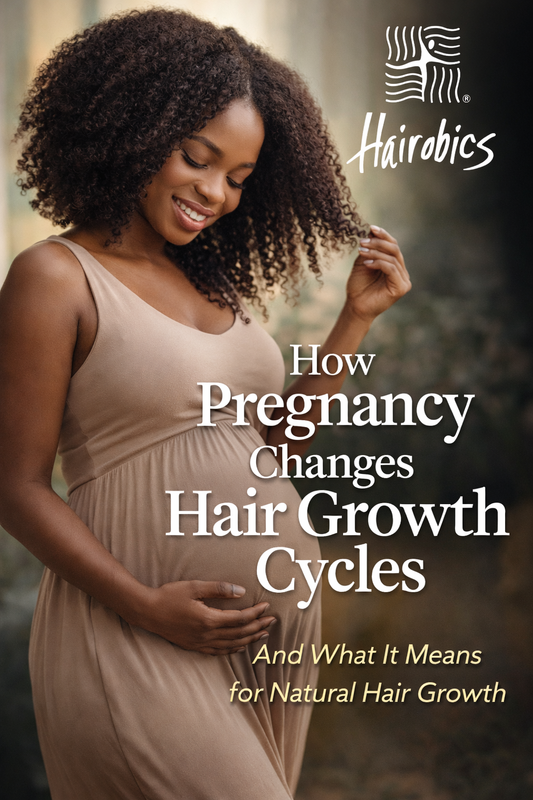
Pregnancy is one of the most powerful hormonal transitions a woman can experience. While many women focus on body changes, cravings, and energy levels, one of the most noticeable transformations often happens in the mirror: your hair.
For many women—especially Black women with natural, curly, coily, or textured hair—pregnancy can dramatically change hair growth cycles. Some notice thicker, fuller hair. Others experience shedding, dryness, or changes in curl pattern. And after delivery? Everything can shift again.
If you’re building a healthy hair routine (especially with natural hair), understanding how pregnancy affects the hair growth cycle is essential for long-term length retention and scalp health.
Let’s break it down in detail.
Understanding the Hair Growth Cycle First
Before we talk about pregnancy, you need to understand how hair grows under normal conditions.
Hair grows in a repeating cycle made up of four phases:
-
Anagen (Growth Phase)
-
Catagen (Transition Phase)
-
Telogen (Resting Phase)
-
Exogen (Shedding Phase)
Each strand on your head is in a different phase at any given time. This is why you don’t lose all your hair at once.
For most women:
-
85–90% of hair is in the anagen phase
-
5–10% is in the telogen phase
-
50–100 hairs shed daily (normal)
Now pregnancy changes that balance.
What Happens to Hair During Pregnancy?
Pregnancy increases levels of hormones such as:
-
Estrogen
-
Progesterone
-
Human chorionic gonadotropin (hCG)
-
Increased blood volume
These hormonal shifts directly impact the hair growth cycle.
1. More Hair Stays in the Anagen Phase
One of the biggest changes during pregnancy is that higher estrogen levels keep hair in the growth phase longer.
Instead of moving into the telogen (resting) phase, more hairs remain in active growth.
What this means:
-
Less daily shedding
-
Hair appears thicker
-
Increased density
-
Fuller edges for some women
-
Better length retention
This is why many pregnant women say:
“My hair has never been this thick before.”
For women with type 4 natural hair, this can feel like a dream season — especially if you’ve struggled with breakage or slow growth before.
2. Increased Blood Circulation to the Scalp
Pregnancy increases total blood volume in the body.
More blood flow = more oxygen and nutrients delivered to hair follicles.
This can:
-
Support stronger strands
-
Increase growth speed slightly
-
Improve scalp health
-
Reduce inflammation
If your scalp was previously dry or irritated, pregnancy hormones can temporarily calm inflammation.
3. Texture Changes During Pregnancy
Not all changes are about thickness.
Some women notice:
-
Curl pattern loosening
-
Hair becoming straighter
-
Hair becoming more coarse
-
Increased dryness
-
More oil production
Hormones affect keratin production and follicle shape. Because curly and coily hair patterns are influenced by follicle structure, pregnancy can temporarily alter your texture.
For Black women especially, texture shifts can be dramatic. Some women even feel like they have “new hair.”
Why Does Hair Seem to Grow Faster?
Technically, pregnancy does not dramatically increase growth speed.
Hair normally grows about:
-
½ inch per month
-
6 inches per year
What changes is retention, not actual growth rate.
Because fewer hairs enter the shedding phase, you keep more of what grows.
So your hair feels like it’s growing faster — but really, you’re just losing less.
Retention is everything in natural hair care.
What Happens After Pregnancy? (Postpartum Shedding Explained)
Here’s where things change dramatically.
After delivery:
-
Estrogen levels drop rapidly
-
Hormones return to pre-pregnancy levels
-
Hair that stayed in anagen shifts into telogen
This triggers postpartum telogen effluvium.
What Is Telogen Effluvium?
It’s a temporary shedding condition where a large number of hairs enter the resting phase at once.
Usually starts:
-
2–4 months postpartum
-
Peaks around month 4–6
-
Can last up to 12 months
You may notice:
-
Hair shedding in the shower
-
Thinner ponytail
-
Edge thinning
-
Hairline recession
-
Overall reduced density
This is not permanent hair loss.
It’s simply your body releasing the hair it “held onto” during pregnancy.
Why Postpartum Shedding Feels Worse for Natural Hair
Women with natural, curly, or coily hair often experience postpartum shedding more dramatically because:
-
Our strands coil around each other
-
Shed hair gets trapped in curls
-
Detangling releases accumulated shedding
-
Volume changes are more noticeable
If you wear braids or protective styles postpartum, shedding may appear extreme once styles are removed.
But remember:
This is hormonal.
Not permanent.
And usually self-correcting.
How Long Does It Take for Hair Cycles to Normalize?
For most women:
-
Shedding slows by 6–12 months postpartum
-
Density begins returning
-
Growth cycles stabilize
However, if shedding continues beyond 12 months, it’s worth checking:
-
Iron levels
-
Thyroid function
-
Vitamin D
-
Stress levels
-
Sleep deprivation
New motherhood stress can extend shedding.
Does Breastfeeding Affect Hair Growth?
Breastfeeding does not directly cause hair loss.
However:
-
Hormones remain slightly altered
-
Nutrient demands increase
-
Sleep deprivation increases cortisol
Cortisol (stress hormone) can push hair into the shedding phase.
So indirectly, lifestyle stress matters.
How Pregnancy Affects the Scalp
Pregnancy can also shift scalp behavior.
Some women experience:
-
Less dandruff
-
Reduced itchiness
-
Improved moisture retention
Others may notice:
-
Increased oiliness
-
Hormonal acne near the hairline
-
Sensitivity
Scalp health directly influences hair growth cycles.
Healthy follicles = stronger anagen phase.
Can Pregnancy Permanently Change Your Hair?
In some cases — yes.
Some women report:
-
Permanent curl pattern changes
-
Permanent thickness changes
-
Different porosity
-
Different density
This happens because hormonal shifts can alter follicle behavior long-term.
However, for most women, hair eventually returns close to baseline.
Hair Growth Cycle Timeline During & After Pregnancy
First Trimester:
-
Hormones rising
-
Minimal visible change
Second Trimester:
-
Reduced shedding
-
Hair feels fuller
Third Trimester:
-
Peak thickness
-
Increased shine
2–4 Months Postpartum:
-
Heavy shedding begins
6–12 Months Postpartum:
-
Gradual stabilization
How to Support Healthy Hair Growth During Pregnancy
Pregnancy is not the time for aggressive treatments.
Instead focus on:
1. Gentle Scalp Care
-
Keep scalp clean
-
Avoid heavy buildup
-
Use light oils if needed
2. Protective Styling (Low Tension)
-
Loose twists
-
Low-tension braids
-
Avoid tight ponytails
3. Balanced Nutrition
-
Iron
-
Protein
-
Healthy fats
-
Hydration
Hair is made of protein.
If your diet shifts, your hair will show it.
How to Minimize Postpartum Shedding
You cannot completely stop postpartum shedding.
But you can support regrowth.
1. Avoid Tight Styles
Traction can worsen hormonal shedding.
2. Focus on Scalp Stimulation
Gentle massage increases blood flow.
3. Reduce Stress Where Possible
Sleep deprivation impacts cortisol.
4. Be Patient
This is temporary.
When to See a Doctor
Consult a healthcare provider if:
-
Shedding lasts longer than 12–15 months
-
Bald patches appear
-
Scalp becomes painful
-
You notice symptoms of thyroid imbalance
Most postpartum shedding resolves naturally.
Key Takeaways
Pregnancy does not magically make hair grow faster.
It changes the hair growth cycle by:
-
Extending the anagen phase
-
Reducing shedding
-
Increasing density
After delivery:
-
Hormones drop
-
Hair shifts to telogen
-
Shedding increases
For Black women with natural hair, these shifts can feel dramatic — but they are usually temporary.
Understanding the biology behind it prevents panic and helps you protect your length.
Final Thoughts
Pregnancy is a powerful hormonal event. Your hair growth cycles are deeply connected to those internal shifts.
If you’re pregnant or recently postpartum, focus on:
-
Gentle care
-
Scalp health
-
Nutritional support
-
Patience
Your hair is adjusting just like your body.
And most importantly — this season will pass.