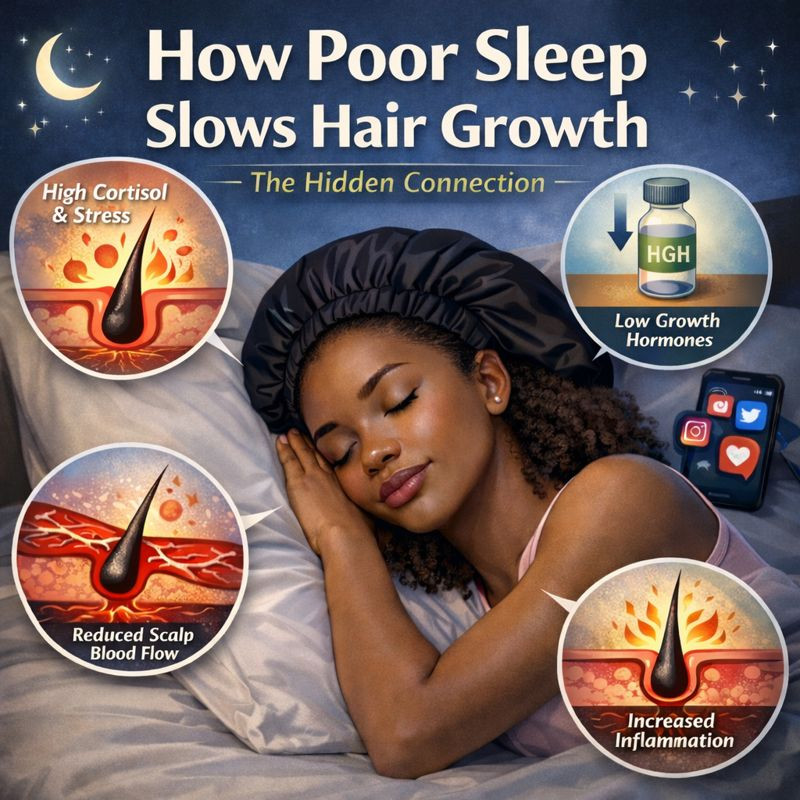
If your hair routine is solid—gentle styling, quality products, scalp care—but your hair still feels like it’s growing at a snail’s pace, the problem might not be your hair at all.
It might be your sleep.
Sleep isn’t just about rest. It’s when your body repairs tissue, balances hormones, reduces inflammation, and fuels hair follicle activity. When sleep is poor, inconsistent, or too short, hair growth is one of the first things to suffer—often silently.
In this article, we’ll break down exactly how poor sleep slows hair growth, the science behind it, warning signs most people ignore, and how to fix it so your hair can finally thrive.
Why Sleep Is Essential for Hair Growth
Hair growth is a biological process, not just a cosmetic one. Every strand on your head depends on internal systems that are deeply tied to sleep.
While you sleep, your body:
-
Releases growth hormones
-
Repairs damaged cells
-
Reduces cortisol (stress hormone)
-
Increases blood flow to the scalp
-
Regulates insulin and thyroid hormones
-
Calms inflammation
Hair follicles are among the most metabolically active structures in the body. That means they require energy, nutrients, oxygen, and hormonal balance—all of which are optimized during deep, restorative sleep.
When sleep is disrupted, hair follicles shift into survival mode instead of growth mode.
The Hair Growth Cycle (And Where Sleep Fits In)
To understand why sleep matters, you need to understand the hair growth cycle:
1. Anagen (Growth Phase)
-
Lasts 2–7 years
-
Hair actively grows
-
Requires high energy, oxygen, and nutrients
2. Catagen (Transition Phase)
-
Follicle shrinks
-
Growth slows
3. Telogen (Resting Phase)
-
Hair stops growing
-
Eventually sheds
Poor sleep shortens the anagen phase and pushes more follicles into telogen early. Over time, this leads to:
-
Slower length retention
-
Increased shedding
-
Thinner strands
-
Sparse edges or crown thinning
How Poor Sleep Slows Hair Growth (The Real Mechanisms)
1. Elevated Cortisol Shrinks Hair Follicles
Lack of sleep raises cortisol levels. Chronically high cortisol:
-
Constricts blood vessels in the scalp
-
Reduces nutrient delivery to follicles
-
Triggers inflammation around the hair root
-
Pushes hair into the shedding phase
This is why stress-related shedding often appears 2–3 months after sleep deprivation, not immediately.
2. Reduced Growth Hormone Production
Human Growth Hormone (HGH) is released primarily during deep sleep.
HGH:
-
Repairs hair follicle cells
-
Extends the growth phase
-
Supports keratin production
When deep sleep is shortened or fragmented, HGH drops—meaning hair simply doesn’t receive the signals it needs to grow efficiently.
3. Poor Sleep Disrupts Melatonin (A Hair Growth Ally)
Melatonin isn’t just a sleep hormone—it plays a role in:
-
Regulating hair follicle cycling
-
Protecting follicles from oxidative stress
-
Extending the anagen phase
Low melatonin levels are associated with:
-
Increased hair shedding
-
Slower regrowth
-
Thinner hair density
Late nights, excessive screen time, and irregular sleep schedules all suppress melatonin.
4. Blood Flow to the Scalp Decreases
During healthy sleep, blood circulation improves and oxygen delivery increases.
Poor sleep causes:
-
Vasoconstriction (narrowing of blood vessels)
-
Reduced scalp oxygenation
-
Sluggish nutrient delivery
Hair follicles starved of oxygen simply cannot function at full capacity.
5. Inflammation Rises When Sleep Is Poor
Sleep deprivation increases systemic inflammation, which directly affects the scalp.
Inflammation can:
-
Block follicle openings
-
Disrupt the scalp microbiome
-
Trigger itching, tenderness, or flakes
-
Slow follicle regeneration
Inflamed scalps grow hair significantly slower than calm, balanced ones.
Signs Poor Sleep Is Affecting Your Hair
Many people blame products or genetics when the real issue is sleep. Watch for these red flags:
-
Hair grows everywhere except edges or crown
-
Increased shedding without breakage
-
Hair feels thinner over time
-
Scalp tenderness or soreness
-
Slow regrowth after protective styles
-
Hair looks dull despite moisture
-
Breakouts or dark under-eye circles alongside hair issues
If these show up together, sleep is likely part of the problem.
How Many Hours of Sleep Does Hair Need?
Hair growth thrives when you consistently get:
-
7–9 hours of quality sleep per night
-
At least 90 minutes of deep sleep
-
A consistent sleep/wake schedule
It’s not just about quantity—sleep quality matters more than you think.
How Poor Sleep Worsens Hair Loss Conditions
Sleep deprivation can worsen or trigger:
Telogen Effluvium
Stress-induced shedding that occurs months after poor sleep or emotional stress.
Traction Alopecia
Poor sleep increases inflammation and slows recovery of stressed edges.
Androgen Sensitivity
Sleep affects insulin and cortisol, which influence DHT activity around follicles.
Scalp Disorders
Conditions like dandruff, seborrheic dermatitis, and scalp psoriasis flare during sleep deprivation.
Nighttime Habits That Quietly Damage Hair Growth
Even if you “sleep,” these habits still hurt hair:
-
Scrolling on your phone in bed
-
Sleeping with lights on
-
Irregular bedtime every night
-
Late-night caffeine or sugar
-
Tight protective styles worn overnight
-
Sleeping without a satin bonnet or pillowcase
All of these interfere with hormones and scalp circulation.
How to Fix Your Sleep for Faster Hair Growth
1. Set a Non-Negotiable Bedtime
Your hair loves consistency. Go to bed and wake up at the same time—even on weekends.
2. Reduce Blue Light at Night
Turn off screens at least 60–90 minutes before bed or use blue-light filters.
3. Support the Scalp Overnight
Use lightweight scalp serums or oils that won’t clog pores and can work while you sleep. Massage gently to stimulate blood flow before bed.
4. Create a Sleep-Friendly Environment
-
Dark room
-
Cool temperature
-
Quiet or white noise
-
Satin pillowcase or bonnet
This reduces friction and improves circulation.
5. Manage Stress Before Bed
Try:
-
Deep breathing
-
Stretching
-
Journaling
-
Herbal teas (non-caffeinated)
Lower stress = lower cortisol = better hair growth.
How Long After Better Sleep Will Hair Growth Improve?
Hair responds slowly, but consistently.
Timeline:
-
2–4 weeks: Reduced shedding
-
6–8 weeks: Improved scalp comfort and thickness
-
3–6 months: Noticeable length retention and regrowth
Hair growth is cumulative. Sleep improvements compound over time.
Can Products Fix Sleep-Related Hair Issues?
Topical products cannot override poor sleep, but they can support recovery when sleep improves.
The best results happen when:
-
Sleep is consistent
-
Scalp care supports circulation
-
Hair is protected at night
-
Stress is managed
This is why people often see better results from products after fixing sleep—not before.
The Bottom Line: Sleep Is a Hair Growth Requirement, Not a Luxury
If your hair isn’t growing, retaining length, or recovering the way it should, don’t just look at your routine—look at your sleep habits.
Poor sleep:
-
Shortens the growth phase
-
Increases shedding
-
Triggers inflammation
-
Disrupts hormones
-
Starves follicles of oxygen
No oil, supplement, or protective style can fully compensate for chronic sleep deprivation.
Healthy hair starts at night—literally.