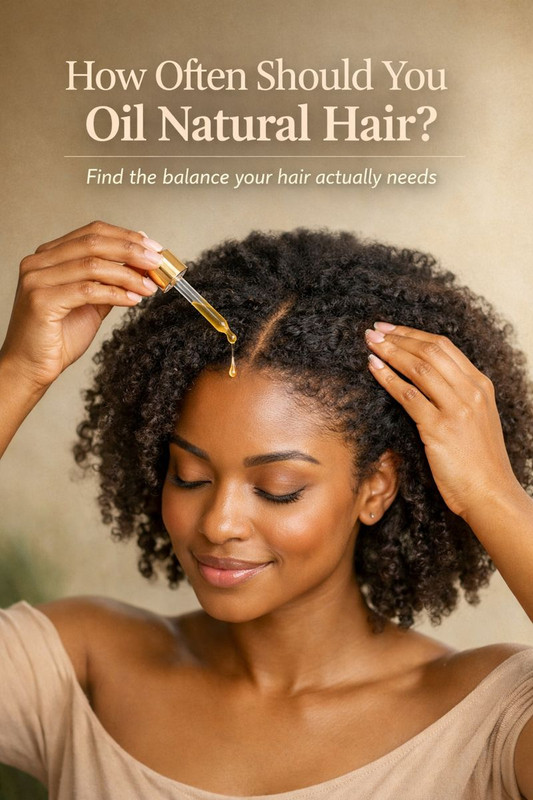
Oiling natural hair is one of the most talked-about — and misunderstood — hair care practices. Some people oil their hair every single day, while others swear oil ruined their moisture balance. So what’s the truth?
How often should you oil natural hair — and does your hair type, scalp condition, or protective style matter?
The short answer: there’s no one-size-fits-all rule.
The long answer (the one that actually helps you grow healthy hair) is below.
In this guide, we’ll break down:
-
How often to oil natural hair by hair type
-
Whether oil actually moisturizes hair (spoiler: it doesn’t)
-
Signs you’re oiling too much — or not enough
-
The best oiling routines for growth, moisture, and scalp health
-
How to oil your hair correctly (this part matters more than frequency)
Does Oiling Natural Hair Actually Moisturize It?
Let’s clear up the biggest myth first.
Oil does NOT moisturize hair.
Water moisturizes hair. Oil seals moisture in.
If you oil dry hair without water or a water-based product first, you’re essentially sealing in dryness. This is why so many people say oil “stopped working” for them.
What oil actually does:
-
Slows moisture loss
-
Adds softness and shine
-
Protects hair from friction
-
Supports scalp health when used correctly
Bottom line:
Oiling works best after your hair has been hydrated.
How Often Should You Oil Natural Hair? (Quick Answer)
For most people with natural hair:
-
Scalp oiling: 1–3 times per week
-
Hair shaft oiling: 2–4 times per week (or as needed)
-
Daily oiling: Only if your hair thrives with it — most don’t
The right frequency depends on your hair porosity, scalp condition, climate, and styling routine.
Let’s break that down ?
How Often to Oil Natural Hair by Hair Type
Type 3 Hair (Curly Hair)
Oil frequency: 2–3 times per week
Curly hair tends to:
-
Hold moisture better than coily hair
-
Get weighed down easily by heavy oils
Best approach:
-
Light oils
-
Focus on ends, not roots
-
Avoid daily oiling unless hair feels dry
Type 4 Hair (4A, 4B, 4C Coily Hair)
Oil frequency: 3–5 times per week
Coily hair:
-
Loses moisture faster
-
Has tighter bends that make oil distribution harder
Best approach:
-
Oil after moisturizing
-
Focus on ends and areas prone to breakage
-
Scalp oiling 1–2 times weekly
? 4C hair especially benefits from sealing moisture more frequently — but still doesn’t need heavy daily oiling if hydration is on point.
How Often Should You Oil Your Scalp?
Your scalp produces its own natural oil (sebum), but many factors affect how much:
-
Genetics
-
Hormones
-
Weather
-
Product buildup
-
Protective styles
General guideline
-
Normal scalp: 1–2 times per week
-
Dry scalp: 2–3 times per week
-
Oily or itchy scalp: Once weekly or less
Over-oiling the scalp can:
-
Clog follicles
-
Cause buildup
-
Trigger itching or flakes
Healthy hair growth starts with a balanced scalp, not a drenched one.
Signs You’re Oiling Your Hair Too Often
If oiling was always good, buildup wouldn’t exist ?
Watch out for these signs:
-
Hair feels greasy but still dry
-
Curls look dull instead of shiny
-
Scalp itching or flakes
-
Hair stops absorbing moisture
-
Products sit on top of hair instead of soaking in
If this sounds familiar, cut back on oiling and increase hydration instead.
Signs You’re Not Oiling Enough
On the flip side, under-oiling can cause issues too:
-
Ends feel rough or crunchy
-
Hair snaps easily
-
Excessive split ends
-
Hair loses moisture quickly
-
Protective styles feel dry after a few days
When oil is used correctly, it protects your moisture investment.
How Often to Oil Natural Hair for Growth
Let’s be real — oil doesn’t magically grow hair.
But it creates the conditions for growth.
For growth support:
-
Oil scalp 1–2 times per week
-
Massage gently to boost circulation
-
Avoid heavy daily oiling that suffocates follicles
Hair grows best when:
-
Scalp is clean
-
Follicles are not clogged
-
Moisture balance is maintained
Consistency beats excess every time.
How Often Should You Oil Natural Hair in Protective Styles?
Protective styles still need care — maybe even more.
Braids, twists, locs, wigs:
-
Scalp oiling: 1–3 times per week
-
Hair oiling: Lightly, 2–3 times per week
Pro tip:
Use lightweight oils or oil blends that absorb easily. Heavy oils + protective styles = buildup city.
Best Time to Oil Natural Hair
Timing matters just as much as frequency.
The BEST times to oil:
-
After washing and conditioning
-
After applying a water-based moisturizer
-
After refreshing curls with water or spray
The WORST time to oil:
-
On completely dry hair
-
Before moisturizing
-
Daily without cleansing regularly
The Right Way to Oil Natural Hair (This Is Key)
Follow this simple rule:
Hydrate → Moisturize → Seal
-
Water (or water-based leave-in)
-
Cream or moisturizer
-
Oil to seal
This method prevents dryness, buildup, and wasted oil.
How Climate Affects How Often You Should Oil Natural Hair
Dry or cold climates
-
Hair loses moisture faster
-
Slightly more frequent oiling may help
-
Still prioritize hydration first
Humid or hot climates
-
Over-oiling can cause limp hair
-
Lighter oils, less frequent use
Always adjust based on how your hair feels, not just the calendar.
Common Oiling Mistakes to Avoid
? Oiling without water
? Using heavy oils daily
? Ignoring scalp buildup
? Thinking oil replaces conditioner
? Never clarifying hair
Oil is a tool — not a cure-all.
So… How Often Should You Oil Natural Hair?
Here’s the real answer:
? As often as your hair needs it — not as often as social media says.
For most naturals:
-
2–4 times per week is plenty
-
Focus on moisture first
-
Let your hair tell you what it needs
Healthy natural hair isn’t about drowning your strands in oil — it’s about balance, consistency, and intention.
Final Thoughts: Oil Smarter, Not Harder
Oiling natural hair should:
-
Support moisture retention
-
Protect ends
-
Promote scalp health
When used correctly, oil becomes a powerful ally in your healthy hair journey — not the reason your hair feels dry, greasy, or stuck.
If you master when, how, and how often to oil your natural hair, everything else gets easier.