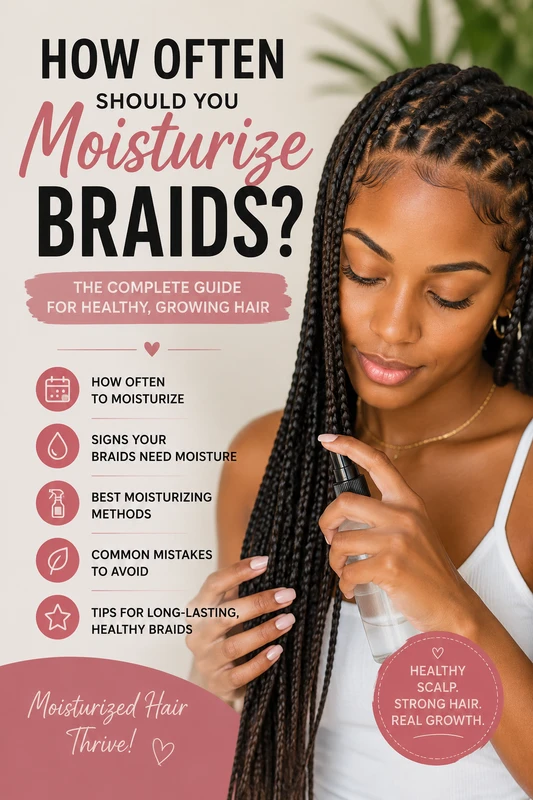
Braids are one of the most popular protective styles for natural hair, and for good reason. Whether you wear box braids, knotless braids, cornrows, goddess braids, or twists, braids help reduce daily manipulation, protect fragile strands, and make hair maintenance easier.
However, one of the biggest mistakes people make while wearing braids is forgetting to moisturize their hair.
Many people assume that because their hair is tucked away, it no longer needs moisture. Unfortunately, that belief often leads to dryness, breakage, itchy scalp, brittle ends, and even hair loss.
So how often should you moisturize braids?
The short answer is:
Most people should moisturize their braids every 2–3 days, while those with extremely dry hair may benefit from daily moisture.
The exact frequency depends on your hair type, climate, scalp condition, and the type of products you use.
In this complete guide, you'll learn:
- How often to moisturize braids
- Signs your braids need moisture
- Best moisturizing methods
- Common mistakes to avoid
- How moisture affects hair growth
- The best routine for long-lasting healthy braids
Let's dive in.
Why Moisture Matters Even When Your Hair Is Braided
Braids protect your hair from excessive handling, but they don't eliminate your hair's need for hydration.
Your hair is still:
- Exposed to air
- Exposed to sun
- Exposed to dry indoor heating
- Losing moisture through evaporation
Natural hair is especially prone to dryness because the scalp's natural oils have difficulty traveling down curly and coily strands.
When hair is braided, this challenge becomes even greater.
Without proper moisture:
- Hair becomes brittle
- Breakage increases
- Scalp becomes flaky
- Hair growth retention decreases
- Braids start looking dull
Many people blame braids for hair loss when the real issue is lack of moisture.
The Ideal Moisturizing Schedule for Braids
Every 2–3 Days (Best for Most People)
For the average person wearing braids:
- Moisturize every 2–3 days
- Focus on scalp and braid length
- Use lightweight products
This schedule helps maintain hydration without causing buildup.
It also keeps braids looking fresh longer.
Daily Moisture for Very Dry Hair
You may need daily moisturizing if you have:
- Type 4 hair
- High-porosity hair
- Extremely dry scalp
- Color-treated hair
- Hair prone to breakage
Daily hydration helps maintain softness and elasticity.
Focus on lightweight moisturizing sprays rather than heavy oils.
Every 4–5 Days for Oily Scalps
If your scalp naturally produces more oil:
- Moisturize less frequently
- Use water-based products
- Avoid heavy creams
Over-moisturizing can lead to buildup and itching.
Signs Your Braids Need Moisture
Your hair usually tells you when it's thirsty.
Watch for these warning signs:
Itchy Scalp
An itchy scalp often signals dryness.
Many people assume itching means they need more oil.
In reality, the scalp often needs water-based hydration.
Dull-Looking Braids
Healthy braids typically have some shine.
If braids appear:
- Dry
- Faded
- Lifeless
Your hair may need moisture.
Flaking
Dryness can cause:
- White flakes
- Scalp irritation
- Tightness
Adding moisture often reduces flaking significantly.
Brittle Ends
Even though your hair is braided, exposed ends can dry out.
Dry ends are more likely to break when braids are removed.
Tight Feeling
Your scalp should not feel tight all the time.
A constantly tight sensation often indicates dehydration.
The Difference Between Moisture and Oil
One of the biggest misconceptions in natural hair care is believing oil equals moisture.
It doesn't.
Moisture Comes From Water
True hydration comes from:
- Water
- Aloe vera
- Water-based leave-ins
- Hydrating sprays
Water is the primary moisturizer.
Oil Seals Moisture
Oils help:
- Reduce moisture loss
- Add shine
- Improve softness
But oils alone do not hydrate hair.
Applying oil to dry hair is like putting lotion on dry dirt.
You must add moisture first.
Best Way to Moisturize Braids
Step 1: Use a Water-Based Moisturizing Spray
Look for ingredients such as:
- Water
- Aloe vera
- Glycerin
- Herbal extracts
Spray directly onto:
- Scalp
- Braids
- Hair length
Step 2: Massage Scalp
Use fingertips to:
- Stimulate circulation
- Distribute moisture
- Reduce dryness
A 2–3 minute scalp massage is enough.
Step 3: Seal With Oil
After moisture is applied:
- Jojoba oil
- Jamaican Black Castor Oil
- Grapeseed oil
- Avocado oil
can help lock hydration in.
Use a small amount.
How Climate Affects Moisturizing Frequency
Dry Climates
If you live in dry regions:
- Moisturize every 1–2 days
- Increase hydration
- Protect hair at night
Dry air pulls moisture from hair quickly.
Humid Climates
Humid environments naturally provide moisture.
You may only need hydration every 3–4 days.
Winter Weather
Cold weather is notorious for drying out hair.
During winter:
- Increase moisturizing frequency
- Wear satin-lined hats
- Deeply hydrate before installation
How Long Can Braids Go Without Moisture?
Not long.
Many people leave braids untouched for weeks.
This often leads to:
- Dry roots
- Breakage
- Tangling
- Difficult braid removal
A braid style may last 6–8 weeks, but moisture should be added regularly throughout that period.
Moisturizing Different Types of Braids
Knotless Braids
Knotless braids allow easier access to the scalp.
Moisturize:
- Every 2–3 days
- Directly at roots
Box Braids
Box braids require moisture on:
- Scalp
- Length
- Ends
Hydrate every few days.
Cornrows
Cornrows expose more scalp.
Moisturize:
- Scalp every 2–3 days
- Hairline regularly
Goddess Braids
Curly extensions tend to dry out.
Hydrate curls often to maintain softness.
Common Moisturizing Mistakes
Using Too Much Oil
Heavy oil application causes:
- Buildup
- Itching
- Attracting dirt
Less is more.
Ignoring the Scalp
Healthy hair begins with a healthy scalp.
Always include scalp hydration.
Overusing Heavy Creams
Creams often accumulate inside braids.
This buildup can lead to odor and flakes.
Waiting Until Hair Feels Dry
Prevent dryness before it starts.
Consistent moisture works better than emergency hydration.
Can Over-Moisturizing Damage Braids?
Yes.
Too much moisture can:
- Cause frizz
- Weaken braid structure
- Create buildup
Balance is key.
Signs of over-moisturizing include:
- Mushy hair
- Excessive softness
- Increased frizz
The Best Ingredients for Moisturizing Braids
Look for:
Aloe Vera
Provides hydration and scalp soothing.
Glycerin
Draws moisture into hair.
Rosemary
Supports scalp health.
Peppermint
Provides cooling relief.
Jamaican Black Castor Oil
Helps seal moisture and support hair retention.
Jojoba Oil
Mimics natural scalp oils.
Nighttime Moisture Protection
Protecting moisture overnight is crucial.
Use:
- Satin bonnet
- Satin scarf
- Silk pillowcase
These reduce friction and moisture loss.
Cotton pillowcases absorb moisture from hair.
Does Moisturizing Braids Help Hair Growth?
Indirectly, yes.
Moisturized hair experiences:
- Less breakage
- Better elasticity
- Improved retention
Hair grows from the scalp, but retained length depends heavily on moisture.
Many people think their hair isn't growing.
In reality, they're losing growth through breakage.
Consistent hydration helps preserve the length you gain.
A Weekly Moisture Routine for Braids
Monday
Apply moisturizing spray.
Wednesday
Hydrate scalp and braid length.
Friday
Light moisture treatment plus scalp massage.
Sunday
Full hydration session and braid inspection.
This simple routine keeps braids healthy throughout the style.
How to Keep Braids Moisturized for 8 Weeks
Follow these rules:
- Moisturize every 2–3 days.
- Wear satin at night.
- Avoid excessive heat.
- Limit heavy product buildup.
- Drink enough water.
- Clean scalp regularly.
- Protect hair from harsh weather.
These habits dramatically improve braid longevity.
Frequently Asked Questions
Can I moisturize braids every day?
Yes, especially if your hair is extremely dry. Use lightweight products.
Should I oil my braids every day?
Usually no. Most people only need oil 1–2 times weekly.
Can braids grow hair faster?
Braids do not increase growth rate, but they can improve length retention.
Why do my braids feel dry after moisturizing?
You may be using oils without enough water-based hydration.
What is the best moisturizer for braids?
A water-based moisturizing spray containing hydrating ingredients is usually the best option.
Final Thoughts
So, how often should you moisturize braids?
For most people, moisturizing every 2–3 days provides the perfect balance of hydration and braid longevity.
The key is remembering that braids protect your hair, but they do not eliminate your hair's need for moisture.
Healthy braids require:
- Regular hydration
- Scalp care
- Moisture retention
- Consistent maintenance
When you keep your braids moisturized, you'll experience less breakage, healthier hair, a happier scalp, and better length retention.
If your goal is stronger, longer natural hair, moisture is one of the most powerful tools you can use while wearing braids.
And remember: dry hair breaks, but moisturized hair thrives.