Braids are one of the most popular protective styles for natural hair—and for good reason. They offer convenience, length retention, and relief from daily styling. But here’s the truth most people don’t hear often enough:
Braids can quietly damage your hair if you leave them in too long.
If you’ve ever taken your braids down and noticed:
-
Excessive shedding
-
Breakage at the roots
-
Thinning edges
-
A sore or itchy scalp
-
Hair that looks shorter after removing braids
…it’s not bad luck. It’s usually timing.
So how long is too long for braids?
Let’s break it all the way down—no myths, no guessing, just science-backed timelines and real-world hair behavior.
Why This Question Matters More Than You Think
Braids are often labeled “protective,” but no style is protective by default. A style only protects your hair if:
-
The hair underneath stays moisturized
-
The scalp stays healthy
-
The strands are not under prolonged tension
-
Shed hair is released regularly
When braids overstay their welcome, the exact opposite happens.
Protective styles become destructive styles.
The Short Answer: How Long Is Too Long?
For most people:
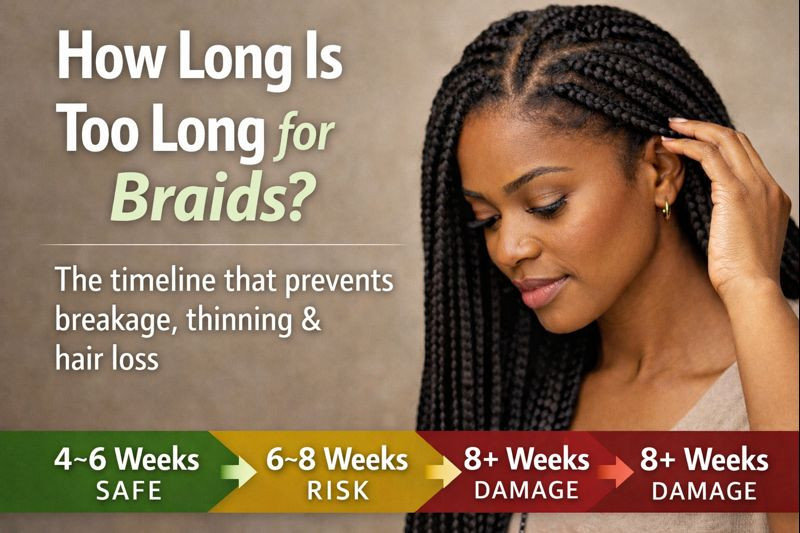
Anything over 8 weeks is too long for braids.
But that’s not the full story.
The real answer depends on:
-
Braid size
-
Hair texture and density
-
Scalp health
-
Installation tension
-
Maintenance routine
Let’s go deeper.
The Hair Growth & Shedding Cycle (Why Braids Have an Expiration Date)
Your hair grows in cycles, not continuously.
The Key Fact Most People Miss
You naturally shed 50–100 hairs per day.
When your hair is braided:
-
Shed hairs do not fall out
-
They stay tangled inside the braid
-
They accumulate week after week
After 6–8 weeks, those trapped shed hairs:
-
Create knots at the root
-
Cause matting
-
Increase friction during takedown
-
Lead to breakage that looks like “hair loss”
This is why people swear braids “made their hair fall out”—when really, the hair was already shed and trapped.
Timeline Breakdown: When Braids Go From Safe to Risky
Weeks 0–2: The Adjustment Phase
-
Scalp may feel tight or tender
-
Mild itching is normal
-
Hair underneath is still healthy
-
Shed hair buildup is minimal
✅ Safe phase (assuming no extreme tension)
Weeks 3–4: The Stable Phase
-
Braids look their best
-
Scalp settles down
-
Growth is happening underneath
-
Moisture retention is manageable
✅ Ideal wear window begins here
Weeks 5–6: The Warning Phase
-
New growth causes tension at the roots
-
Scalp may feel itchy or flaky
-
Shed hairs start accumulating
-
Braids may feel heavier
⚠️ This is when many people should plan removal
Weeks 7–8: The Risk Zone
-
Matting begins at the roots
-
Shedding is heavily trapped
-
Edges experience prolonged tension
-
Breakage risk increases significantly
? High risk for damage if maintenance is poor
Weeks 9+: The Damage Zone
At this point:
-
Hair loss risk increases
-
Knots and fairy knots form
-
Takedown causes unnecessary breakage
-
Edges and nape thin out
❌ Too long for almost everyone
Does Braid Size Change How Long You Can Keep Them?
Yes—dramatically.
Small Braids (Micro, Knotless, Small Box Braids)
Max time: 6–8 weeks
Why:
-
Less room for shed hair
-
More tension per strand
-
Faster matting
Medium Braids
Max time: 8 weeks
Why:
-
Balanced tension
-
Manageable shedding
-
Still prone to knotting past 8 weeks
Large / Jumbo Braids
Max time: 4–6 weeks
Why:
-
Less hair per braid
-
Roots loosen faster
-
Higher friction and breakage risk
What About Knotless Braids?
Knotless braids are often marketed as safer—but timing still matters.
Knotless braids should not exceed 8 weeks.
While they reduce initial tension, they:
-
Still trap shed hair
-
Still cause friction over time
-
Can still thin edges if worn too long
Comfort ≠ unlimited wear time.
Signs You’ve Kept Your Braids in Too Long
Your hair will tell you before damage becomes obvious.
Watch for:
-
Persistent itching even after moisturizing
-
Flakes that return quickly
-
Braids slipping with tangled roots
-
Excessive shedding during takedown
-
Short broken pieces instead of full strands
If you see breakage instead of shed hairs, that’s damage—not normal shedding.
Why Edges Suffer the Most From Long-Term Braids
Edges are:
-
Finer
-
More fragile
-
More sensitive to tension
Leaving braids in too long:
-
Keeps edges under constant stress
-
Weakens the follicle over time
-
Leads to thinning or permanent loss if repeated
This is why people who “live in braids” often notice their hairline changing—even if the rest of their hair seems fine.
The Hidden Danger: Scalp Health Decline
Braids don’t just affect strands—they affect your scalp.
Long-term braids can cause:
-
Product buildup
-
Clogged follicles
-
Reduced oxygen flow
-
Inflammation
A compromised scalp slows growth, even if your hair is technically protected.
Healthy growth requires:
-
Clean follicles
-
Moisturized skin
-
Regular stimulation
Braids block all three when worn too long without care.
Can You Wash Braids to Extend Wear Time?
Washing helps—but it’s not a magic reset.
What Washing DOES:
-
Removes buildup
-
Soothes itch
-
Refreshes scalp
What Washing Does NOT Do:
-
Release trapped shed hair
-
Reverse tension damage
-
Prevent matting at the roots
Even with washing, braids still have a maximum lifespan.
How Often Should You Moisturize Hair While Braided?
This is where many people fail.
Your hair underneath braids still needs:
-
Moisture
-
Scalp nourishment
-
Slip to reduce friction
Dry hair + trapped shedding = breakage during takedown.
Moisturize 2–4 times per week minimum, focusing on:
-
Scalp
-
New growth
-
Length inside the braid
The Best Braid Schedule for Maximum Hair Growth
If your goal is length retention and healthy growth, follow this cycle:
-
Braids in: 4–6 weeks
-
Rest period: 1–2 weeks
-
Cleanse & treat scalp
-
Reinstall if desired
This prevents:
-
Follicle stress
-
Edge thinning
-
Long-term breakage
Your hair grows best when it gets breaks from tension.
Why “My Hair Grows Better in Braids” Is Only Half True
Yes—braids can help retain length.
But only if:
-
They’re not too tight
-
They’re not worn too long
-
Hair underneath stays moisturized
Many people confuse:
“My hair looks longer when I take braids out”
with
“Braids made my hair grow”
Growth happens regardless. Retention is the real goal.
What to Do Immediately After Taking Braids Down
This step determines whether you keep or lose length.
Post-Braid Must-Do’s:
-
Detangle gently before washing
-
Remove shed hair carefully
-
Deep cleanse scalp
-
Rehydrate hair thoroughly
Skipping this step leads to:
-
Breakage
-
Knots
-
Setbacks that undo weeks of growth
How Often Is Too Often to Get Braids?
Back-to-back braids without rest are just as damaging as leaving them in too long.
Avoid:
-
Continuous installs with no break
-
Rebraiding edges repeatedly
-
Tight re-dos without scalp recovery time
Your follicles need rest to stay productive.
Who Should Avoid Long-Term Braids Altogether?
You should be especially cautious if you have:
-
Fine or low-density hair
-
History of edge thinning
-
Scalp conditions (eczema, psoriasis, chronic dandruff)
-
Postpartum shedding
-
Stress-related hair loss
For these cases, shorter wear times are safer.
Final Answer: So… How Long Is Too Long?
Here’s the honest breakdown:
-
4–6 weeks: Ideal for most people
-
6–8 weeks: Maximum for healthy hair with great maintenance
-
8+ weeks: Too long and high risk
-
9–12 weeks: Damage territory
If your goal is longer, thicker, healthier hair, timing matters just as much as the style itself.
Final Thoughts: Braids Should Support Your Hair—Not Steal From It
Braids are a tool, not a solution.
Used correctly, they help you retain length and reduce manipulation. Used incorrectly, they quietly cause:
-
Breakage
-
Thinning
-
Growth plateaus
The difference isn’t the braid style.
It’s how long you keep them.