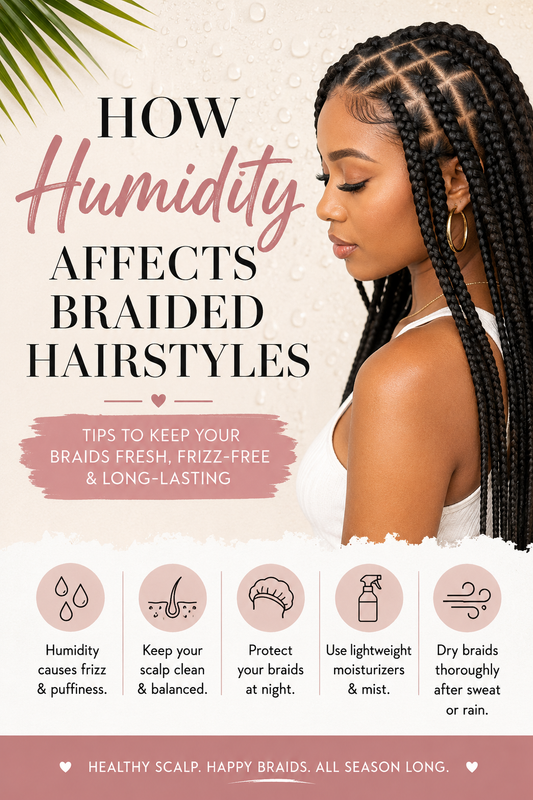
Braided hairstyles are one of the most popular protective styles for natural hair. Whether you wear box braids, knotless braids, cornrows, goddess braids, twists, or feed-in braids, they offer convenience, style, and protection. However, one environmental factor can quickly change how your braids look and feel—humidity.
If you've ever stepped outside on a hot summer morning only to notice your braids becoming fuzzy before lunchtime, humidity is likely the reason. Moisture in the air affects both your natural hair and the synthetic or human hair extensions used in braids.
Understanding how humidity works allows you to protect your hairstyle, extend the life of your braids, and keep your scalp healthy.
In this complete guide, we'll explain exactly how humidity affects braided hairstyles, why some braids frizz faster than others, and the best ways to maintain beautiful braids no matter how humid the weather becomes.
What Is Humidity?
Humidity refers to the amount of water vapor present in the air.
The higher the humidity:
- More moisture surrounds your hair.
- Hair absorbs water from the air.
- Hair expands.
- Hair becomes puffier.
- Frizz increases.
Natural textured hair is especially sensitive because it naturally seeks moisture from the environment.
Even though your hair is braided, your natural strands are still reacting to changes in moisture.
Why Braids React to Humidity
Many people assume braids completely protect hair from environmental changes.
They don't.
Humidity affects several parts of braided hairstyles:
- New growth
- Hair at the roots
- Loose baby hairs
- Ends
- Extension fibers
- Scalp moisture
Because braided styles combine natural hair with extensions, both materials can respond differently to humid conditions.
Your Natural Hair Swells
Natural hair absorbs moisture quickly.
When humidity rises:
- Hair strands expand.
- Curls become more defined.
- Hair lifts away from the braid.
- Braids appear older faster.
This is especially noticeable if:
- Your hair is highly textured.
- Your braids are several weeks old.
- Your new growth has increased.
The swelling creates fuzz around each braid.
Why Frizz Happens Faster
Frizz is one of the first signs of humidity damage.
Humidity causes:
- Tiny hairs to escape the braid.
- Cuticles to lift.
- Hair to curl around the braid.
- Flyaways to increase.
This creates the fuzzy halo many people notice after being outside.
The older the braids become, the easier humidity creates frizz.
New Growth Becomes Puffier
Even perfectly installed braids eventually develop new growth.
Humidity accelerates this process.
The roots:
- Expand.
- Become softer.
- Lose their sleek appearance.
- Appear thicker.
Many people think their braids are coming loose when they're actually experiencing swollen new growth caused by moisture.
Knotless Braids and Humidity
Knotless braids are especially vulnerable.
Because they begin with your natural hair instead of a tight knot:
- Roots move more freely.
- Hair expands easier.
- Puffiness appears sooner.
- Frizz develops faster.
This doesn't mean knotless braids are bad.
They simply require more regular maintenance during humid seasons.
Box Braids in Humid Weather
Box braids generally hold up well.
However, humidity can still cause:
- Puffy roots
- Frizzy edges
- Loose ends
- Hair slipping from braids
Keeping the roots moisturized—but not overly wet—helps maintain a cleaner appearance.
Cornrows and Moisture
Cornrows lie close to the scalp.
High humidity may cause:
- Hair to lift between rows.
- Frizz around hairline.
- Sweaty scalp.
- Itching.
Since cornrows expose more scalp, sweat evaporates differently than with hanging braids.
Goddess Braids and Curly Ends
Humidity dramatically affects curly braid styles.
Curly ends absorb moisture rapidly.
This can cause:
- Bigger curls
- Expanded texture
- Tangling
- Matting
- Frizz
Refreshing curls regularly helps maintain definition.
Crochet Braids
Crochet braids vary depending on the hair used.
Some synthetic fibers resist humidity.
Others become:
- Puffy
- Tangled
- Frizzy
Reading extension care instructions helps determine how well they perform in humid climates.
Synthetic Hair Reacts Differently
Not all braid hair behaves the same.
Premium synthetic fibers:
- Resist moisture better.
- Stay smoother longer.
- Produce less frizz.
Lower-quality fibers often become rough quickly in humid conditions.
Investing in quality braiding hair usually results in longer-lasting styles.
Human Hair Extensions
Human hair absorbs moisture similarly to natural hair.
Humidity can cause:
- Curl expansion
- Puffiness
- Frizz
- Increased maintenance
Human hair offers a natural look but typically requires more styling in humid weather.
Sweat Makes Humidity Worse
Humidity and sweat often work together.
Sweat contains:
- Water
- Salt
- Oils
These accumulate on:
- Scalp
- Hairline
- Braids
Excess buildup attracts dirt and may shorten the life of your hairstyle.
Scalp Itching During Humid Weather
Many people notice increased itching.
Possible reasons include:
- Sweat buildup
- Oil accumulation
- Dead skin
- Product residue
- Reduced airflow
Keeping the scalp clean is one of the best ways to reduce irritation.
Why Braids Feel Heavier
Humidity increases moisture absorption.
Combined with sweat, braids may feel:
- Heavier
- Damp
- Less flexible
This feeling usually disappears after thoroughly drying the scalp.
Humidity Can Cause Odor
If braids remain damp for long periods:
- Bacteria multiply.
- Sweat lingers.
- Mildew odors may develop.
Always dry braids completely after:
- Washing
- Swimming
- Heavy workouts
- Rain exposure
Best Hairstyles for Humid Climates
Some braided styles resist humidity better than others.
Excellent choices include:
- Medium box braids
- Feed-in braids
- Cornrows
- Stitch braids
- Rope twists
- Senegalese twists
These styles often maintain their structure longer than loose textured braid styles.
How to Prevent Frizz in Humidity
Reducing frizz begins with consistent care.
Helpful habits include:
- Sleeping with a satin bonnet.
- Using a satin pillowcase.
- Avoiding excessive touching.
- Keeping braids clean.
- Moisturizing lightly.
- Protecting hair during rain.
Small daily habits make a noticeable difference.
Don't Overuse Heavy Products
Many people respond to frizz by adding excessive oils or creams.
Too much product can:
- Attract dust.
- Trap sweat.
- Cause buildup.
- Make braids appear greasy.
Instead, choose lightweight products that hydrate without leaving residue.
Keep Your Scalp Balanced
Healthy braids begin with a healthy scalp.
Focus on:
- Gentle cleansing
- Moisture balance
- Regular scalp massages
- Removing buildup
- Avoiding clogged follicles
A balanced scalp supports healthier hair while wearing protective styles.
Wash Braids Correctly
Many people avoid washing braids.
However, clean braids typically last longer.
When washing:
- Dilute shampoo.
- Focus on the scalp.
- Massage gently.
- Rinse thoroughly.
- Dry completely.
Clean hair responds better to humidity than dirty hair covered with buildup.
Dry Braids Completely
Never leave braids damp.
Remaining moisture encourages:
- Odor
- Frizz
- Mildew
- Scalp irritation
Use:
- Microfiber towels
- Cool blow dryer settings
- Air circulation
Complete drying is one of the best ways to preserve braided hairstyles.
Sleep Protection Matters
Nighttime friction creates additional fuzz.
Always protect braids using:
- Satin bonnet
- Silk scarf
- Satin pillowcase
These reduce friction and preserve smoother braids.
Avoid Constant Touching
Hands transfer:
- Dirt
- Oils
- Sweat
- Bacteria
Frequently touching braids speeds up frizz and buildup.
The less manipulation, the longer your style stays neat.
Stay Hydrated
Healthy hair begins from within.
Drink plenty of water throughout the day.
Hydration supports:
- Healthy scalp
- Hair elasticity
- Overall hair health
Internal hydration complements your external hair care routine.
Protect Braids During Exercise
Workouts increase sweat production.
After exercising:
- Allow the scalp to dry.
- Cleanse when necessary.
- Wear moisture-wicking headbands if needed.
Reducing sweat accumulation helps extend braid longevity.
Swimming With Braids
Pools and oceans introduce additional moisture.
Before swimming:
- Secure braids.
- Wet hair with clean water first.
- Rinse immediately afterward.
- Cleanse if necessary.
- Dry thoroughly.
This minimizes chlorine and salt buildup.
Seasonal Humidity Tips
Spring
Expect rising moisture levels.
Begin protective maintenance early.
Summer
Humidity reaches its peak.
Increase scalp cleansing while protecting braids from excessive sweating.
Fall
Humidity often decreases.
Braids usually last longer with less environmental moisture.
Winter
Indoor heating may create dryness while occasional humidity fluctuations still affect hair.
Continue moisturizing appropriately.
Signs Humidity Is Affecting Your Braids
Watch for:
- Puffy roots
- Frizzy edges
- Loose braid pattern
- Increased itching
- Damp feeling
- Heavy braids
- Tangling
- Odor
Addressing these early helps preserve your hairstyle.
Common Humidity Mistakes
Avoid these habits:
- Applying too much oil
- Sleeping without protection
- Leaving braids wet
- Ignoring scalp buildup
- Constantly redoing edges
- Touching braids throughout the day
- Waiting too long between scalp cleansing
Daily Humidity Protection Routine
Morning:
- Check scalp.
- Smooth flyaways lightly.
- Protect edges if needed.
- Avoid heavy products.
Afternoon:
- Blot sweat after workouts.
- Keep braids dry.
Evening:
- Massage scalp gently.
- Wear satin protection before bed.
Consistency always beats occasional intensive care.
Long-Term Benefits of Proper Humidity Care
Managing humidity helps:
- Extend braid lifespan.
- Reduce breakage.
- Keep the scalp healthier.
- Maintain cleaner parts.
- Reduce tangles.
- Preserve edges.
- Improve overall hair health.
Healthy maintenance means fewer reinstallations and stronger natural hair over time.
Support Healthy Braids with the Right Hair Care Routine
Humidity is unavoidable, but damaged braids don't have to be. Consistent scalp care, lightweight hydration, regular cleansing, and proper nighttime protection can dramatically reduce frizz and help your protective style last longer.
For even better results, use natural hair care products that help nourish the scalp, support stronger hair, and maintain moisture balance without leaving heavy buildup. A healthy scalp creates the best foundation for beautiful braids in every season.
Frequently Asked Questions
Does humidity ruin braided hairstyles?
Humidity doesn't ruin braids, but it can cause frizz, puffiness, swollen roots, and faster wear if the hair isn't properly maintained.
How can I stop my braids from getting frizzy in humid weather?
Wear a satin bonnet at night, avoid excessive touching, cleanse your scalp regularly, use lightweight moisturizing products, and dry your braids thoroughly after sweating or washing.
Are knotless braids more affected by humidity?
Yes. Because knotless braids begin with your natural hair instead of a tight knot, the roots tend to swell and become fuzzy more quickly in humid conditions.
Should I moisturize braids when it's humid?
Yes, but use lightweight, non-greasy products. Heavy oils and creams can trap moisture, attract dirt, and cause buildup.
Can humidity make my scalp itch?
Yes. High humidity often increases sweating and oil buildup on the scalp, which may contribute to itching if the scalp isn't cleaned regularly.
Conclusion
Humidity is one of the biggest challenges for maintaining neat, long-lasting braided hairstyles. As moisture in the air causes natural hair to swell, frizz, and loosen around the braid, your style can begin to look older long before it's time for a refresh. Fortunately, proper maintenance can make a significant difference.
By keeping your scalp clean, using lightweight moisturizing products, protecting your braids while you sleep, drying them thoroughly after exposure to moisture, and minimizing unnecessary manipulation, you can keep your braids looking fresh through every season.
Whether you wear box braids, knotless braids, cornrows, twists, or goddess braids, understanding how humidity affects your hair allows you to protect your investment, support healthy natural hair, and enjoy beautiful, long-lasting protective styles.