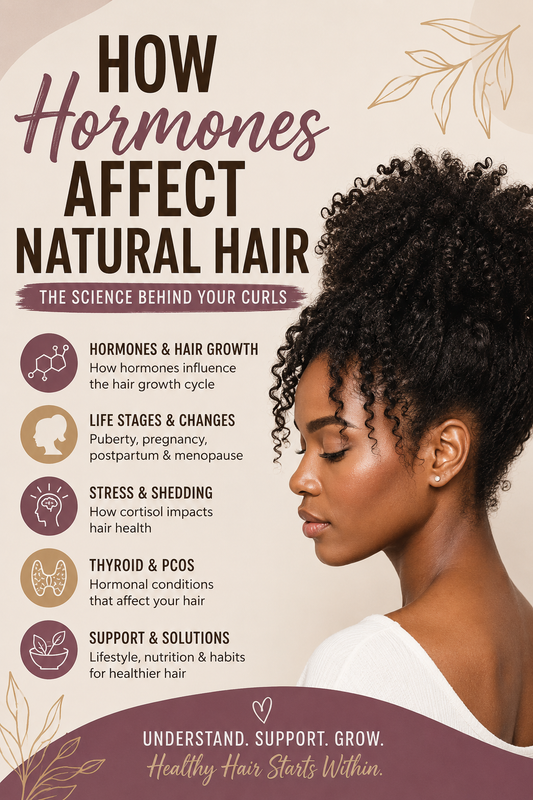
If you've noticed your natural hair becoming thinner, drier, curlier, straighter, or shedding more than usual, hormones may be playing a larger role than you realize.
Hormones influence nearly every system in the body—including your hair follicles. They regulate the speed of hair growth, determine how long hair remains in its growing phase, affect scalp oil production, influence curl pattern, and even determine how much hair you lose during periods of stress or major life changes.
For people with natural hair, hormonal shifts can sometimes appear more dramatic because tightly coiled hair naturally experiences more dryness and breakage than straighter hair types. A small hormonal imbalance can therefore seem like a major hair problem.
The good news is that understanding how hormones affect natural hair allows you to make better decisions about hair care, nutrition, stress management, and when to seek medical advice.
In this comprehensive guide, you'll learn:
- How hormones control hair growth
- Which hormones affect natural hair the most
- Why hormonal changes cause shedding
- How pregnancy, menopause, puberty, and stress impact curls
- Signs your hair changes may be hormone-related
- Healthy habits that support hormonal balance and hair health
How Hair Grows
Before understanding hormones, it's important to understand the hair growth cycle.
Each strand grows from its own follicle through three main stages.
Anagen (Growth Phase)
This is when the follicle actively produces hair.
This phase can last between two and seven years depending on genetics and individual biology.
The longer hair stays in this phase, the longer it can grow.
Catagen (Transition Phase)
Growth slows.
The follicle begins shrinking.
This stage lasts only a few weeks.
Telogen (Resting Phase)
Hair rests before eventually shedding.
New hair begins forming underneath.
Normally losing 50–100 hairs daily is considered typical for many adults.
Hormones help determine how long each phase lasts.
Hormones That Affect Natural Hair
Several hormones directly influence hair follicles.
Estrogen
Estrogen generally supports longer periods of hair growth.
Higher estrogen levels often result in:
- Fuller hair
- Longer growth cycles
- Less shedding
- Shinier hair
- Improved moisture retention
This is one reason many women notice thicker hair during pregnancy.
Progesterone
Progesterone works alongside estrogen.
Healthy progesterone levels may help reduce the influence of certain hormones that contribute to hair thinning.
Low progesterone may sometimes coincide with increased shedding in some individuals.
Testosterone
Both men and women naturally produce testosterone.
Testosterone itself isn't necessarily harmful.
However, it can be converted into another hormone called DHT.
DHT (Dihydrotestosterone)
DHT is one of the primary hormones associated with genetically influenced hair thinning in susceptible individuals.
Over time it may:
- Shrink follicles
- Shorten growth cycles
- Produce finer hairs
- Slow regrowth
Not everyone is equally sensitive to DHT.
Genetics play a major role.
Cortisol
Cortisol is often called the stress hormone.
Temporary increases are normal.
Chronically elevated cortisol may contribute to increased shedding by disrupting the normal hair cycle.
Stress-related shedding often becomes noticeable a few months after the stressful event rather than immediately.
Thyroid Hormones
The thyroid regulates metabolism throughout the body.
When thyroid hormone levels are too low or too high, hair may become:
- Dry
- Brittle
- Thin
- Slow-growing
Changes to the eyebrows, eyelashes, or body hair can also occur with thyroid disorders.
Insulin
Insulin helps regulate blood sugar.
Insulin resistance can be associated with hormonal conditions such as polycystic ovary syndrome (PCOS), which may contribute to hair thinning in some people.
Why Hormones Affect Curly and Coily Hair Differently
Natural hair is uniquely structured.
Because curls twist and bend, natural oils have a harder time traveling from the scalp to the ends.
This means hormonal changes that affect oil production or moisture balance may feel more dramatic.
People with natural hair may notice:
- Increased dryness
- More tangles
- Reduced elasticity
- Breakage
- Less curl definition
Sometimes the hair is growing normally—but increased breakage creates the appearance of slower growth.
Puberty and Natural Hair
Puberty is one of the first major hormonal transitions.
During this period many people notice:
- Texture changes
- Increased scalp oil
- Curl pattern changes
- Faster body hair growth
- Temporary shedding
Some individuals discover their lifelong curl pattern during puberty.
Pregnancy and Hair
Many people experience thicker hair during pregnancy.
Higher estrogen levels keep more hairs in the growth phase.
Hair often appears:
- Fuller
- Softer
- Shinier
- More voluminous
However, this effect is temporary.
Postpartum Hair Shedding
After childbirth, estrogen levels decline rapidly.
Hair that remained in the growth phase begins shedding.
This is called postpartum shedding.
It often peaks around three to four months after delivery and gradually improves over time.
While it can be alarming, it is usually temporary.
Menopause and Hair
Menopause brings another major hormonal shift.
Estrogen declines while the relative influence of androgens may increase.
Common changes include:
- Thinner hair
- Smaller ponytail
- Reduced density
- Slower growth
- Dry scalp
- Curl pattern changes
Some women notice their curls becoming looser, while others find their hair becoming curlier than before.
PCOS and Hair Changes
Polycystic ovary syndrome (PCOS) affects hormone production and can influence hair growth.
Some people with PCOS experience:
- Thinning around the crown
- Increased facial hair
- Oily scalp
- Acne
- Irregular menstrual cycles
If these symptoms occur together, a healthcare professional can evaluate whether PCOS or another hormonal condition may be contributing.
Thyroid Disorders and Hair
Both hypothyroidism and hyperthyroidism can affect hair.
Signs may include:
- Diffuse thinning
- Dry texture
- Brittle strands
- Slower growth
- Increased shedding
Because these symptoms overlap with other conditions, proper medical evaluation is important.
Stress Hormones and Hair Loss
Major stressors can temporarily shift more follicles into the resting phase.
Examples include:
- Surgery
- Serious illness
- Emotional trauma
- Rapid weight loss
- High fever
- Chronic psychological stress
Shedding often begins several weeks to months later.
Fortunately, hair usually regrows once the underlying trigger resolves.
Can Hormones Change Curl Pattern?
Yes.
Many people notice changes in curl pattern during:
- Puberty
- Pregnancy
- Menopause
- Hormonal therapy
- Certain medical conditions
Some curls become tighter.
Others loosen.
Texture changes are not always permanent.
Hormones and Scalp Health
Hormones influence more than hair growth.
They also affect:
- Oil production
- Sweat glands
- Inflammation
- Scalp sensitivity
- Skin barrier function
Changes in scalp health can indirectly affect the appearance and manageability of natural hair.
Signs Your Hair Changes May Be Hormonal
You may want to discuss your symptoms with a healthcare professional if you notice:
- Sudden widespread shedding
- Hair thinning at the crown
- Changes following pregnancy
- Hair loss with irregular periods
- Hair thinning with fatigue or weight changes
- Increased facial hair combined with scalp thinning
- Persistent hair changes despite good hair care
Nutrition and Hormonal Hair Health
Healthy hair depends on overall health.
Nutrients commonly associated with healthy hair include:
- Protein
- Iron
- Zinc
- Vitamin D
- Vitamin B12
- Omega-3 fats
- Biotin (only when deficiency exists)
- Folate
A varied, nutrient-rich diet supports normal hair growth and overall wellness.
Lifestyle Habits That Support Healthy Hair
While lifestyle changes cannot "balance hormones" on their own or treat medical conditions, they can support overall health and healthy hair growth.
Helpful habits include:
- Getting adequate sleep
- Managing stress
- Eating enough protein
- Staying physically active
- Avoiding smoking
- Limiting excessive heat styling
- Avoiding overly tight hairstyles
- Keeping the scalp clean
- Moisturizing hair regularly
- Protecting hair at night with satin or silk
Common Myths
Myth: Hormones Only Affect Older Women
False.
Hormonal changes occur throughout life.
Myth: Hair Loss Always Means High Testosterone
False.
Many hormonal and non-hormonal factors can contribute to hair shedding.
Myth: Pregnancy Permanently Improves Hair
Usually false.
The fuller hair experienced during pregnancy often returns to its pre-pregnancy state after hormone levels normalize.
Myth: Cutting Hair Fixes Hormonal Hair Loss
Haircuts improve appearance but do not address hormonal causes.
Frequently Asked Questions
Can hormones make natural hair stop growing?
Hormones typically affect the hair growth cycle rather than completely stopping growth. Hair may grow more slowly, shed more frequently, or break more easily.
Can birth control affect hair?
Some people notice hair changes after starting or stopping hormonal contraceptives. Responses vary depending on the individual and the specific formulation.
Can menopause permanently change curls?
It can. Hormonal changes during menopause may alter hair texture, thickness, and curl pattern, although experiences vary widely.
Does stress permanently damage hair follicles?
Most stress-related shedding is temporary. Once the underlying cause improves, many people experience gradual regrowth over several months.
When should I see a healthcare provider?
Consider seeking medical evaluation if you experience sudden or severe hair loss, patchy bald spots, scalp pain, or hair changes accompanied by symptoms such as fatigue, irregular menstrual cycles, or unexplained weight changes.
Final Thoughts
Hormones play a powerful role in the health and appearance of natural hair. Throughout life—from puberty and pregnancy to menopause and periods of significant stress—normal hormonal shifts can influence growth, shedding, texture, moisture, and scalp condition.
Although hormonal changes can be frustrating, they do not always indicate permanent hair loss. Understanding the hair growth cycle, maintaining healthy lifestyle habits, using gentle hair-care practices, and seeking medical advice when changes are sudden or persistent can help you better care for your natural hair.
Every head of natural hair is unique, and hormonal influences vary from person to person. Paying attention to your body's signals and supporting your overall health are among the most effective ways to promote resilient, healthy-looking hair over the long term.