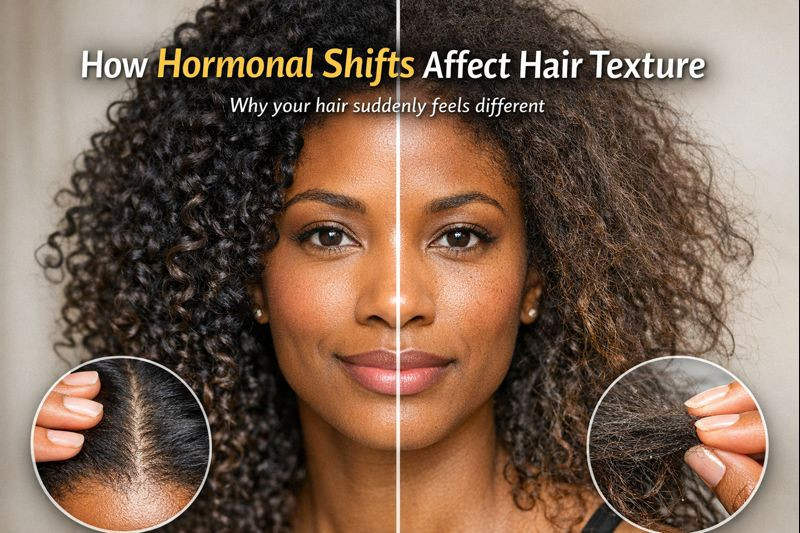
If your hair texture has changed seemingly overnight—becoming drier, coarser, thinner, curlier, flatter, or harder to manage—you’re not imagining things. Hormonal shifts are one of the most powerful and overlooked drivers of hair texture changes at every stage of life.
From puberty to pregnancy, postpartum recovery, birth control use, stress, thyroid imbalance, and menopause, hormones quietly reshape how your hair behaves—sometimes permanently, sometimes temporarily.
In this article, we’ll break down exactly how hormones affect hair texture, which hormones are responsible, what changes are normal vs concerning, and what you can do to restore balance and hair health.
What Is Hair Texture (And Why Hormones Matter)?
Hair texture refers to how your hair feels and behaves, including:
-
Thickness (fine, medium, coarse)
-
Pattern (straight, wavy, curly, coily)
-
Density (how full hair looks)
-
Porosity (how well hair absorbs moisture)
-
Elasticity (stretch and strength)
While genetics set the foundation, hormones control the environment your hair grows in. They influence:
-
Hair follicle size
-
Oil production
-
Growth speed
-
Moisture retention
-
Protein structure (keratin formation)
When hormones fluctuate, the follicle itself changes, producing hair that may look and feel completely different from what you’re used to.
The Key Hormones That Affect Hair Texture
Estrogen: The Hair-Softening Hormone
Estrogen is often called the “beauty hormone” for good reason. It:
-
Extends the hair growth phase (anagen)
-
Increases shine and softness
-
Improves moisture retention
-
Supports curl definition and elasticity
When estrogen is high (pregnancy, ovulation):
-
Hair feels thicker, softer, and fuller
-
Shedding slows
-
Texture often looks smoother and healthier
When estrogen drops (postpartum, menopause, stopping birth control):
-
Hair may feel dry, brittle, or coarse
-
Curl patterns can loosen or tighten
-
Hair may thin or shed excessively
This is why many women say, “My hair has never been the same since…”
Progesterone: The Balancing Act
Progesterone helps balance estrogen and supports scalp health by:
-
Regulating oil production
-
Reducing inflammation
-
Supporting hair thickness
Low progesterone can lead to:
-
Oily scalp but dry ends
-
Increased frizz
-
Texture inconsistency
-
Hair that feels limp or lifeless
When progesterone dips (common with chronic stress or perimenopause), hair texture often becomes unpredictable.
Androgens (Testosterone & DHT): The Texture Changers
Androgens are present in all genders. In excess, they can:
-
Shrink hair follicles
-
Shorten growth cycles
-
Increase scalp oil
-
Alter curl patterns
-
Cause hair to grow finer or weaker
DHT (a byproduct of testosterone) is especially impactful. High DHT can cause:
-
Hair to feel thinner even before visible hair loss
-
Texture changes at the crown or hairline
-
New growth that feels wispy or fragile
This often happens with:
-
PCOS
-
Hormonal imbalances
-
Menopause
-
Chronic stress
Thyroid Hormones: The Growth Regulators
Your thyroid controls metabolism and cell turnover, including hair cells.
When thyroid hormones are off:
-
Hair may feel coarse or straw-like
-
Texture may suddenly change throughout the head
-
Hair can lose shine and elasticity
-
Curl patterns may disappear
Both hypothyroidism and hyperthyroidism can drastically alter hair texture long before shedding becomes obvious.
Cortisol: The Silent Disruptor
Cortisol is the stress hormone—and chronic stress wreaks havoc on hair texture by:
-
Disrupting estrogen and progesterone balance
-
Reducing blood flow to follicles
-
Increasing inflammation
-
Causing dryness and breakage
High cortisol can make hair:
-
Feel rough or brittle
-
Lose curl definition
-
Become harder to moisturize
-
Shed excessively months later
Many people notice texture changes before hair loss after stressful life events.
Life Stages Where Hormonal Hair Texture Changes Are Common
Puberty
Hormonal surges during puberty often:
-
Turn straight hair wavy or curly
-
Increase oil production
-
Change strand thickness
This is when many people discover their “real” hair texture for the first time.
Pregnancy
High estrogen levels during pregnancy can:
-
Make hair thicker and shinier
-
Reduce shedding
-
Alter curl patterns
However, this is temporary.
Postpartum (After Birth)
After delivery, estrogen drops sharply, leading to:
-
Texture changes
-
Increased dryness
-
Excessive shedding (telogen effluvium)
-
Hair that feels weaker or frizzier
Postpartum hair often feels nothing like pregnancy hair.
Birth Control (Starting or Stopping)
Hormonal contraceptives can:
-
Smooth hair texture (estrogen-dominant formulas)
-
Cause dryness or thinning (androgenic formulas)
Stopping birth control often triggers:
-
Temporary texture changes
-
Shedding
-
Oil imbalance
Perimenopause & Menopause
As estrogen declines:
-
Hair may become finer or more brittle
-
Curl patterns can loosen or tighten
-
Scalp may feel drier
-
Hair may thin at the crown or temples
This stage brings some of the most dramatic texture changes people experience.
Why Hormonal Hair Texture Changes Can Feel Permanent
Hormones don’t just affect existing hair—they change how new hair is formed at the follicle level.
When a follicle shrinks or becomes inflamed due to hormonal imbalance:
-
New hair grows thinner
-
Protein structure changes
-
Curl shape alters
-
Moisture retention decreases
This is why trimming old hair doesn’t always fix texture issues—the new growth is different.
Signs Your Hair Texture Change Is Hormone-Related
-
Hair feels different at the roots
-
Texture change started after a life event (stress, pregnancy, illness)
-
Scalp oiliness or dryness suddenly changed
-
Hair looks thinner without obvious shedding
-
Products that used to work no longer do
These are strong indicators hormones—not products—are driving the issue.
Can Hormonal Hair Texture Changes Be Reversed?
Sometimes yes. Sometimes partially. Sometimes they require adaptation.
Reversible Changes:
-
Postpartum shifts
-
Stress-related changes
-
Temporary hormonal imbalances
-
Thyroid treatment correction
Long-Term Changes:
-
Menopause-related shifts
-
Genetic androgen sensitivity
-
Long-term hormonal conditions
Even when texture changes are permanent, hair health and appearance can dramatically improve with the right care.
How to Support Hair Texture During Hormonal Shifts
1. Support Scalp Health First
Healthy follicles produce healthier hair. Focus on:
-
Gentle cleansing
-
Scalp massage
-
Reducing inflammation
2. Prioritize Moisture + Protein Balance
Hormonal shifts often disrupt this balance. Hair may need:
-
Lighter moisture but more frequently
-
Gentle protein support
-
Fewer harsh treatments
3. Reduce Physical Stress on Hair
Hormone-affected hair breaks more easily. Avoid:
-
Tight styles
-
Excessive heat
-
Aggressive detangling
4. Manage Internal Stress
Lowering cortisol helps restore hormonal balance and hair quality.
5. Be Patient With New Growth
Hormonal hair changes don’t correct overnight. Hair reflects what happened months ago, not yesterday.
Why Hair Products “Stop Working” During Hormonal Changes
When hormones alter:
-
Porosity
-
Oil production
-
Protein structure
Your old routine may no longer match your hair’s needs. This doesn’t mean your hair is “bad”—it means its environment changed.
Adjusting routines is often more effective than switching products constantly.
Final Thoughts: Your Hair Isn’t Betraying You—It’s Communicating
Hair texture changes are not random. They’re biological signals reflecting internal shifts.
Understanding how hormones affect hair texture allows you to:
-
Stop blaming yourself or your products
-
Care for your hair more strategically
-
Set realistic expectations
-
Restore confidence in your hair journey
Your hair is responding to what your body is experiencing—and with the right support, it can still thrive through every hormonal phase of life.