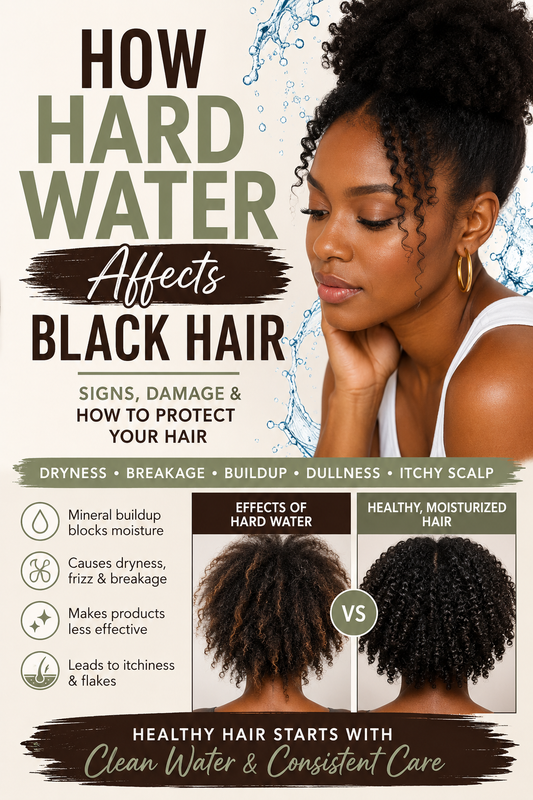
Many people spend hundreds of dollars on shampoos, conditioners, oils, and styling products without realizing one hidden factor may be preventing healthy hair growth: hard water.
If your hair always feels dry no matter how much you moisturize, your curls refuse to pop, your locs feel stiff, or your scalp constantly flakes, your water—not your products—may be the real problem.
Hard water affects millions of households across the United States. Unfortunately, Black hair is especially vulnerable because its natural curl pattern already makes moisture retention more difficult.
The good news is that hard water damage can be managed once you understand what's happening.
In this guide you'll learn:
- What hard water is
- Why it affects Black hair differently
- Signs hard water is damaging your hair
- How it affects curls, braids, twists, and locs
- How to remove mineral buildup
- The best routines for protecting your hair
- Natural ways to restore softness and moisture
What Is Hard Water?
Hard water contains high amounts of dissolved minerals, primarily:
- Calcium
- Magnesium
- Iron
- Copper
- Manganese
These minerals are harmless to drink but can leave deposits on your hair every time you wash it.
Instead of rinsing clean, minerals stay attached to your hair strands.
Over time these deposits create a coating that causes numerous hair problems.
Why Black Hair Is More Sensitive to Hard Water
Natural Black hair has unique characteristics.
The bends and curves in curly and coily hair make it harder for natural scalp oils to travel from the roots to the ends.
This means Black hair naturally experiences:
- Less moisture
- Greater dryness
- Higher risk of breakage
- More fragile ends
When hard water adds mineral buildup on top of these challenges, moisture becomes trapped outside the hair shaft instead of penetrating it.
The result is hair that feels dry even after deep conditioning.
How Hard Water Damages Hair
Every wash leaves behind tiny mineral deposits.
Eventually those minerals begin to:
- Block moisture
- Prevent conditioners from working
- Cause product buildup
- Roughen the hair cuticle
- Increase tangles
- Reduce elasticity
Hair gradually becomes harder to manage.
Many people mistake these symptoms for damaged hair when mineral buildup is actually the culprit.
Signs Hard Water Is Affecting Your Hair
Here are common warning signs.
Hair Feels Dry Immediately After Washing
Healthy hair should feel clean and soft.
Hard water often leaves hair feeling:
- Rough
- Straw-like
- Brittle
- Crunchy
Even after conditioning.
Products Stop Working
Have your favorite products suddenly stopped performing?
Hard water minerals can prevent:
- Leave-ins from absorbing
- Oils from penetrating
- Deep conditioners from moisturizing
Instead, products simply sit on top of the hair.
Hair Looks Dull
Mineral deposits block natural shine.
Instead of reflecting light, hair begins looking:
- Dusty
- Flat
- Lifeless
Increased Breakage
Dry hair snaps easier.
Hard water contributes to:
- Split ends
- Mid-shaft breakage
- Weak ends
- Hair snapping during detangling
Tangles Become Worse
Mineral-coated hair creates friction.
Hair strands rub together instead of sliding smoothly.
This increases:
- Knots
- Single strand knots
- Matting
- Shedding during wash day
White Film on Hair
Some people notice a chalky appearance.
This is often mineral residue mixed with product buildup.
Flaky Scalp
Hard water can dry out the scalp.
This may lead to:
- Itching
- Flaking
- Tightness
- Irritation
Hard Water and Hair Growth
Hard water doesn't directly stop hair growth.
Your follicles continue producing hair.
However, it creates conditions that make it difficult to retain length.
For example:
Hair grows half an inch each month.
But if one-half inch breaks off monthly because of dryness, it appears your hair never grows.
Length retention—not growth—is the issue.
How Hard Water Affects 4C Hair
4C hair already requires extra moisture.
Hard water makes this even more challenging.
Common problems include:
- Shrinkage
- Dryness
- Breakage
- Poor curl definition
- Tangles
Removing mineral buildup often restores softness within several washes.
Hard Water and Curly Hair
Curl definition depends on moisture.
Minerals prevent curls from clumping together.
Instead curls become:
- Puffy
- Frizzy
- Undefined
- Dry
Many people think they need stronger styling products when they actually need cleaner hair.
Hard Water and Locs
Locs absorb minerals over time.
Without regular cleansing, buildup accumulates inside the loc.
This may cause:
- Heavy locs
- Stiff texture
- White residue
- Odor retention
- Slow drying
Periodic clarifying keeps locs healthier.
Hard Water and Braids
Even protective styles aren't immune.
Minerals accumulate on:
- Exposed roots
- Scalp
- New growth
Many people experience increased itching while wearing braids because hard water dries the scalp.
Hard Water and Twists
Twists rely on moisture to stay neat.
Dry hair becomes frizzy faster.
Hard water often causes:
- Puffiness
- Frizz
- Dry ends
- Twists unraveling sooner
Why Conditioner Stops Working
Conditioners are designed to penetrate clean hair.
Mineral buildup creates a barrier.
Think of trying to moisturize skin covered in plastic wrap.
The moisture cannot penetrate effectively.
Why Oils Can't Fix Hard Water Damage
Many people respond to dryness by adding more oils.
Unfortunately:
Oil cannot dissolve mineral deposits.
Adding more oil simply coats the buildup.
Hair may temporarily feel smoother but remains dehydrated underneath.
Hard Water vs Product Buildup
The symptoms look similar.
Product buildup comes from:
- Gels
- Creams
- Oils
- Butters
Hard water buildup comes from:
- Calcium
- Magnesium
- Iron
Many people actually have both.
How to Tell If Your Water Is Hard
Signs around your home include:
- White spots on dishes
- Soap scum
- Mineral stains
- Cloudy faucets
- Low soap lather
If these are common in your home, your hair may also be affected.
Can Hard Water Cause Hair Loss?
Hard water doesn't directly cause permanent hair loss.
However, it may contribute to:
- Increased shedding
- Hair breakage
- Fragile strands
- Scalp irritation
These issues can make hair appear thinner over time.
Best Ways to Remove Hard Water Buildup
Use a Clarifying Shampoo
Clarifying shampoos remove:
- Minerals
- Oils
- Styling products
Most people benefit from clarifying every 3–6 weeks depending on washing frequency.
Avoid overusing clarifying shampoos, as excessive cleansing can dry out the hair.
Deep Condition Immediately
After clarifying:
- Restore moisture
- Strengthen strands
- Improve elasticity
Look for ingredients like:
- Aloe vera
- Shea butter
- Coconut oil
- Avocado oil
- Glycerin
Finish With a Leave-In Conditioner
Leave-ins help restore softness after cleansing.
They also improve:
- Slip
- Detangling
- Moisture retention
Seal Moisture
Use a lightweight oil to help reduce moisture loss after applying water-based products.
Popular choices include:
- Jojoba oil
- Grapeseed oil
- Avocado oil
Install a Shower Filter
One of the easiest solutions is installing a shower filter.
While not all filters remove every dissolved mineral, many can reduce chlorine and some mineral content, helping improve hair feel over time.
Wash With Filtered Water Occasionally
Some people notice improvements when occasionally rinsing with filtered or distilled water after shampooing.
This reduces the amount of new mineral residue left on the hair.
Moisturize More Frequently
If your water is hard, your hair may require additional hydration.
Focus on:
- Water-based leave-ins
- Weekly deep conditioning
- Gentle cleansing
- Protective styling
Protect Hair While Sleeping
Dry hair loses moisture overnight.
Sleep with:
- Satin bonnet
- Silk scarf
- Satin pillowcase
This reduces friction and helps preserve moisture.
Healthy Diet Supports Strong Hair
Hair health starts from within.
Eat foods rich in:
- Protein
- Iron
- Zinc
- Vitamin D
- Omega-3 fatty acids
- Vitamin C
Staying hydrated also supports scalp health.
Weekly Routine for Hard Water Areas
Wash Day
- Clarify as needed (every few weeks)
- Moisturizing shampoo
- Deep conditioner
- Leave-in conditioner
- Seal moisture
Midweek
- Lightly mist hair with water or a water-based moisturizer
- Apply a small amount of oil if needed
Night
- Satin protection
- Avoid sleeping on cotton pillowcases
Common Mistakes
Avoid these habits:
- Skipping clarifying treatments
- Using too much heavy oil
- Ignoring scalp buildup
- Overwashing
- Using very hot water
- Detangling dry hair
- Assuming products are the problem when the water may be the issue
Frequently Asked Questions
Does hard water permanently damage Black hair?
No. In many cases, removing mineral buildup and following a moisturizing routine can significantly improve the hair's condition.
How often should I clarify?
Every 3–6 weeks is common for many people, though the ideal frequency depends on your hair type, styling routine, and how hard your water is.
Can hard water make hair stop growing?
Hair usually continues to grow, but breakage caused by dryness can reduce length retention, making growth less noticeable.
Should I oil my hair more?
Not necessarily. Hydration starts with water and water-based products. Oils are best used to help seal in moisture rather than replace it.
Are locs affected by hard water?
Yes. Mineral buildup can accumulate within locs over time, leading to stiffness, residue, and dullness if not regularly clarified.
Final Thoughts
Hard water is one of the most overlooked reasons Black hair becomes dry, dull, brittle, and difficult to manage. If your curls have lost their bounce, your locs feel stiff, your braids leave your scalp itchy, or your hair seems impossible to moisturize, the water coming from your shower may be playing a major role.
By understanding the effects of mineral buildup, incorporating periodic clarifying treatments, deep conditioning consistently, and focusing on moisture retention, you can help restore softness, improve manageability, and retain more length over time. Healthy Black hair starts with a healthy routine—and sometimes that means looking beyond your products and paying attention to the water you use every day.