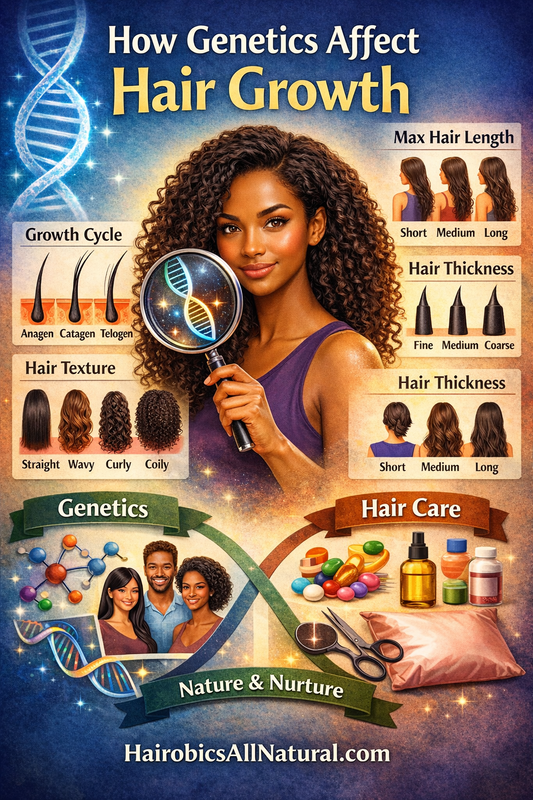
Hair growth is one of the most discussed topics in natural hair care, especially among people trying to grow longer, thicker, and healthier hair. Many people follow strict routines, use oils, protective styles, and supplements — yet their hair still grows slowly or seems stuck at a certain length.
One of the biggest factors influencing hair growth is genetics. Your DNA plays a powerful role in determining how fast your hair grows, how thick it becomes, how long it stays in the growth phase, and even how prone it is to breakage or thinning.
Understanding how genetics affect hair growth can help you set realistic expectations and build a routine that works with your hair — not against it.
This complete guide explains the science of hair genetics and how you can maximize your natural hair growth potential.
What Hair Genetics Really Means
Genetics refers to the traits passed down from your parents through DNA. These traits influence many aspects of your hair, including:
-
Growth rate
-
Hair thickness
-
Density
-
Texture
-
Curl pattern
-
Hairline shape
-
Maximum length potential
-
Tendency toward thinning
-
Scalp oil production
While good hair care can improve hair health, genetics determines your baseline potential.
Think of genetics as the foundation of your hair growth, while hair care routines are the tools you use to maximize it.
The Hair Growth Cycle and Genetics
Hair grows in repeating cycles that are heavily influenced by genetics.
1. Anagen Phase (Growth Phase)
The anagen phase is when hair actively grows.
For most people:
-
Lasts 2–7 years
-
Determines maximum hair length
-
Controls growth speed
If your genetics give you a long anagen phase, your hair can grow very long.
If your anagen phase is shorter, your hair may stop growing sooner — even with perfect care.
This is why two people using identical products can get very different results.
2. Catagen Phase (Transition Phase)
This phase lasts a few weeks and prepares the hair follicle for shedding.
Genetics influences how smoothly follicles transition between growth cycles.
3. Telogen Phase (Resting Phase)
During this stage:
-
Hair stops growing
-
Hair sheds naturally
-
New hair begins forming
Genetics determines:
-
How many hairs shed daily
-
How quickly follicles restart growth
Some people genetically shed more hair than others.
Genetics and Hair Growth Speed
The average hair growth rate is:
About ½ inch per month
However, genetics can shift this range significantly.
Some people grow:
-
¾ inch per month
-
Nearly 1 inch per month
Others grow:
-
¼ inch per month
If your hair grows slowly, it may not be due to poor hair care — it may simply be genetic.
Genetics and Maximum Hair Length
Many people believe their hair "won't grow," but in reality:
Hair always grows — but genetics determines how long it stays in the growth phase.
If your anagen phase lasts:
-
7 years → Very long hair potential
-
4 years → Medium length potential
-
2 years → Shorter maximum length
This is called terminal length, and it is genetically determined.
No product can change your terminal length permanently, but proper care helps you reach it.
Genetics and Hair Thickness
Hair strand thickness is largely inherited.
You may have:
Fine Hair
-
Smaller hair diameter
-
Breaks more easily
-
Needs gentle handling
Medium Hair
-
Balanced strength and flexibility
Coarse Hair
-
Larger diameter
-
Stronger strands
-
Often more resilient
People with fine hair often struggle to retain length because fine strands break more easily.
Genetics and Hair Density
Density refers to how many follicles you have on your scalp.
This is almost entirely genetic.
High-density hair:
-
Looks fuller
-
Holds styles better
Low-density hair:
-
Shows scalp easier
-
Requires lighter products
You cannot increase follicle count naturally.
But you can make hair look fuller through healthy growth.
Genetics and Curl Pattern
Curl pattern is strongly genetic.
Types include:
-
Straight
-
Wavy
-
Curly
-
Coily
Tighter curls often:
-
Appear to grow slower
-
Shrink more
-
Require more moisture
In reality, curly hair grows at similar speeds — but shrinkage hides length.
Genetics and Hair Strength
Some people naturally have:
-
Strong elastic hair
-
Flexible strands
-
Low breakage rates
Others genetically have:
-
Fragile hair
-
Low elasticity
-
High breakage risk
This explains why some people retain length easily while others struggle.
Genetics and Scalp Health
Your scalp environment is partly genetic.
Genetics influence:
-
Oil production
-
Dry scalp tendency
-
Sensitivity
-
Inflammation risk
Some people naturally produce more sebum, keeping hair moisturized.
Others have dry scalps and need more moisture.
Genetics and Hairline Shape
Hairline patterns are inherited traits.
This includes:
-
Widow's peaks
-
Rounded hairlines
-
Straight hairlines
-
Naturally high foreheads
Trying to permanently reshape a genetic hairline is difficult without medical treatment.
However, healthy routines can strengthen the hairline.
Genetics and Hair Thinning
Genetics strongly influences hair thinning.
This includes:
Female Pattern Thinning
Often appears as:
-
Widening parts
-
Thinner ponytails
-
Crown thinning
Male Pattern Hair Loss
Often appears as:
-
Receding hairline
-
Bald spots
-
Crown loss
These conditions are genetic but manageable with proper care.
Genetics vs Hair Care: What Matters More?
Both matter — but in different ways.
Genetics Determines:
-
Maximum growth potential
-
Hair texture
-
Density
-
Growth rate
-
Terminal length
Hair Care Determines:
-
Breakage levels
-
Moisture balance
-
Scalp health
-
Length retention
-
Shine and softness
Many people with "slow-growing hair" actually have normal growth but poor retention.
Improving retention can dramatically increase visible length.
Signs Genetics Are Limiting Your Hair Growth
You may be dealing with genetic limits if:
-
Hair stops growing at the same length repeatedly
-
Hair grows evenly but slowly
-
Family members have similar hair patterns
-
Hair density matches relatives
-
Hairline shape runs in the family
Genetics often follow family patterns.
Look at:
-
Parents
-
Grandparents
-
Siblings
Hair traits often repeat across generations.
Can You Override Genetic Hair Growth?
You cannot completely change genetic potential, but you can maximize it.
Many people never reach their genetic hair growth potential due to breakage and poor scalp health.
Healthy hair practices help you reach your full genetic potential.
How to Maximize Your Genetic Hair Growth Potential
1. Protect Length
Length retention is key.
Focus on:
-
Gentle detangling
-
Low manipulation
-
Satin bonnets
-
Protective styles
2. Maintain Scalp Health
Healthy follicles grow better hair.
Focus on:
-
Clean scalp
-
Gentle massage
-
Light oils
-
Reduced buildup
3. Reduce Breakage
Breakage hides growth.
Prevent breakage by:
-
Moisturizing regularly
-
Avoiding tight styles
-
Limiting heat
-
Trimming damaged ends
4. Support Growth Internally
Nutrition supports genetic growth potential.
Important nutrients include:
-
Protein
-
Iron
-
Zinc
-
Vitamin D
-
Omega fatty acids
Healthy bodies grow stronger hair.
5. Be Consistent
Genetics reward consistency.
Hair grows slowly, so routines must be maintained long term.
Results usually appear after:
-
3 months
-
6 months
-
12 months
Consistency allows you to reach your natural potential.
Common Myths About Genetics and Hair Growth
Myth 1: If Your Parents Had Short Hair, You Can't Grow Long Hair
Not always true.
You may inherit different genetic combinations.
Proper care can reveal hidden potential.
Myth 2: Oils Change Genetic Hair Growth
Oils help scalp health and retention.
But they do not change DNA.
They help you reach your natural growth capacity.
Myth 3: Genetics Means Nothing Works
Genetics sets limits — but routines still matter.
Healthy hair always grows better.
Myth 4: Hair That Grows Slowly Is Unhealthy
Slow growth can be completely normal.
Growth speed varies genetically.
Healthy slow-growing hair is still healthy hair.
Genetics and Black Hair Growth
Genetics plays a unique role in Black hair.
Common genetic traits include:
-
Tighter curl patterns
-
Higher shrinkage
-
Increased dryness
-
Fragility
-
Slower visible length gain
Black hair often grows at normal speeds but appears slower due to shrinkage and breakage.
Proper moisture and gentle care help maximize growth.
When Hair Growth Problems Aren't Genetic
Not all hair growth problems come from genetics.
Other causes include:
-
Stress
-
Hormonal changes
-
Poor diet
-
Tight hairstyles
-
Scalp inflammation
-
Chemical damage
If hair growth suddenly changes, genetics may not be the cause.
The Real Secret to Hair Growth Success
The biggest secret is:
Healthy routines unlock genetic potential.
Your genetics determine the ceiling.
Your routine determines whether you reach it.
Many people only achieve 50–70% of their potential growth because of breakage and poor scalp care.
Final Thoughts
Genetics plays a major role in hair growth, influencing everything from growth rate and density to maximum length and thickness. While you cannot change your DNA, you can build a routine that helps you reach your natural potential.
Understanding genetics helps remove frustration and unrealistic expectations. Instead of trying to force your hair to behave like someone else's, you can focus on optimizing what your hair naturally does best.
The goal is not to change your genetics — the goal is to work with them to achieve the healthiest, longest hair possible.
With proper scalp care, gentle handling, and consistent routines, most people can reach their full genetic hair growth potential and enjoy stronger, healthier hair over time.