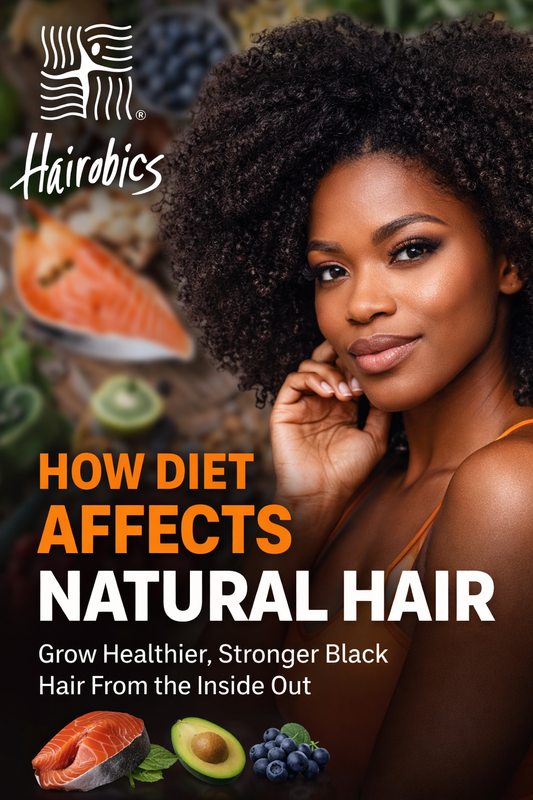
If you're deep into your natural hair journey, you already know this truth: products matter — but what you put inside your body matters just as much.
You can use the best leave-ins, oils, and protective styles… but if your nutrition is off, your hair will show it.
In this complete guide, we’re breaking down how diet affects natural hair, especially textured, curly, coily, and kinky hair types. We’ll cover:
-
The science behind nutrition and hair growth
-
What deficiencies cause shedding and breakage
-
The best foods for stronger, thicker hair
-
How gut health impacts growth
-
What to avoid if you want long-term retention
If you're trying to maximize length retention, improve thickness, or stop slow growth cycles — this article is for you.
The Science: How Hair Growth Actually Works
Your hair grows from follicles embedded in your scalp. These follicles are made of living cells that require:
-
Oxygen
-
Protein
-
Vitamins
-
Minerals
-
Healthy blood circulation
Hair growth happens in cycles:
-
Anagen (growth phase) – lasts 2–7 years
-
Catagen (transition phase)
-
Telogen (resting/shedding phase)
When your diet lacks nutrients, your body prioritizes essential organs (heart, brain, lungs). Hair is considered non-essential, so nutrient shortages show up there first.
That’s why:
-
Crash dieting causes shedding
-
Chronic stress causes thinning
-
Poor nutrition leads to breakage and dullness
Your hair reflects your internal health.
Why Diet Impacts Natural Hair More Than You Think
Natural hair (especially Type 3 and Type 4 textures) already faces unique challenges:
-
Higher dryness levels
-
More breakage due to curl structure
-
Slower visible length retention
-
Greater sensitivity to stress and inflammation
Because coily and kinky hair bends at sharp angles, it’s naturally more fragile. If your hair shaft is weakened by poor nutrition, it snaps even easier.
Strong hair starts at the follicle.
Protein: The Foundation of Hair Growth
Hair is made of keratin, which is a protein.
If you don’t eat enough protein, your body cannot build strong strands.
Signs You’re Protein Deficient
-
Excess shedding
-
Hair feels soft but weak
-
Breaks easily when detangling
-
Slow growth
Best Protein Sources for Natural Hair
-
Eggs
-
Salmon
-
Chicken
-
Lentils
-
Black beans
-
Greek yogurt
-
Pumpkin seeds
For women and men growing natural hair, aim for roughly 0.7–1 gram of protein per pound of body weight (consult a healthcare provider for personalization).
If you are vegan or vegetarian, be especially mindful of complete proteins.
Iron Deficiency & Hair Thinning in Black Women
Iron deficiency is one of the most common causes of hair thinning — especially in Black women.
Low iron reduces oxygen delivery to hair follicles. Without oxygen, growth slows.
Symptoms of Low Iron
-
Chronic fatigue
-
Hair shedding around edges
-
Brittle nails
-
Pale skin
Iron-Rich Foods
-
Spinach
-
Red meat
-
Turkey
-
Beans
-
Quinoa
-
Pumpkin seeds
Pro tip: Pair iron with vitamin C (like citrus) to improve absorption.
Vitamin D and Hair Growth Plateaus
Vitamin D plays a role in follicle cycling.
Low vitamin D levels are linked to:
-
Alopecia
-
Excess shedding
-
Thinning hairlines
Many people — especially those with deeper skin tones — are deficient due to reduced sun absorption.
Sources of Vitamin D
-
Sunlight
-
Fatty fish
-
Fortified milk
-
Supplements (if needed)
Getting levels tested can be a game-changer.
Biotin: Helpful or Overhyped?
Biotin is often marketed as a miracle hair vitamin.
The truth?
If you're not deficient, extra biotin likely won’t dramatically increase growth. However, severe deficiency can cause thinning and brittle hair.
Instead of mega-dosing supplements, focus on:
-
Eggs
-
Nuts
-
Seeds
-
Sweet potatoes
Real food works best.
Omega-3 Fatty Acids: Shine & Scalp Health
Omega-3s reduce inflammation and support scalp circulation.
Inflammation can restrict follicles and slow growth.
Foods Rich in Omega-3s
-
Salmon
-
Sardines
-
Chia seeds
-
Walnuts
-
Flaxseeds
Healthy fats also help reduce scalp dryness — a major issue for natural hair.
Zinc & Scalp Repair
Zinc helps:
-
Repair tissue
-
Support oil gland function
-
Maintain follicle structure
Low zinc levels can trigger shedding.
Zinc Sources
-
Pumpkin seeds
-
Chickpeas
-
Beef
-
Oysters
-
Cashews
How Gut Health Affects Natural Hair
Your gut absorbs nutrients.
If your digestion is compromised, even a healthy diet won’t translate to strong hair.
Poor gut health can cause:
-
Inflammation
-
Nutrient malabsorption
-
Hormonal imbalance
-
Autoimmune triggers
Support Gut Health With:
-
Fermented foods (kimchi, yogurt)
-
Fiber-rich vegetables
-
Bone broth
-
Probiotics
Healthy gut = better nutrient delivery = stronger follicles.
Sugar, Processed Foods & Hair Damage
High sugar intake increases inflammation and can spike insulin levels.
This may contribute to:
-
Hormonal imbalances
-
Increased oil production
-
Thinning patterns
Processed foods also lack essential micronutrients.
If your diet is heavy in fast food and low in fresh produce, your hair will likely suffer.
Crash Dieting & Rapid Shedding
Extreme calorie restriction shocks the body.
When you lose weight too quickly, the body shifts follicles into the shedding phase (telogen effluvium).
Shedding usually appears 2–3 months after the stress event.
This is common after:
-
Fad diets
-
Surgery
-
Childbirth
-
Severe stress
If you're on a weight loss journey, make sure it’s balanced and nutrient-dense.
Hydration & Natural Hair
Dehydration affects:
-
Scalp elasticity
-
Follicle strength
-
Hair shaft flexibility
Water supports nutrient transport.
Aim for half your body weight in ounces daily as a general rule.
Remember: topical moisture is different from internal hydration.
Hormones, Diet & Natural Hair
Hormonal imbalances (like thyroid issues, PCOS, or high cortisol) can slow growth.
Diet influences hormones.
For example:
-
Excess sugar can spike insulin
-
Poor sleep disrupts cortisol
-
Low iodine affects thyroid
Balanced nutrition supports hormonal balance — which supports hair.
Anti-Inflammatory Eating for Growth
Chronic inflammation weakens follicles.
Focus on:
-
Leafy greens
-
Berries
-
Fatty fish
-
Turmeric
-
Ginger
-
Olive oil
Reduce:
-
Processed meats
-
Refined sugar
-
Excess alcohol
An anti-inflammatory diet promotes long-term retention.
What Happens When Your Diet Improves?
Within 4–8 weeks:
-
Shedding stabilizes
-
Shine improves
-
Breakage decreases
Within 3–6 months:
-
Thickness may increase
-
New growth becomes more visible
-
Edges appear fuller
Hair growth takes patience. Nutrition changes show up gradually.
Diet Alone Isn’t Enough
While diet is critical, it works best when combined with:
-
Proper scalp care
-
Gentle detangling
-
Protective styling
-
Reduced heat damage
-
Consistent moisturizing
For external support, using a lightweight scalp oil and a strengthening leave-in helps maximize the benefits of internal nutrition.
Sample Hair-Healthy Daily Meal Plan
Breakfast:
Scrambled eggs, sautéed spinach, whole grain toast
Lunch:
Grilled salmon, quinoa, roasted vegetables
Snack:
Greek yogurt with berries and chia seeds
Dinner:
Lean turkey, sweet potatoes, mixed greens
Hydration:
Water + herbal teas
This kind of balance supports strong, consistent growth.
Common Diet Mistakes That Slow Natural Hair Growth
-
Skipping meals
-
Not eating enough protein
-
Overeating processed foods
-
Ignoring iron levels
-
Relying only on supplements
-
Drinking too little water
Consistency matters more than perfection.
Final Thoughts: Growing Natural Hair From the Inside Out
Healthy natural hair is not just about products. It’s about:
-
Nourishing your body
-
Reducing inflammation
-
Supporting hormone balance
-
Feeding your follicles
If your hair feels stuck, brittle, or thin — don’t just change your routine.
Look at your plate.
Because when your body is nourished, your hair responds.