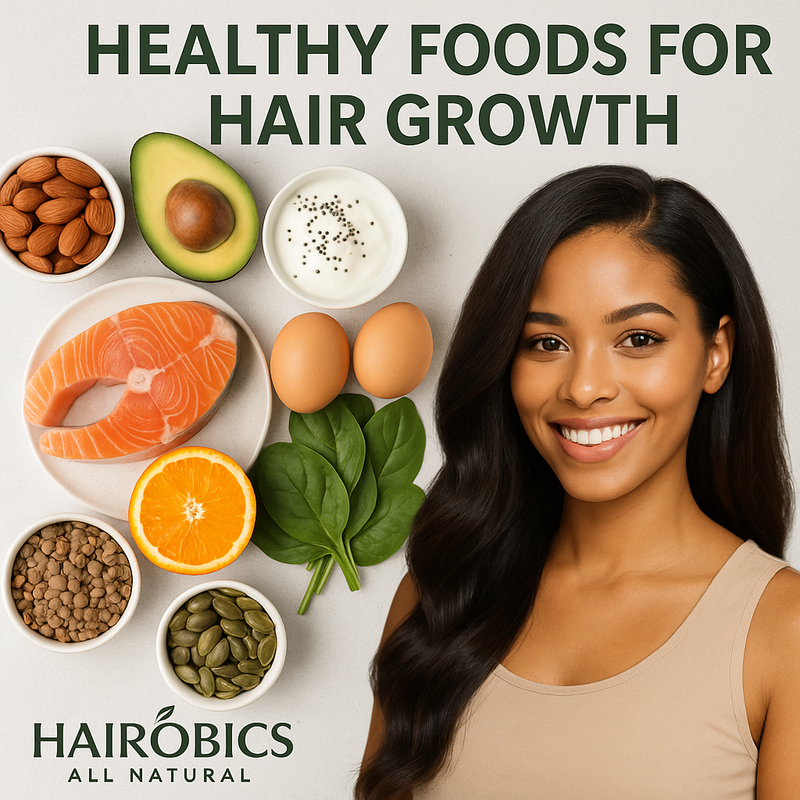
Introduction: The Food-Hair Connection
You’ve probably heard the saying, “You are what you eat.” When it comes to your hair, that couldn’t be more true. What you put on your plate can have just as much of an impact on your hair growth, shine, and strength as the products you apply to your scalp.
A healthy diet gives your hair the building blocks it needs to thrive — from protein to iron, zinc, vitamins, and antioxidants. On the other hand, nutrient deficiencies, processed foods, or crash diets can lead to thinning, dryness, or even hair loss.
In this article, we’ll explore exactly how diet affects hair growth, which nutrients your hair craves most, what foods to include or avoid, and how you can pair your nutrition with Hairobics All Natural hair products for the ultimate growth routine.
1. How Hair Grows: A Quick Overview
Before diving into how diet affects your hair, let’s understand how hair growth works.
Each strand of hair grows from a tiny structure beneath your scalp called a hair follicle. The follicle has a bulb at its base, which receives oxygen and nutrients through blood vessels. These nutrients fuel the growth of keratin, the protein that makes up 90% of your hair.
Your hair grows in three stages:
-
Anagen (growth phase) – lasts 2–7 years, where hair actively grows.
-
Catagen (transition phase) – a short 2-week stage where growth slows.
-
Telogen (resting phase) – lasts about 3 months before hair sheds and restarts.
A healthy diet helps keep your hair in the anagen phase longer and supports the continuous production of strong, vibrant strands.
2. Why Nutrition Matters for Hair Health
Hair is a non-essential tissue, meaning your body will prioritize nutrients for vital organs (heart, brain, liver) before sending them to your hair. If you’re not eating enough or lacking key vitamins and minerals, your hair follicles are among the first to suffer.
A poor diet can lead to:
-
Hair thinning or excessive shedding
-
Dry, brittle strands
-
Slow hair growth
-
Loss of shine or elasticity
-
Weakened hair follicles
In contrast, a nutrient-rich diet filled with whole foods and balanced macronutrients (protein, fats, and carbs) can encourage hair that’s thicker, stronger, and grows faster.
3. The Best Nutrients for Hair Growth
Let’s break down the most important nutrients your hair needs — and the best food sources for each.
A. Protein: The Foundation of Hair
Hair is made of keratin, a type of protein. Without enough dietary protein, hair can become weak, brittle, or stop growing altogether.
Best sources:
-
Lean meats (chicken, turkey)
-
Fish (salmon, sardines, mackerel)
-
Eggs (rich in biotin and protein)
-
Lentils, beans, quinoa
-
Greek yogurt and cottage cheese
Tip: Try to include at least one protein-rich food with every meal to keep your hair follicles consistently nourished.
B. Iron: Prevents Hair Shedding
Iron helps red blood cells deliver oxygen to your hair follicles. Low iron levels are one of the most common causes of hair loss, especially in women.
Best sources:
-
Lean red meat and poultry
-
Spinach and kale
-
Lentils and chickpeas
-
Pumpkin seeds
-
Iron-fortified cereals
Pair it with: Vitamin C (from oranges, bell peppers, or strawberries) to enhance absorption.
C. Omega-3 Fatty Acids: For Shine and Scalp Health
Healthy fats aren’t just good for your heart — they also keep your scalp hydrated and reduce inflammation that can inhibit growth.
Best sources:
-
Salmon, sardines, mackerel
-
Chia seeds, flaxseeds, walnuts
-
Avocado
-
Olive oil
These fats help support the scalp’s natural oils, giving your hair a smooth, glossy look.
D. Zinc: Strengthens Follicles
Zinc plays a role in tissue growth and repair, including hair follicle recovery. Deficiency can lead to hair thinning or dandruff.
Best sources:
-
Oysters (the richest source)
-
Pumpkin seeds and cashews
-
Chickpeas and lentils
-
Eggs
E. Biotin: The “Hair Vitamin”
Biotin (Vitamin B7) is one of the most popular nutrients for hair growth — and for good reason. It supports keratin production and helps prevent breakage.
Best sources:
-
Eggs (especially yolks)
-
Almonds and peanuts
-
Sweet potatoes
-
Spinach and broccoli
Pro Tip: While biotin supplements can help, most people can meet their needs through a balanced diet.
F. Vitamin D: For Hair Follicle Activation
Research shows that low Vitamin D levels are linked to hair loss conditions like alopecia. This vitamin helps create new hair follicles and stimulates dormant ones.
Best sources:
-
Sunlight (10–15 minutes daily)
-
Fatty fish (salmon, tuna)
-
Fortified dairy or plant milks
-
Mushrooms exposed to UV light
G. Vitamin A: For Sebum Production
Vitamin A helps your scalp produce sebum, a natural oil that keeps your hair moisturized. However, too much Vitamin A can cause hair loss — so balance is key.
Best sources:
-
Sweet potatoes and carrots
-
Spinach and kale
-
Mangoes and apricots
H. Vitamin E: Protects Against Damage
Vitamin E is an antioxidant that helps reduce oxidative stress in the scalp, keeping your follicles healthy and active.
Best sources:
-
Sunflower seeds and almonds
-
Spinach
-
Avocados
-
Olive oil
I. B Vitamins: For Energy and Growth
Beyond biotin, the full range of B vitamins (B2, B3, B5, B6, B12, folate) helps carry oxygen and nutrients to the scalp and follicles.
Best sources:
-
Whole grains and oats
-
Eggs and dairy
-
Leafy greens
-
Legumes
4. The Worst Foods for Hair Growth
Just as the right foods can help your hair, the wrong ones can slow or damage growth.
Avoid or limit:
-
Sugary foods – trigger insulin spikes that can lead to hormone imbalances.
-
Processed foods – low in nutrients, high in inflammatory fats.
-
Excessive alcohol – dehydrates hair and depletes vitamins.
-
Too much caffeine – can reduce iron absorption.
-
Crash diets – rapid weight loss often leads to temporary hair shedding (telogen effluvium).
If your diet is full of fast food or nutrient-poor snacks, your hair will show it in dullness, dryness, and shedding.
5. Hydration and Hair Growth
Water doesn’t just hydrate your body — it’s vital for your scalp and hair too. Dehydration can make your hair dry, frizzy, and prone to breakage.
Tips for hydration:
-
Aim for at least 8 glasses of water per day.
-
Eat hydrating foods like cucumbers, watermelon, and oranges.
-
Limit sugary sodas and energy drinks that deplete nutrients.
6. Supplements: When Diet Isn’t Enough
Even with a great diet, some people struggle to meet their nutrient needs due to stress, digestion issues, or busy lifestyles. In those cases, supplements can help fill the gap.
Effective supplements for hair growth:
-
Multivitamins with biotin and zinc
-
Omega-3 fish oil
-
Iron (if tested and found low)
-
Vitamin D3
-
Collagen peptides
Before starting supplements, it’s best to consult your healthcare provider to check for deficiencies.
7. Combining Nutrition with Topical Care
While nutrition works internally, topical care supports the external environment — your scalp and strands. For optimal growth, pair your healthy diet with natural hair products that keep your follicles nourished and your scalp clean.
Hairobics All Natural products complement your nutrition by providing moisture, protection, and stimulation at the scalp level.
-
Hairobics Hair & Scalp Booster: Infused with natural herbs and essential oils to increase blood circulation and stimulate new growth.
-
Hairobics Leave-In Treatment: Provides deep moisture and strengthens your strands, preventing breakage and dryness.
-
Raaw Roots Moisturizing Spray: Keeps your scalp hydrated between wash days — especially helpful when protective styling.
Together with a nutrient-dense diet, these products help you achieve holistic hair health — from the inside out.
8. Meal Plan for Healthy Hair
Here’s a sample one-day meal plan packed with hair-loving nutrients.
Breakfast:
-
Scrambled eggs with spinach and avocado toast
-
Fresh orange juice (Vitamin C boost)
Snack:
-
Greek yogurt with chia seeds and blueberries
Lunch:
-
Grilled salmon with quinoa and steamed broccoli
-
Olive oil drizzle for Vitamin E
Snack:
-
Handful of almonds and pumpkin seeds
Dinner:
-
Chicken stir-fry with bell peppers and brown rice
-
Side of kale salad with lemon vinaigrette
Hydration tip:
Drink water throughout the day and include herbal teas for extra antioxidants.
9. Lifestyle Habits That Support Hair Growth
Beyond diet and products, lifestyle factors also influence your hair health:
-
Manage stress: Chronic stress increases cortisol, which can cause hair shedding.
-
Get enough sleep: Hair regenerates during rest. Aim for 7–8 hours nightly.
-
Exercise regularly: Improves blood flow to your scalp.
-
Avoid smoking: It limits oxygen supply to hair follicles.
Healthy living supports not just your hair, but your overall well-being.
10. The Bottom Line
Your hair is a reflection of your inner health. If your diet lacks the right nutrients, your hair will struggle to grow and maintain strength. By eating a variety of protein-rich, vitamin-packed, and antioxidant-filled foods — and supporting your routine with Hairobics All Natural products — you can achieve the long, strong, and healthy hair you’ve always wanted.
Remember: great hair starts on your plate. Feed your body well, and your hair will thank you!