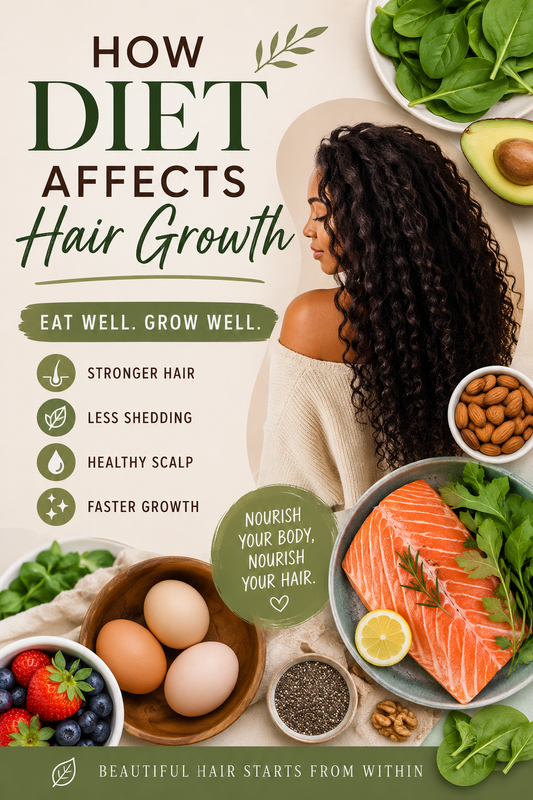
Healthy hair starts from within. While many people focus on oils, shampoos, conditioners, and styling products, one of the biggest factors affecting hair growth is often overlooked: diet. Your hair follicles require a constant supply of nutrients to grow strong, thick, and healthy hair. Without the right vitamins, minerals, proteins, and healthy fats, your hair may become weak, dry, brittle, thin, or slow-growing.
If you’ve ever wondered why your hair growth seems stalled despite using good hair products, your nutrition could be the missing piece.
In this complete guide, we’ll break down exactly how diet affects hair growth, the best foods for healthy hair, nutrients linked to stronger strands, and the worst eating habits for your scalp and hair health.
Why Diet Matters for Hair Growth
Hair is made primarily of a protein called keratin. Every strand growing from your scalp requires nutrients delivered through the bloodstream. If your body lacks proper nutrition, your hair often becomes one of the first areas affected.
Your body prioritizes vital organs like the heart and brain before supplying nutrients to hair follicles. That means poor eating habits can quickly lead to:
- Hair thinning
- Excessive shedding
- Weak strands
- Dryness
- Breakage
- Slow growth
- Dull hair
- Receding edges
- Scalp inflammation
A healthy diet helps support:
- Stronger hair follicles
- Better scalp circulation
- Reduced shedding
- Improved moisture retention
- Faster growth cycles
- Healthier scalp conditions
The Hair Growth Cycle and Nutrition
Understanding the hair growth cycle helps explain why nutrition is so important.
Anagen Phase (Growth Phase)
This is the active growth stage where hair follicles produce new strands. This phase can last 2–7 years. Proper nutrition helps extend this phase, allowing hair to grow longer.
Catagen Phase (Transition Phase)
Hair growth slows, and follicles shrink temporarily.
Telogen Phase (Resting Phase)
Hair rests before shedding and restarting the cycle.
Poor nutrition can shorten the growth phase and push more follicles into the shedding phase prematurely.
Protein: The Foundation of Hair Growth
Protein is one of the most important nutrients for healthy hair because hair itself is mostly protein.
Without enough protein intake, the body conserves protein for essential functions and reduces hair growth.
Signs of Protein Deficiency
- Increased shedding
- Thin hair
- Weak strands
- Hair breakage
- Slow growth
Best Protein Sources for Hair
Animal-Based Protein
- Eggs
- Chicken
- Turkey
- Salmon
- Tuna
- Greek yogurt
- Lean beef
Plant-Based Protein
- Lentils
- Chickpeas
- Black beans
- Tofu
- Quinoa
- Hemp seeds
- Chia seeds
Eggs are especially beneficial because they contain both protein and biotin, two nutrients strongly linked to hair health.
Iron Deficiency and Hair Loss
Iron deficiency is one of the most common nutritional causes of hair shedding, especially in women.
Iron helps red blood cells carry oxygen to hair follicles. Without enough oxygen delivery, follicles weaken and hair growth slows.
Symptoms of Low Iron
- Excessive shedding
- Fatigue
- Weakness
- Pale skin
- Thin hair
- Brittle strands
Best Iron-Rich Foods
- Spinach
- Red meat
- Liver
- Lentils
- Pumpkin seeds
- Beans
- Sardines
Pair iron-rich foods with vitamin C sources like oranges or strawberries to improve absorption.
Biotin and Hair Growth
Biotin is one of the most talked-about vitamins for hair growth. It helps support keratin production and strengthens hair structure.
Although true biotin deficiency is rare, low levels may contribute to thinning hair.
Foods High in Biotin
- Eggs
- Almonds
- Walnuts
- Sweet potatoes
- Salmon
- Sunflower seeds
While biotin supplements are popular, getting nutrients from whole foods is usually more effective for overall health.
Omega-3 Fatty Acids for Scalp Health
Healthy fats help nourish the scalp, reduce dryness, and support shiny, moisturized hair.
Omega-3 fatty acids also help reduce inflammation that may contribute to hair thinning.
Best Sources of Omega-3s
- Salmon
- Mackerel
- Sardines
- Flaxseeds
- Chia seeds
- Walnuts
People who avoid healthy fats often experience dry scalp conditions and brittle hair.
Vitamin D and Hair Growth
Low vitamin D levels have been linked to hair thinning and certain forms of hair loss, including alopecia.
Vitamin D helps regulate hair follicle cycling and supports new follicle growth.
Natural Sources of Vitamin D
- Sunlight
- Fatty fish
- Egg yolks
- Fortified dairy products
- Mushrooms
Many people are deficient in vitamin D without realizing it.
Zinc and Hair Repair
Zinc helps repair hair tissue and supports proper oil gland function around follicles.
A zinc deficiency may cause:
- Hair shedding
- Dry scalp
- Weak hair
- Slow growth
Foods Rich in Zinc
- Pumpkin seeds
- Oysters
- Beef
- Chickpeas
- Cashews
Vitamin C and Collagen Production
Vitamin C helps the body produce collagen, which supports hair structure and strength.
It also helps absorb iron more efficiently.
Vitamin C-Rich Foods
- Oranges
- Strawberries
- Kiwi
- Bell peppers
- Pineapple
- Broccoli
Water Intake and Hair Health
Hydration is often ignored when discussing hair growth.
Dehydration can contribute to:
- Dry hair
- Brittle strands
- Frizz
- Scalp dryness
Hair needs moisture internally and externally to remain healthy.
Aim to drink enough water daily, especially if you live in hot climates or exercise regularly.
The Link Between Crash Diets and Hair Loss
Extreme dieting can severely impact hair growth.
Rapid weight loss and calorie restriction may trigger telogen effluvium, a condition where hair sheds excessively after stress on the body.
Diets That May Cause Hair Problems
- Extremely low-calorie diets
- Fad diets
- Severe carb restriction
- Very low-fat diets
- Starvation diets
Hair shedding from crash dieting often begins several months after the diet starts.
Sugar and Processed Foods Can Damage Hair Health
Highly processed foods and excess sugar may increase inflammation throughout the body.
Inflammation can negatively affect scalp health and hair follicles.
Too much sugar may also disrupt hormones that influence hair growth.
Foods That May Hurt Hair Growth
- Sugary drinks
- Candy
- Fast food
- Highly processed snacks
- Excess fried foods
Gut Health and Hair Growth
Healthy digestion helps the body absorb nutrients properly.
Even if you eat healthy foods, poor gut health may reduce nutrient absorption.
Signs of Poor Gut Health
- Bloating
- Constipation
- Inflammation
- Nutrient deficiencies
Gut-Friendly Foods
- Yogurt
- Kefir
- Sauerkraut
- Kimchi
- Fiber-rich vegetables
Can Poor Diet Cause Thinning Edges?
Yes. Nutritional deficiencies may weaken delicate edge hair, especially when combined with:
- Tight hairstyles
- Stress
- Heat damage
- Hormonal imbalance
A nutrient-rich diet may help support stronger edges over time.
Foods That Support Faster Hair Growth
1. Salmon
Rich in omega-3 fatty acids and protein.
2. Eggs
Packed with biotin and protein.
3. Spinach
Loaded with iron and vitamin A.
4. Sweet Potatoes
Contain beta-carotene, which converts into vitamin A.
5. Avocados
Healthy fats support scalp moisture.
6. Nuts and Seeds
Contain zinc, vitamin E, and healthy oils.
7. Greek Yogurt
High in protein and probiotics.
8. Berries
Rich in antioxidants and vitamin C.
Foods That May Contribute to Hair Loss
Excess Alcohol
Can dehydrate the body and reduce nutrient absorption.
Highly Processed Foods
May increase inflammation.
Excessive Sugar
Can contribute to hormonal imbalance.
Artificial Trans Fats
Linked to inflammation.
Does Malnutrition Cause Permanent Hair Loss?
In many cases, hair loss caused by poor nutrition is reversible once deficiencies are corrected.
However, long-term nutrient deficiencies can weaken follicles significantly over time.
Early intervention is important.
Best Vitamins for Hair Growth
Some of the most important vitamins and minerals for hair include:
- Biotin
- Vitamin D
- Iron
- Zinc
- Vitamin C
- Vitamin E
- Omega-3 fatty acids
- Protein
Hair Growth Supplements vs Real Food
Supplements can help in some cases, but whole foods usually provide:
- Better nutrient absorption
- Fiber
- Antioxidants
- Balanced nutrition
Supplements work best when paired with a healthy lifestyle.
The Connection Between Stress Eating and Hair Health
Stress often leads to poor eating habits, which can worsen hair shedding.
Stress may increase:
- Sugar cravings
- Inflammation
- Hormonal imbalance
Managing stress and improving diet together may improve overall hair health.
How Long Does It Take Diet Changes to Affect Hair?
Hair grows slowly, so dietary improvements usually take time.
Many people begin noticing changes within:
- 2–3 months for reduced shedding
- 3–6 months for improved thickness
- 6–12 months for noticeable growth improvements
Consistency matters.
Healthy Hair Diet Meal Ideas
Breakfast
- Eggs with spinach
- Greek yogurt with berries
- Oatmeal with chia seeds
Lunch
- Grilled salmon salad
- Quinoa bowl with vegetables
- Chicken and avocado wrap
Dinner
- Lean beef with sweet potatoes
- Lentil soup
- Stir-fried vegetables with tofu
Snacks
- Almonds
- Walnuts
- Fruit
- Pumpkin seeds
Vegan and Vegetarian Diets for Hair Growth
Plant-based diets can support healthy hair when properly balanced.
Key nutrients vegans should monitor:
- Iron
- Vitamin B12
- Protein
- Zinc
- Omega-3s
Combining protein sources helps improve amino acid intake.
Does Collagen Help Hair Growth?
Collagen contains amino acids that support hair structure.
While more research is needed, collagen may help strengthen hair and improve elasticity.
Natural collagen-supporting foods include:
- Bone broth
- Fish
- Citrus fruits
- Berries
The Role of Scalp Health in Nutrition
A healthy scalp creates the best environment for hair growth.
Certain nutrients help reduce scalp inflammation and dryness:
- Omega-3s
- Vitamin E
- Zinc
- Water
- Antioxidants
Healthy eating supports both follicles and scalp condition.
Hair Growth Myths About Diet
Myth: Hair Gummies Instantly Grow Hair
No supplement creates overnight growth.
Myth: Oily Foods Make Hair Grow Faster
Hair growth depends on balanced nutrition, not greasy foods.
Myth: One Superfood Will Fix Hair Loss
Healthy hair requires a consistent overall diet.
Combining Nutrition With Proper Hair Care
Diet alone cannot overcome severe damage from:
- Heat styling
- Chemical treatments
- Tight hairstyles
- Poor scalp care
For best results, combine healthy eating with:
- Gentle hair care
- Protective styles
- Moisture routines
- Scalp massages
- Natural hair products
Products like Hairobics Hair & Scalp Booster may help support healthier scalp conditions while a nutrient-rich diet nourishes hair from within.
Signs Your Diet May Be Affecting Your Hair
You may want to evaluate your nutrition if you notice:
- Excessive shedding
- Constant dryness
- Brittle strands
- Thinning edges
- Slow growth
- Dull hair
- Weak curls
- Increased breakage
Final Thoughts: Healthy Hair Starts From Within
Hair growth is deeply connected to nutrition. While hair products and protective styles matter, your body still needs the right nutrients to grow strong, healthy hair consistently.
A balanced diet rich in protein, iron, vitamins, healthy fats, and hydration can help improve:
- Hair strength
- Thickness
- Shine
- Moisture retention
- Growth cycles
- Scalp health
The healthiest hair routines combine internal nutrition with external care.
If you want healthier hair naturally, start by feeding your follicles from the inside out.
Consistency with both your diet and hair care routine is the key to long-term results.
Frequently Asked Questions About Diet and Hair Growth
Can poor diet cause hair loss?
Yes. Nutrient deficiencies can weaken follicles and increase shedding.
What foods help hair grow faster?
Protein-rich foods, healthy fats, leafy greens, eggs, salmon, berries, and nuts support healthy growth.
Does drinking water help hair growth?
Hydration supports scalp moisture and overall hair health.
Can vitamin deficiencies cause thinning hair?
Yes. Low iron, vitamin D, zinc, and protein intake are common contributors.
How long does it take for diet changes to improve hair?
Most people see improvements within several months of consistent healthy eating.
Is protein important for natural hair growth?
Absolutely. Hair is primarily made of protein, making protein intake essential for strong strands.