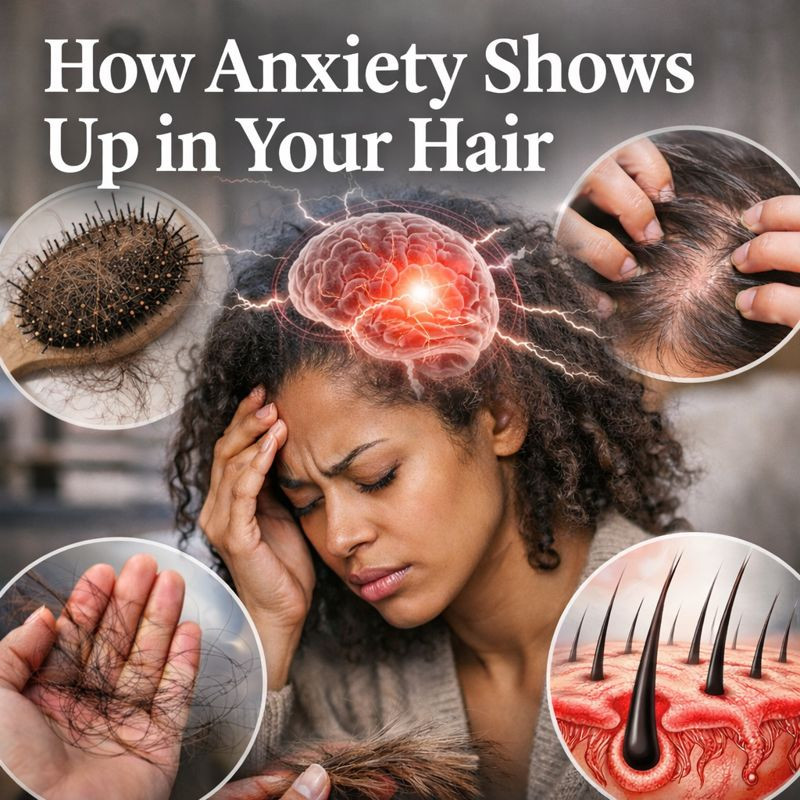
Anxiety doesn’t just live in your mind.
It shows up in your body — your sleep, your digestion, your hormones… and yes, your hair.
If you’ve noticed more shedding, thinning edges, dryness that won’t quit, or a scalp that suddenly feels irritated or tight, anxiety may be playing a bigger role than you realize. And the tricky part? Hair changes from anxiety often show up weeks or even months after the stress starts, making it hard to connect the dots.
In this article, we’ll break down exactly how anxiety affects your hair, what signs to look for, and — most importantly — how to support hair recovery when stress is part of the problem.
The Hair–Anxiety Connection: What’s Really Happening
When you experience anxiety, your body activates its stress response system — also known as “fight or flight.” This system is designed to keep you alive in short bursts, not to be switched on constantly.
Chronic anxiety keeps stress hormones elevated, especially cortisol, which directly interferes with:
-
Hair growth cycles
-
Scalp circulation
-
Nutrient delivery to hair follicles
-
Oil and moisture balance
-
Immune function in the scalp
Hair follicles are non-essential in survival terms. When your body is under stress, it redirects energy away from hair growth and toward vital organs. Over time, this shows up visibly.
1. Anxiety Can Trigger Excessive Hair Shedding
One of the most common ways anxiety shows up in hair is sudden or increased shedding.
What’s happening biologically?
Anxiety can push hair follicles prematurely into the telogen (resting) phase of the hair growth cycle. This condition is called stress-induced telogen effluvium.
Normally:
-
About 85–90% of hair is growing
-
10–15% is resting
With chronic anxiety:
-
A large number of hairs stop growing early
-
Shedding increases 2–3 months later
This is why many people say:
“My hair started falling out, but nothing changed recently.”
The stressor may have happened months earlier.
Signs anxiety-related shedding is happening:
-
Hair coming out in clumps during washing
-
Excess shedding when detangling
-
More hair on pillows, floors, or clothing
-
Thinning ponytail or braids feeling lighter
2. Anxiety Can Stall Hair Growth
Even if hair isn’t shedding excessively, anxiety can cause hair growth to slow down dramatically.
Why growth slows:
-
Elevated cortisol shortens the growth (anagen) phase
-
Reduced blood flow limits oxygen and nutrients to follicles
-
Chronic tension restricts scalp circulation
You may notice:
-
Hair seems “stuck” at the same length
-
Edges or crown won’t fill in
-
New growth appears weaker or finer
This is especially frustrating because the hair isn’t necessarily falling out — it’s just not progressing.
3. Anxiety Can Cause Scalp Tightness, Pain, or Tingling
Anxiety often causes muscle tension, and that includes the muscles and connective tissue of the scalp.
This can result in:
-
Tight scalp sensation
-
Tenderness when touching or styling
-
Tingling, crawling, or burning feelings
-
Headaches paired with scalp discomfort
Tight scalp = reduced blood flow = compromised follicle health.
Over time, tension can create a hostile environment for hair growth, even if your routine is otherwise healthy.
4. Anxiety Can Increase Scalp Inflammation
Chronic anxiety activates the immune system in ways that increase inflammation throughout the body — including the scalp.
Inflammation can lead to:
-
Itchy or irritated scalp
-
Flaking without dryness
-
Redness or sensitivity
-
Increased dandruff-like symptoms
Inflamed follicles don’t grow hair efficiently. In some cases, inflammation can even contribute to miniaturization (thinner strands over time).
5. Anxiety Can Worsen Edge Thinning and Breakage
Edges are already the most fragile area of the hairline. Anxiety makes them even more vulnerable.
Here’s how:
-
Cortisol weakens hair structure
-
Stress reduces moisture retention
-
Tension increases subconscious hair pulling or touching
You may notice:
-
Edges thinning without tight styles
-
Increased breakage around temples
-
Hairline not recovering despite gentle care
Stress doesn’t have to cause traction to damage edges — biochemical stress alone can do it.
6. Anxiety Can Lead to Dry, Brittle Hair
Anxiety alters hormone balance, which can disrupt your scalp’s oil production.
This may result in:
-
Hair that feels dry even after moisturizing
-
Ends snapping easily
-
Loss of softness and elasticity
-
Hair that tangles more than usual
Stress also depletes key nutrients like magnesium, B-vitamins, and zinc — all essential for healthy, resilient hair.
7. Anxiety Can Trigger Hair-Pulling Behaviors
For some people, anxiety manifests physically through repetitive behaviors, including:
-
Twisting hair
-
Picking at the scalp
-
Pulling edges or strands unconsciously
Over time, this can lead to:
-
Patchy thinning
-
Broken regrowth
-
Scalp irritation
These behaviors often happen automatically — especially during high stress or emotional overload.
8. Anxiety Can Disrupt Sleep (Which Affects Hair)
Sleep is when the body:
-
Repairs tissue
-
Regulates hormones
-
Supports hair growth
Anxiety-related sleep disruption reduces:
-
Growth hormone release
-
Cellular repair
-
Scalp recovery
Poor sleep + stress is a double hit to hair health.
How to Tell If Anxiety Is Affecting Your Hair
Ask yourself:
-
Did hair changes follow a stressful period?
-
Is shedding happening without obvious styling damage?
-
Does my scalp feel tight, irritated, or sensitive?
-
Has my hair growth slowed despite consistent care?
If the answer is yes to multiple questions, anxiety may be part of the picture.
How to Support Hair Recovery When Anxiety Is Involved
Hair recovery requires a dual approach: internal regulation + external care.
1. Lower Cortisol Where Possible
You don’t have to eliminate stress — just reduce chronic activation.
Helpful practices:
-
Deep breathing or meditation (even 5 minutes)
-
Walking or light movement
-
Nervous system regulation techniques
-
Setting boundaries with time and energy
Lower cortisol = better follicle signaling.
2. Improve Scalp Circulation
Circulation helps counteract tension and stagnation.
Try:
-
Gentle scalp massage (daily or weekly)
-
Oils that support blood flow and follicle nourishment
-
Avoiding tight styles during high stress periods
3. Focus on Scalp Health First
Healthy hair grows from a calm, nourished scalp.
Prioritize:
-
Clean but not over-cleansed scalp
-
Anti-inflammatory ingredients
-
Moisture without buildup
4. Be Patient With Regrowth
Stress-related hair changes are reversible, but regrowth takes time.
Timeline expectations:
-
Shedding may last 2–4 months
-
New growth often appears after stress levels stabilize
-
Full density recovery can take 6–12 months
Consistency matters more than urgency.
5. Avoid Over-Styling During Recovery
Your hair is already under internal stress — don’t add physical stress.
Avoid:
-
Tight braids or ponytails
-
Excess heat
-
Over-manipulation
Think: low tension, high nourishment.
Can Hair Lost From Anxiety Grow Back?
In most cases, yes.
Anxiety-related hair loss is usually non-scarring, meaning follicles remain alive. Once stress hormones normalize and the scalp environment improves, hair can re-enter the growth phase.
The key is addressing anxiety early and supporting the scalp during recovery.
Final Thoughts: Your Hair Is Communicating With You
Hair is often one of the first places stress shows up — and one of the last places to fully recover.
If your hair has changed and you’ve been dealing with anxiety, it’s not “all in your head.” Your body is responding exactly as it was designed to.
By calming your nervous system, caring for your scalp, and giving your hair time, growth can return — stronger, healthier, and more resilient than before.
Your hair isn’t failing you.
It’s asking for support.