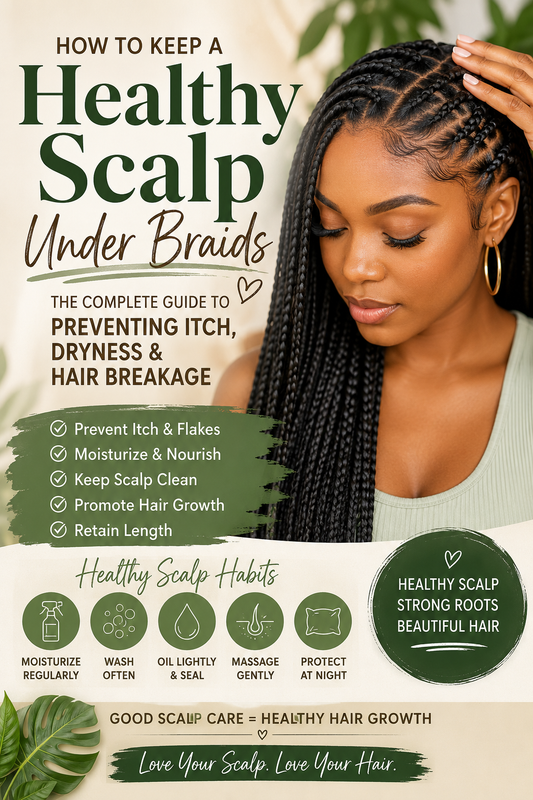
Braids are one of the most popular protective hairstyles for natural hair because they help reduce daily manipulation, retain length, and provide styling versatility. However, wearing braids does not automatically guarantee healthy hair growth. One of the biggest mistakes people make is forgetting about their scalp after installing braids.
Your scalp is living skin. Just like the skin on your face needs cleansing and moisturizing, your scalp needs regular care while your hair is braided.
A neglected scalp can lead to:
- Dryness
- Flaking
- Excess oil
- Product buildup
- Itching
- Hair breakage
- Weak roots
- Inflammation
- Slower hair retention
The good news is that keeping your scalp healthy under braids is surprisingly simple once you know the right routine.
This guide explains everything you need to know about maintaining a healthy scalp while wearing braids so your hair stays strong from root to tip.
Why Scalp Health Matters
Hair grows from follicles located beneath the scalp.
Healthy follicles produce stronger strands.
When your scalp becomes irritated or clogged with buildup, follicles cannot function as efficiently.
Think of your scalp as the soil in a garden.
Healthy soil grows healthy plants.
Healthy scalp supports healthier hair.
Ignoring your scalp while wearing braids often leads to:
- Excess shedding
- Weak edges
- Hair thinning
- Dry roots
- Increased breakage after braid removal
A healthy scalp creates the best environment for maintaining long, beautiful hair.
Signs Your Scalp Is Healthy
A healthy scalp usually has:
- Little to no itching
- No painful tenderness
- Minimal flakes
- Balanced oil production
- Comfortable braid tension
- Healthy shine
- Clean hair follicles
Your scalp should never constantly hurt while wearing braids.
Signs Your Scalp Needs Attention
Watch for these warning signs:
Persistent Itching
Occasional itching is normal.
Constant itching often indicates:
- Dry scalp
- Product buildup
- Allergic reactions
- Sweat accumulation
White Flakes
Not all flakes are dandruff.
Flakes can come from:
- Dry scalp
- Excess styling products
- Dead skin
- Infrequent cleansing
Bad Odor
A sour smell usually indicates:
- Sweat trapped beneath braids
- Oil buildup
- Bacteria
- Fungal growth
Painful Roots
Braids should never remain painful for several days.
Pain may mean:
- Braids are too tight
- Follicles are inflamed
- Hair is under excessive tension
Oily Scalp
Some people stop moisturizing because they believe oily scalps don't need moisture.
Actually, excess oil often mixes with sweat and products, creating buildup.
What Causes Scalp Problems Under Braids?
Several factors contribute.
Too Much Product
Applying thick oils every day attracts dirt.
Heavy products can clog follicles.
Less is often more.
Infrequent Washing
Many people fear washing braids.
In reality, dirty braids create unhealthy scalp conditions.
Sweat, dust, dead skin, and oil continue accumulating.
Tight Installation
Braids should never feel like they're pulling your scalp.
Excess tension increases the risk of:
- Traction alopecia
- Hairline thinning
- Broken hairs
- Inflamed follicles
Dry Weather
Cold air removes moisture from both skin and hair.
Indoor heating can make dryness even worse.
Sweat
Regular workouts increase sweat accumulation.
Sweat itself isn't harmful.
Leaving sweat on the scalp for days is.
Step 1: Moisturize Your Scalp
Moisture is essential.
Use lightweight moisturizing products rather than thick grease.
Look for ingredients like:
- Aloe vera
- Rose water
- Glycerin
- Distilled water
- Botanical extracts
Spray lightly between braid rows.
Avoid soaking the braids daily.
Step 2: Seal in Moisture
After moisturizing, use a small amount of lightweight oil.
Good options include:
- Jojoba oil
- Grapeseed oil
- Avocado oil
- Argan oil
Only a few drops are necessary.
Heavy oiling creates buildup.
Step 3: Wash Your Braids
Yes—you should wash braided hair.
Experts generally recommend cleansing every 2–3 weeks, or more often if you sweat heavily.
Benefits include:
- Cleaner follicles
- Reduced itching
- Less buildup
- Healthier scalp
Use diluted shampoo.
Massage gently using fingertips.
Avoid aggressive scrubbing.
Step 4: Dry Thoroughly
Never leave braids damp for long periods.
Moisture trapped inside braids encourages odor and microbial growth.
Use:
- Microfiber towel
- Hooded dryer
- Cool blow dryer
- Air drying in a well-ventilated area
Ensure the roots are completely dry.
Step 5: Massage Your Scalp
Scalp massage offers several benefits:
- Encourages circulation
- Relaxes tension
- Helps distribute natural oils
Massage gently for 2–5 minutes.
Avoid excessive pulling.
How Often Should You Moisturize?
This depends on:
- Climate
- Hair texture
- Activity level
- Product choice
Most people benefit from moisturizing 2–4 times per week.
Very dry climates may require additional hydration.
Should You Oil Every Day?
Usually no.
Daily oil application often causes buildup.
Instead:
- Moisturize regularly
- Seal lightly
- Clean consistently
Can Dirty Braids Stop Hair Growth?
Hair continues growing.
However, excessive buildup can lead to:
- Irritation
- Breakage
- Poor hair retention
Many people mistake breakage for slow growth.
Best Ingredients for Scalp Health
Aloe Vera
Helps soothe irritation.
Adds lightweight moisture.
Peppermint
Creates a cooling sensation.
Leaves the scalp feeling refreshed.
Tea Tree Oil
Often used in diluted amounts to help keep the scalp feeling clean.
Always dilute before applying directly.
Rosemary
Popular in hair care routines because it supports an overall healthy scalp environment.
Chamomile
Helps calm sensitive skin.
Lavender
Provides soothing comfort and a pleasant scent.
Ingredients to Avoid
Avoid excessive use of:
- Heavy petroleum greases
- Thick waxes
- Alcohol-heavy sprays
- Sticky gels
- Heavy pomades directly on the scalp
These products trap buildup.
Nighttime Scalp Care
Night care is just as important.
Sleep using:
- Satin bonnet
- Satin scarf
- Silk pillowcase
These reduce:
- Friction
- Frizz
- Moisture loss
Morning Scalp Routine
Morning routine:
- Check for dryness.
- Mist scalp if needed.
- Smooth flyaways.
- Massage lightly.
- Protect from excessive sun.
Weekly Healthy Scalp Routine
Monday
- Moisturize scalp
Tuesday
- Leave alone
Wednesday
- Massage scalp
Thursday
- Moisturize lightly
Friday
- Check for buildup
Saturday
- Clean edges
Sunday
- Rest the scalp
Consistency matters more than overdoing products.
Exercise With Braids
Sweat isn't harmful.
Leaving sweat trapped is.
After workouts:
- Let scalp dry
- Use a clean towel
- Refresh with a lightweight moisturizing spray if needed
Swimming With Braids
Before swimming:
- Wet hair with clean water.
- Apply a light leave-in conditioner.
After swimming:
- Rinse thoroughly.
- Cleanse if exposed to chlorine or salt water.
- Dry completely.
How Long Should You Keep Braids?
Leaving braids in too long increases:
- Shedding
- Tangling
- Buildup
- Breakage
Most stylists recommend wearing braids for 6–8 weeks, depending on braid size, maintenance, and hair condition.
Common Mistakes
Using Too Much Oil
More oil does not equal more growth.
Never Washing
Clean scalp equals healthier follicles.
Scratching Constantly
Scratching causes irritation.
Instead:
- Moisturize
- Clean
- Massage gently
Wearing Tight Braids Too Long
If braids hurt continuously, remove them.
Ignoring Flakes
Treat flakes early before buildup worsens.
Frequently Asked Questions
Can my hair grow under braids?
Yes. Hair naturally continues to grow while braided. Good scalp care helps you retain that growth by reducing breakage.
Why does my scalp itch after braids?
Common reasons include:
- Dryness
- Tight braids
- Product residue
- Sweat
- Sensitivity to synthetic hair
Is oil enough to moisturize?
No.
Water-based moisture should come first.
Oil helps seal in that moisture.
Should I wash braids weekly?
Most people do well washing every 2–3 weeks, though frequent exercisers may need to cleanse more often.
Can braids cause hair loss?
Braids themselves don't usually cause hair loss. Excessive tension, poor maintenance, and leaving them in too long can contribute to breakage and traction alopecia.
Healthy Scalp Checklist
✔ Moisturize 2–4 times weekly
✔ Wash every 2–3 weeks
✔ Dry completely
✔ Sleep with satin
✔ Avoid heavy buildup
✔ Massage gently
✔ Drink enough water
✔ Eat nutrient-rich foods
✔ Remove braids on time
✔ Keep tension low
Final Thoughts
Healthy braids begin with a healthy scalp. While protective styles reduce daily manipulation, they still require regular maintenance to keep your scalp clean, hydrated, and comfortable. A balanced routine of gentle cleansing, lightweight moisturizing, proper drying, and avoiding excessive tension helps minimize itchiness, buildup, and breakage.
Remember that hair growth happens naturally, but retaining that growth depends on keeping both your scalp and hair in good condition. By caring for your scalp throughout the time you wear braids, you'll be more likely to enjoy stronger roots, healthier strands, and better length retention once your braids are removed.
FAQ Schema Questions
What keeps your scalp healthy under braids?
Regular cleansing, lightweight moisturizing, gentle scalp massages, and avoiding excessive buildup help maintain a healthy scalp while wearing braids.
How often should you wash your scalp with braids?
Most people benefit from washing every 2–3 weeks, though those who exercise frequently or have oily scalps may need to wash more often.
Can braids damage your scalp?
Braids themselves are not harmful, but excessive tension, poor hygiene, and leaving them installed too long can irritate the scalp and contribute to breakage or traction alopecia.
How do you stop an itchy scalp under braids?
Keep the scalp clean, moisturize with a water-based spray, avoid heavy product buildup, and ensure braids are not installed too tightly.
Do braids help hair grow?
Braids do not make hair grow faster, but they can help retain length by reducing daily manipulation and minimizing breakage when maintained properly.