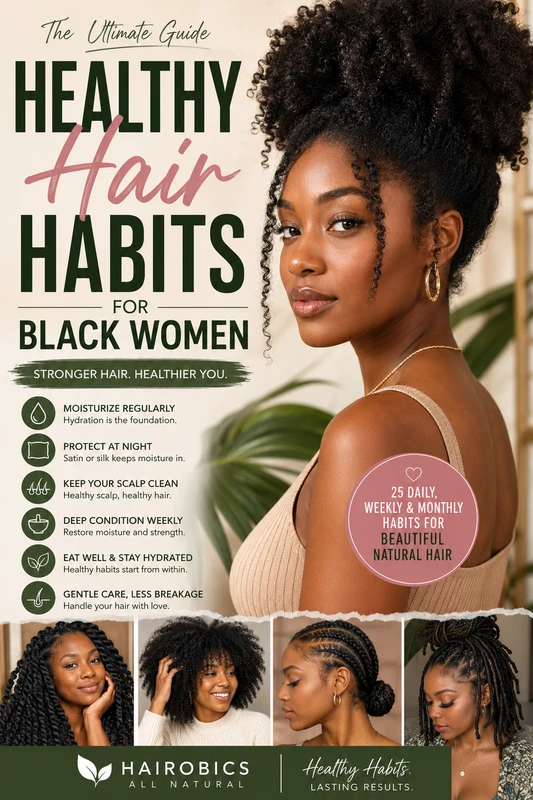
Beautiful, healthy hair doesn't happen overnight—it develops through consistent habits practiced over weeks, months, and years. Whether you wear your hair natural, relaxed, braided, twisted, locked, or in protective styles, your daily decisions determine the health of your hair.
Many Black women spend hundreds of dollars on products hoping for instant transformation. While quality products certainly help, healthy hair is built through routine rather than miracles.
The healthiest heads of hair are usually cared for consistently rather than aggressively. Simple habits such as moisturizing regularly, protecting your hair at night, and eating nutritious foods often have a greater long-term impact than constantly switching products.
In this complete guide, you'll discover the healthiest habits every Black woman should develop to achieve stronger, thicker, shinier, and more manageable hair.
Why Healthy Hair Habits Matter
Black hair is naturally beautiful but requires thoughtful care because of its unique structure.
The spiral shape of curly and coily hair makes it more difficult for natural scalp oils to travel from the roots to the ends. As a result, moisture escapes faster, making dryness one of the biggest causes of breakage.
Healthy habits help you:
- Retain length
- Reduce shedding
- Prevent split ends
- Improve scalp health
- Increase moisture
- Reduce breakage
- Strengthen strands
- Make styling easier
Small improvements repeated consistently create dramatic long-term results.
Habit #1: Moisturize Your Hair Regularly
Moisture is the foundation of healthy Black hair.
Dry hair becomes brittle, making it much more likely to snap during styling or everyday manipulation.
Good moisturizing habits include:
- Applying a water-based leave-in conditioner
- Sealing moisture with natural oils or butters
- Paying extra attention to your ends
- Reapplying moisture when hair feels dry
Avoid waiting until your hair feels extremely dry before moisturizing.
Habit #2: Drink Plenty of Water
Healthy hair starts inside your body.
Water supports:
- Healthy scalp circulation
- Hair elasticity
- Cell function
- Nutrient transportation
Although drinking water alone won't make your hair grow faster, dehydration can negatively affect your overall hair health.
Aim to stay hydrated throughout the day.
Habit #3: Protect Your Hair While Sleeping
Nighttime protection is one of the easiest habits to develop.
Sleeping directly on cotton pillowcases creates friction that removes moisture from hair.
Instead, use:
- Satin pillowcases
- Silk pillowcases
- Satin bonnets
- Silk scarves
These reduce friction while helping your hair retain moisture overnight.
Habit #4: Keep Your Scalp Clean
Healthy hair grows best from a healthy scalp.
An unhealthy scalp may experience:
- Product buildup
- Itching
- Flaking
- Excess oil
- Odor
Wash your scalp regularly using a gentle shampoo designed to remove buildup without excessively drying your hair.
Habit #5: Massage Your Scalp
Scalp massages help stimulate circulation.
Benefits include:
- Relaxation
- Improved blood flow
- Better product distribution
- Reduced tension
Massage your scalp for several minutes using your fingertips—not your nails.
Habit #6: Trim Split Ends
Split ends don't repair themselves.
Ignoring damaged ends often allows splitting to travel farther up the hair shaft.
Trim damaged ends as needed to maintain healthier-looking hair and reduce tangling.
Habit #7: Wear Protective Styles Correctly
Protective styles help reduce daily manipulation.
Popular styles include:
- Braids
- Twists
- Cornrows
- Wigs
- Crochet styles
- Buns
- Updos
However, protective styles should never be excessively tight.
Tension can contribute to breakage and thinning around the hairline.
Habit #8: Avoid Excessive Heat
Frequent heat styling weakens hair proteins.
Limit the use of:
- Flat irons
- Curling irons
- Blow dryers on high heat
When using heat:
- Apply a heat protectant.
- Use the lowest effective temperature.
- Avoid repeated passes over the same section.
Habit #9: Deep Condition Weekly
Deep conditioning restores moisture and softness.
A quality deep conditioner helps:
- Improve elasticity
- Reduce dryness
- Increase manageability
- Strengthen strands
Many women benefit from deep conditioning once each week, though frequency can vary by hair type and condition.
Habit #10: Handle Wet Hair Gently
Hair is most fragile when wet.
Avoid rough towel drying.
Instead:
- Use a microfiber towel or soft cotton T-shirt.
- Detangle carefully with conditioner applied.
- Start from the ends and work upward.
Habit #11: Detangle Patiently
Aggressive detangling causes unnecessary breakage.
Always:
- Separate hair into sections.
- Use plenty of slip from conditioner or a detangler.
- Work slowly.
Never rush through detangling.
Habit #12: Don't Overwash
While scalp cleanliness is important, excessive washing may strip natural oils.
Find a washing schedule that works for your lifestyle, activity level, and hair needs.
Many women wash every one to two weeks, while others prefer more frequent cleansing depending on their routines.
Habit #13: Eat Nutrient-Rich Foods
Hair is made primarily of protein.
A balanced diet that includes:
- Lean protein
- Fruits
- Vegetables
- Healthy fats
- Whole grains
- Iron-rich foods
supports overall hair health.
Habit #14: Protect Your Edges
Edges are among the most delicate hairs on your head.
Avoid:
- Tight ponytails
- Tight braids
- Tight wigs
- Tight buns
Choose styles that don't constantly pull on your hairline.
Habit #15: Moisturize Protective Styles
Protective styles still require maintenance.
Keep your hair hydrated by:
- Moisturizing your scalp as needed.
- Applying lightweight leave-in products.
- Refreshing braids or twists with a moisturizing spray.
Habit #16: Reduce Product Buildup
Using too many heavy products may weigh hair down and contribute to buildup.
Clarify occasionally if you notice:
- Dull hair
- Sticky strands
- Reduced curl definition
- Heavy residue
Habit #17: Choose Hairstyles That Reduce Stress
Constant tension weakens hair over time.
Alternate between:
- Loose buns
- Twist-outs
- Wash-and-gos
- Protective styles
- Low-manipulation styles
Giving your hair a break can improve long-term health.
Habit #18: Protect Hair From the Sun
Prolonged UV exposure may dry hair.
Consider:
- Hats
- Scarves
- Moisturizing products before outdoor activities
especially during extended time in direct sunlight.
Habit #19: Exercise Regularly
Exercise promotes overall health and healthy circulation.
Healthy circulation supports the scalp and contributes to an environment where hair can thrive.
Remember to cleanse your scalp as needed after heavy sweating.
Habit #20: Manage Stress
High stress levels can contribute to increased shedding in some individuals.
Practice stress management through activities such as:
- Walking
- Meditation
- Prayer
- Journaling
- Yoga
- Quality sleep
Habit #21: Avoid Constant Product Switching
Many women buy dozens of products hoping to find instant results.
Instead:
Choose a consistent routine.
Give products enough time before deciding whether they're working.
Consistency often produces better results than constantly changing routines.
Habit #22: Wear Loose Hairstyles Often
Hair needs rest.
Alternate protective styles with looser styles that place minimal tension on your scalp.
Habit #23: Be Gentle During Wash Day
Wash day shouldn't feel like a workout.
Avoid:
- Scrubbing aggressively
- Rough towel drying
- Pulling knots apart
Gentle handling preserves more hair.
Habit #24: Listen to Your Hair
Healthy routines aren't identical for everyone.
Pay attention to:
- Dryness
- Breakage
- Shedding
- Scalp irritation
- Product performance
Adjust your routine when your hair's needs change due to weather, styling, or lifestyle.
Habit #25: Be Consistent
Healthy hair isn't built in one week.
Consistency over months leads to noticeable improvements.
Daily habits—even small ones—compound into healthier, stronger hair over time.
A Simple Weekly Healthy Hair Routine
A balanced weekly routine might include:
Monday
- Lightly moisturize hair if needed.
Tuesday
- Massage scalp for a few minutes.
Wednesday
- Refresh curls or protective style.
Thursday
- Check ends for dryness and moisturize.
Friday
- Wear a low-manipulation hairstyle.
Saturday
- Wash and deep condition (or follow your regular wash schedule).
Sunday
- Style hair and protect it overnight with a satin bonnet or pillowcase.
Common Habits That Damage Hair
Avoid these frequent mistakes:
- Sleeping without a satin bonnet or pillowcase
- Overusing heat tools
- Tight hairstyles
- Skipping deep conditioning
- Picking at your scalp
- Ignoring split ends
- Detangling dry hair
- Using dirty brushes and combs
- Letting product buildup accumulate
- Constantly changing products
Replacing these habits with healthier alternatives can significantly improve hair retention and manageability.
Frequently Asked Questions
How long does it take to develop healthier hair?
Most people notice improvements in moisture and manageability within a few weeks of consistent care. Length retention and reduced breakage typically become more noticeable over several months.
Should Black women oil their hair every day?
Not necessarily. Oiling without adequate moisture can leave hair feeling greasy without addressing dryness. Focus on hydrating first, then use oil or butter to help seal in that moisture if it works well for your hair.
What's the most important healthy hair habit?
Consistency. A simple routine followed regularly often delivers better results than an elaborate routine that's difficult to maintain.
Can protective styles help hair grow?
Protective styles don't directly increase the rate of hair growth, but they can help retain length by reducing breakage when installed and maintained properly.
How often should I deep condition?
Many people benefit from deep conditioning weekly or every other wash day, depending on their hair's moisture needs and condition.
Final Thoughts
Healthy hair is the result of consistent care—not perfection. By moisturizing regularly, cleansing your scalp, protecting your hair at night, minimizing excessive heat, eating a balanced diet, and handling your strands gently, you create the conditions for stronger, healthier hair over time.
Focus on building habits you can maintain rather than chasing quick fixes. Small daily actions add up, helping you reduce breakage, retain length, and enjoy hair that looks and feels its best.
When paired with quality, moisture-focused hair care products and a routine tailored to your unique texture and lifestyle, these healthy habits can support long-term hair health and confidence.