If you’ve ever stood in the shower staring at strands of hair on your hands, wondering “Is this normal… or am I losing my hair?” — you’re not alone.
Hair shedding and hair breakage are two of the most confused hair problems, and that confusion is one of the biggest reasons people feel like their hair “won’t grow,” even when they’re using good products and following a solid routine.
Here’s the truth most people don’t tell you:
? Shedding and breakage look similar — but they come from completely different causes, require totally different solutions, and ignoring the difference can keep your hair stuck at the same length for years.
The good news?
There is one simple test that never lies — and once you understand it, you’ll stop guessing and finally fix the real issue.
Let’s break it all the way down.
Why Understanding the Difference Matters (More Than You Think)
If you treat breakage like shedding — or shedding like breakage — you can actually make the problem worse.
-
Treating shedding with heavy protein can cause dryness and snapping
-
Treating breakage with growth oils alone won’t stop the damage
-
Ignoring both can lead to thinning edges, see-through ends, and “length plateaus”
Knowing the difference is the foundation of real hair growth, not just wishful thinking.
What Is Hair Shedding? (The Normal Hair Loss Most People Panic About)
Hair shedding is a natural biological process.
Every single hair on your head goes through a cycle:
-
Anagen (growth phase) – lasts 2–7 years
-
Catagen (transition phase) – a few weeks
-
Telogen (resting phase) – about 3 months
-
Exogen (shedding phase) – the hair releases and falls out
At any given time, 10–15% of your hair is shedding on purpose.
How Much Shedding Is Normal?
-
50–100 hairs per day for most people
-
Up to 150 hairs if you have thick or long hair
-
More visible shedding after wash day, detangling, or protective styles
Shedding looks dramatic — but it doesn’t automatically mean hair loss.
What Is Hair Breakage? (The Silent Growth Killer)
Breakage is not natural — it’s damage.
Hair breaks when the strand becomes too weak to withstand:
-
Tension
-
Dryness
-
Friction
-
Chemical stress
-
Heat
-
Poor scalp health
Unlike shedding, breakage shortens your hair, making it seem like it never grows.
Common Signs of Breakage
-
Hair stuck at the same length for months or years
-
Short pieces everywhere (sink, pillow, clothes)
-
Thin, wispy ends
-
Excessive tangling
-
Frizz that won’t smooth down
-
Hair snapping during detangling
Breakage is the #1 reason people say:
“My hair grows… but it doesn’t get longer.”
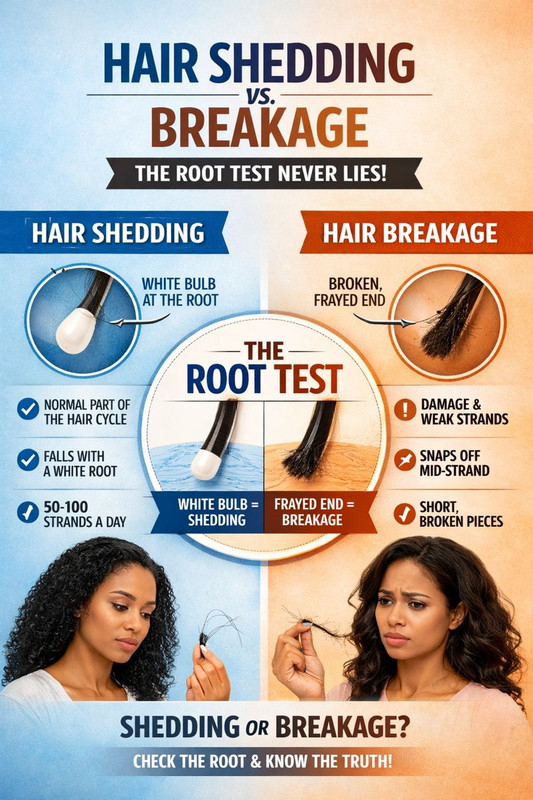
The One Test That Never Lies: The Root Test
This test takes 5 seconds, costs nothing, and tells you the truth immediately.
How to Do the Root Test
-
Pick up a strand of hair that has fallen out
-
Look closely at one end
What You See = Your Answer
✅ White or clear bulb at one end
That’s shedding
The hair completed its growth cycle naturally
❌ No bulb, blunt or frayed ends
That’s breakage
The hair snapped somewhere along the strand
? This test never lies — because biology doesn’t lie.
Why People Confuse Shedding and Breakage
Here’s why this confusion is so common:
1. Both Happen at the Same Time
You can be shedding and breaking hair simultaneously.
2. Long Hair Makes Shedding Look Worse
Long strands look scarier in the drain — but length ≠ damage.
3. Protective Styles Hide Breakage
Braids, wigs, and sew-ins can mask breakage until takedown day.
4. Detangling Reveals Both at Once
Wash day combines shedding (released hairs) and breakage (snapped hairs).
Major Causes of Excessive Hair Shedding
When shedding becomes excessive, it’s usually internal or scalp-related.
1. Stress (Physical or Emotional)
Stress can push hair into the shedding phase prematurely (telogen effluvium).
Triggers include:
-
Emotional trauma
-
Chronic anxiety
-
Illness
-
Surgery
-
Rapid weight loss
2. Hormonal Changes
-
Postpartum
-
Birth control changes
-
Perimenopause & menopause
-
Thyroid imbalance
3. Scalp Inflammation
-
Clogged follicles
-
Product buildup
-
Poor circulation
-
Untreated scalp conditions
4. Nutritional Deficiencies
-
Iron
-
Vitamin D
-
Protein
-
Zinc
Shedding is often a signal, not the problem itself.
Major Causes of Hair Breakage
Breakage is usually caused by external stress + internal weakness.
1. Chronic Dryness
Dry hair snaps easily — especially textured hair.
2. Over-Manipulation
-
Daily styling
-
Tight ponytails
-
Rough detangling
3. Protein Overload
Too much protein makes hair stiff and brittle.
4. Heat Damage
Flat irons and blow dryers weaken the cuticle.
5. Chemical Damage
Relaxers, color, bleach weaken bonds inside the hair shaft.
6. Poor Moisture Balance
Moisture without strength = mushy hair
Strength without moisture = snapping hair
Why Your Hair Can Look Healthy But Still Break
This is one of the most frustrating situations.
Your hair can:
-
Shine
-
Feel soft
-
Look full
…and still be breaking internally.
Why?
-
Cuticle looks smooth, cortex is weak
-
Moisture sits on top but doesn’t penetrate
-
Scalp health is ignored
Healthy-looking hair isn’t always strong hair.
Shedding vs Breakage by Hair Type
Natural & Textured Hair
-
More prone to breakage due to bends and coils
-
Needs moisture + gentle handling
-
Shrinkage hides length, breakage kills retention
Relaxed or Chemically Treated Hair
-
Higher breakage risk
-
Weakened protein bonds
-
Requires strength rebuilding
Locs
-
Shedding is trapped in locs
-
Breakage shows as thinning locs or weak roots
Protective Styles
-
Shedding appears worse at takedown
-
Breakage often happens during install and removal
How to Fix Excessive Shedding (The Right Way)
If shedding is the issue, focus on scalp health and internal balance.
1. Improve Scalp Circulation
Healthy follicles grow stronger hair.
2. Reduce Inflammation
Clean scalp = better growth cycles.
3. Support Your Body
-
Manage stress
-
Eat enough protein
-
Address deficiencies
4. Be Patient
Shedding from stress or hormones often corrects itself in 3–6 months.
How to Fix Hair Breakage (This Is Where Growth Happens)
Breakage requires consistent strand care.
1. Restore Moisture Balance
Hydration must penetrate the strand — not just coat it.
2. Strengthen Weak Areas
Especially ends, edges, and crown.
3. Change How You Handle Your Hair
-
Detangle gently
-
Reduce manipulation
-
Protect hair at night
4. Trim Strategically
Dusting damaged ends prevents splits from traveling upward.
Daily Habits That Quietly Cause Breakage
-
Dry detangling
-
Cotton pillowcases
-
Skipping deep conditioning
-
Tight styles worn too long
-
Ignoring scalp buildup
Small habits = big damage over time.
How Long Until You See Results?
Shedding
-
6–12 weeks once the trigger is addressed
Breakage
-
30–90 days with consistent moisture and gentle care
Growth isn’t instant — but it is predictable when you fix the right problem.
When to See a Professional
If you experience:
-
Sudden heavy shedding
-
Bald spots
-
Scalp pain or burning
-
Hair coming out in clumps
Consult a dermatologist or trichologist.
Final Thoughts: Stop Guessing — Start Growing
Hair shedding and hair breakage are not the same thing, and treating them like they are will keep you stuck.
The root test tells the truth.
Your routine must match the problem.
Healthy hair growth starts with clarity.
Once you stop guessing and start responding correctly, length retention becomes inevitable.