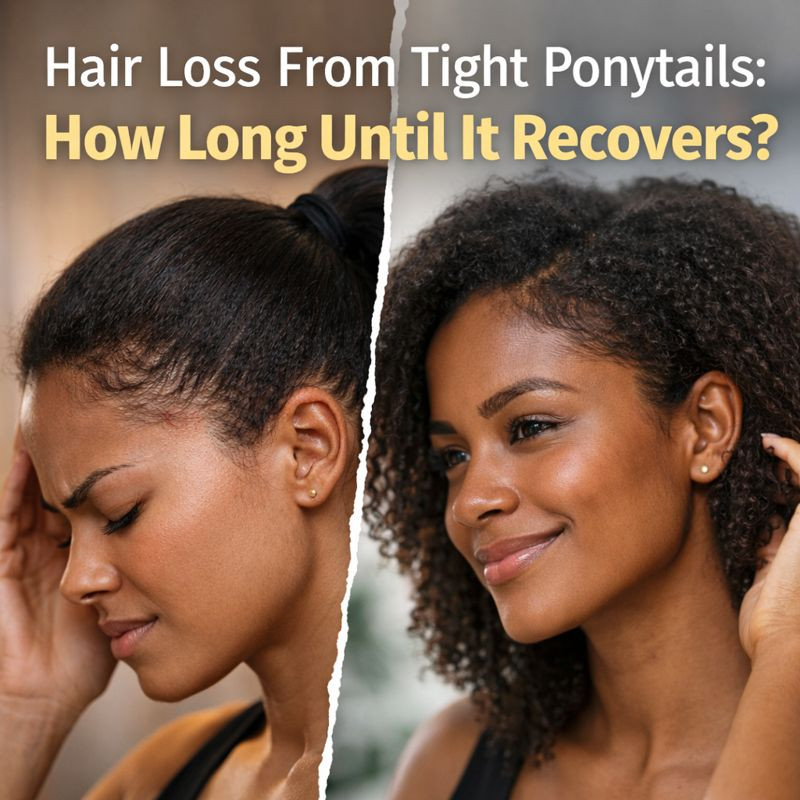
Tight ponytails are often seen as harmless. They’re quick, convenient, and “protective” — especially for workouts, busy mornings, or sleek styles. But when hair starts thinning around the hairline, temples, or crown, many people ask the same uneasy question:
Did my ponytail cause this… and will my hair grow back?
The answer is yes, tight ponytails can cause hair loss — and recovery depends on how long the tension lasted and how much damage occurred. In this guide, we’ll break down exactly what happens to your hair, how long recovery takes, and what you can do to help your hair bounce back safely.
What Is Hair Loss From Tight Ponytails?
Hair loss caused by repeated tension on the scalp is known as traction alopecia. It develops when hair follicles are pulled consistently in the same direction over time, weakening them and disrupting the growth cycle.
Ponytails are one of the most common causes, especially when they are:
-
Pulled tightly back or upward
-
Worn in the same position daily
-
Secured with elastic bands or rubber ties
-
Worn for long hours (8+ hours a day)
-
Combined with slicking products or brushing while wet
Unlike shedding or hormonal hair loss, traction alopecia is mechanical — meaning it’s caused by physical stress, not internal imbalance.
Early Signs Your Ponytail Is Causing Hair Loss
Catching traction damage early is critical. The sooner tension stops, the better your chances of full recovery.
Common early signs include:
-
Thinning around the temples or hairline
-
Short, broken hairs along the edges
-
Scalp tenderness after removing a ponytail
-
A tight, sore, or itchy scalp
-
Hair that feels weaker near the roots
-
A receding or uneven hairline
If your scalp feels relieved when you take your hair down, that’s already a red flag.
How Tight Ponytails Damage Hair Follicles
Hair grows from follicles embedded in the scalp. Each follicle has tiny blood vessels that deliver oxygen and nutrients needed for growth.
When hair is pulled tightly:
-
Blood flow to the follicle is restricted
-
The follicle becomes inflamed
-
The hair growth cycle shortens
-
New hairs grow in thinner and weaker
-
Eventually, growth may stop altogether
Over time, this repeated stress can cause follicles to shut down or scar — which is when hair loss becomes permanent.
Is Hair Loss From Tight Ponytails Reversible?
The short answer:
Yes — if caught early. No — if tension continues too long.
Recovery depends on how advanced the traction damage is.
Reversible traction alopecia:
-
Thinning without smooth bald patches
-
Presence of short baby hairs
-
No scalp scarring
-
Hair loss for less than 1–2 years
Potentially permanent traction alopecia:
-
Smooth, shiny scalp
-
No visible follicle openings
-
Hair loss lasting several years
-
Repeated tension despite thinning
If follicles are still alive, regrowth is possible.
How Long Does It Take Hair to Recover From Tight Ponytails?
Hair regrowth doesn’t happen overnight. Follicles need time to heal, reset, and re-enter the growth phase.
Average recovery timeline:
0–4 weeks
-
Reduced shedding
-
Less scalp soreness
-
Improved circulation
-
No visible regrowth yet (this is normal)
1–3 months
-
Baby hairs begin to appear
-
Hairline looks softer
-
Less breakage near edges
-
Follicles re-enter the anagen (growth) phase
3–6 months
-
Noticeable regrowth in thinned areas
-
Hair appears fuller at the hairline
-
Density slowly improves
6–12 months
-
Significant regrowth possible
-
Hair thickens and strengthens
-
Growth depends on follicle health and care consistency
If no regrowth appears after 6–9 months, follicle damage may be more advanced.
Why Some People Recover Faster Than Others
Hair recovery speed varies based on several factors:
1. Duration of tension
The longer hair was pulled tightly, the slower recovery tends to be.
2. Hair texture and density
Finer hair strands often show damage sooner and may recover more slowly.
3. Scalp health
Inflammation, dryness, buildup, or poor circulation can delay regrowth.
4. Styling habits after damage
Continuing tight styles — even occasionally — can stall healing.
5. Overall health
Stress, nutrition, and hormonal balance influence regrowth speed.
Mistakes That Delay Recovery From Ponytail Hair Loss
Many people unknowingly sabotage regrowth efforts.
Common recovery mistakes:
-
Switching from tight ponytails to tight buns
-
Using slicked-back styles with gel or edge control
-
Brushing edges aggressively to “lay” baby hairs
-
Wearing headbands or scarves tightly
-
Assuming wigs or sew-ins are safer (they often aren’t)
-
Overusing oils without addressing scalp inflammation
Recovery requires removing tension completely, not just changing the style.
The Best Hairstyles While Recovering From Traction Alopecia
The goal is to reduce tension and improve blood flow.
Safer alternatives:
-
Loose low ponytails (below the nape)
-
Loose braids without tight roots
-
Hair worn down
-
Soft twists with no pulling
-
Claw clips instead of elastic bands
-
Satin scrunchies if tying hair back is necessary
Switching styles regularly also prevents repeated stress in one area.
How to Help Hair Recover Faster After Tight Ponytails
1. Stop the tension immediately
This is non-negotiable. No tight styles — even “just once in a while.”
2. Soothe scalp inflammation
Inflamed follicles can’t grow hair efficiently. Focus on calming the scalp before pushing growth.
3. Improve scalp circulation
Gentle massage helps deliver nutrients to struggling follicles.
4. Keep the scalp clean
Buildup blocks follicles and worsens inflammation.
5. Strengthen new growth
Fragile regrowth needs moisture and protection to survive.
Can Hair Products Help With Ponytail Hair Loss?
Products alone can’t reverse traction alopecia — but the right routine can dramatically improve recovery.
Look for products that:
-
Reduce scalp inflammation
-
Support follicle health
-
Improve moisture balance
-
Strengthen weak regrowth
-
Avoid heavy buildup or harsh alcohols
Avoid:
-
Heavy waxes on the hairline
-
Strong edge controls
-
Drying gels
-
Products that require brushing hair backward forcefully
When to See a Dermatologist
You should consult a professional if:
-
Hair loss continues despite stopping tight styles
-
Bald patches appear smooth or shiny
-
No regrowth after 6–9 months
-
Scalp pain or itching persists
-
Hair loss spreads beyond the hairline
A dermatologist can confirm whether follicles are still viable and recommend medical treatments if needed.
Can Ponytail Hair Loss Come Back?
Yes — traction alopecia can return if tight styling habits resume.
Many people experience regrowth, then lose hair again months later because they:
-
Go back to sleek ponytails
-
Wear wigs or braids too tightly
-
Use excessive edge styling
Once follicles have been weakened, they are more vulnerable to future damage.
How to Prevent Ponytail Hair Loss Permanently
Prevention is simpler than recovery.
Long-term prevention tips:
-
Rotate hairstyles weekly
-
Avoid tight edges and slick styles
-
Never style tightly on wet hair
-
Use satin or silk accessories
-
Keep hair moisturized and elastic
-
Listen to scalp discomfort — pain is a warning sign
If your scalp hurts, the style is too tight. Always.
Final Thoughts: Will Hair Lost From Tight Ponytails Grow Back?
In most cases, yes — if you act early.
Hair loss from tight ponytails is one of the most preventable and reversible forms of hair loss — but only when tension stops before permanent follicle damage occurs.
The keys to recovery are:
-
Immediate tension removal
-
Patience with the regrowth timeline
-
Consistent scalp care
-
Gentle styling habits
Your hairline didn’t disappear overnight — and it won’t return overnight either. But with the right care, many people see real improvement within months.