If you’ve ever felt like your hair stays the same length for years, grows in spurts, or thrives in one season only to stall in another — you’re not imagining it.
Hair growth isn’t constant. It happens in cycles, and for Black women, those cycles are influenced by genetics, curl pattern, scalp health, hormones, protective styling habits, stress, and moisture balance.
Understanding how hair growth cycles work — and how they uniquely affect Black women — is the difference between frustration and real, sustainable growth.
This guide breaks it all down in plain language.
What Is the Hair Growth Cycle?
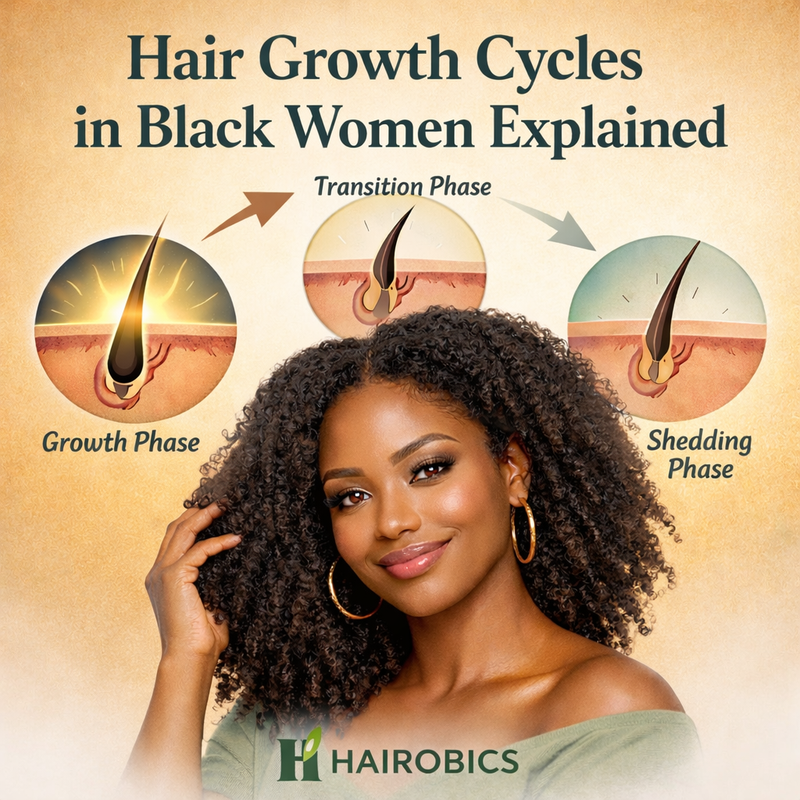
Every strand of hair on your head goes through a repeating biological cycle made up of three main phases:
-
Anagen (Growth Phase)
-
Catagen (Transition Phase)
-
Telogen (Resting + Shedding Phase)
At any given time:
-
About 85–90% of your hair is growing
-
1–2% is transitioning
-
10–15% is resting or shedding
Hair loss becomes noticeable only when this balance is disrupted.
Phase 1: Anagen — The Growth Phase
Anagen is the phase everyone focuses on — because this is when hair actually grows.
How Long Does Anagen Last?
-
Average: 2–7 years
-
Determines your maximum hair length
-
Genetically influenced, but environment and care matter
Anagen in Black Women
For many Black women:
-
Anagen phases may be shorter
-
Growth may be slower but steadier
-
Hair grows tightly coiled, which affects length retention
Important truth:
Your hair may be growing, but not retaining length.
This is why Black women often say:
-
“My hair grows, it just breaks.”
-
“My hair was longer last year than it is now.”
Why Growth Can Appear Slower in Black Hair
Black hair isn’t slower — it’s more fragile.
Structural Differences Matter
Curly and coily hair:
-
Has more bends along the strand
-
Is more prone to dryness
-
Experiences weakened cuticle points
-
Loses moisture faster
Each bend is a potential breakage point.
So while growth happens at the scalp:
-
Breakage at the ends cancels it out
-
Length plateaus feel endless
Phase 2: Catagen — The Transition Phase
Catagen is a short but important phase.
What Happens During Catagen?
-
Hair stops growing
-
The follicle detaches from blood supply
-
The strand prepares to shed
This phase lasts about 2–3 weeks.
Catagen is not a problem — it’s normal.
Issues arise when:
-
Too many hairs enter catagen early
-
Growth cycles shorten over time
Phase 3: Telogen — Resting and Shedding
Telogen lasts about 3–4 months.
What Telogen Looks Like
-
Hair isn’t growing
-
Strand eventually sheds
-
New anagen hair pushes it out
Losing 50–100 hairs per day is normal.
Telogen in Black Women
Telogen shedding can increase due to:
-
Stress
-
Hormonal changes
-
Postpartum shifts
-
Nutrient deficiencies
-
Illness
-
Tight protective styles
When telogen shedding spikes, it can feel like:
-
Thinning
-
Edges disappearing
-
Excess hair in combs and showers
Postpartum Hair Shedding Explained
One of the biggest cycle disruptions for Black women is postpartum shedding.
What’s Really Happening?
During pregnancy:
-
Estrogen levels rise
-
Hair stays longer in anagen
-
Hair looks thicker and fuller
After birth:
-
Estrogen drops
-
Many hairs enter telogen at once
-
Shedding peaks 3–5 months postpartum
This is temporary, but breakage during this phase can cause lasting length loss if hair isn’t protected.
How Hormones Affect Hair Growth Cycles
Hormones play a massive role in cycle timing.
Key Hormones That Impact Growth
-
Estrogen – extends anagen (growth)
-
Progesterone – supports follicle health
-
Testosterone/DHT – can shorten growth phase
-
Cortisol (stress hormone) – pushes hair into telogen
Black women are especially affected because:
-
Chronic stress levels tend to be higher
-
Hormonal conditions like PCOS are common
-
Postpartum and perimenopause often overlap with peak career stress
Stress and Hair Growth Stalling
Stress doesn’t just cause shedding — it shortens growth cycles.
Signs Stress Is Affecting Your Hair
-
Hair grows, then suddenly sheds
-
Edges thin without obvious breakage
-
Hair feels weaker, even when moisturized
-
Protective styles stop “working”
Stress pushes hair follicles out of anagen early, meaning hair never reaches its potential length.
Protective Styles and Growth Cycles
Protective styles can either support or sabotage growth cycles.
Styles That Support Growth
-
Loose braids
-
Low-tension twists
-
Wigs with scalp access
-
Satin-lined protective styles
Styles That Disrupt Cycles
-
Tight braids
-
Heavy extensions
-
Long-term styles without scalp care
-
Styles that cause pain or soreness
If a style causes inflammation:
-
Follicles shift into telogen
-
Growth cycles shorten
-
Regrowth slows over time
Scalp Health: The Growth Cycle Gatekeeper
Healthy cycles require a healthy scalp environment.
What the Scalp Needs
-
Clean follicles
-
Balanced oils
-
Good circulation
-
Low inflammation
Common scalp issues in Black women:
-
Product buildup
-
Dry scalp mistaken for dandruff
-
Over-oiling without cleansing
-
Neglect under protective styles
A congested scalp can block anagen signals, even if genetics are strong.
Age and Hair Growth Cycles in Black Women
Hair growth cycles naturally change with age.
What Happens Over Time
-
Anagen phases shorten
-
Growth slows slightly
-
Hair becomes finer
-
Recovery from shedding takes longer
This doesn’t mean growth stops — it means strategy matters more.
Many Black women notice:
-
Major changes after 30
-
Texture shifts after 35
-
Density changes in 40s+
The key is supporting the follicle, not chasing products.
Why Hair Plateaus Happen
A hair plateau occurs when:
-
Growth rate = breakage rate
Common plateau causes:
-
Inconsistent routines
-
Over-manipulation
-
Moisture overload
-
Protein neglect
-
Scalp inflammation
-
Stress accumulation
Plateaus are cycle-based, not failures.
Retention vs Growth: The Missing Piece
Hair growth happens at the scalp.
Length shows at the ends.
Black women often focus on:
-
Oils
-
Growth products
-
Supplements
But retention habits matter more.
Retention Essentials
-
Low-tension styling
-
Moisture + sealing balance
-
Gentle detangling
-
Consistent trims (not over-cutting)
-
Night protection (satin/silk)
If retention improves, growth becomes visible.
Seasonal Growth Cycles
Hair growth changes with the seasons.
Faster Growth Periods
-
Spring
-
Early summer
Slower Growth Periods
-
Fall
-
Winter
-
High-stress seasons
Cold weather:
-
Reduces circulation
-
Increases dryness
-
Raises breakage risk
Adjust routines seasonally to protect cycles.
Nutrition and Hair Cycles
Hair is non-essential tissue.
When nutrients are low, the body prioritizes organs — not hair.
Key nutrients for healthy cycles:
-
Iron
-
Zinc
-
Vitamin D
-
B vitamins
-
Protein
-
Omega fatty acids
Low levels can:
-
Shorten anagen
-
Increase telogen shedding
-
Delay regrowth
How Long Does It Take to See Growth?
On average:
-
Hair grows ¼–½ inch per month
-
Visible length takes 6–12 months
For Black women recovering from shedding or breakage:
-
Density may return first
-
Length follows later
Patience isn’t optional — it’s biological.
Signs Your Hair Growth Cycle Is Healthy
-
Consistent shedding (not excessive)
-
New growth at the roots
-
Ends stay fuller longer
-
Hair rebounds after stress
-
Less breakage over time
Signs Your Growth Cycle Is Disrupted
-
Sudden shedding
-
Persistent thinning
-
Edges not regrowing
-
Hair feels weaker every wash
-
Growth stalls despite care
These signals mean it’s time to adjust routines, not panic.
How to Support Healthy Hair Growth Cycles Naturally
1. Reduce Scalp Inflammation
Clean regularly, avoid excessive tension, and keep follicles calm.
2. Protect Length
Gentle styles, low manipulation, and nighttime protection matter.
3. Balance Moisture and Strength
Too much moisture causes weakness. Too much protein causes stiffness.
4. Manage Stress
Sleep, hydration, and boundaries affect hair more than oils.
5. Stay Consistent
Cycles respond to patterns, not quick fixes.
The Truth About Hair Growth in Black Women
Black women don’t have “bad hair genetics.”
We have:
-
Unique textures
-
Unique cycles
-
Unique care needs
When routines align with biology, hair thrives.
Growth isn’t magic — it’s cycle support.
Final Thoughts
Understanding hair growth cycles removes the guesswork.
When you know:
-
Why shedding happens
-
Why growth stalls
-
Why length retention matters
You stop blaming yourself — and start working with your hair, not against it.
Healthy hair isn’t rushed.
It’s supported, protected, and respected.