If you've ever wondered why your hair feels rough, frizzy, dry, or prone to breakage, the answer may lie in one tiny but incredibly important part of your hair—the hair cuticle.
Many people focus on finding the perfect shampoo, conditioner, or hair oil without realizing that none of those products can perform at their best if the hair cuticle is damaged. Whether your goal is longer hair, stronger curls, healthier locs, or shinier braids, understanding the hair cuticle is one of the most valuable things you can learn.
For Black hair, curly hair, coily hair, and textured hair, keeping the cuticle healthy is especially important because natural bends and coils make it harder for the scalp's natural oils to travel down the hair shaft. This means moisture loss happens more easily, making proper cuticle care essential for preventing dryness and breakage.
In this complete guide, you'll discover exactly what the hair cuticle is, why it matters, what damages it, and how to protect it so your hair stays healthy for years to come.
What Is the Hair Cuticle?
The hair cuticle is the outermost protective layer of each individual strand of hair.
Think of it as your hair's armor.
Although each strand of hair looks smooth from a distance, it's actually covered by multiple microscopic layers of overlapping cells. These cells resemble shingles on a roof or fish scales. Their primary purpose is to protect the inside of the hair from damage.
A healthy cuticle:
-
Protects the inner hair structure
-
Locks moisture inside
-
Prevents excessive breakage
-
Reflects light for shine
-
Reduces tangles
-
Improves elasticity
-
Helps hair remain strong
When these layers stay flat and smooth, your hair appears:
-
Soft
-
Healthy
-
Smooth
-
Shiny
-
Well-moisturized
When the cuticle becomes damaged or lifted, your hair often looks:
-
Dry
-
Dull
-
Frizzy
-
Rough
-
Brittle
-
Tangled
-
Weak
Simply put, the condition of your cuticle determines how healthy your hair looks and feels.
Understanding the Three Layers of Hair
Every strand of hair consists of three major parts.
1. The Cuticle
This is the protective outer shell.
Its job includes:
-
Guarding the cortex
-
Preventing moisture loss
-
Shielding against heat
-
Blocking environmental damage
-
Reducing friction
The healthier the cuticle, the healthier your entire hair strand becomes.
2. The Cortex
Beneath the cuticle lies the cortex.
The cortex makes up approximately 80–90% of your hair.
It contains:
-
Keratin proteins
-
Natural pigment (melanin)
-
Elastic fibers
-
Moisture
-
Structural strength
Most chemical services affect the cortex, including:
-
Hair coloring
-
Bleaching
-
Relaxers
-
Perms
-
Keratin treatments
When the cortex becomes damaged, the hair loses strength and elasticity.
3. The Medulla
The medulla is the innermost portion of the hair.
Interestingly, not every hair strand contains a medulla.
Fine hair often lacks one completely.
Scientists believe the medulla contributes little to overall hair health compared to the cortex and cuticle.
How the Hair Cuticle Works
The cuticle functions like a protective gate.
When healthy:
-
Cuticle layers lie flat.
-
Moisture stays inside.
-
Protein remains protected.
-
Hair stays flexible.
-
Hair shines beautifully.
When damaged:
-
Layers lift upward.
-
Moisture escapes.
-
Protein leaks out.
-
Hair weakens.
-
Frizz increases.
-
Breakage becomes common.
Imagine leaving your home's front door open during a rainstorm.
Eventually everything inside gets damaged.
That's exactly what happens when your cuticle remains lifted for long periods.
Why Healthy Cuticles Matter
Many people believe hair growth depends only on the scalp.
While scalp health is important, maintaining healthy cuticles allows you to retain the hair you grow.
Hair grows roughly half an inch per month on average.
However, if your cuticles are damaged, those new inches may break off before you notice significant length.
Healthy cuticles help with:
-
Length retention
-
Curl definition
-
Reduced shedding
-
Less breakage
-
Better moisture balance
-
Improved elasticity
-
Easier detangling
-
Greater shine
-
Smoother texture
For anyone trying to grow natural hair longer, protecting the cuticle should be a top priority.
Hair Cuticle and Moisture Retention
One of the cuticle's biggest responsibilities is locking moisture inside the hair shaft.
When cuticles lie flat:
Water enters the hair during washing.
Conditioners hydrate the strand.
Leave-in conditioners seal moisture inside.
Natural oils help reduce moisture loss.
Everything works together.
When cuticles stay raised:
Water escapes quickly.
Hair dries rapidly.
Products stop working effectively.
Hair becomes stiff.
Ends split.
Breakage increases.
Many people think they need more products.
In reality, they often need healthier cuticles.
Why Black Hair Needs Extra Cuticle Protection
Natural curls and coils are beautiful, but their unique structure creates additional challenges.
Each bend in the hair strand slightly lifts portions of the cuticle.
That means textured hair naturally has:
-
More exposed cuticle edges
-
Greater moisture loss
-
Higher friction
-
Increased tangling
-
More opportunities for breakage
This doesn't mean textured hair is weak.
It simply means it benefits from consistent moisture and gentle handling.
Protective styles, satin pillowcases, regular conditioning, and nourishing natural ingredients can help support healthier cuticles over time.
What Causes Hair Cuticle Damage?
The cuticle is strong, but it isn't indestructible.
Daily habits can slowly wear it down.
Some of the most common causes include:
Excessive Heat Styling
Flat irons, curling irons, hot combs, and frequent blow drying expose the cuticle to high temperatures.
Repeated heat can:
-
Lift cuticle layers
-
Remove moisture
-
Weaken keratin
-
Increase brittleness
-
Cause split ends
Always use a heat protectant and avoid excessive heat whenever possible.
Chemical Treatments
Relaxers, bleach, permanent color, and perms intentionally alter the hair's structure.
While effective for styling, repeated chemical processing can weaken the cuticle if proper care isn't taken.
Deep conditioning and protein treatments may help maintain strength after chemical services.
Overwashing
Washing hair too frequently can strip away natural oils that help lubricate and protect the cuticle.
For many people with textured hair, washing every 7–14 days is often sufficient, though individual needs vary based on scalp condition, activity level, and product buildup.
Harsh Shampoos
Some shampoos contain strong cleansing agents that remove dirt effectively but also strip away beneficial oils.
Choosing gentle, moisturizing cleansers can help preserve the cuticle while keeping the scalp clean.
Rough Detangling
Using excessive force during detangling can physically chip and lift the cuticle.
Instead:
-
Detangle on damp hair.
-
Apply conditioner or a leave-in product.
-
Work in sections.
-
Start at the ends and gradually move toward the roots.
-
Use a wide-tooth comb or your fingers when appropriate.
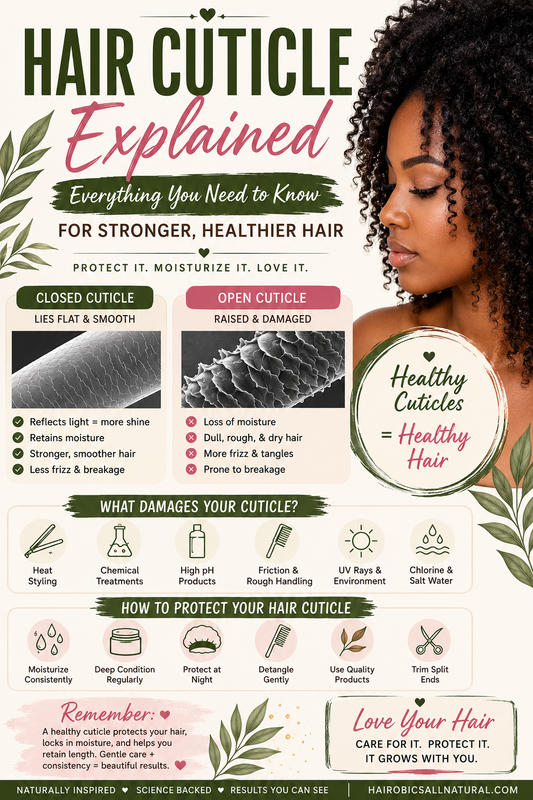
Open vs. Closed Hair Cuticles
One of the biggest misconceptions in hair care is that the hair cuticle stays in the same condition all the time. In reality, the cuticle is constantly responding to moisture, heat, pH, and the products you apply.
Think of the cuticle as a series of tiny overlapping scales. These scales can lie flat or become slightly raised depending on how the hair is treated.
What Is a Closed Hair Cuticle?
A closed cuticle has scales that lie flat against the hair shaft.
When this happens, hair typically feels:
-
Smooth
-
Soft
-
Silky
-
Strong
-
Flexible
-
Less tangled
A closed cuticle also reflects light more evenly, which is why healthy hair often appears shinier.
Benefits of a closed cuticle include:
-
Better moisture retention
-
Less frizz
-
Reduced breakage
-
Improved shine
-
Easier detangling
-
Longer-lasting hairstyles
-
Better protection from environmental damage
While it's impossible to permanently "seal" the cuticle, maintaining healthy hair habits can help keep it smooth most of the time.
What Is an Open Hair Cuticle?
An open or raised cuticle occurs when the protective scales lift away from the hair shaft.
This allows moisture to escape while also making it easier for damage to occur.
Hair with raised cuticles often feels:
-
Dry
-
Rough
-
Brittle
-
Frizzy
-
Dull
-
Tangled
-
Weak
A raised cuticle is not always a bad thing. For example, during deep conditioning, a slightly raised cuticle allows water and conditioning ingredients to penetrate the hair shaft more effectively.
The problem occurs when the cuticle remains lifted for extended periods due to repeated damage.
What Causes the Cuticle to Lift?
Several everyday factors can raise the hair cuticle.
Heat
Blow dryers, flat irons, curling wands, and hot combs expose the cuticle to high temperatures.
Repeated heat styling can weaken the protective layer over time.
Chemical Services
Hair coloring, bleaching, relaxers, and permanent waving all work by opening the cuticle so chemical ingredients can reach the cortex.
Without proper aftercare, repeated chemical processing can leave the cuticle vulnerable.
High-pH Products
Hair naturally has a slightly acidic pH, generally between 4.5 and 5.5.
Products with a much higher pH can cause the cuticle to swell and lift.
Using pH-balanced shampoos and conditioners helps support healthier hair.
Friction
Everyday friction gradually wears away the cuticle.
Examples include:
-
Cotton pillowcases
-
Tight hats
-
Rough towels
-
Tight ponytails
-
Excessive brushing
-
Hair rubbing against clothing
This is one reason satin bonnets and satin pillowcases are highly recommended for textured hair.
Environmental Exposure
Hair is exposed to environmental stress every day.
These include:
-
UV rays
-
Wind
-
Pollution
-
Chlorinated pools
-
Saltwater
-
Dry winter air
-
Low humidity
Over time, these factors can weaken the outer layer of the hair shaft.
Hair Porosity Explained
Hair porosity and the cuticle go hand in hand.
Porosity refers to your hair's ability to absorb and retain moisture.
The condition of the cuticle largely determines your hair's porosity.
Low Porosity Hair
Low-porosity hair has tightly packed cuticle layers.
Characteristics include:
-
Water beads on the surface.
-
Products sit on top of the hair.
-
Hair takes a long time to get wet.
-
Hair dries slowly.
-
Product buildup occurs easily.
Advantages include:
-
Excellent moisture retention
-
Smooth texture
-
Healthy shine
-
Less frizz
Challenges include:
-
Moisture is harder to get into the hair.
-
Heavy products may weigh the hair down.
Tips for low-porosity hair:
-
Use lightweight leave-in conditioners.
-
Apply products to damp, warm hair.
-
Use occasional steam treatments.
-
Avoid heavy oils and butters if they cause buildup.
-
Clarify periodically to remove residue.
Medium Porosity Hair
Medium porosity is often considered the ideal balance.
The cuticle is neither too tight nor too open.
Hair typically:
-
Accepts moisture easily
-
Retains hydration well
-
Responds well to styling
-
Has good elasticity
-
Experiences less breakage
People with medium-porosity hair generally need a consistent moisturizing routine to maintain healthy strands.
High Porosity Hair
High-porosity hair has more open or damaged cuticle layers.
Moisture enters quickly but also escapes just as fast.
Signs include:
-
Hair dries rapidly.
-
Hair feels dry shortly after moisturizing.
-
Frizz develops easily.
-
Split ends appear frequently.
-
Hair tangles often.
-
Breakage increases.
High porosity can be natural, but it may also result from:
-
Bleaching
-
Coloring
-
Heat damage
-
Relaxers
-
Mechanical damage
-
Weathering
People with high-porosity hair often benefit from layering moisture with creams and oils to help reduce moisture loss.
How to Tell If Your Hair Cuticle Is Healthy
Healthy cuticles usually produce hair that:
-
Feels smooth
-
Looks shiny
-
Retains moisture
-
Detangles easily
-
Has minimal breakage
-
Maintains curl definition
-
Feels soft after washing
-
Is more resistant to split ends
Healthy hair doesn't have to be perfectly shiny all the time—especially highly textured hair—but it should feel resilient and manageable.
Signs of a Damaged Hair Cuticle
When the cuticle becomes worn or chipped, you may notice:
-
Constant dryness
-
Frizz even after moisturizing
-
Split ends
-
Excessive tangles
-
Hair snapping while combing
-
Lack of elasticity
-
Dull appearance
-
Rough texture
-
Difficulty retaining length
-
Increased breakage
Many of these signs develop gradually, making regular hair care important for prevention.
Common Myths About the Hair Cuticle
Myth #1: You Can Permanently Seal the Cuticle
No product can permanently seal the cuticle shut.
Conditioners and acidic products can help the cuticle lie flatter temporarily, improving smoothness and shine, but the effect is not permanent.
Myth #2: Oiling Your Hair Repairs Damaged Cuticles
Hair oils help reduce friction, improve softness, and slow moisture loss, but they cannot rebuild damaged cuticle cells.
Once the cuticle is physically damaged, the goal is to protect the remaining hair and minimize further damage until new, healthy hair grows in.
Myth #3: Cold Water Completely Closes the Cuticle
Many people believe rinsing with ice-cold water permanently closes the cuticle.
In reality, the temperature difference has only a modest effect. Hair care professionals generally attribute smoother-feeling hair after a cool rinse more to reduced swelling and product behavior than to the cuticle literally "locking shut."
Myth #4: Brushing Hair 100 Times Makes It Healthier
Excessive brushing creates friction that can wear down the cuticle.
Instead, brush or comb only as needed using gentle techniques and appropriate tools for your hair type.
Best Ingredients for Supporting a Healthy Hair Cuticle
Look for products that help moisturize, lubricate, and protect the hair shaft, such as:
-
Aloe vera
-
Glycerin (depending on climate)
-
Coconut oil
-
Avocado oil
-
Jojoba oil
-
Argan oil
-
Shea butter
-
Panthenol (Provitamin B5)
-
Hydrolyzed proteins
-
Ceramides
For many people with natural hair, a routine that combines gentle cleansing, conditioning, and consistent moisturizing can help maintain healthier-looking cuticles over time.
The Ultimate Hair Cuticle Care Routine
Understanding the hair cuticle is only half the battle. The next step is creating a routine that protects this delicate outer layer every day.
Healthy hair doesn't happen because of one miracle product—it comes from consistent habits that reduce damage and help your hair retain moisture and strength.
Whether you have natural hair, curls, coils, locs, braids, or twists, following a structured routine can help keep your cuticles smoother and your hair healthier.
Daily Hair Cuticle Care Routine
Small daily habits make the biggest difference over time.
1. Moisturize When Needed
Dry hair is more likely to experience friction, tangles, and breakage.
If your hair feels dry, apply a lightweight leave-in conditioner or moisturizing spray to help replenish hydration.
For many people with textured hair, lightly moisturizing every few days—or as needed—helps reduce excessive dryness without overloading the hair with product.
2. Protect Your Ends
The ends of your hair are the oldest and most fragile.
Because they've been exposed to months or years of washing, styling, and weather, their cuticles naturally experience more wear.
Protect your ends by:
-
Wearing low-manipulation styles
-
Avoiding constant touching
-
Keeping ends moisturized
-
Tucking ends away when possible
-
Trimming damaged ends when necessary
Healthy ends are one of the biggest secrets to retaining length.
3. Minimize Friction
Every time your hair rubs against rough surfaces, tiny amounts of cuticle damage can occur.
Reduce friction by:
-
Wearing satin bonnets at night
-
Sleeping on satin or silk pillowcases
-
Using satin-lined hats when possible
-
Avoiding rough cotton towels
-
Patting hair dry instead of rubbing it
These simple changes can significantly reduce breakage over time.
4. Avoid Constant Touching
Many people unknowingly damage their cuticles by constantly playing with their hair.
Frequent touching creates friction and transfers oils, dirt, and bacteria from your hands to your hair.
If your goal is healthy, longer hair, try to keep unnecessary handling to a minimum.
Weekly Hair Cuticle Routine
A consistent weekly routine helps replenish moisture and maintain the protective barrier of the hair shaft.
Step 1: Cleanse the Scalp
Healthy hair starts with a healthy scalp.
Wash away:
-
Sweat
-
Dirt
-
Product buildup
-
Excess oil
-
Environmental pollutants
Choose a gentle shampoo that cleanses without leaving your hair feeling stripped.
Step 2: Deep Condition
Deep conditioning is one of the best ways to support healthier-looking hair.
Benefits include:
-
Increased softness
-
Improved manageability
-
Better elasticity
-
Reduced tangling
-
Improved moisture retention
Allow the conditioner to sit according to the product directions so it has time to coat and condition the hair.
Step 3: Detangle Gently
Never rush through detangling.
Instead:
-
Divide hair into sections.
-
Work from the ends upward.
-
Use plenty of conditioner or a detangling product.
-
Be patient with knots.
Gentle detangling helps preserve the cuticle and reduce unnecessary breakage.
Step 4: Apply Leave-In Conditioner
After cleansing and conditioning, apply a leave-in conditioner to help maintain hydration.
A leave-in conditioner creates a protective layer that can improve softness and reduce friction during styling.
Step 5: Seal Moisture
Many people with textured hair like to finish with a lightweight oil or butter to help slow moisture loss.
Common choices include:
-
Jojoba oil
-
Avocado oil
-
Grapeseed oil
-
Jamaican black castor oil
-
Shea butter (used sparingly)
The goal isn't to "lock in" moisture permanently but to help reduce how quickly water evaporates from the hair.
Monthly Hair Care Habits
Every month, evaluate the overall condition of your hair.
Ask yourself:
-
Are my ends splitting?
-
Is my hair retaining moisture?
-
Am I experiencing excessive breakage?
-
Do I have product buildup?
-
Is my scalp healthy?
Addressing small issues early can prevent larger problems later.
Clarify When Needed
Over time, styling products, oils, and environmental debris can accumulate on the hair.
Too much buildup may make hair feel:
-
Heavy
-
Waxy
-
Sticky
-
Dull
-
Hard to moisturize
Using a clarifying shampoo occasionally can remove excess residue and allow conditioners to work more effectively.
The ideal frequency depends on your hair type, styling routine, and product use.
Protecting the Cuticle During Heat Styling
Heat styling isn't automatically harmful—but excessive or improper heat can damage the cuticle.
If you use heat:
-
Apply a heat protectant.
-
Use the lowest effective temperature.
-
Avoid repeated passes with flat irons.
-
Never use high heat on soaking wet hair unless your tool is designed for it.
-
Limit heat styling frequency.
Giving your hair breaks from heat allows it to maintain better moisture and elasticity.
Protective Hairstyles That Help Preserve the Cuticle
Protective styles can reduce manipulation and friction when installed and maintained correctly.
Popular options include:
-
Two-strand twists
-
Flat twists
-
Box braids
-
Cornrows
-
Crochet styles
-
Wigs
-
Buns
-
Updos
-
Locs
Remember that a protective style only protects your hair if it isn't installed too tightly and your scalp and hair remain clean and moisturized.
Caring for the Cuticle While Wearing Braids
Braids can help reduce daily manipulation, but your natural hair still needs care underneath.
Tips include:
-
Cleanse your scalp regularly.
-
Use a lightweight moisturizing spray on your hair.
-
Avoid excessive product buildup.
-
Sleep with a satin bonnet.
-
Don't keep braids in for too long.
-
Avoid overly tight installations.
Healthy hair under braids starts with a healthy cuticle.
Caring for the Cuticle With Locs
Locs require a slightly different approach because heavy products can leave residue.
Focus on:
-
Regular cleansing
-
Lightweight hydration
-
Scalp care
-
Avoiding excessive waxes
-
Protecting locs at night
-
Gentle retwisting practices
Moisturized locs are generally less prone to brittleness and breakage.
Caring for Curly and Coily Hair
Curly hair naturally experiences more friction because of its twists and bends.
To protect the cuticle:
-
Detangle gently.
-
Moisturize consistently.
-
Avoid excessive brushing.
-
Use protective nighttime care.
-
Reduce heat styling.
-
Trim damaged ends as needed.
Healthy curls often begin with healthy cuticles.
The Role of Nutrition in Hair Health
Hair is made primarily of keratin, a structural protein.
While hair products help care for the outside of the hair shaft, nutrition supports healthy hair growth from within.
A balanced diet that includes adequate protein, vitamins, minerals, and healthy fats contributes to normal hair growth and overall hair health.
Staying hydrated also supports overall body function, including the scalp environment where hair grows.
Supporting Your Routine with Hairobics All Natural
A consistent routine paired with quality hair care products can help you maintain softer, healthier-looking hair.
Products from Hairobics All Natural are formulated with naturally inspired ingredients to help:
-
Moisturize dry hair
-
Support a healthy-feeling scalp
-
Reduce the appearance of dryness
-
Improve manageability
-
Help hair feel softer and smoother
-
Complement protective styling routines
For best results, use products consistently as part of a complete hair care regimen rather than relying on any single product to solve every hair concern.
15 Common Mistakes That Damage the Hair Cuticle
Even if you use high-quality hair products, certain everyday habits can gradually wear down your hair cuticle. Recognizing and correcting these habits can make a noticeable difference in the health, appearance, and strength of your hair.
1. Using Excessive Heat
Frequent use of flat irons, curling irons, hot combs, and high-heat blow dryers can weaken the cuticle over time.
Signs of heat damage include:
-
Loss of curl pattern
-
Dryness
-
Split ends
-
Increased breakage
-
Rough texture
-
Lack of shine
Tip: Limit heat styling and always use a heat protectant before applying heat.
2. Washing Hair With Very Hot Water
Hot water can strip away the natural oils that help lubricate the hair shaft.
Instead, wash with lukewarm water and, if desired, finish with a cool rinse for a smoother feel.
3. Skipping Conditioner
Conditioner helps improve slip, reduce friction, and coat the hair shaft, making strands easier to manage.
Skipping conditioner regularly can leave hair more vulnerable to tangling and breakage.
4. Overwashing
Cleansing too often may remove natural oils faster than your scalp can replace them.
Many people with textured hair benefit from washing less frequently, though the ideal schedule depends on lifestyle, scalp condition, and product use.
5. Aggressive Towel Drying
Rubbing hair vigorously with a rough towel creates friction that can roughen the cuticle.
A better option is to:
-
Gently squeeze out excess water
-
Pat hair dry with a microfiber towel or soft cotton T-shirt
-
Avoid twisting or wringing wet hair
6. Brushing Dry Curly Hair
Curly and coily hair is generally more fragile when brushed without lubrication.
Instead:
-
Detangle with conditioner or leave-in conditioner
-
Work in sections
-
Use a wide-tooth comb or your fingers
-
Start at the ends and work upward
7. Tight Hairstyles
Styles that constantly pull on the hair can contribute to:
-
Hair breakage
-
Split ends
-
Thinning edges
-
Increased friction
-
Tension-related hair loss
Protective styles should feel secure—not painful.
8. Ignoring Split Ends
Split ends do not repair themselves.
Once a strand splits, the damage can continue traveling upward, making the hair more prone to breakage.
Regular trims help remove damaged ends and improve the overall appearance of your hair.
9. Sleeping Without Protection
Hair rubs against your pillow for several hours every night.
Cotton pillowcases can create more friction than satin or silk, increasing the likelihood of:
-
Frizz
-
Dryness
-
Tangles
-
Breakage
A satin bonnet or satin pillowcase helps reduce unnecessary friction.
10. Product Buildup
Too many heavy oils, creams, and styling products can coat the cuticle, making it harder for moisture to reach the hair shaft.
Signs of buildup include:
-
Hair feeling coated
-
Dull appearance
-
Sticky texture
-
Difficulty absorbing water
-
Flaking
Clarifying occasionally can help restore balance.
11. Chemical Overprocessing
Frequent bleaching, coloring, relaxing, or perming can weaken the cuticle if not spaced out appropriately.
Give your hair time to recover between chemical services and follow up with conditioning treatments.
12. Sun Exposure
Just like skin, hair can be affected by prolonged UV exposure.
Excessive sunlight may contribute to:
-
Dryness
-
Color fading
-
Increased brittleness
-
Reduced elasticity
When spending extended periods outdoors, consider wearing a hat or scarf for added protection.
13. Chlorine and Saltwater
Swimming pools and ocean water can leave hair feeling dry.
Before swimming:
-
Wet your hair with clean water.
-
Apply a leave-in conditioner if desired.
-
Wear a swim cap when practical.
After swimming:
-
Rinse your hair as soon as possible.
-
Cleanse if needed.
-
Condition thoroughly.
14. Not Drinking Enough Water
While drinking water doesn't directly hydrate the hair shaft, staying hydrated supports overall body function and scalp health.
Healthy hair starts with a healthy body.
15. Inconsistent Hair Care
Healthy hair is built through consistent habits.
One deep conditioning session won't undo months of damage, just as one missed wash day won't ruin healthy hair.
Aim for a routine you can maintain over the long term.
Seasonal Effects on the Hair Cuticle
Different weather conditions affect your hair in different ways.
Summer
Challenges:
-
UV rays
-
Sweat
-
Chlorine
-
Saltwater
-
Increased washing
Helpful habits:
-
Moisturize consistently
-
Wear hats outdoors
-
Rinse after swimming
-
Avoid excessive heat styling
Winter
Cold air and indoor heating often reduce humidity, which can make hair feel drier.
Helpful habits:
-
Deep condition regularly
-
Use moisturizing leave-ins
-
Wear satin-lined hats
-
Avoid very hot showers
Spring
Spring humidity may increase frizz for some hair types.
Focus on:
-
Lightweight moisturizers
-
Gentle cleansing
-
Protective styling as needed
Fall
Fall is a great time to:
-
Trim damaged ends
-
Clarify product buildup
-
Refresh your hair care routine
-
Prepare for drier winter conditions
Professional Treatments That Can Improve Hair Appearance
Salon treatments may temporarily improve the look and feel of the cuticle.
Examples include:
-
Deep conditioning treatments
-
Bond-building treatments
-
Protein treatments (used appropriately)
-
Professional trims
-
Gloss treatments
These services can enhance manageability and appearance, but no treatment can permanently reverse severe structural damage.
Scientific Facts About the Hair Cuticle
Research has shown that:
-
The cuticle consists of multiple overlapping layers of flattened cells.
-
These layers protect the cortex from mechanical and environmental damage.
-
Hair becomes more vulnerable when the cuticle is chipped or eroded.
-
Curly hair often experiences more mechanical stress because of its shape.
-
Moisture, pH, friction, and chemical exposure all influence the condition of the cuticle.
Understanding these principles helps explain why gentle hair care practices are so effective.
Expert Tips for Healthier Hair Cuticles
Professional stylists and trichologists often recommend:
-
Wash your scalp regularly without over-cleansing.
-
Deep condition consistently.
-
Handle wet hair gently.
-
Minimize unnecessary heat.
-
Protect hair while sleeping.
-
Trim damaged ends before splitting worsens.
-
Avoid hairstyles that create excessive tension.
-
Choose products suited to your hair type.
-
Be patient—healthy hair habits pay off over time.
Frequently Asked Questions
Does a damaged cuticle stop hair growth?
No. Hair growth begins in the follicle beneath the scalp. However, a damaged cuticle can lead to breakage, making it seem like your hair isn't growing because you're losing length as quickly as you gain it.
Can oils repair the hair cuticle?
Oils help lubricate the hair, reduce friction, and slow moisture loss, but they cannot permanently repair damaged cuticle cells.
Is frizz always a sign of damage?
Not necessarily. Humidity, hair texture, and styling methods can all contribute to frizz. However, persistent frizz combined with dryness and breakage may indicate cuticle damage.
How often should I deep condition?
It depends on your hair's needs. Many people with textured hair deep condition every one to two weeks, adjusting based on moisture levels, styling habits, and overall hair condition.
Does trimming hair make it grow faster?
No. Trimming doesn't change the growth rate from the scalp, but removing split ends can reduce breakage and help you retain more length over time.
Your Complete Hair Cuticle Care Checklist
Now that you understand how the hair cuticle works, you can build a routine that protects your hair every day. Healthy hair isn't about perfection—it's about consistency. Small habits practiced over weeks and months can help reduce breakage, improve moisture retention, and make your hair easier to manage.
Use this checklist as a guide.
Daily Checklist
✓ Protect hair from unnecessary friction
✓ Avoid excessive touching
✓ Moisturize your hair if it feels dry
✓ Protect your hair while sleeping with a satin bonnet or satin pillowcase
✓ Drink enough water to support overall health
✓ Avoid tight hairstyles that pull on your scalp
Weekly Checklist
✓ Cleanse your scalp
✓ Condition thoroughly
✓ Detangle gently
✓ Apply a leave-in conditioner
✓ Seal in moisture with a lightweight oil if needed
✓ Evaluate how your hair feels and adjust your routine accordingly
Monthly Checklist
✓ Clarify if product buildup is present
✓ Trim split ends when necessary
✓ Deep condition consistently
✓ Review your hair goals
✓ Replace worn brushes or combs that snag your hair
✓ Refresh protective styles if they have become loose or excessively frizzy
Healthy Hair Habits That Protect the Cuticle
Keeping your cuticle healthy doesn't require an overly complicated routine. Many of the most effective habits are simple and inexpensive.
Focus on:
-
Washing your scalp regularly
-
Conditioning after every wash
-
Deep conditioning as needed
-
Reducing friction
-
Limiting excessive heat
-
Protecting your hair overnight
-
Wearing protective styles correctly
-
Moisturizing consistently
-
Being gentle during detangling
-
Maintaining a healthy diet
When these habits become part of your routine, they can help improve the overall appearance and manageability of your hair over time.
How Hairobics All Natural Can Support Healthy Hair
A consistent hair care routine works best when paired with products designed to nourish and moisturize textured hair.
Hairobics All Natural offers products made with naturally inspired ingredients that can complement a healthy hair regimen.
Depending on your routine, you can use Hairobics products to help:
-
Moisturize dry hair
-
Support a healthy-feeling scalp
-
Improve softness
-
Reduce the appearance of dryness
-
Enhance manageability
-
Support protective styles
-
Keep hair feeling refreshed between wash days
For example:
Hairobics Leave-In Treatment
A leave-in conditioner can help replenish moisture after washing while improving slip for easier detangling.
Hairobics Hair & Scalp Booster
Use as part of your scalp care routine to help keep the scalp moisturized and support healthy-looking hair.
Hairobics Raaw Roots Moisturizing Spray
Ideal for refreshing curls, braids, twists, and locs between wash days without heavily weighing the hair down.
Hairobics Scalp Rejuvenator Oil
Can be used to help soothe a dry-feeling scalp and maintain scalp comfort as part of a regular hair care routine.
Remember that no single product can permanently repair damaged hair. Healthy-looking hair comes from combining quality products with consistent care and gentle styling habits.
Frequently Asked Questions
Does everyone's hair cuticle look the same?
No. Hair texture, genetics, age, and previous chemical or heat treatments all influence the condition and appearance of the cuticle.
Why does my hair still feel dry after moisturizing?
Possible reasons include:
-
Product buildup
-
High porosity
-
Environmental dryness
-
Overuse of heat
-
Insufficient conditioning
-
Infrequent washing
-
A routine that doesn't match your hair's needs
Can damaged cuticles heal?
Hair is made of dead keratinized cells, so damaged cuticle cells cannot biologically heal.
However, you can:
-
Reduce further damage
-
Improve the appearance of the hair
-
Minimize breakage
-
Smooth the hair with conditioning products
-
Trim away severely damaged ends
As new hair grows, practicing healthy hair habits helps protect the new cuticle from unnecessary damage.
Is the hair cuticle important for hair growth?
Indirectly, yes.
Hair growth starts beneath the scalp in the follicle.
The cuticle doesn't control growth, but it plays a major role in length retention.
Healthy cuticles reduce breakage, allowing you to keep more of the hair you grow.
What's the biggest enemy of a healthy cuticle?
Usually, it's the combination of:
-
Heat damage
-
Chemical overprocessing
-
Mechanical friction
-
Dryness
-
Poor moisture retention
-
Rough handling
Avoiding these factors can help keep your hair looking healthier.
Key Takeaways
The hair cuticle is your hair's first line of defense. It protects the inner structure of each strand, helps retain moisture, reduces breakage, and contributes to smoothness and shine.
If your cuticle becomes damaged, your hair may become:
-
Dry
-
Frizzy
-
Weak
-
Dull
-
Tangled
-
Difficult to manage
Fortunately, you can support healthier-looking hair by following a consistent routine that includes:
-
Gentle cleansing
-
Regular conditioning
-
Deep conditioning
-
Moisturizing
-
Protective styling
-
Satin protection at night
-
Minimal heat
-
Gentle detangling
-
Routine trims
These habits work together to preserve the cuticle and improve the overall condition of your hair.
Final Thoughts
Healthy hair starts with understanding how it works.
The hair cuticle may be microscopic, but it has an enormous impact on how your hair looks, feels, and performs every day. Whether you're caring for natural curls, coils, locs, braids, twists, or relaxed hair, protecting the cuticle is one of the best investments you can make in your hair journey.
Instead of chasing quick fixes, focus on building healthy habits that strengthen your routine over time. Consistent moisture, gentle handling, regular cleansing, and high-quality products can help you reduce breakage, retain length, and enjoy softer, healthier-looking hair.
At Hairobics All Natural, we believe that healthy hair begins with healthy routines. By combining thoughtful hair care practices with naturally inspired products, you can give your hair the support it needs to thrive.